






























Willie Edward Richardson
Submitted by: Sherrill Rayford, Ed.D {Grandchild}
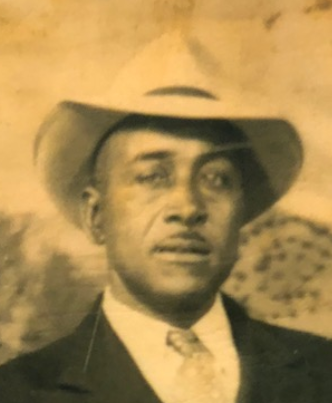 Willie Edward Richardson born around April 4, 1895. Willie Richardson served in World War 1 with the United States Army . The enlistment was in 1917 and the service was completed in 1917.
Story of Service
Memories: Willie Richardson, A World War I Veteran
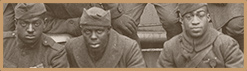
My grandfather, Willie Richardson, was a veteran of World War I, and his experiences symbolize the service and family life of many African American soldiers. Unfortunately, their military service occurred during a period of “nots.” They could not eat in certain businesses; they could not live in certain neighborhoods; their service was often overlooked or devalued.
Yet, my grandfather and those soldiers defended the world and prospered within limitations.
Yet, the invisibility of my grandfather’s service seemed invisible in 2018 as I viewed a pictorial display of World War I soldiers in an Arkansas Welcome Center. None of the soldiers in the display looked like my grandfather. Therefore, I contacted the Arkansas visitor’s bureau to express that soldiers of color should be commemorated too. The communication exchange was informative and productive as I learned of efforts to find and preserve the service of Arkansas’ soldiers of color during World War I.
However, I also learned that my grandfather’s two brothers also served in World War I. Before the communication exchange, I thought one of my grandfather’s brothers had been killed in another war. This perception came from visits to his home in Pine Bluff, Arkansas, and watching him reflectively hold papers and a folded flag that belonged to one of his brothers. Afterwards, he returned the materials to a cedar chest beside his bed.
Russell Banks, Sr.
Submitted by: Mike Esposito {great grandson}
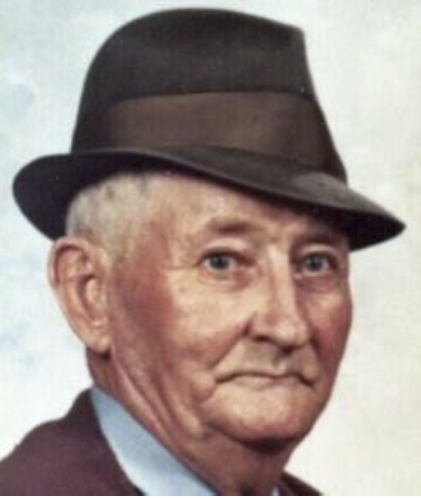
Russell -Banks, Sr. was born around 1895. Russell Banks served in World War 1 with the United States Army. The enlistment was in 1917 and the service was completed in 1919.
Story of Service
Chapter I -- The First Nine Years of My Life
By Russell Banks1
I was born September 25, 1895, at Elkatawa, Kentucky, the year the railroad was finished into Jackson, Kentucky2. My father, Samuel Henry Banks, made a living by cutting hickory timber and loading it in box cars to be shipped to Louisville, Kentucky to make wagons. Each car was supposed to have two wooden malls made and put in the car to split the timber at the factory.
I don’t know how long we lived at Elkatawa; the first recollection I have is living on Tira Creek3, a tributary of Frozen Creek. I remember my father was walking to the O & K4 Junction, five miles away, to help build the O & K railroad. While we lived here, I had my first pair of shoes. They were brogans with brass on the toes. There was no right or left, they were exactly the same so as to be changed back and forth if they started to run over. They were made of coarse stiff leather and the soles were put on with wooden pegs. They had to be greased with beef or mutton tallow to soften them up and keep out the water.
When I was three, we moved farther up the creek to a two-room log cabin. Here my father bought my mother her first cook stove. It was a 4-cap cast step stove known as a “rail burner.” It cost $12.50. While we were living here, Mother had a hen setting near the house and the hen was found dead on the nest from snake bite. Mother put the eggs in with an old cat and kittens and hatched every one.
Waller Browne Morris
 Submitted by: Patrick Morris {Grandson}
Waller Browne Morris was born around 1892. Waller Morris served in World War 1 with the United States Army. The enlistment was in 1918 and the service was completed in 1918.
Story of Service
Like many thousands of young men, Waller Browne Morris worked stateside for the Army during the war, contributing logistical support necessary for fielding an effective infantry.
Though he was born and lived most his life in Kentucky's Lexington region, as a young man he lived briefly in Chicago, where he worked as a clerk for the Illinois Central Railroad Company.
Possibly because of his railroad work, in 1918 he served as a 3rd Corporal in the 159th Depot Battalion, processing newly arrived draftees for training at Fort Zachary Taylor. At age 49 in 1941 he registered again for military service, but did not enlist, for the next world war.
Martin Apostolico
Submitted by: Steven Apostolico {Grandson}
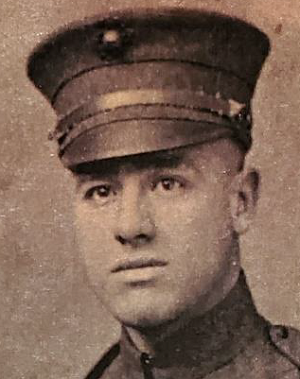
Martin Apostolico was born December 3, 1900 in Philadelphia, PA. Martin Apostolico served in World War I with 82nd Company, 3rd Battalion, 6th Regiment of the United States Marines. The enlistment was June 8, 1917 and the service was completed May 21, 1919.
Story of Service
My grandfather, Martin Apostolico, enlisted at the tender age of 16. He lied about both his age and name so that he would be accepted. He enlisted as Martin Woods, so that his parents would not know. He originally had his training at Parris Island, South Carolina where he was sent to Cook School. He had a scar on his arm where he cut himself learning to sharpen knifes.
It did not take long however for his parents to learn of his enlistment. His name was corrected, and he was sent to Quantico, Virginia as Martin Apostolico, where he joined a rifle company (he qualified as a sharpshooter) of the Sixth Regiment.
He arrived “Over There” on May 9, 1918. He served at Belleau Wood, Chateau-Thierry, Aisne-Marne Offensive, St Mihiel Offensive, Champagne Offensive (Blanc Mont Ridge), and the Meuse Argonne Offensive.
Pelham Davis Glassford
Submitted by: William C Parke {Grandson}
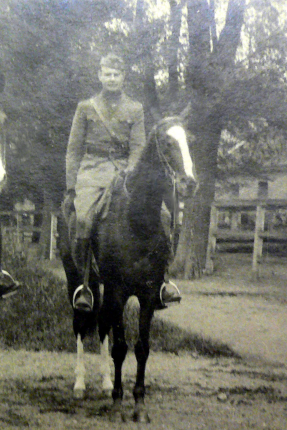 Pelham Davis Glassford born around 1883. Pelham Glassford served in World War 1 with the United States Army. The enlistment was in 1900 and the service was completed in 1931.
Story of Service
The Story of Kidron, Pershing's Favorite Horse
By William C. Parke, grandson of Gen. Pelham Davis Glassford.
During World War I, Gen. John J. Pershing's favorite horse, named Kidron, was among a group of gelding thoroughbreds captured by the French from the Germans in 1917.
While training his troops at the Saumur Artillery School, Brig. General Pelham Davis Glassford was offered one of those horses by the French Colonel Godeau, commandant of the adjoining remount depot. Godeau's act on behalf of France was a gesture of gratitude for the help of the American Expeditionary Force in the War. He also knew how skilled Pelham was on horseback, and that Pelham was respected by the French military and villagers, as he would engage them in their own language. Pelham knew French from the time his father, Colonel William Alexander Glassford in the Army Signal Corps, took his two sons to Paris, France, to study the French signal balloons.
Kemer H Runkle
Submitted by: Vic Brown {Grandson}
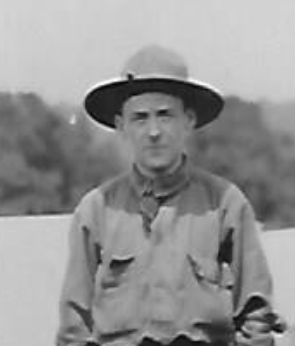 Kemer H. Runkle born around 1891. Kemer Runkle served in World War 1 with the United States Army. The enlistment was in 1917 and the service was completed in 1919.
Story of Service
My Grandfather was a Medic with 103rd Ammo Train, 28th Division.
I am very proud of his service.
Leonard Andrew Crosby, Sr.
Submitted by: Leonard Andrew Crosby III {Grandson}
Leonard Andrew Crosby, Sr.served in World War 1 with the United States Army . The enlistment was in 1917 and the service was completed in 1919.
Story of Service
My Grandfather, Dr. Leonard A. Crosby graduated from the University of Tennessee School of Medicine and completed an internship as a surgeon. He enlisted in the Army at the start of America's involvement in that war and was commissioned a Captain in the Army Medical Corps.
I do not know what unit he was assigned to, but I do know that he deployed with the first contingent of troops sent to France, and served as a Physician and medical officer until the end of the war. I also know that he was involved in the Ardennes campaign and similar actions in that area with his unit.
After the War, he became a family physician in Kentucky and Mississippi, and was one of the first physicians to utilize insulin to treat diabetes. At one point in his career, he was asked to join the Mayo Clinic in Minnesota, but chose not to relocate and continued to practice medicine and surgery until his late 60's, acting in several administrative roles at local hospitals in Marion, Kentucky and Aberdeen, Mississippi.
Charles Everett Hanmer
Submitted by: Linda Goodbary Bryant {First Cousin Twice Removed}
Charles Everett Hanmer born around 1883. Charles Hanmer served in World War 1 with the United States Army. The enlistment was in 1917 and the service was completed in 1919.
Story of Service
George Edward Hanmer (1855-1935) and Susie Freedley (Jacoby) Hanmer (1857-1943) had four children, two sons and two daughters. Their children were: Charles Everett Hanmer (1883 -1922 - age 38), John Lynn Hanmer (1886-1919 -age 33), Alice Hanmer Shelby (1882-1919 - age 35) and Neva Hanmer (1892 - 1961- age 66).
George and Susie gave both of their sons to the Great War, John Lynn is buried in France and Charles Everett is buried in Burlingame, Kansas. Alice, who died from the flu the same year as her brother John in in 1919 is buried in Webb City,Missouri. Only daughter Neva lived past 38; she is buried in California and died at age 66.
Sadly, John Lynn contracted typhoid and the flu having never seen action and died in France after the Armistice was signed.
Older brother Charles Everett, who went before John Lynn was heavily involved in combat. As a member from C Company 117th Field Signal Battalion, 42 Division from Missouri. He saw much action and made it through six campaigns without a scratch as recounted by his mother in attached article plus Army of Occupation of Germany after the war, only to succumb in 1922 back in Kansas City, Missouri VA hospital from the effects of mustard gas. He was 38 years old.
Joseph Berkley Thomas
Submitted by: Anne Thomas {Daughter}
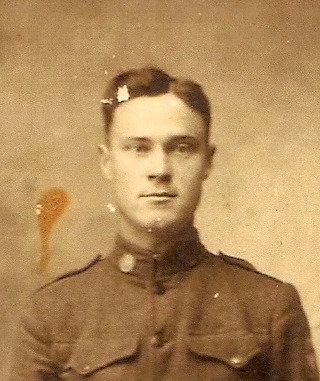 Joseph Berkley Thomas born around 1891. Joseph Thomas served in World War 1 with the United States Army. The enlistment was in 1918 and the service was completed in 1919.
Story of Service
My Father was a member of the 81st Wildcat Division. The Wildcats were shipped out of NYC and landed in England.
The Division was sent to France and were involved in the defense of St. Die.The most significant battle of which they fought was the battle of the Meuse-Argonne Offensive.
After Armistice Day the Division came back to Norfolk. My Father spoke of riding the train from Norfolk to his beloved home in North Carolina and how proud he was of his service to the United States of America.
Unfortunately, because of a fire to his home there are very few mementos left from his service.