


































John J. Lydon
Submitted by: Patricia Lydon {granddaughter}
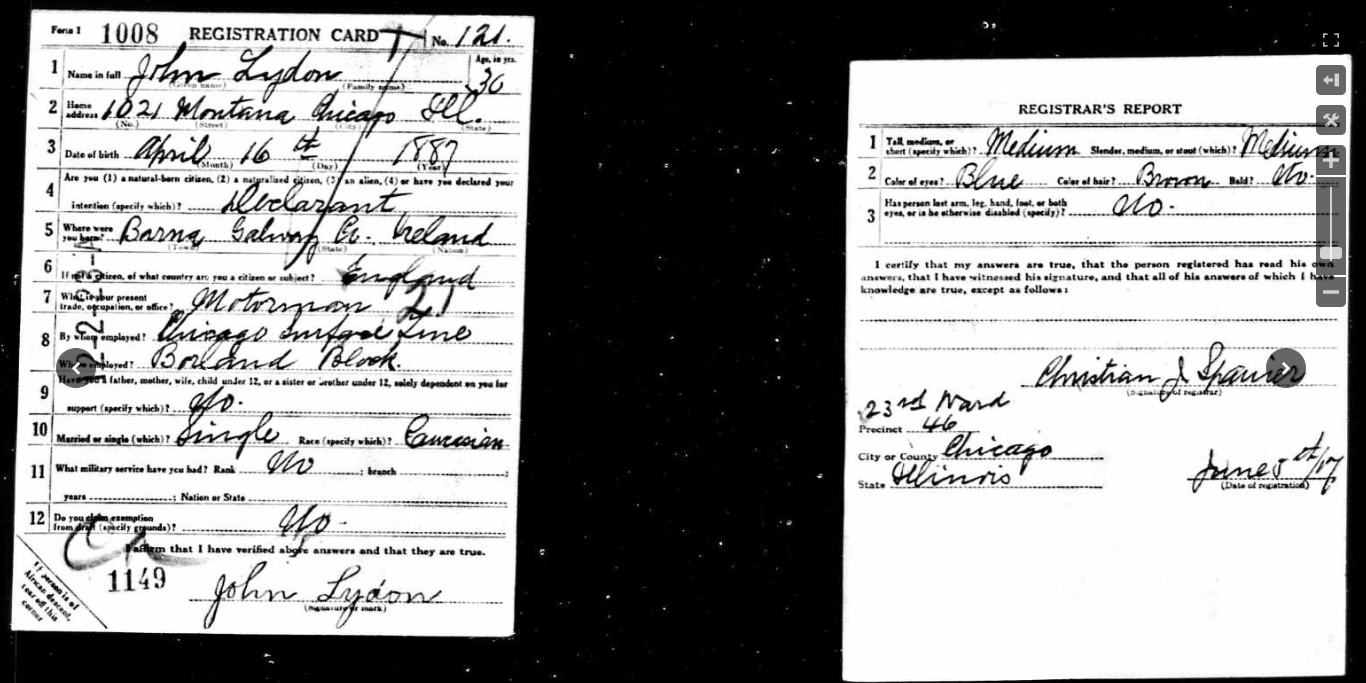
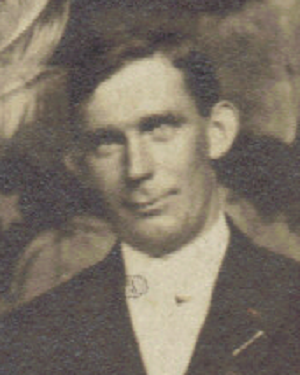 John J. Lydon was born around 1887. John Lydon served in World War 1 with the United States Army. The enlistment was in 1917 and the service was completed in 1919.
Story of Service
My grandfather, John J. Lydon, served as a private in the 33rd Division, 66th Infantry Brigade,132nd Infantry, 2nd Battalion, Company F.
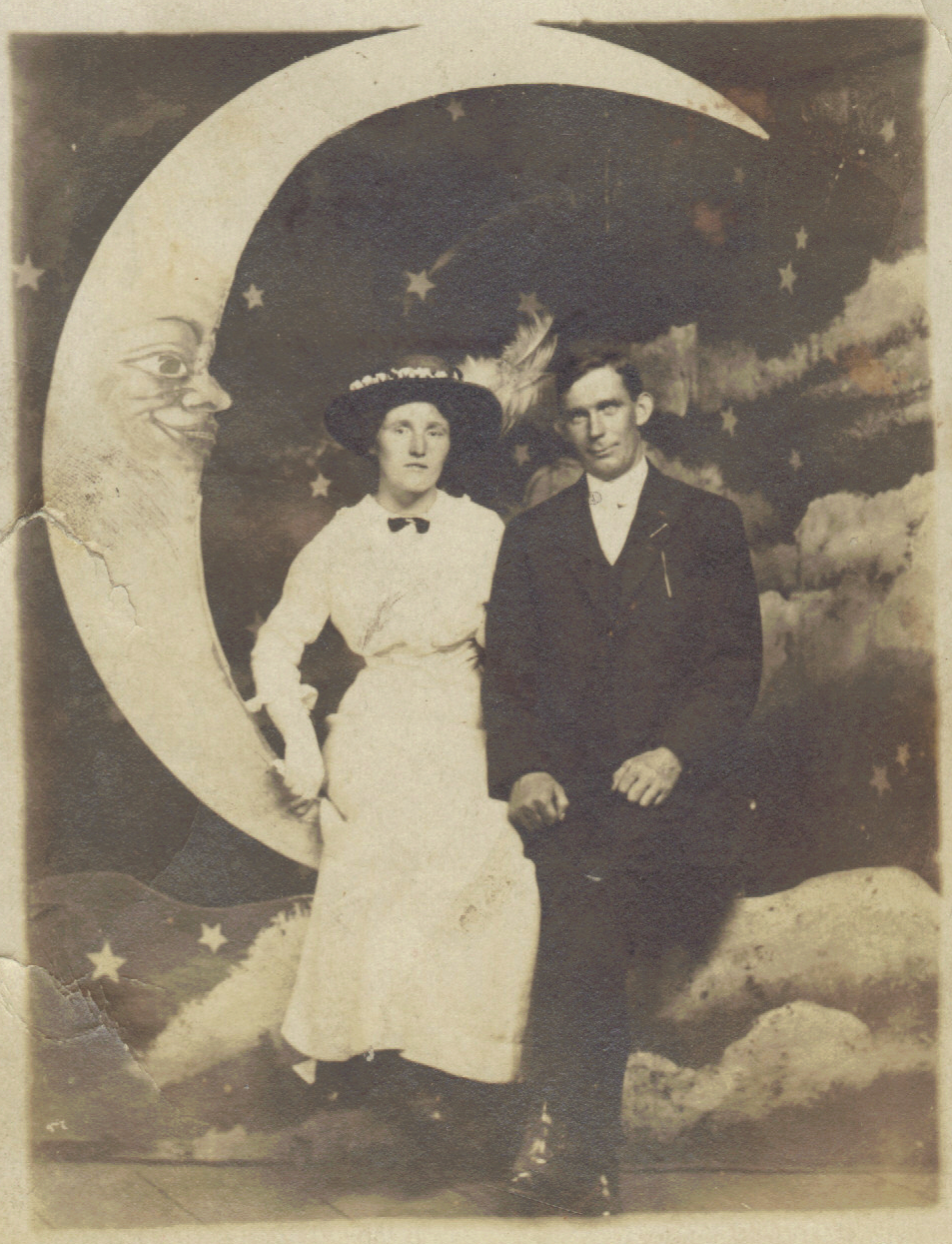
He had emigrated from Galway, Ireland about 1914. He enlisted in 1917 after marrying my grandmother, Delia Geraghty.
He served in France, in the Second Battle of the Marne and then near Verdun.
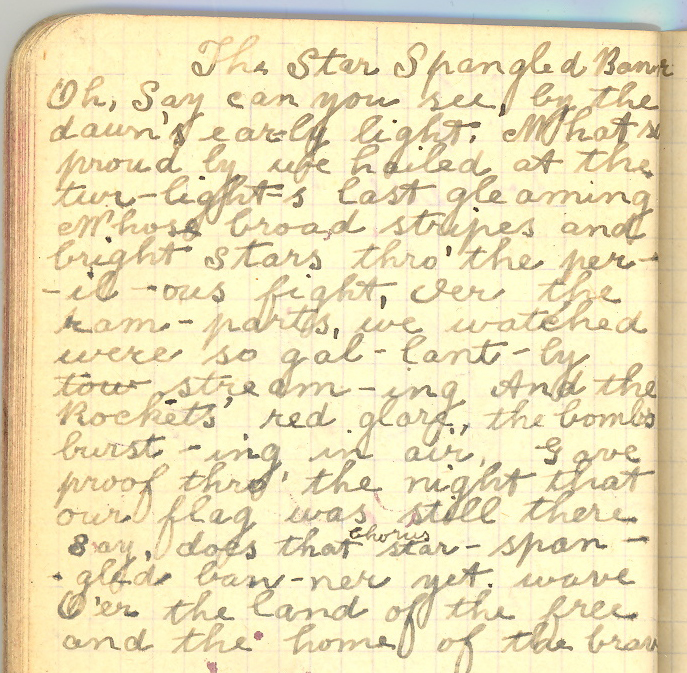
We are fortunate to have his diary from the war. But one of the most telling stories from his service came from another soldier, Charles Dermody, from Lebanon, IL. He described to his children about an incident with my grandfather:
"WE PUT ON OUR masks and Jimmy Barnes and myself got into a shell hole. It was just breaking day - one of those mornings shrouded in a gray mist, then filled with smoke and gas. We were in a valley and behind a railroad embankment, laying in the shell hole - Jimmy Barnes and I - both afraid to raise our heads as shrapnel was falling thick and fast. We felt more and then saw a movement above us.
"We looked up and there stood John Lydon, face white as a sheet, looking down at us. We thought he was hit but couldn’t figure out what he was doing standing there in the middle of the shelling while we were afraid to raise for only a couple of seconds.
"When we yelled to ask if he was hit, he shook his head no. I shouted, 'Then for God’s sake, get down here with us before you do get hit.'
"Later, he told us that when the shelling started he dove into the nearest shell hole and, when he did, he landed in something mushy which he figured at the time was mud. (He had on his gas mask and could not see. When we thought the Germans were coming we took off our gas masks, gas or no gas. We might as well be gassed as killed by the Germans - we couldn’t see 10 feet with them on.)
"It was then that Lydon saw what his fingers had dug into. Two dead Germans, decayed until mushy, were there under his feet. What he had thought was mud had once been man. In sudden shock he lost no time getting out of there, even though it was almost certain death to walk through the shelling. By removing our gas masks, it caused us to suffer intensely for the next three or four days from the effects of the gas. Our lips, tongue, mouth and throat were parched, our eyes burned and our vision was in very bad shape."
It was the exposure to gas that ultimately took my grandfather's life when he was just 48 years old, He had returned to Chicago, gained American citizenship for our family and had become a policeman. He and Delia had four children but he died before the oldest turned 16. We believe he may have also suffered from PTSD but did his best to provide a good home and be a loving father.
At the end of his diary, he has the names and addresses of his buddies. In a strange twist of fate, it ends up that one of his buddies, Joseph Zaresky of Cedar Rapids, IA, was the great uncle of my brother's wife.
My favorite page of my grandfather's diary is attached. He wrote out the words to the U.S. national anthem - the anthem of his adopted country.