





























World War I Centennial News
From the World War I Centennial News Podcast
Remembering Veterans: Hawaii WWI Centennial Task Force Chairman Colonel Arthur Tulak on the upcoming Honolulu WWI Symposium
In June 7th's edition of the World War I Centennial News Podcast, Episode 126, host Theo Mayer interviewed Colonel Arthur Tulak, Chairman of the Hawaii World War I Centennial Task Force. Colonel Tulak discusses Hawaii's role in the First World War, the activities of the Task Force, and an upcoming academic symposium in Honolulu. The following is a transcript of the conversation, lightly edited for clarity:
Theo Mayer: For Remembering Veterans, we're going to start in Honolulu. Hawaii has had a very active World War I centennial period and stood up a World War I Centennial Task Force, built a website hosted by the Commission, participated in 100 Cities/100 Memorials program, held a major armistice centennial event in Honolulu, and is now wrapping things up with an academic symposium co-hosted by Hawaii's Pacific University, the Arizona Memorial Visitor Center, and the Task Force. With us today is Colonel Arthur Tulak, U.S. Army, Retired, who's the Chairman of the Hawaii World War I Centennial Task Force. Colonel, thank you for joining us.
Col Arthur T.: Thank you, Theo. It's great to be here.
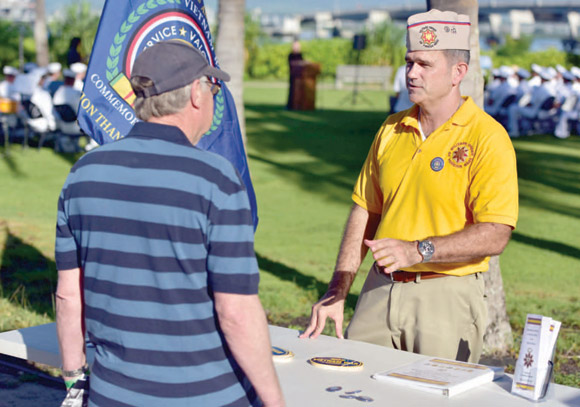 Colonel Arthur Tulak is the Chairman of the Hawaii World War I Centennial Task ForceTheo Mayer: Let's start by talking a little bit about the Hawaii Centennial Task Force, how it came together, and some of the activities that you guys undertook.
Col Arthur T.: Yes, well, this all started in April of 2015 when Governor Ige directed the Hawaii State Department of Defense to put together a committee of some sort to take responsibility and the lead for planning Hawaii's World War I Centennial Commemoration. From May 2015, we got together a bunch of volunteers from academia, from veterans, and patriotic organizations to start developing a concept. This small group eventually became known as the Hawaii World War I Centennial Task Force, so that we've been working on these things ever since and conducted now over 35 events on the islands of Oahu and Maui.
Theo Mayer: Let me ask you this. Most people don't think about Hawaii's role in World War I because it wasn't even a state yet. How did that all play out?
Col Arthur T.: Well, that's correct. It was a territory, but it had a territorial governor. What's really amazing about Hawaii's World War I history is the fact that we had the highest per capita voluntary rate of service or enlistment rate in the nation, so we had 9800 people who served in uniform either in the Hawaii Naval Militia, the Territorial National Guard or who joined the federal services and even a small number who ended up serving in the uniform of our Allied nations on the battlefields in Europe.
From the World War I Centennial News Podcast
Commission News: Raising Money for the Memorial with Director of Development Phil Mazzara
In May 31st's edition of the World War I Centennial News Podcast, Episode 125, host Theo Mayer spoke with Phil Mazarra, Director of Development and the Chief Fundraiser for the National World War I Memorial in Washington, D.C. Read on to learn more about the Mr. Mazarra's experience in the fundraising field, and the ongoing effort to raise enough money for the National Memorial- what he calls "the most meaningful project he's ever raised money for." The following is a transcript of the conversation, lightly edited for clarity:
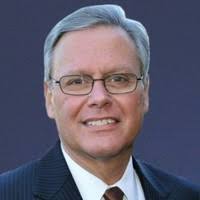 Philip Mazzara, Director of Development for the U.S. World War I Centennial CommissionTheo Mayer: As everybody but our newest listeners know, the Capstone Project for the US World War One Centennial Commission is the building of the National World War One Memorial in our nation's capital. It's a really huge undertaking that the Commission has managed to put together in literally record time. Congress allocated a space just two blocks east of the White House, an international design competition was held in 2015, followed by several years of design detail and development and interaction with controlling entities in Washington for such things. It has all led to a truly stunning and remarkable design that brings together an urban park environment with a national memorial in a unique and really special way. Of course, a huge part of this is raising the money to build it. To talk about that, we're joined by the director of development for the project, also known as our fundraiser-in-chief, Phil Mazzara. Phil, welcome to the podcast.
Phil Mazzara: Thank you, Theo, happy to be here.
Theo Mayer: Phil, before we get into the memorial, let me ask you about your background. What major projects have you helped to raise money for in the past, and also, how is this project unique?
Phil Mazzara: Well, Theo, I'm at the end of a 40-year career and I'm delighted to say I've been blessed and privileged to have worked with some of our country's best institutions, both at the collegiate level and healthcare, hospitals and medical centers, including two organizations that are known as NGOs. I have, in 40 years, worked in fundraising campaigns totaling around $700 million. I say this in order to provide the background for how one would look at raising money for a memorial which commemorates the service of Doughboys and others who served our country more than 100 years ago, and that's a unique challenge. Perhaps the only thing close to that in terms of uniqueness that I've done is work with a former living US president in raising money and not a lot of fundraisers get to do that. How you go about raising money with a constituency that is long gone is truly unique. We don't have, as a college would have, a cohort of alumni or parents. We don't have, as hospitals have, a cohort of grateful patients, and so we're really working to build a constituency out of people who, either they're businesses or families who were impacted by the war or have developed an interest in the war, like I did some 50 years ago when I was a student and studied the war and the impact of the war on English literature. For me, personally, this is the perfect culmination of a 50-year interest in the Great War and a 40-year fundraising experience.
From the World War I Centennial News Podcast
An Interview with Women's Suffrage Centennial Commission Executive Director Rebecca Kleefisch
In May 31st's edition of the World War I Centennial News Podcast, Episode 125, host Theo Mayer spoke with Rebecca Kleefisch about the background, mission, and plans for the Women's Suffrage Centennial Commission, of which she is the Executive Director. The following is a transcript of the conversation, lightly edited for clarity:
Theo Mayer: Following up on our women's suffrage theme: In April of 2017, Congress passed legislation to create the Women's Suffrage Centennial Commission through Bill #S847. To quote, "Ensure a suitable observance of the centennial of the passage and ratification of the 19th Amendment to the Constitution of the United States providing for women's suffrage." The original bill was sponsored by Senator Tammy Baldwin of Wisconsin and won bipartisan support with each female member of the US Senate acting as a co-sponsor. With us today to tell us about the Commission, the mission, the plans for the centennial commemoration of the passage of the 19th Amendment, is the executive director of the Women's Suffrage Centennial Commission, Rebecca Kleefisch. Rebecca, welcome to the podcast.
Rebecca K.: Thanks so much, Theo. I'm glad to be here.
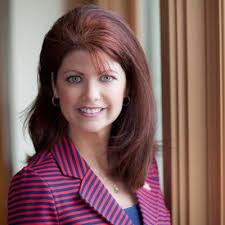 Rebecca Kleefisch is the Executive Director of the Women's Suffrage Centennial CommissionTheo Mayer: Rebecca, what's your personal background? How did you get appointed to the role?
Rebecca K.: Well, I'll tell you I would not be here were it not for women's rights to vote, because I held elected office, once upon a time. Well, once just a couple of months ago. I was the lieutenant governor of Wisconsin, which was the first state to ratify the 19th Amendment, which was the Constitutional Amendment that gave women across America the right to vote. This holds a special place in my heart. Initially, I had been appointed to the commission by Speaker Paul Ryan and then, when it looked like I was not going to be able to do as much as I wanted to for this Commission because by that time it had become an absolute passion project for me, I dropped off the Commission and applied to be its Executive Director and I was blessed enough to have been chosen and, boy, do we have an extraordinary year and a half planned for America.
Theo Mayer: What are some of the activities and programs?
Rebecca K.: Well, we've already observed our very first centennial, Theo. That happened on May 21, which is 100 years to the day since the US House of Representatives passed the 19th Amendment. If you noticed anyone from the United States House of Representatives wearing a yellow rose on their lapel on the news that night, or perhaps in the paper the next morning, that's because the Women's Suffrage Centennial Commission made sure that every member had a yellow rose in order to commemorate that special day. On that day as well, there was a vote, by unanimous consent, it passed that the house reaffirm the 19th Amendment, which was a really special moment. Then, on top of that, the Speaker of the House, Nancy Pelosi, held a very special reception in Statuary Hall to honor the suffragists of the past, but also record-breaking numbers of women holding office in the United States Congress this year. The minority leader was there and gave a wonderful speech. The speaker herself gave a wonderful speech, and it was a great honor that our chairwoman, Kay Coles James, and our vice chairwoman, former Senator Barbara Mikulski, were also there and gave speeches.
We're coming up now on our second big centennial, so watch C-SPAN from 4:00 PM to 6:00 PM on June 4th. That's when you will see the commemoration in the United States Senate, and you're going to see them wearing yellow roses on their lapels, which is the signature flower of the suffragists of yesteryear. That is also the day that you'll see the Library of Congress exhibit opening, so we have so much planned. Plans in the works with the White House, plans in the works with States across this nation, to make this an incredible commemorative year.
Read more: Podcast Article - Women's Suffrage with Rebecca Kleefisch
USC and United Airlines reach agreement to name LA Memorial Coliseum field
By Amanda Sturges
via the Daily Trojan newspaper web site at the University of Southern California
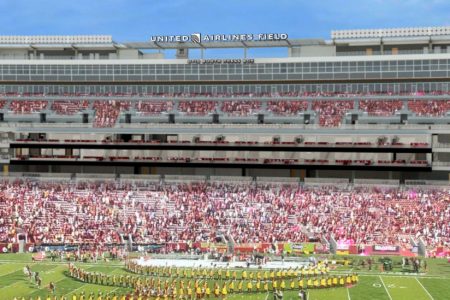 Los Angeles Memorial ColiseumUSC and United Airlines have agreed to a new naming rights deal for the Coliseum, after facing some backlash regarding the original name change.
The two parties came to a 10-year deal that will result in a new name for just the field, instead of the entire stadium. The field will now be called the United Airlines Field at Los Angeles Memorial Coliseum starting August.
USC and United had initially struck an agreement in May 2017 to rename the stadium United Airlines Memorial Coliseum. The 16-year deal provided USC over $69 million to use toward the Coliseum’s renovation, part of a $315 million undertaking.
Shortly after the original naming rights deal was agreed upon, veterans groups protested that changing the name of the stadium would dilute its identity as a memorial to World War I veterans.
“I think there are certain things that we shouldn’t sell,” said Janice Hahn, president of the Los Angeles Memorial Coliseum Commission, who sided with the veterans back in March. “The Los Angeles Memorial Coliseum was built in an effort to honor those men who were from Los Angeles that marched off in World War I and never came back.”
Read more: USC and United Airlines reach agreement to name Coliseum field
One of the Nation's Oldest WWI Memorials
Reading, OH Rededicates 'Doughboy' Monument
By Tana Weingartner
via the WOSU radio station (OH) web site
The Great War ended on Armistice Day in November 1918; by June 8, 1919, the city of Reading was dedicating a memorial to the 224 soldiers from there and surrounding communities.
"Our research says that it's the oldest World War I monument in Ohio and one of the first in the country," says Reading Historical Society President Allan Rettberg. He points to a letter from the Ohio History Connection suggesting the memorial at Jefferson and Vine streets may be one of the oldest in the state and country.
Reading rededicated its World War I 'Doughboy' Monument during a ceremony Saturday, June 8, the 100th anniversary of its original dedication.
"There's 224 soldiers on the monument and we have a photograph from the 1919 Mill Creek Valley News that shows the memorial was up and standing just two to two-and-a-half months after the war ended," Rettberg says. "But it wasn't dedicated until June 8 and I believe that was because they wanted to wait for the soldiers to return home."
Only 10 of the 224 soldiers died during the war, Rettberg says, and not all while in action. Two contracted the Spanish flu and one died in a Navy accident. Not everyone saw active duty in Europe, according to Rettberg, but all served in the military during the war.
The rifle-carrying Doughboy sitting atop the memorial was created by Michael Roth - a contractor and mayor of Reading during the war - using his son Alfred, a World War I soldier, as a model.
Read more: Reading Rededicates 'Doughboy' Monument, One Of Nation's Oldest WWI Memorials
Teaching the Great War 100 Years Later
By Chris Davis
Special to the United States World War One Centennial Commission web site
When I was asked by the History Department what course I would like to teach for the fall of 2018, there was no hesitation in my response.
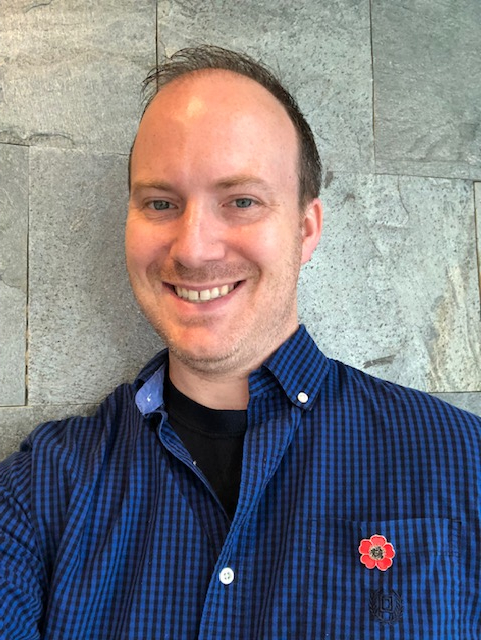 Chris DavisIn the fourth year of my Ph.D. program in U.S. History at The University of North Carolina at Greensboro, I had just wrapped up the spring semester teaching a course on the first half of the twentieth century. Since my area is in the WWI era, for a course whose scope spanned both world wars, I devoted the first half of the course to understanding the causes and consequences of the First World War and transitioned into how it connected with the Second.
The students throughout the course often told me that this was the most detail about WWI history they had been exposed to up to that point, and I was glad to have given them a greater appreciation for it, but I still felt limited in having to move on to WWII halfway through. What I really wanted, what I imagined I would someday get to do, was to teach a course that gave The Great War its due.
Shortly after the spring of 2018, I would find out that “someday” was going to be in a few months. I got my wish and, not only would I be teaching a course on my favorite topic, but this course would coincide with the centennial of the war’s end. To say I was excited would be a gross understatement, but the centennial added pressure, as well as opportunities, to make sure I got it right. That summer involved a lot of brainstorming to bring my dream course to fruition.
When the fall semester started, I began the first day of my class (entitled “The Great War”) with a question: How much have you learned about World War I prior to today? The answer was largely what I expected. Very few of these undergraduates were history majors, and their knowledge of World War I was essentially that the name “World War II” implied that there had been one. I reassured them that was okay, because we would spend the next 16 weeks fixing that.
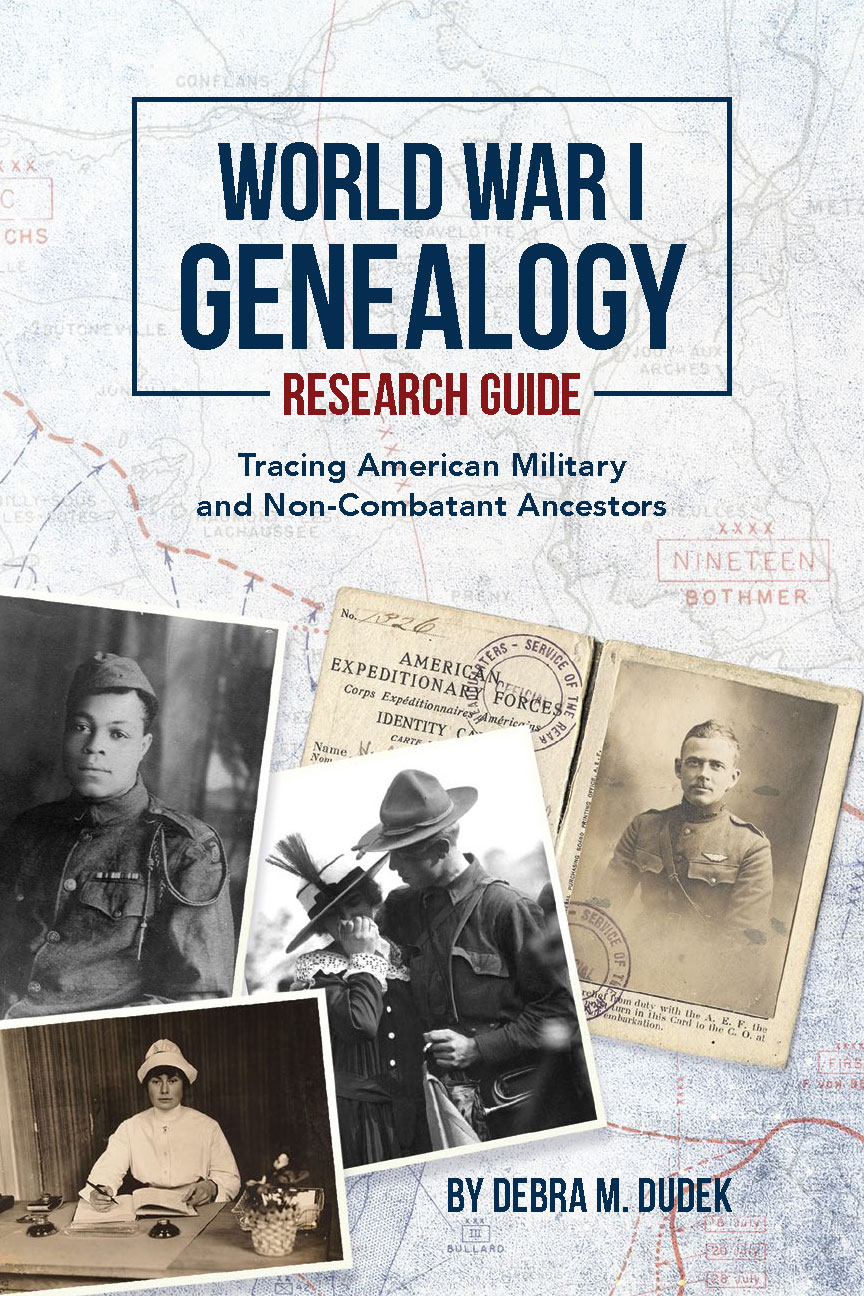
Our FREE WWI Genealogy PDF Guide is still being offered!
By Theo Mayer
Chief Technologist, United States World War One Centennial Commission
During our Fleet Week activities in New York City in May, the U.S. World War One Centennial Commission (WWICC) highlighted a new genealogical tool that has a limited-time offer attached.
The World War I Genealogy Research Guide helps trace American military and noncombatant ancestors. It is provided courtesy of WWICC and the Doughboy Foundation.
This guide is authored by Debra M. Dudek, with a foreword by Col. Gerald York, grandson of Medal of Honor recipient Alvin York.
As well as over 100 pages of information and guidance, it features over 250 links to resources on the Web.
The guide is available in PDF form, free of charge, to the first 5,000 people who download it here:
https://www.worldwar1centennial.org/commemorate/family-ties/wwi-genealogy-research-guide.html
After the download limit has been reached, it can be purchased in book form online or wherever books are sold.
National History Day Offers Webinar Series Scholarships
By Lynne O'Hara
Director of Programs, National History Day
National History Day (NHD) has engaged with several partners to commemorate the World War I Centennial. NHD has created resources to offer different perspectives on the war, engage students with unique primary sources, and remember those who served and sacrificed as part of the war effort.
 NHD is excited to be offering scholarships for LEGACIES OF WORLD WAR I, our World War I Webinar series in the fall.
Free tuition and credit is available for two teachers from every NHD Affiliate.
Through this program, teachers can earn a certificate of professional development hours or three graduate extension credit units from the University of San Diego.
Applications for a scholarship will be accepted through July 30, 2019. All teachers will be notified by August 16, 2019.
Information and the link to apply is https://www.nhd.org/wwi.
WHO: Teachers and librarians who instruct grades 4-12
WHAT: Webinar series for teachers to learn about the impact of World War I in a national and international context
WHEN: Once a month, from September to December 2019
Read more: National History Day Offers Webinar Series Scholarships
 World War I Memorials restored by NYC Parks (left to right): Bronx Victory Memorial, Ridgewood War Memorial; Greenpoint War Memorial.
Kudos to the NYC Parks Conservation Team for their work on World War I Memorials
By Jonathan Kuhn
Director, Art & Antiquities, NYC Parks
The World War I Centennial may be over, but the NYC Parks continue our mission and mandate to preserve our touchstones of the past, including all of the 102 World War I monuments in our city’s parks.
In the run up to Memorial Day, the NYC Parks' small but dedicated field staff were engaged in ongoing care of many World War I memorials. This work included detailed cleaning, waxing, and minor repairs.
Leading this team of professionals was Steven Drago, Monuments Conservation Technician, Victor Riddick, Monuments Conservation Technician, and John Saunders, Monuments Conservation Manager.
Attached are a few representative photos of relevant sites where this amazing team made special effort. As you can see, the special care given to these historic treasures is clearly evident.
Of special note -- the Gertrude Vanderbilt Whitney’s sculpture of the Washington Heights-Inwood War Memorial was repaired last fall (we replaced the missing bayonet) with support from various donors, including the Centennial Commission's 100 Cities/100 Memorials program.
Read more: Kudos to the NYC Parks Conservation Team for their work on World War I Memorials
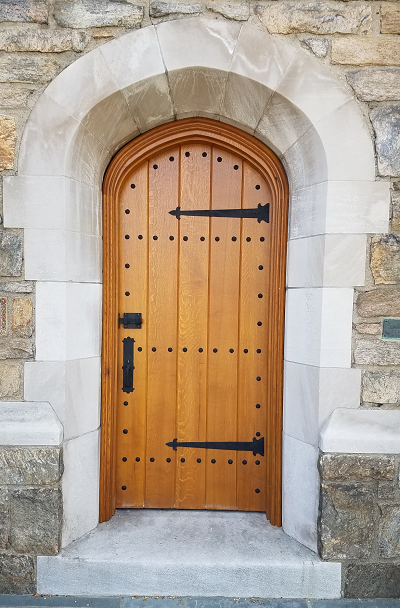 Detail of the new entryway to the Riverdale Memorial Bell Tower
One Door Closes and another Opens: Historic Riverdale, NY Memorial Bell Tower Entryway Refurbished with Replica Portal
By Jonathan Kuhn
Director, Art & Antiquities, NYC Parks
NYC Parks’ Citywide Monuments Conservation Program (CMCP), a public-private partnership, recently commissioned a precise replica of the severely deteriorated oak door at this landmark monument.
The new door was fashioned by master carpenter Tim Fagin, and reuses the original forged decorative ironwork. The project was supported in part by a $2,000 award from the US World War I Centennial Commission’s 100 Cities/100 Memorials Grant Program, with oversight by NYC Parks Art & Antiquities.
The Riverdale Bell Tower, a 500-ton rustic Collegiate Gothic-styled stone tower designed by Dwight James Baum (1886-1939), features nine bronze honor rolls that list the names of more than 700 local residents of Riverdale, Spuyten Duyvil and Kingsbridge who served and 29 who died in World War I.
The tower dates to 1930, resembles an Ivy League campanile and houses a historic bell, which was cast in Spain in 1762 and captured by General Winfield Scott during the Mexican War.
In 2007 CMCP restored the lower portion of the monument and conserved the honor rolls. In 2011 the bell tower was placed on the National Registry of Historic Places.
New Online Exhibition "The Volunteers: Americans Join WWI"
By Mike Vietti
Director of Marketing, Communications and Guest Services, National World War I Museum and Memorial
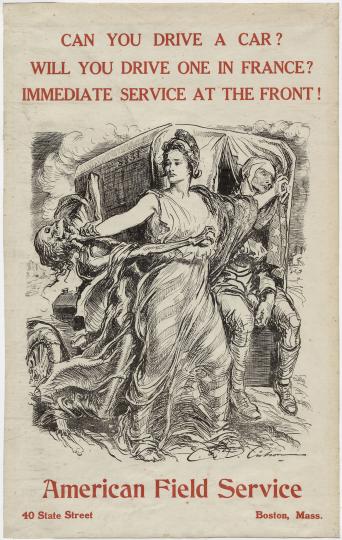 Recruiting poster for the American Field ServiceIn Europe alone, World War I displaced approximately 10 million people. In 2017, an unprecedented 68.5 million people worldwide were forced to leave their homes, including more than 25 million by war and violence.
Now available online, "The Volunteers: Americans Join World War I" examines the stories of the young men and women who transformed the meaning of volunteerism. Prompted by altruism, personal ambition, a search for adventure or hope for an Allied-led redemption of a devastated Europe, these American volunteers engaged in the war before the United States entered the conflict. This digital exhibition, produced in collaboration with AFS Intercultural Programs, shares their inspirational stories.
The online exhibition can be found here: http://exhibitions.theworldwar.org/volunteers/#!/
Individual Americans immediately volunteered for humanitarian and military service primarily with the Allies after World War I broke out in 1914. They volunteered as ambulance and truck drivers, as hospital workers, as flyers, as doctors and nurses. They crossed into Canada and received military training and were sent to Europe to fight under Allied flags. Americans joined the French Foreign Legion.
They volunteered for adventure. They volunteered to see the world even one torn by war. They volunteered for the better good. They volunteered because their friends did. They volunteered because they wanted to make a difference.
All volunteers’ contributions were without bounds and absolutely necessary. Some gave their lives. Their contributions are often shown through individual accounts and documents in this special exhibition produced by the National World War I Museum and Memorial in collaboration with AFS Intercultural Programs.
American volunteer organizations contributed immensely to the well-being and welfare of the American men and women serving the American military, but also to peoples in the war-torn countries around the globe. Volunteers from such widely varied organizations such as the American Field Service, YMCA (Young Men’s Christian Association), YWCA (Young Women’s Christian Association), American Library Association and countless other local, regional and national groups provided labor, food, entertainment, physical and emotional support and respite from the war.
Read more: New Online Exhibition "The Volunteers: Americans Join WWI"

Park University to Host Valor Medals Review Program at National WWI Museum and Memorial
By Dr. Timothy Westcott
In mid-April, the U.S. World War I Centennial Commission and Park University announced that they were spearheading the effort of a Congress-led systematic review of minority veterans who served in World War I who may have been denied the Medal of Honor due to race.
Information on that effort can be found on the Centennial Commission's web site at https://www.worldwar1centennial.org/index.php/our-goals.html
On Wednesday, June 19, the University will host a program “From Kansas City to Washington, D.C.: World War I Valor Medals Review,” at the National World War I Museum and Memorial in Kansas City, Mo., starting at 6:30 p.m. Admission to the event is free and open to the public, but attendees should RSVP at my.theworldwar.org/4234.
A Park University Spencer Cave Black History Month lecture in February 2016 that featured a discussion about the role a white Park alumnus and World War I hero played as the leader of the mostly black 369th Regiment of New York (known as the “Harlem Hellfighters”) served as the inspiration of a multi-partner initiative to undertake this review. The Valor Medals Review is being conducted by the University’s George S. Robb Centre for the Study of the Great War and the Valor Medals Review Task Force which was formed in August 2018 in conjunction with the Foundation for the Commemoration of the World Wars on behalf of the U.S. World War I Centennial Commission. The Robb Centre’s namesake was a 1912 Park University graduate and a 1919 Medal of Honor recipient.
The interactive program will include Park University panelists Timothy Westcott, Ph.D., director of the Robb Centre and associate professor of history, and Bridget Locke, director of strategic communications. Both are members of the Valor Medals Review Task Force, of which Westcott is the co-chair. The discussion will be moderated by Kimberlee Ried, public affairs specialist, National Archives at Kansas City. The event will describe the three-year journey of the effort thus far, some of the stories that have been uncovered along the way and the intense research work which lies ahead, which will take five to seven years to complete.
Read more: Park University to Host Valor Medals Review Program at National WWI Museum and Memorial
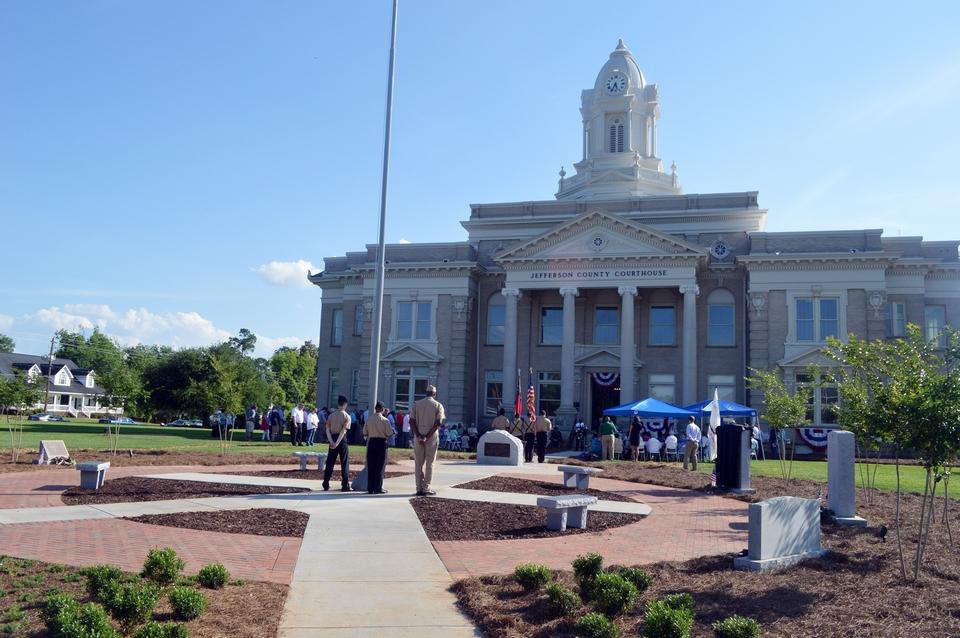 Dedication ceremonies in Jefferson County, Georgia for a new memorial honoring 26 County men who gave their lives in service to their country during WWI
They will not be forgotten
By Parish Howard
via the Augusta Chronicle newspaper (GA) web site
The names of 26 Jefferson County men who gave their lives in service to their country during WWI were revealed, etched in granite, on a new monument in the newly redesigned veterans plaza on the county courthouse lawn Thursday, June 6.
The previous monuments to service men and women who served in other United States wars were removed, cleaned and replaced around the flagpole in a design inspired by a military star, Commission Chair Mitchell McGraw explained.
“This veterans plaza originally started last year with Dr. Lamar Veatch, a Jefferson County native and member of the WWI Commission who brought the idea of a WWI memorial to the board of commissioners and historical society,” McGraw said. “The commissioners tasked the historical society with raising funds from private donors for the memorial.”
The Louisville Garden Club helped redesign the placement of all of the memorials on the grounds.
This was all done to honor the memories of fallen heroes, McGraw said.
Dr. Lamar Veatch, who works with both the United States and Georgia WWI Centennial Commissions called WWI “the war that changed everything, the war that changed the world.” He told those gathered on the courthouse lawn Thursday that these organizations have been working to help Georgians remember all of the sacrifices that were made during that conflict.
Veatch personally has worked on both a photo inventory of all WWI monuments in the state and a list of all Georgian WWI soldiers they could identify who died in combat.
“We have a database online of about 4,069 names, 1,400 of which are African American names and that particular part of our community got a pretty short shrift when it came to recognition after WWI so we were particularly interested in making sure we recognize contributions of the African American community from Georgia,” Veatch said. “We brought this to the commissioners’ attention, the Jefferson County Historical Society jumped onboard and now we will have a monument out here that has 26 names on it to represent the soldiers from Jefferson County who died in service.”