




























Four Questions for Kerri Young
"Our priority was to gather collections together in a way that would enable people to tell stories."
By Michael Stahler
Staff Writer
Historypin is a digital, user-generated archive of historical photos, videos, audio recordings and personal recollections. The company is one of the World War I Centennial Commission’s Commemorative Partners, and they are contractor for “Remembering WWI”, a National Archives app that makes available the miles of WWI film footage at NARA which was heretofore mostly unavailable. Kerri Young of Historypin worked on this exciting project, and told us about it.
Very soon, a new version of "Remembering WW1" app will be out for people to access. Could you tell us a little bit about what this app does, and in what way you brought this project to fruition?
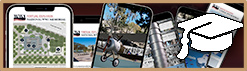
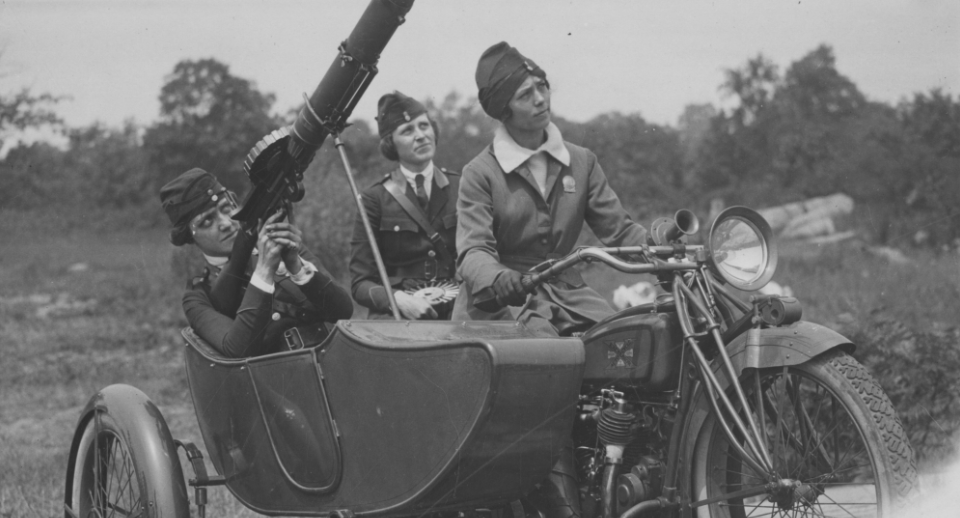
 Kerri YoungThe US National Archives (NARA) has been working with Historypin to develop an engagement strategy that complements a large-scale digitization project on films and photographs from WWI. The creation of the Remembering WWI app is helping us further our goals of greater access and increased reuse of this content. This includes over 100,000 photographs and several hundred reels of film originally shot by the US Signal Corps on behalf of various armed forces units in the 1914–1920 timeframe. In light of the 100-year anniversary of the US entering World War I this year, we wanted to tie into renewed interest in the conflict from local and national efforts focused on the centenary.
We began to imagine a product that could not only bring NARA’s WWI content to light in a dynamic way, but also to create a tool that could help to enable real exchange. We established a target audience of teachers and local institutions who helped to shape the product we created.
Ultimately, our priority was to gather collections together in a way that would enable people to tell stories. Teachers and institutions such as museums place significant importance on understanding historical documents, constructing theses, and finding documents to help explain those theses. Understanding this helped us to start identifying goals for an app that would speak to both these target audiences and the ways in which they want to engage with the records.
The app is a tool that allows these audiences to not only more easily discover and access never-before-seen NARA WWI content, but one that allows them to form their own narratives of the war through the curation of their own collections.
The National Archives and Records Administration (NARA) has spearheaded this project, which you [Historypin] were the contractor for. What brought you into the subject of archiving?
 At Historypin, we focus on helping archives, as well as other cultural institutions, engage and grow their communities through storytelling projects. We believe that cultural heritage is a powerful tool for bringing people together. The work we do and tools we help provide focus on helping local institutions not only use their rich collections as catalysts for starting conversations, but inviting the community to add new interpretations to and enrich their existing collections. It’s exciting to bring this work to the Remembering WWI project, and see NARA leading such a big initiative focused on both digitization and reuse from the ground up.
By taking these archived documents and spreading them across a digital platform, this app greatly increases the accessibility of archived historical media. Why do you consider this accessibility important?
It is our mission at NARA to provide public access to the government records we oversee. “Making Access Happen” is also one of the pillars of NARA’s strategic plan. This is important because public access to government records, as our mission statement lays out, “strengthens democracy by allowing Americans to claim their rights of citizenship, hold their government accountable, and understand their history so they can participate more effectively in their government.”
We’ve only seen the public demand for accessing electronic records grow and thus have made it a top priority to improve the management and preservation of our records to increase digital access. The Remembering WWI project was an opportunity to ensure that a digitization initiative also went hand-in-hand with targeted engagement so audiences would know when and how to access new content as it’s digitized.
Importantly, we encouraged public participation when it came to how we made these WWI records accessible. For example, this project started with a major audience needs analysis to first get a sense of how people are currently accessing NARA records, how these newly digitized films and photographs could be presented to make them easier to utilize in their work, and create engagement ideas around the content. Long before there was an app, this initial approach helped us determine audience-focused outcomes that would not only improve access, but help build active communities of use.
One thing that's unique about "Remembering WWI" is its intersection of technology and historical preservation. What led to the decision of making this service an app, instead of, say, a website?
As mentioned above, from the beginning we focused on two main target audiences for this app, teachers and local institutions. We designed the app with feedback from representatives of each of these groups; input was based solely on how to design an app for tablets. While a website certainly would have complimented engagement around the app (we planned for it), the realities of app development prompted us to focus solely on an in-app experience and making that the best we could for our audiences.
Another reason why we chose tablets as the primary device was so we could showcase the fantastic quality of NARA's newly digitized WWI films and photographs, the experience of which would not reflect as well on say, mobile phones.
A note: While not a website version of the app, the curated NARA and institutional partner collections found in the app can always be accessed at historypin.org/en/rememberingww1. NARA’s digitized content can also be accessed at NARA’s online catalog at https://catalog.archives.gov/.
Michael Stahler is a 2017 Summer Intern at the U.S. World War One Centennial Commission