

































How WWI saved Einstein’s Theory of Relativity
By Jeff Kerns
via the Machine Design web site
The eclipse this year reminded me of a couple famous eclipses around 100 years ago that changed the way we view the universe. Einstein’s Theory of Relativity was paradigm-shifting, and proving it seemed like a miracle. From cloudy skies to the first World War to a hot jungle, the phrase “Genius is 1% inspiration and 99% perspiration” was true for this universe-altering moment.
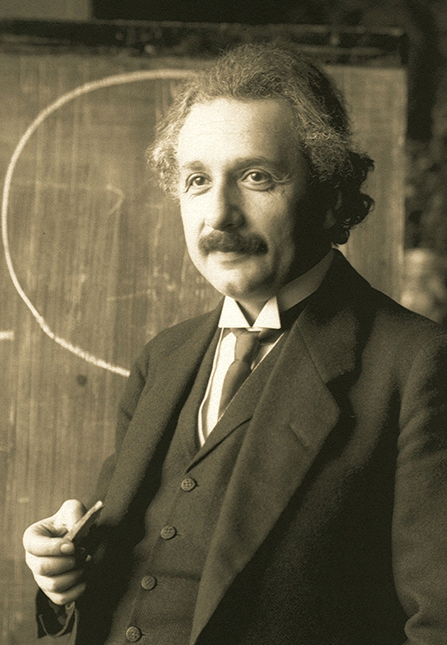 Einstein's theory had a relatively close call in WWIIn 1914, Erwin Finlay-Freundlich and William Wallace Campbell got onto a train with hundreds of pounds of equipment. Their goal was to photograph a solar eclipse to get evidence of Einstein’s theory. To prove the theory, light (star light) passing by a large mass (the sun) would bend. A photograph of star light passing close to the sun should show to be out of place compared to viewing it when the light didn’t pass by the sun.
To increase their chances of a paradigm-shifting photo, Campbell headed toward Kiev while Freundlich took off to Crimea. Once the equipment was set up, there was nothing to do but wait. Unknown to these scientists was that on June 28,1914, Austrian Archduke Franz Ferdinand was assassinated in Sarajevo, Bosnia, which essentially started WWI.
Both camps were stopped by Russian soldiers. Freundlich not only was shut down, but since he was German, he was taken as a prisoner of war. Campbell was an American, and at this point, the U.S. was a neutral country. He was permitted to continue. The eclipse came and so did the clouds, thwarting the attempt. Campbell was allowed to return to America, but he had no evidence and no equipment—it was confiscated by the Russian army.
The war killed communication between the scientists and halted scientific development for years. Ties were eventually cut—Campbell now saw his colleagues from Germany as the enemy. With a negative view of the war, Einstein realized there were things bigger than physics. Taking a stand against the war, Einstein wrote a manifesto against it, but no one joined the cause. This alienated Einstein, who used the isolation to focus on his work.
Had this isolation not occurred, Einstein may have never noticed his mistake. If the observations of the eclipse happened, it would have shown that light only bent about half of what was predicted by the theory. This would have discredited Einstein and killed the Theory of Relativity.
Shedding New Light on the Math
There is no wiggle room for the Theory of Relativity. If a photo of an eclipse showed that the light didn’t bend precisely to how the math predicted, it would be wrong and dismissed. The setbacks in proving the theory might have become a good thing for Einstein and the scientific community.
In reworking the math, he noticed everything seemed to be pointing to something he had dismissed years ago. In 1912, Einstein stopped working some equations because they were just too unfamiliar. He realized he might be able to not only fix his equation, but explain something that has confused astronomers for years.
Read the entire article on the Machine Design web site here.
External Web Site Notice: This page contains information directly presented from an external source. The terms and conditions of this page may not be the same as those of this website. Click here to read the full disclaimer notice for external web sites. Thank you.