
































Four Questions for Jo Ellen Hayden
Horse Heroes "served with heart, with obedience, with loyalty" in WWI
By Ashleigh Shaw
Staff Writer
For three years prior to the nation's entry into World War I, the United States shipped approximately one million American horses and mules to Europe, to assist the war effort as they worked for the British and French armies. These animals carried men into battle, and wounded men to safety. They carried food, water, medical supplies, ammunition, gun carriages and other supplies to the front lines across difficult terrain, in brutal weather, often surrounded by dead and dying men and animals. For peace-loving animals, the sights, sounds, and smells were as dreadful as they were for the men.The story of these animals is one of courage, and also of tragedy. Brooke USA is charity dedicated to improving the welfare of horses, donkeys and mules in the developing world. They have a special project to honor and remember the story of these animals. Brooke USA is a Commemorative Partner to the WW1CC, and we are honored to host their new section on our website, which goes live this week. We discussed Horse Heroes, and the efforts by Brooke USA, with Jo Ellen Hayden, Brooke USA's Horse Heroes Special Project Volunteer
Tell us a little bit about the new Horse Heroes section on the Commission’s website.
The Horse Heroes site honors and documents the use of American horses and mules in World War 1. Approximately 1.2 million American horses and mules served Allied forces in Europe during the war. Many were used by the British, French, Italian, and even German armies well before the United States entered the war.
 Jo Ellen HaydenThe first wave of American horses and mules arrived in France in late 1914 – only a few months after the war began in Europe. Though hard to understand today, horsepower was an essential part of every army during World War I. Most were used as draft animals, pulling everything from ambulances to guns to water carts. Some were pack animals, carrying food, medical supplies, and ammunition. And some horses were used by officers as saddle horses. Just as an officer might be issued a Jeep in later wars, he was issued a horse in World War 1. Horses served on or just behind the front lines, across difficult terrain, in brutal weather, and often surrounded by dead and dying men and animals. They did their part, in spite of being terrified and often while sick and wounded themselves, and they worked until they were annihilated by guns or poison gas, or simply died in their harnesses from exposure, disease, and sheer exhaustion. In total, eight million horses and mules died in WW1 on all sides, including hundreds of thousands of American animals.
Only 200 horses came back to the U.S. after the war. When the war ended there was neither funding or political will to bring the working animals home. Horses were a commodity, and just as armies today routinely abandon motor vehicles, so these armies sold off their horseflesh. Some went to slaughter, if too old, worn out, or injured to be sold as working animals.
The Horse Heroes website delves into where all these animals came from and how they got to Europe. We also set the scene so that our readers will know where the fighting took place and what the conditions were like – including why there was so much mud! We explore, and in our future releases will show hundred-year old film clips, of their training, veterinary care, and life in the field. The site contains hundreds of photographs, many gathered together in one site for the first time.
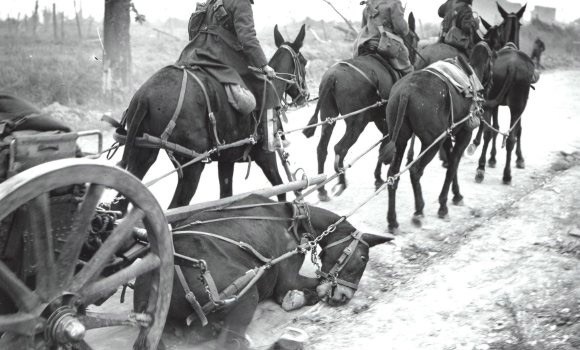 Horses and mules in WWI carried ammunition, food, water and other supplies to the front lines. Photo from © Brooke USASeveral special parts of the Horse Heroes website are devoted to mules – hybrids between a horse and donkey, and with their own special personality, exceptional hardihood, and the source of many stories.
We will provide extensive information about veterinary care for wounds, poison gas, and disease – from which more horses died than from battle injuries.
There was no great emotional debate, as there might be today, about the morality of sending horse and mules to war, though several humane organizations sent supplies and funds to assist in caring for them on the battlefield. The Horse Heroes website will educate people about these organizations and their work. Brooke USA is proud to serve as a partner organization of the World War I Centennial Commission. We hope that our web page will help readers understand the role of horses and mules in the Great War, and how their legacy still supports the world’s neediest animals today.
The Horse Heroes site is curated by Brooke USA, a Commemorative Partner of the Commission. Tell us a little bit about Brooke USA.
Brooke, the world’s largest international equine welfare charity, is headquartered in London and had its beginnings in Egypt in 1933. Brooke USA is the U.S. affiliate, and funds many of Brooke's sustainable equine welfare programs around the world through donations from Americans.
After World War 1, all but a few of the animals owned by the U.S. and British forces were sold off locally – wherever the armies were at the time. This included, for the British army, their forces in Egypt - the British sold thousands of horses in Egypt, and among them were quite possibly some horses that had come originally from the U.S.
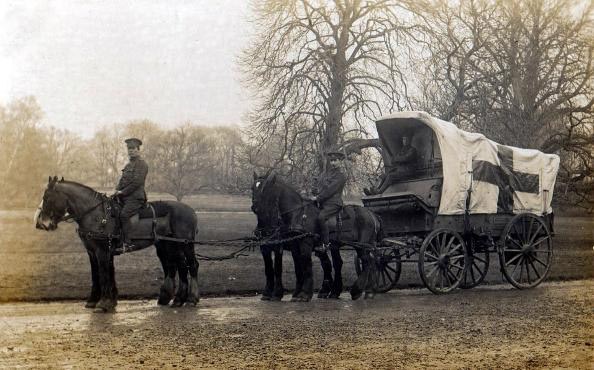 A medical supply wagon during WWI. © Brooke USAIn Egypt, the hot dry climate made forage expensive. Donkeys were the usual equine draft animal. Able to survive on far less than horses, the donkeys still were usually miserably thin and often ill-treated. Except for the Arab nobility, there was no cultural tradition and little knowledge of horse care. Most of the unfortunate horses that were sold in Egypt went into lives of hard labor and utter misery.
Years passed and amazingly, some were still alive by 1933 – nearing or past age 20, which was considered old for a horse at that time, and in horrible condition – lame, emaciated, and with open sores and scars covering their bodies. It was then that they were discovered by Dorothy Brooke, the wife of British Army Major General Geoffrey Brooke, when she accompanied her husband on an assignment in Cairo. She recognized the British army brand on the horses she saw, and was horrified at their condition. She was a woman of compassion and a dedicated animal lover, and her first impulse was to buy back these horses and send them back to England to live out their days.
But she soon realized that there were far too many horses to be able to put this plan into action. A practical and resourceful woman, Dorothy soon changed her program. Unable to give the horses a better life, she decided to buy them, keep them for a few days with good food, gentle care, and love, and then give them a merciful and quick end.
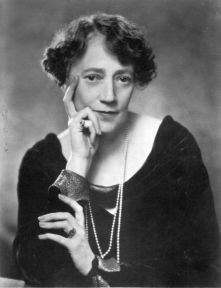 Dorothy Brooke, who founded the effort in the 1930's to help mistreated horses, donkeys, and mules. She raised money and set about buying back every old warrior that she could find in Cairo, and over the course of a few years she had rescued 5,000 war horses. Seeing that the owners would simply take the money from the old war horse and buy another animal, which would be treated just as badly, she founded the "Old War Horse Memorial Hospital" and began providing care for native Egyptian horses, mules, and donkeys.
Dorothy Brooke was a compassionate woman, and she realized quickly that most of the abuse of these animals was due to ignorance rather than intentional cruelty. Also, she soon saw that the lives of the owners were difficult in the extreme, and that they had no resources or knowledge to provide better for their animals. From these twin realizations came her commitment to help both equines and their owners to find a better life. This value system still guides the Brooke’s work today. In 2017, right now, there are approximately 100 million working horses, donkeys, and mules in the developing world. About 80% of those working equines are suffering from preventable problems. Brooke touches the lives of over two million of them annually, supporting twelve million people in their human families each year.
Known to millions of people across the globe as simply “The Brooke,” the charity Dorothy Brooke founded has brought hope to animals and their owners since 1934. Today, the memory of the rescued war horses is kept alive and honored by Brooke’s work. We have over 900 employees, many of whom are veterinarians and other horse care professionals, who work hands-on in the world’s poorest countries with owners, governments, veterinarians, farriers, and other groups to provide practical and sustainable long-term solutions. Brooke provides free veterinary and farrier care and education while teaching owners how to improve the welfare of their animals in the long term.
Do you have a favorite story that will be featured on the new Horse Heroes site?
It is really hard to pick a favorite story, because so many of the real stories were never told. These were animals that were anonymous, except to the soldiers who worked directly with them – and those were just ordinary soldiers, whose stories also were not really remembered in any individual way. As a horsewoman, someone who has worked with horses much of my life, known and loved many horses, seen their strengths, foibles, and heart – it is impossible to put one ahead of another. They have individual personalities just as dogs and cats do – to anyone who has ever been close to any animal, there is a personality, often a sense of humor, sometimes a reserve, sometimes playfulness – they are feeling, sentient creatures just as we humans are. And – so many of the stories are very sad. The photos tell those stories as words never could. When you see animals mired in mud holes, probably going to be shot to spare them the torture of drowning, you realize there is no real romanticism in war, and no point in pretending about the suffering of war. Animals served with heart, with obedience, with loyalty – but very few, if any, of those stories were written down.
Why is it so important to remember and honor the Horse Heroes of World War I, especially during the centennial?
Really this question goes right back to the ones before – it is important because, for Brooke USA, the memory of World War 1’s horses and mules inspires our work every day – we have never forgotten, and we are putting that memory to a very practical use by improving the lives of working equines and their human families every day, every year, all over the developing world. Brooke has been doing practical work for over 84 years – we will never forget.
Ashleigh Shaw is a Fall 2017 Intern at the United States World War One Centennial Commission.
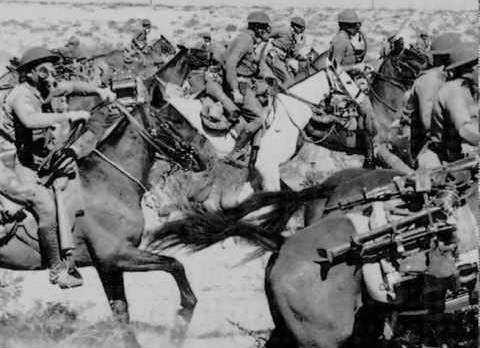 A cavalry charge in WWI, with the soldiers wearing gas masks. © Brooke USA
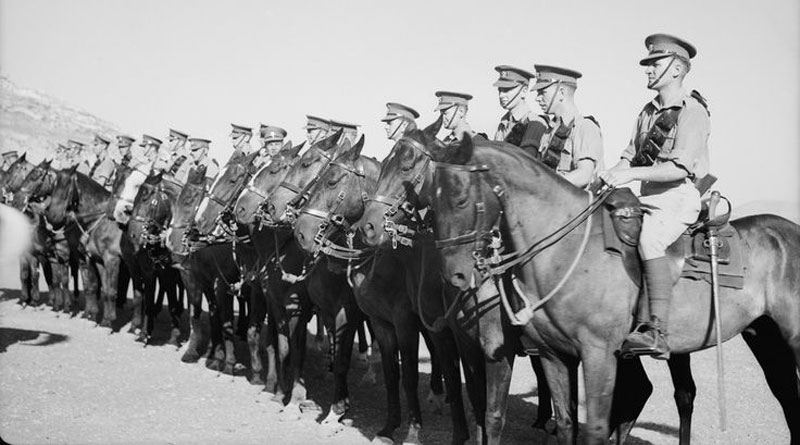 WWI horses in Palestine. © Brooke USA