






























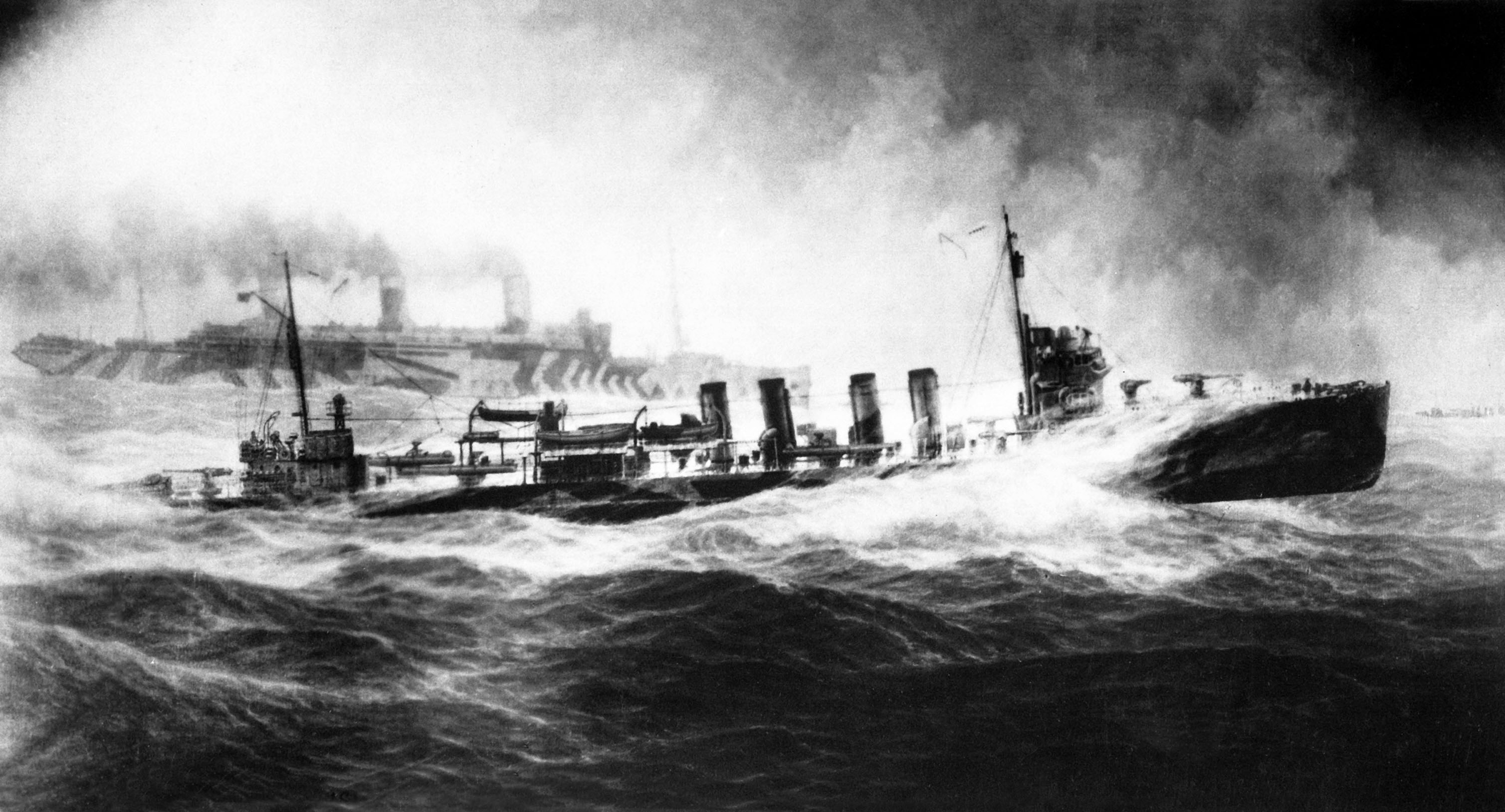
 Painting of a U.S. Navy destroyer on convoy-protection duty during World War I. Dr. Dennis Conrad asserts that "the convoy was what in the end defeated the German submarine offensive."
Four Questions for Dr. Dennis Conrad, Naval History and Heritage Command
"The U.S. Navy was a key contributor to the German decision to end the war."
By Caitlin Hamon
Staff Writer
The role of the U.S. Navy in the Great War is one that is, at times, debated, but mostly forgotten, primarily due to the lack of large-scale naval warfare and victories comparable to the Spanish-American War and later World War II. However, the Navy did provide crucial functions, including transportation of over 2.5 million soldiers, supplies, service as aircraft carriers, and more. Dr. Dennis Conrad, Historian at the the Naval History and Heritage Command, visited the Centennial Commission on Friday, December 1, 2017, and gave a presentation on the various operations performed by the U.S.Navy throughout World War I. Dr. Conrad holds a P.h.D from Duke University in history and has done extensive work for the NHHC researching and documenting Navy history from the American Revolutionary War up to the Spanish American War. He is currently working on a biography of Josephus Daniels, Secretary of the Navy during World War I. We asked him a few questions following up on his presentation to the staff
How did you come to grow such rich and deep interest in WW1 Naval history?
 Dr. Dennis ConradI joined the Navy History and Heritage Command (although then it was called the Naval Historical Center) in 2001. I did not have any background in naval history. I had been editor and project director of the Papers of General Nathanael Greene. However I did have expertise doing documentary history and the NHC was in the midst of a documentary project on the American Revolution called Naval Documents of the American Revolution so they hired me to work on that project, which I did.
Early on, however, I realized that the centennial of WWI was fast approaching and that the NHC/NHHC did not have anyone who was an expert in that war so I began work on a monograph on Secretary of the Navy Josephus Daniels, who was SecNav during WWI, with the idea that I would learn about the war so there would be someone on staff that could discuss the Navy's role in that war intelligently. I have also done work on the War of 1812 and the Spanish-American War so now I truly do have a strong background on the early U.S. Navy.
What were the top 5 innovations developed from the war that impacted naval power in the interwar years?
- Airplanes--they went from the Wright Brothers to a plane that could fly across the Atlantic.
- The aircraft carrier, which became the cornerstone of the US Navy in WWII.
- Development of the U-boat/Submarine--the American victory in WWII was primarily the success of the USN submarines in a guerre de course against the Japanese merchant marine.
- ASW developments--destroyers, depth charges, and particularly sonar, which was in its early stages in WWI.
- Development of the Naval Consulting Board that morphed into the Navy Research Lab, which has become the cornerstone of the Navy's R & D.
In your presentation to the WW1CC group, you mentioned that the CNO wanted the USN to go on the offensive during the war. What were some of the operations conducted by the USN in that regard?
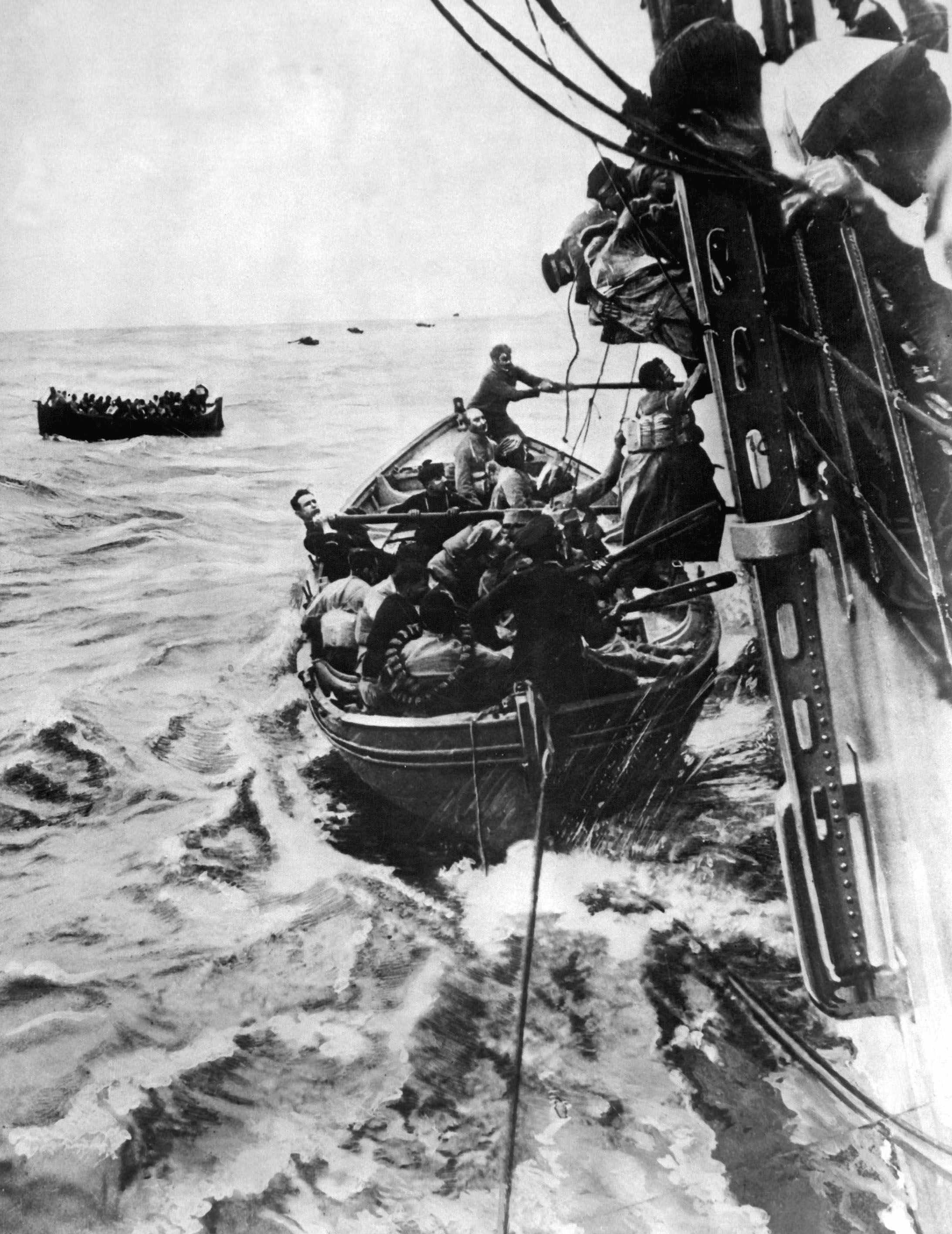 Picking up survivors from a World War I ship-sinking Obviously, the German fleet was confined in the North Sea and was not a threat. The threat was the submarine campaign. The U.S. discussed the possibility of attacking the German U-boat bases, but decided that was not feasible.
The Northern Mine barrage--a line of undersea mines stretching from Scotland to Norway was the U.S.'s attempt to go on the offensive against the German U-boat. Because the war ended just as the mine barrage was completed, whether it would have succeeded or not is a point of debate. Naval leaders did not see convoying as offensive but defensive in nature (although some officers, notably William S. Sims argued otherwise). Even the British would assign their destroyers to patrol areas hoping to find and attack submarines. Despite that viewpoint, the convoy was what in the end defeated the German submarine offensive.
You also mentioned how USN efforts in the War are often considered a failure. Can you explain why this is?
They are considered a failure in comparison to the Spanish-American War (which featured two American victories against Spanish fleets) and WWII and the War in the Pacific, which was a Navy war. Therefore, what happened in WWI pales by comparison. However, I argued that the role of the USN was key to the victory because they were able to get the AEF to France without loss despite German attempts to attack American transports and in turn, I believe, the presence of the AEF in growing numbers convinced the German high command after the failure of their 1918 offensive, that Germany could not win the war and therefore they surrendered.
The U.S. Navy (and Army) planned to make 1919 the key year and were building up their strength in anticipation that 1919 would be when American power came to the fore and would overwhelm the Germans. That did not happen because the Germans surrendered in 1918 and I would argue that the U.S. Navy was a key contributor to the German decision to end the war so I do not consider the USN to have "failed" but merely that because it did not win any major naval victories like Manila Bay, Santiago de Cuba, Midway, or the Battle of the Coral Sea, for example, it is a "forgotten" war for the USN.
Caitlin Hamon is a volunteer with the U.S. World War One Centennial Commission.
 Dr. Conrad, and WW1CC Interns and volunteers, after his recent briefing on U.S. Navy efforts during World War I.
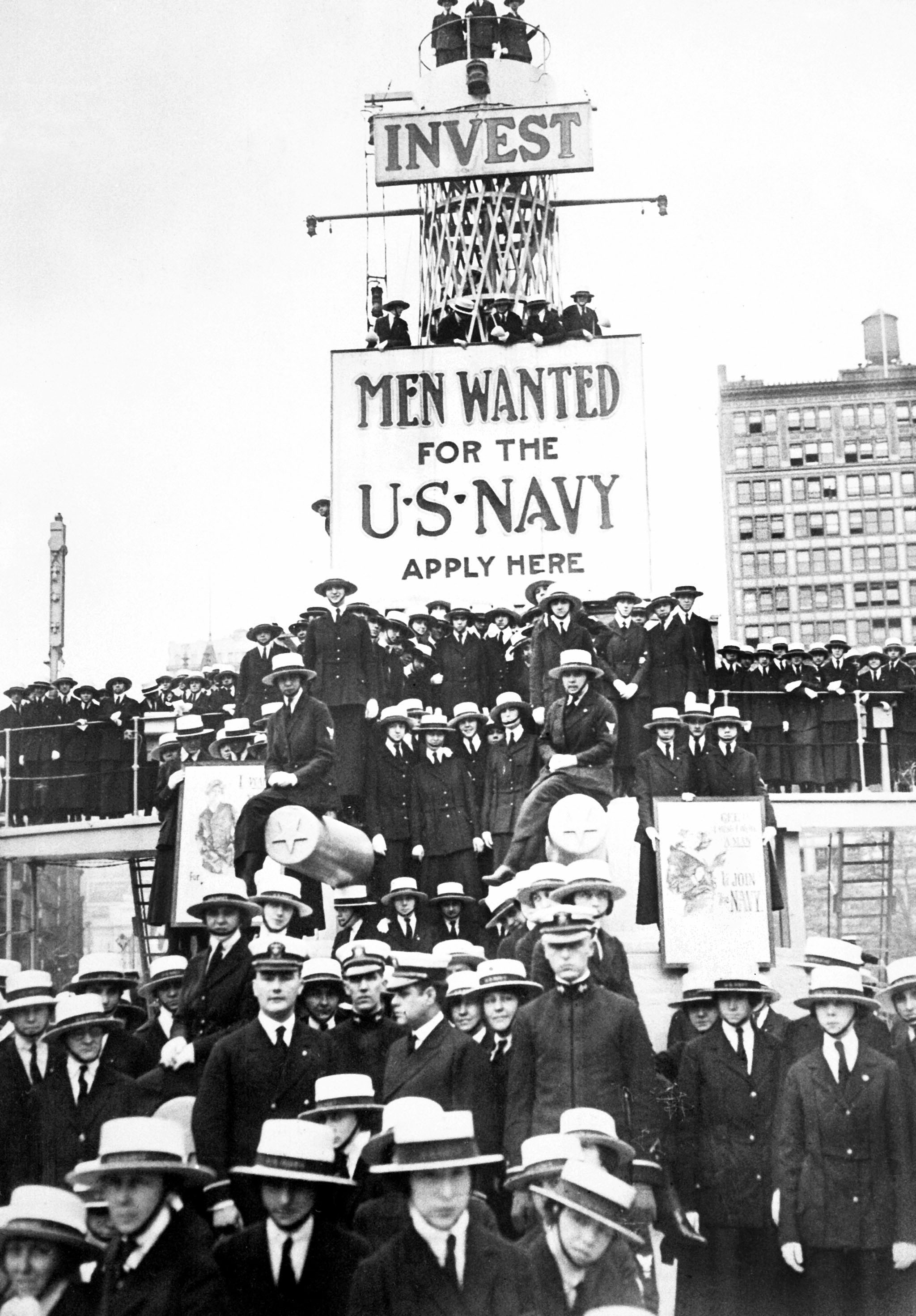 U.S. Navy recruiting effort at wooden mock-up USS Recruit in New York City's Union Square.
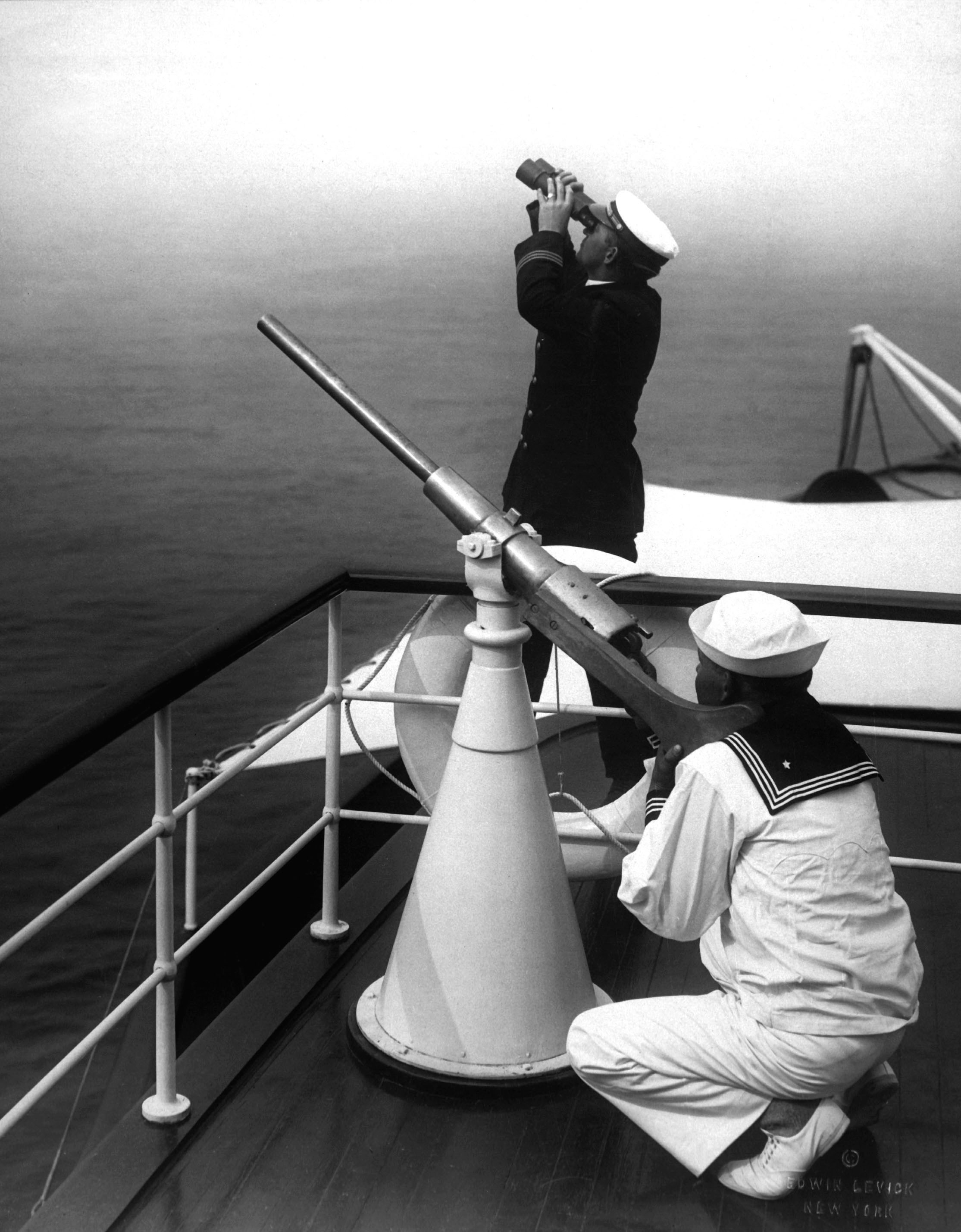 Shipboard anti-aircraft practice during WWI.