

































'Over Here,' Athletes Gave to World War I Effort
By Ron Pesch
via the Michigan High School Athletic Association Second Half web site
In a nation at war, the needs of many outweigh the desires of a few.
Among the many noble sacrifices for the greater good was Michigan’s spring high school sports season of 1918.
The United States’ entry into “The Great War” (today commonly known as World War I) came on April 6, 1917, 2½ years after the war had begun. First elected President of the United States in 1912, Woodrow Wilson earned re-election in 1916 under a platform to keep the U.S. out of the war in Europe. The sinking of the British passenger ships Arabic and Lusitania in 1915 caused the death of 131 America citizens, but did not invoke entry into the conflict. However, continued aggressive German actions forced a reversal in policy.
 “The present German submarine warfare against commerce is a warfare against mankind,” stated Wilson in an April 2 special session of Congress, in requesting action to enter the war.
A huge baseball fan, President Wilson recognized the value of entertainment and athletics during a time of crisis. Major league baseball, America’s pastime, completed a full schedule in 1917. A former president at Princeton University, on May 21, 1917, Wilson addressed the value of school athletics in a letter to the New York Evening Post.
“I would be sincerely sorry to see the men and boys in our colleges and schools give up their athletic sports and I hope most sincerely that the normal courses of college sports will be continued so far as possible, not only to afford a diversion to the American people in the days to come when we shall no doubt have our share of mental depression, but as a real contribution to the national defense. Our young men must be made physically fit in order that later they may take the place of those who are now of military age and exhibit the vigor and alertness which we are proud to believe to be characteristic of our young men.”
Despite the highest of hopes, the requirements and realities of war deeply impacted life in the U.S. soon after.
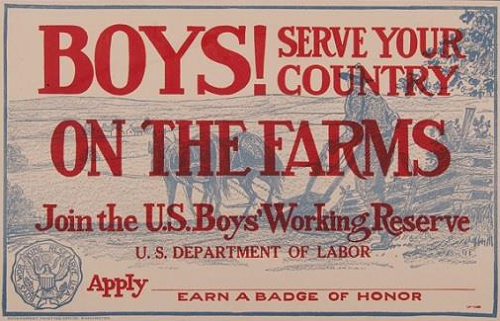
In February of 1918, a proposal was circulated by Dr. John Remsen Bishop, principal of Detroit Eastern High School and president of the Michigan Interscholastic Athletic Association, to abolish spring athletics at Michigan high schools. Due to a labor shortage brought on by the war, the states, including Michigan, needed help on farms, harvesting crops from spring until late fall. The action might also affect the football season of 1918.
The Boys’ Working Reserve, a branch of the U.S. Department of Labor, was organized in the spring of 1917 and designed to tap into an underutilized resource to help address that labor deficiency. “Its object was the organization of the boy-power of the nation for work on the farms during the school vacation months.”
While the idea was popular among schools around Detroit, due to the lack of public commentary from outstate school administration, it was expected that the proposal would meet at least some opposition when the M.I.A.A. gathered on Thursday, March 28 in Ann Arbor during a meeting of the state’s Schoolmasters Club.
Read the entire article on the MHSAA Second Half web site here:
External Web Site Notice: This page contains information directly presented from an external source. The terms and conditions of this page may not be the same as those of this website. Click here to read the full disclaimer notice for external web sites. Thank you.