



































Sniping From Below: Periscope Rifles in World War I
By Tom Laemlein
via the American Rifleman web site
World War I saw the widespread introduction of many, what we would call “modern” arms, including the aircraft, the machine gun, the armored vehicle, the submarine and even poison gas. When you drill down a little farther, there are several highly specialized arms used in the “Great War” that were specific to the conflict.
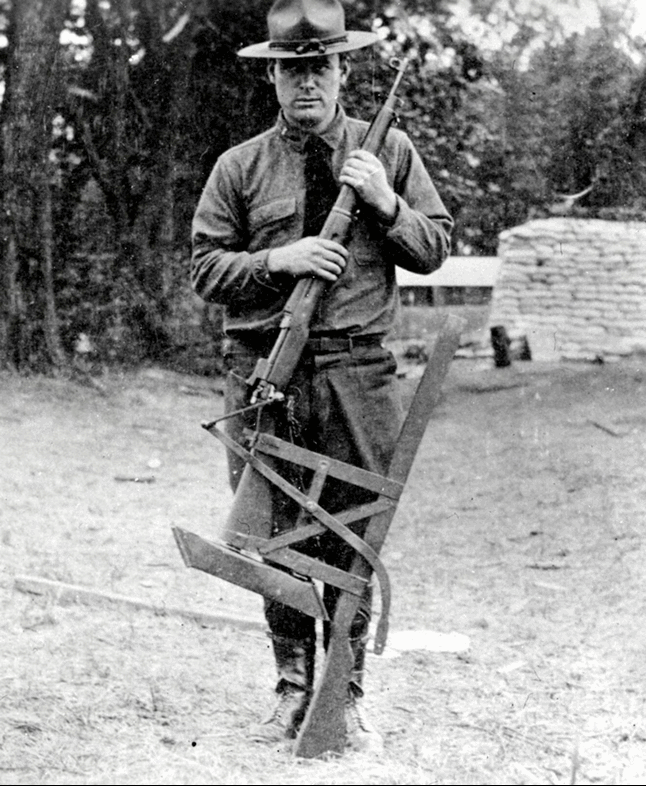 Periscope rifle using the U.S. M1917 rifle.One of these was the periscope rifle. Born in the battle of the trenches, the periscope rifle was a specialized tool for the deadly cat-and-mouse game of Great War snipers. The basic concept was to give the marksman the ability to aim and fire from the comparative safety of below ground—inside his trench position—without having to raise his head above the parapet and expose himself to enemy fire.
A standard rifle was cradled in one of many various style mounts, with a mirrored-periscope set up to provide the shooter with a reasonable approximation of a normal sight picture. A string or wire was attached to the trigger. The rest was the fine art of marksmanship.
“Sniping” was generally considered a dirty business, or a black art at best, on both sides and throughout most of World War I. Regardless of official sentiments, the snipers’ deadly skills were readily cultivated and refined beginning in 1915.
Allied sniper manuals from the Great War are quite detailed (and much of the information in those guides is still relevant today). The development of the periscope rifle was simply in keeping with the needs of the troops engaged in trench warfare, and periscope-sighted rifles could be found in service with the British, French, Belgian, Russian and German armies.
Read the entire article on the American Rifleman web site.
External Web Site Notice: This page contains information directly presented from an external source. The terms and conditions of this page may not be the same as those of this website. Click here to read the full disclaimer notice for external web sites. Thank you.