


































Four Questions for Ed Nef and Doug Hartley, creators of the An American Martyr movie
"It was a sad but poignant tale."
By Chris Isleib
Director of Public Affairs, United States World War One Centennial Commission
Lifelong friends Ed Nef and Doug Hartley, are both 84 years young, and they recently undertook a remarkable project -- to create a documentary film about Doug's uncle, Charles Fletcher Hartley. One hundred years ago, Charles Fletcher Hartley was an American living overseas, who left a comfortable life in order to join the British Army. He served in the trenches as an infantry officer with the famous Coldstream Guards. The film, An American Martyr, is a remarkable finished project. We caught up with Ed and Doug to find out more about their movie.
You read the letter from you uncle to his family about joining the Coldstream Guards. Is there any indication of why he felt so strongly about joining this particular fight, this particular war? Did he say anything about his feelings toward his American roots or national-identity? Why did he go on this journey? What comments did he make about it, in the letters, before he was killed?
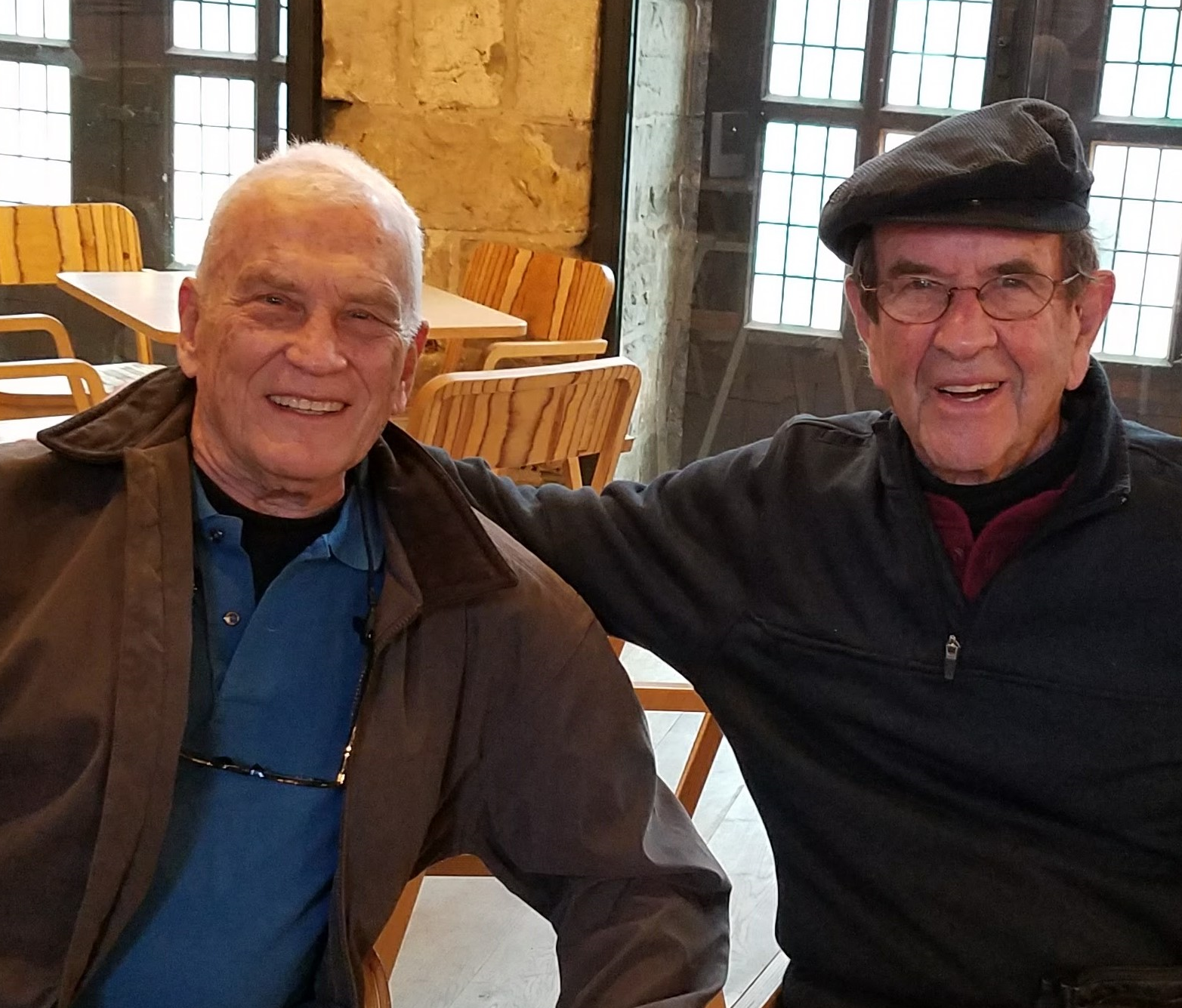 Ed Nef (left) and Doug Hartley together in Belgium.Charles left the US at age 16 in 1913 before the outbreak in 1914. In the US he attended local elementary schools and later high school when his father decided to bring the family' to England.
Like many 1000s of Americans who fought in that war Charles parentage was mixed. A native born American, he had a British father and an American born mother.
He was undoubtedly patriotic but it would be hard to describe his motivations. He wanted to fight and in 1916 the US was neutral. However, many of his friends joined up, and he pleaded with his father to enlist. Hatred of the Hun? Feeling that freedoms were threatened? Youthful ardor? Or a mix of all the above?
In October 1917 before he left for Cambrai, Charles was slated to help train US army machine gunners before the massive US troop movements into France, but was killed before he could fulfill this duty.
Tell us about the making of the film. You went to remarkable places, sites where the WWI battles took place. What did the experience teach you about what happened there 100 years ago? What did the geography look like, what challenges did the armies face?
Doug and Ed, both 84 years old, are Harvard classmates (’55) and fellow former Foreign Service Officers. William Flanders, also 84, Yale '55, is Narrator for our film. He is Ed's classmate at Phillips Academy, Andover. One day Doug was telling Ed about his uncle who was killed in WWI. It was a sad but poignant tale. Ed, who had retired from the Government and had gone into the production of documentaries, was taken by the story. He suggested it could make an interesting film. They decided then and there to team up for this purpose.
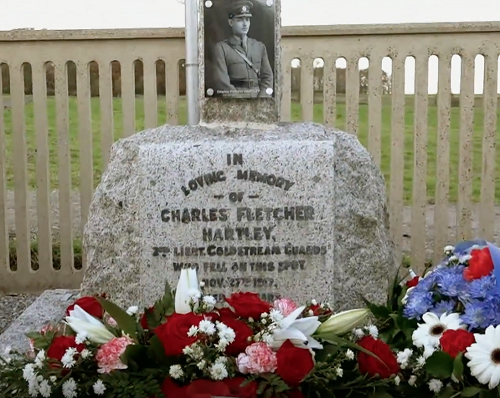 They visited many battlegrounds and many cemeteries in Belgium and France. This was awesome and so tragic, seeing so many countless tombstones, row upon row, often with no names, so many marks of sorrow left alongside the tombstones by grieving visitors. Since our hero had joined the Coldstream Guards, Ed and Doug also went to the UK for an interview there and to visit their headquarters.
The French and Belgian geography was remarkably pastoral and idyllic; small rural farms, quiet streets, peaceful villages. The people were uniformly hospitable, welcoming and most graciously appreciative of the role Americans played in bringing peace and freedom to their land during and after both world wars. Many symbolic poppy fields were constant reminders of the war.
It was hard to envisage the incredible brutality of warfare ravaging the land, and it made one aware of the artificiality of warfare. The only thing which could destroy this idyllic scene was the intrusion of man-made instruments of war: tanks lumbering through the fields and woods; troops rushing headlong into huge fusillades, bombardments wreaking destruction, and what for? Hours and hours of battle, troops surging forward and backward, all eventually ending up not far from where they began. Thousands of brave men dead or wounded.
Enormous challenges were faced: still rudimentary mechanical designs resulted in the failure of many tanks, which were supposed to be the key to victory; unsanitary conditions in trenches dug deep; underground bunkers where air was stale and unhealthy; horses unequal to the tasks demanded of them.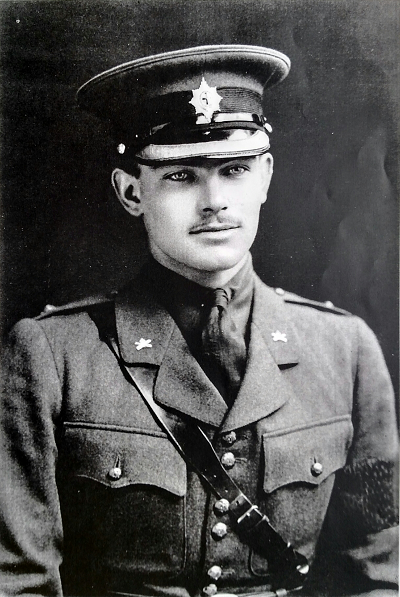 Lt Charles Fletcher Hartley in Coldstream Guards uniform
You were there, in France, at these sites during commemoration events. How are these BEF soldiers remembered in current day? What did the local people say, what impressions and memories did they share with you? What struck you, or stayed with you about this journey?
The European populace remains deeply patriotic about its world wars; it is hard to forget how the wars intruded on ALL the population, and how fortunate we in the US were never to have to face such domestic destruction and mayhem.
Commemorative events such as we filmed and witnessed were obviously deeply felt. This included the very evident sincerity of the expressions of gratitude to the US for having entered both Wars and having been instrumental in the defeat of the enemy forces. This includes not only the older generation which may have actual memories of warfare, even the younger population displayed much knowledge and understanding.
It was impressive to note how even the local Mayor made a point of referencing the importance of very young people taking part in commemorative events.
Tell us about the future for the film. What are your next steps? How can people see it?
We plan to make the film available to educational, historical and social institutions, enter film festivals and any other venues for public screening. We will approach embassies and news media, the broadcast and TV industries (e.g. PBS, NPR, etc) for further dissemination.
We are a non-profit 501-C-3 organization. We hope our film will be a part of the USWWICC events to give the film publicity and to promote the Commission's mandate.
Information on An American Martyr can be found here:
Blog`: https://ednef.wordpress.com
Trailer (2 minutes): https://youtu.be/NWnCcTUFzV8
Film (22 minutes): https://youtu.be/94K7JkMepFU