

































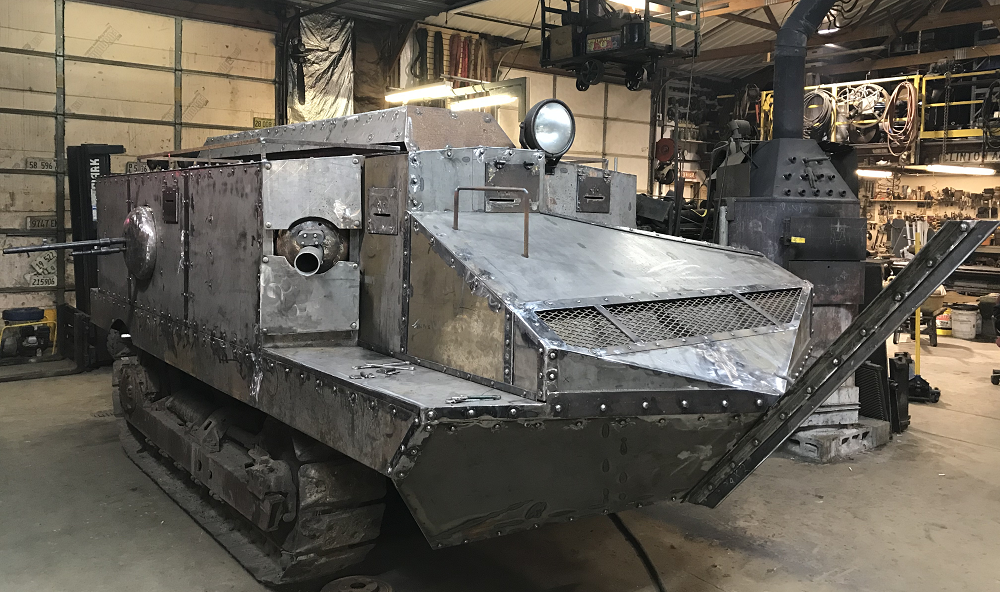
 The tank in the garage: "It is a massive, aggressive looking machine ready to cross no-man’s-land."
Five Questions for Dr. Doug Strong
Building a World War I tank in the garage
By Chris Isleib
Director of Public Affairs, United States World War One Centennial Commission
Two of our new friends - Dr. Doug Strong and George Reinke -- have a pretty unique weekend project. They are building a WWI tank in their garage. Further, we should actually say that they are building another WWI tank in their garage -- they completed another one, earlier last year. We wanted to hear more about these interesting people, and why they are doing what they do, so our Intern Nicole Renna asked them for an interview. Doug Strong took some moments to give us an update.
What inspired this project of creating a WWI Tank and how did you first get involved in it?
I’ve always been interested in the Great War. My grandfather was a U.S. Veteran of the war. When I realized there were guys interested in reenacting WWI I was very interested and as I got to know the guys I realized they liked to build things too I was totally hooked. Sam Johnson and I got the idea to build a tank from Dave Fornell who is the commander of our WWI re-enactment unit. We knew we hand to give it a try so we gathered a team of like minded individuals who wanted to help.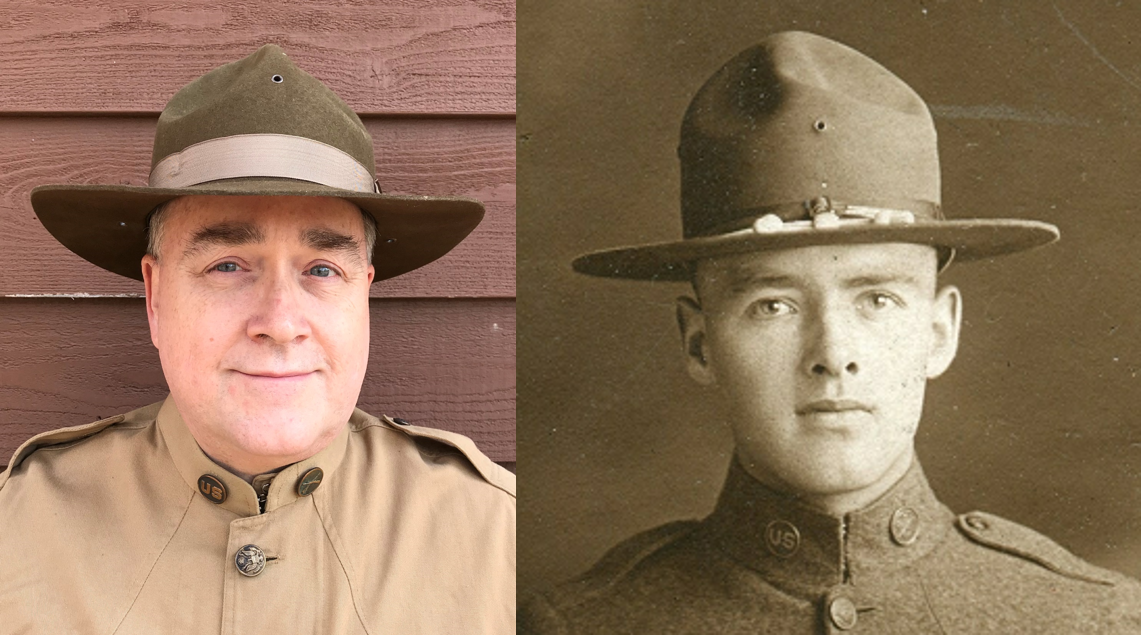 Dr. Doug Strong (left) and his grandfather
What was the research, planning, and building processes like for this project and how much time overall do you anticipate it taking to complete? How have you and members of your team contributed so far and what left is there to do?
We began by acquiring every photo and piece of information we could find about the Schneider tank. Through a friend Andrew Woods at the Cantigny Museum we were able to make a connection to Stephen J. Zaloga who literally wrote the book on these sorts of tanks. He provided us with schematics and measurements for our build.
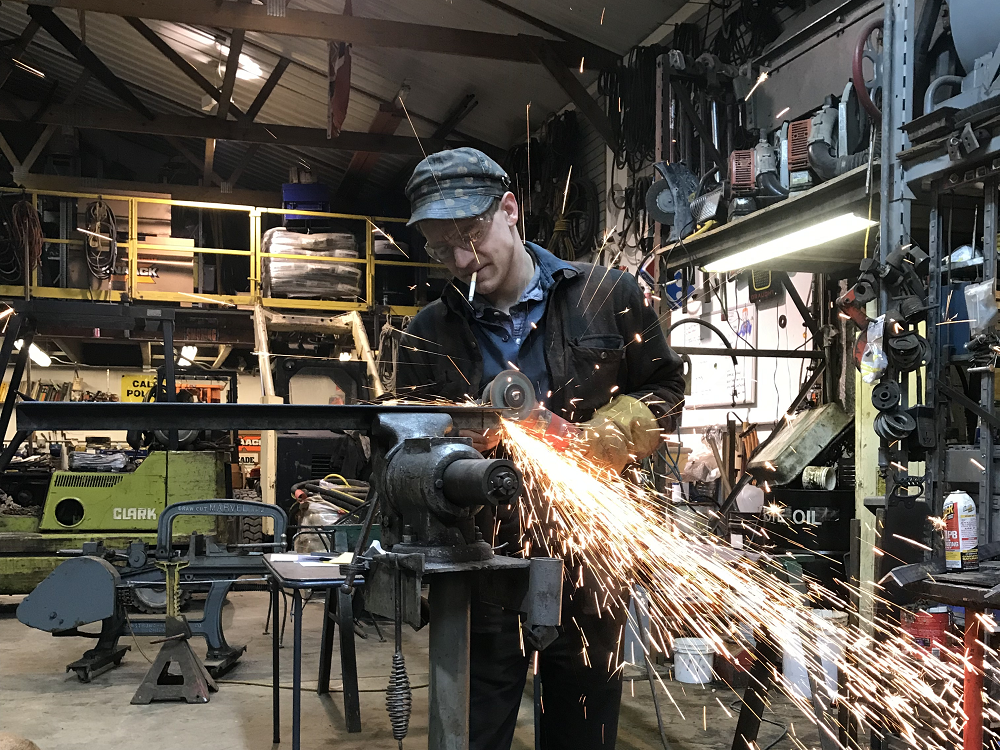
Sam and I work together well we have been in the shop every day after work for the last month welding, cutting, fitting and grinding the steel to shape. We anticipate the entire build taking 30 days from start to finish. We are on schedule and anticipate exterior completion within 48 hours.
What has been the most exciting or interesting part of the project so far and why?
About two weeks ago, when we completed the prow of the tank the whole thing took on a sense of reality. By that time it had all of the shape of the finished tank. A few days later we removed a piece of angle iron we had been using as a placeholder for the barbed wire cutting blade. When we installed the new blade the tank really came to life. It is a massive, aggressive looking machine ready to cross no-man’s-land.
Have you ever worked on a project of this magnitude before? How is this project similar and different to previous projects you may have worked on? What unique challenges or difficulties have you faced?
Who’s is our third large scale build but by far the most ambitious. Our first major build was a WWI French Renault FT-17 tank. This was a full size wood and steel stationary model. People were impressed and encouraged us to do more. Our next build was a 7/8 scale WWI German Eindecker fighter plane. This was another crowd favorite. This year for the Centennial we knew we had to go full size, all steel and drivable.
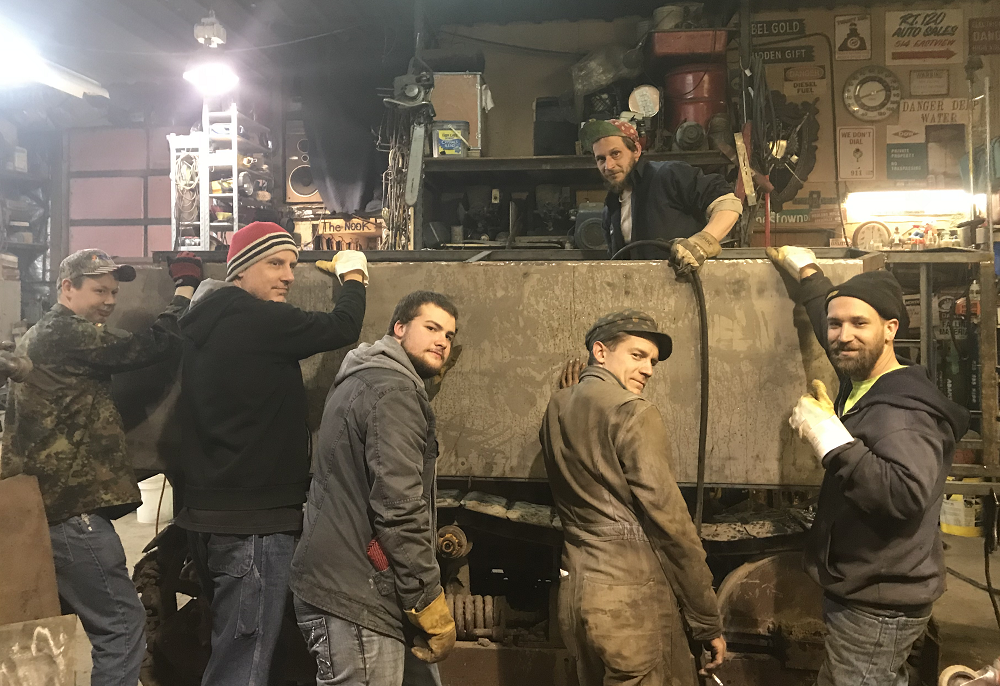
The biggest challenge for all of these projects is always money. These are expensive projects. That is why we set up our Go Fund Me campaign. (https://www.gofundme.com/ft-17). We are working on a shoestring budget and have to rely on the kindness of our friends and family to get things done. Sam’s father, James Johnson runs JPJ Construction. He has let us scavenge parts and materials from his workshop and has generously given us a place to work in the dead of winter.
What will you do with the tank when it is completed? What impact do you expect this project to have on WWI history and commemorative efforts?
Once we are completed we will be using the tank in Centennial celebrations such as parades and events as well as Great War reenactments such as the one held at Rockford’s Midway Village this April. (http://www.midwayvillage.com/the-great-war-midway.html)
We hope our tank will add a sense of scale and dimension to people’s understanding of the First World War. We believe in the importance of honoring the millions who served and sacrificed in the Great War and hope that their deeds will be remembered for what they contributed to the formation modern society.
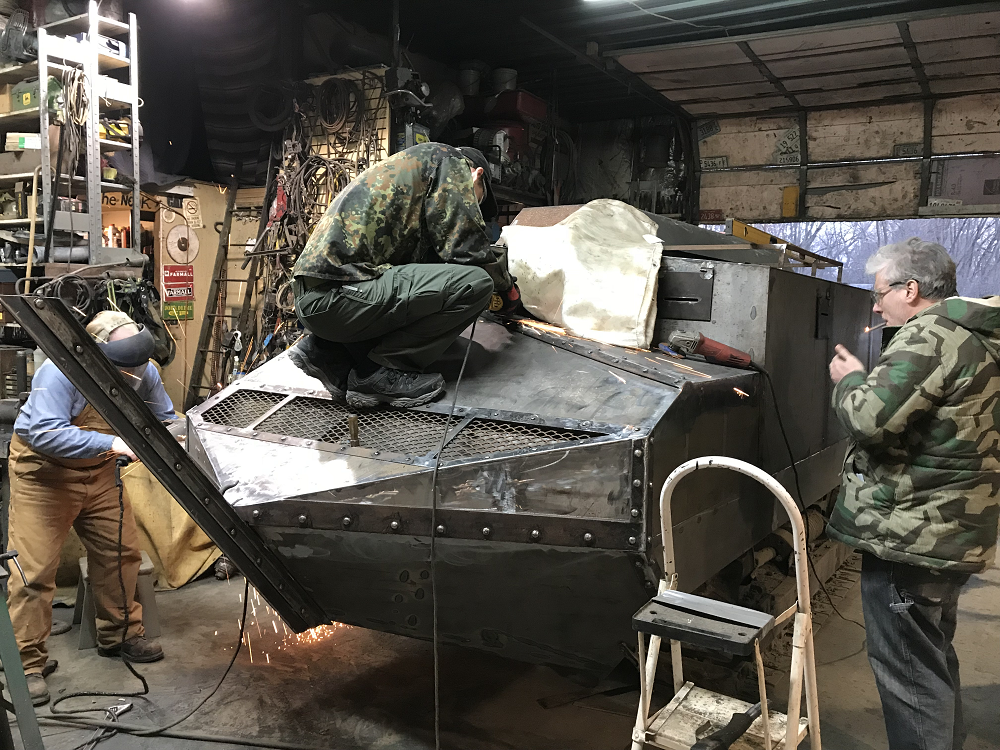 Above and below: The tank team members hard at work building the replica World War I Schneider tank in the JPL Construction garage.