






























How World War I Changed Literature
By Amanda Onion
via the History.com web site
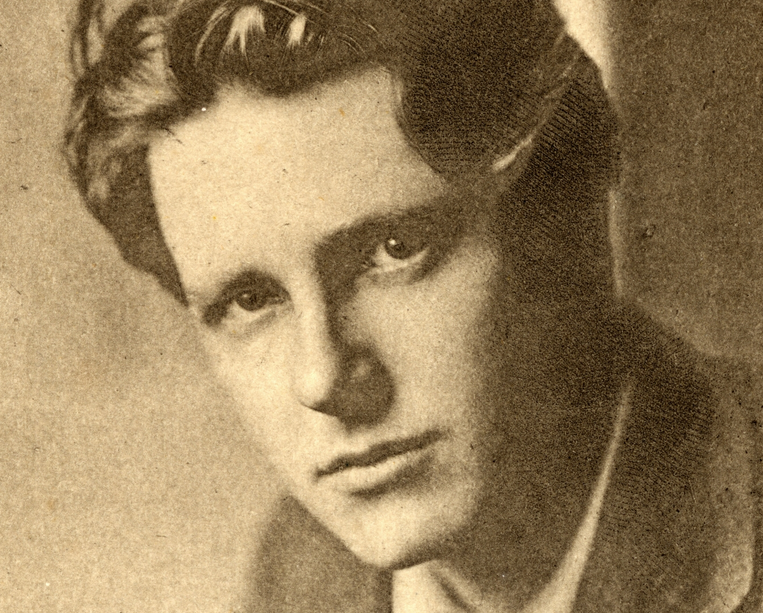 Rupert Brooke. (Credit: Universal History Archive/Getty Images)World War I, the war that was originally expected to be “over by Christmas,” dragged on for four years with a grim brutality brought on by the dawn of trench warfare and advanced weapons, including chemical weapons. The horrors of that conflict altered the world for decades – and writers reflected that shifted outlook in their work. As Virginia Woolf would later write, “Then suddenly, like a chasm in a smooth road, the war came.”
Early works were romantic sonnets of war and death.
Among the first to document the “chasm” of the war were soldiers themselves. At first, idealism persisted as leaders glorified young soldiers marching off for the good of the country.
English poet Rupert Brooke, after enlisting in Britain’s Royal Navy, wrote a series of patriotic sonnets, including “The Soldier,” which read:
If I should die, think only this of me:
That there’s some corner of a foreign field
That is for ever England.
Brooke, after being deployed in the Allied invasion of Gallipoli, would die of blood poisoning in 1915.
The same year, Canadian doctor Lieutenant-Colonel John McCrae, upon seeing how red poppies grew in the fields that had been ravaged by bombs and littered with bodies, wrote “In Flanders Fields.” The poem, memorializing the death of his friend and fellow soldier, would later be used by Allied militaries to recruit soldiers and raise money in selling war bonds:
In Flanders fields the poppies blow
Between the crosses, row on row,
That mark our place, and in the sky,
The larks, still bravely singing, fly,
Scarce heard amid the guns below.
The tone of literature shifted after years of grueling WWI combat.
While both Brooke’s and McCrae’s works lent patriotic tones to the sacrifices of war early in the conflict, as time wore on, the war’s relentless horrors spawned darker reflections. Some, like English poet Wilfred Owen, saw it their duty to reflect the grim reality of the war in their work.
As Owen would write, “All a poet today can do is warn. That is why the true poet must be truthful.” In “Anthem for the Doomed Youth,” Owen describes soldiers who “die as cattle” and the “monstrous anger of the guns.”
Read the entire article on the History.com web site here:
External Web Site Notice: This page contains information directly presented from an external source. The terms and conditions of this page may not be the same as those of this website. Click here to read the full disclaimer notice for external web sites. Thank you.