
































Who was Alan Seeger, and why did President Macron mention him in his speech before Congress?
By Nicole Renna
Staff Writer, United States World War One Centennial Commission
Note: During his recent visit to the United States, France's President Emmanuel Macron underlined America's centuries-long history of special partnership, including several specific speech mentions related to World War I. One of the most significant World War I mentions was during his speech before the Joint Session of Congress, at the U.S. Capitol. There, President Macron told the story of Alan Seeger, an American poet who is venerated in France, to include a memorial statue in Paris. Who was Alan Seeger, and why is he such a powerful symbol? We decided to find out, and our Intern Nicole Renna has the story. -- Chris Isleib, Director of Public Affairs, United States World War One Centennial Commission
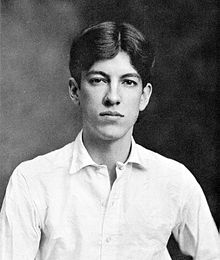 Alan SeegerAlan Seeger (22 June 1888 – 4 July 1916), uncle of folk singer Pete Seeger and classmate of T.S. Eliot at Harvard, was an American poet who served in the French Foreign Legion in World War I and died during the Battle of the Somme. Notably, he was quoted by French president Macron in his speech at GWU this April 25, 2018. He is represented by a statue on the monument in the Place des États-Unis, Paris, honoring fallen Americans who fought with France during the Great war, although many Americans might not be aware of his commendable contribution to the American and Allied war effort.
Born in New York City, Seeger’s family moved to Staten Island when he was one, and lived there until he was ten. In 1900, his family moved to Mexico for two years, an experience which influenced the imagery in much of his poetry. At Harvard, he edited and wrote for the Harvard Monthly. After graduating in 1910, he spent two years in Greenwich Village, living as a young bohemian and writing poetry. After moving to the Latin Quarter of Paris to continue this lifestyle, on August 24 1914 Seeger joined the French Foreign Legion so that he could fight for the Allies in WWI. On July 4, 1916, while cheering on his fellow soldiers in a successful charge at Belloy-en-Santerre, he died after several hits by machine gun fire.
Seeger's poetry was published posthumously by Charles Scribner's Sons in December 1916, in a collection of his works entitled Poems, but was objectively unsuccessful, likely due to its idealism and language, which, post-WWI fell largely out of literary fashion. One of his poems, however, called I Have a Rendezvous with Death, which he is best known for, was both a favorite of President John F. Kennedy and the poem which Macron quoted this April in DC. He is memorialized for his bravery and literary vision through memorials like that in Place des États-Unis, famous biographies such like that by Author Chris Dickon, and the naming of a liberty ship “SS Alan Seeger” by the California Shipbuilding Corp. A link to his famous poem can be followed here: https://www.poets.org/poetsorg/poem/i-have-rendezvous-death
Nicole Renna is a Spring 2018 Intern with the U.S. World War One Centennial Commission.
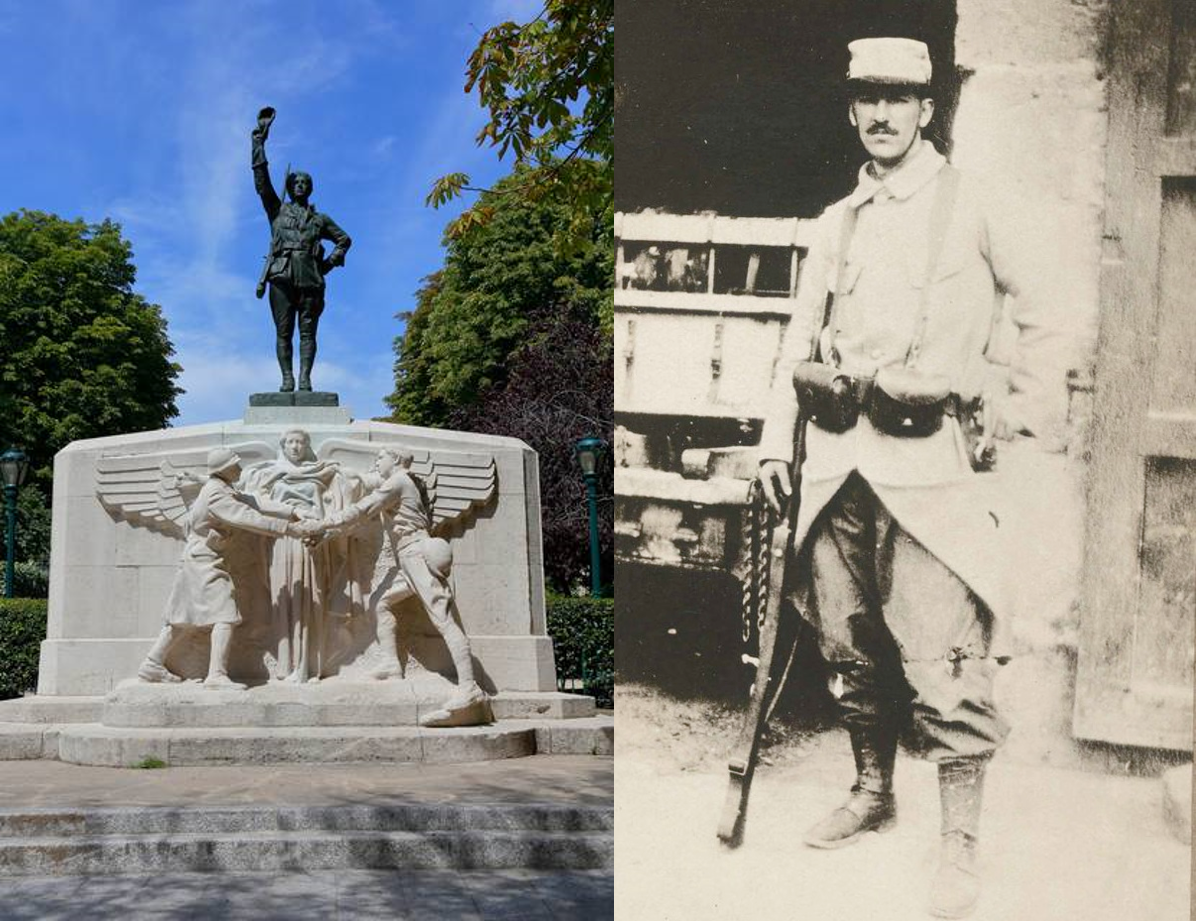 Seeger as a soldier in the French Army during World War I (right). Memorial in Paris honoring those fallen Americans who volunteered for France during World War I. Alan Seeger is widely regarded as the inspiration for the statue figure at the top of the memorial (left).