

































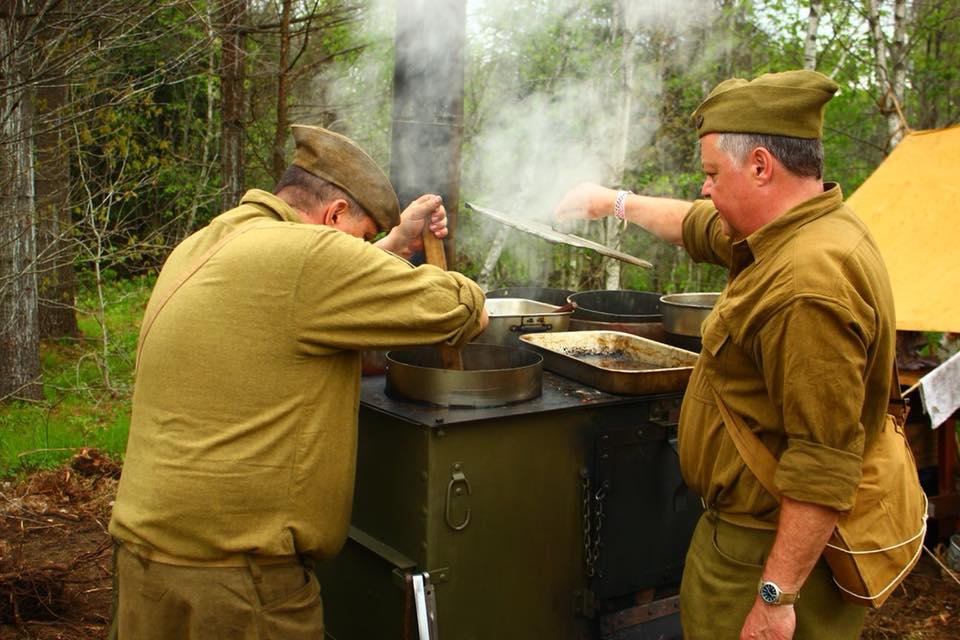
 The finished rolling kitchen replica, being used in the field
An army marches on its stomach, but a rolling kitchen helps
By Joseph Vesper
Staff Writer
Imagine that you are a Doughboy and have just finished a 20 mile march in the rain. You feel frozen, tired and hungry. Thank goodness your company’s rolling field kitchen accompanied you on this long trek and tonight you will be well fed with a warm meal. The rolling kitchens of World War One were capable of feeding over 200 men at a time. The inspiration behind them was to have a fast warm meal ready to fuel the immense amount of calories burned per day while simultaneously boosting morale amongst the troops. In Norwich, Connecticut, Alan Crane, a WWI history enthusiast, re-enactor and manager of the 26th Yankee Division WW1 Living History Group, has created the iconic and well welcomed sight for many a hungry Doughboy. In a brief exchange with Alan Crane, I had the opportunity to ask him about his recently constructed WWI rolling kitchen.
Could you tell us more about the time and effort that was required to build your WWI rolling kitchen? Moreover, what gave you the idea to build this historical item in the first place?
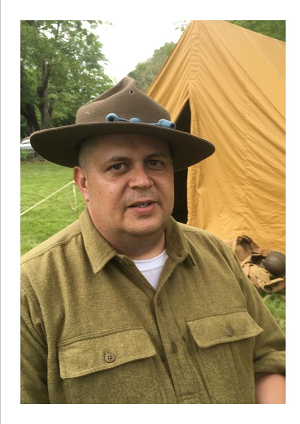 Alan Crane wearing his WWI Yankee Division kitI started building it back in 2004, but the project got put on hold after I got married and had kids. I started back up in earnest in the winter of 2017. I always thought it would be cool to see a WW1 rolling kitchen in operation, so I just decided to make one.
What were some of the most challenging aspects of building the rolling kitchen and how did you overcome those challenges? What is the historical significance of the WWI rolling kitchen?
There is very little documentation on the rolling kitchen's purchased by the Army, and hardly any surviving original examples, so it was a real challenge to replicate the design and construction. I was able to gain access to the only surviving Taylor rolling kitchen in the world, at the Vermont National Guard museum and also found some incredible original photographs digitized by the National Archives which aided me greatly in the project. The rolling kitchen is significant because it was an iconic item familiar to just about every doughboy who went overseas. It was part of the daily fabric of life for the AEF and practically none of them have survived. I thought it was important to bring this part of the American WW1 experience back to life.
What were some of the most exciting and memorable moments while building your rolling kitchen? And if you had to do it all over again, what would you want to do differently?
It was incredibly exciting to light the first fire in the fire box, and see the thing start working exactly like Taylor had designed it to over 100 years ago. I knew I was seeing something come to life that no one else alive today had ever seen before. That was a very memorable moment for me. I don't know I would have done anything differently, maybe try to get some actual metal working tools!
Do you have any future plans regarding the use of your WWI rolling kitchen and what are they? Also, do you have any more future WWI Projects planned and if so what can we expect to see?
I plan on taking the rolling kitchen to a number of WW1 centennial events this year to share and demonstrate its operation for the public. My next project is to either build the limber that the kitchen attached to, or to restore a 1918 Federal 1 1/2 truck that I saved from a scrap yard in Massachusetts.
For more information on the 26th Yankee Division WWI Living History group check-out: https://www.facebook.com/yd102/
For a historic video of a WWI kitchen in action check-out: https://www.youtube.com/watch?v=f7LHHtCL44g
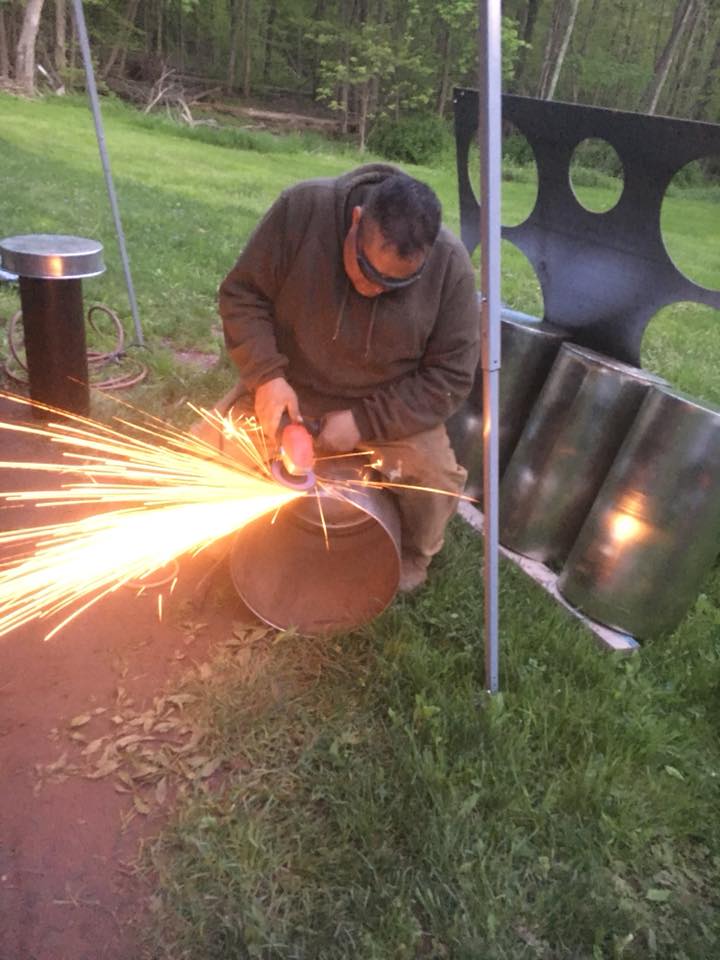 The Rolling Kitchen being built
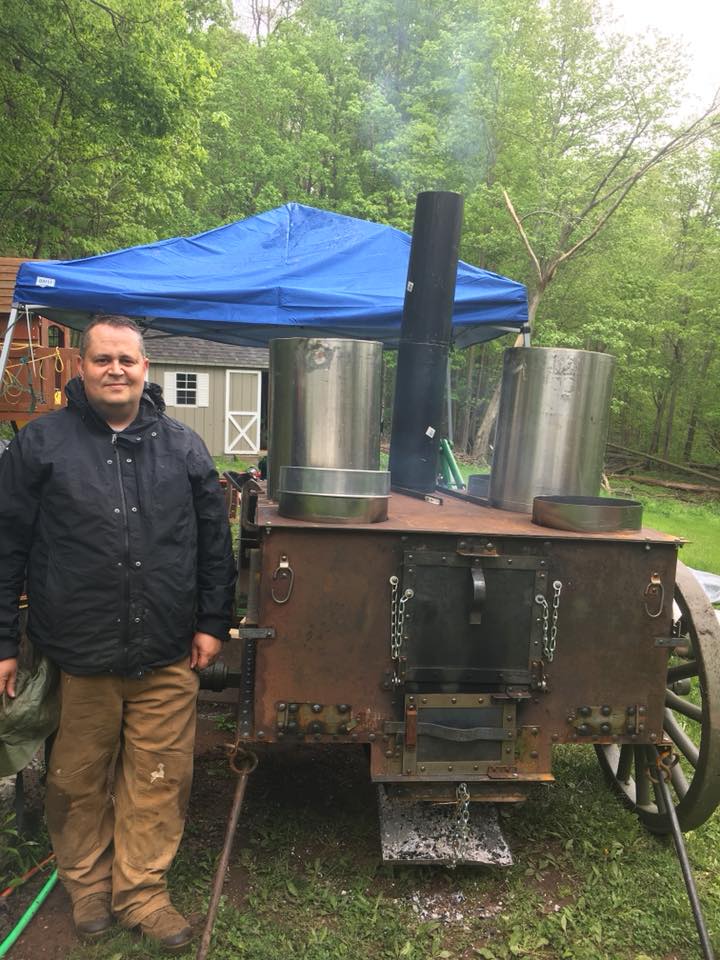 Alan Crane and his rolling kitchen replica.