


































NC & OH highway commemorative gardens honor WWI Centennial
By Will Kaiser
Staff Writer
This Memorial Day Weekend in Columbus, OH, Thursday, May 24, 2018, marked the Ohio Department of Transportation (ODOT) commemoration of the Centennial of the end of World War I. ODOT unveiled its own World War I Red Poppy Remembrance Garden at the Interstate 70 eastbound rest area in Madison County, Ohio.
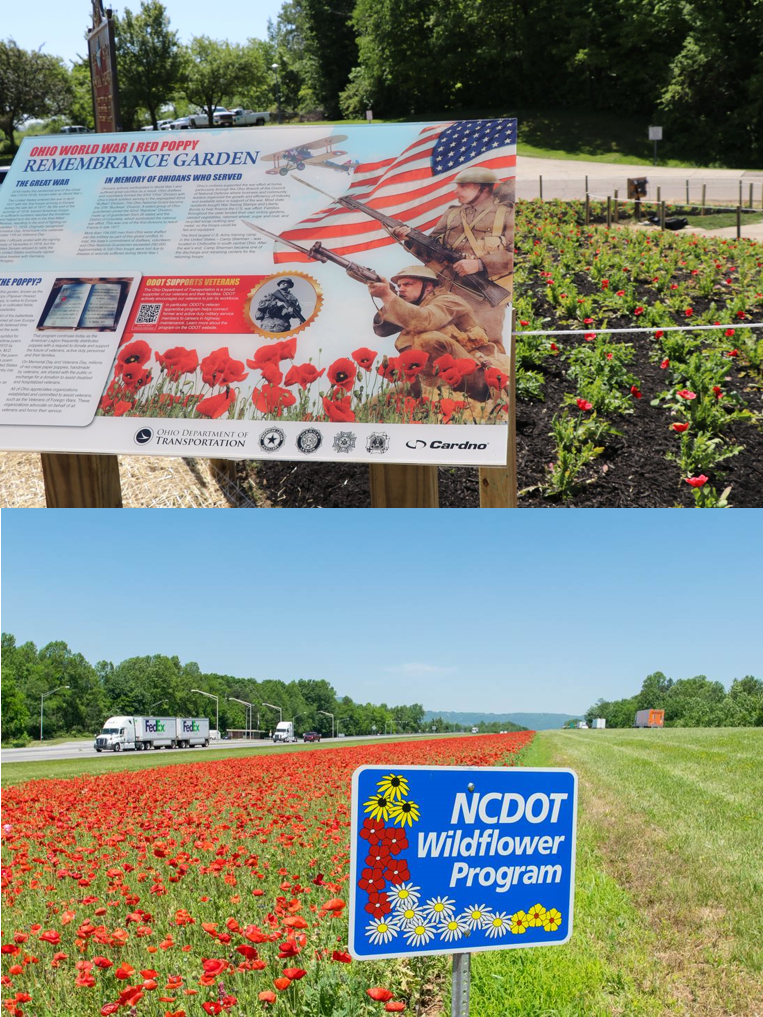 Both the Ohio Department of Transportation (top) and the North Carolina Department of Transportation have used poppies planted along state highways to commemorate the centennial of World War I.The garden honors those who lost their lives in WWI, raises awareness of Ohio’s role in WWI, and enhances commuter’s experience as they travel through Ohio.
“Ohio played a major role in WWI and we owe these brave Ohioans a debt of gratitude,” said ODOT Director Jerry Wray. “This red poppy garden is a beautiful way to honor them and educate travelers about their service to our great country.”
Ohio contributed approximately 263,000 men and women to service, which constituted 5.3% of the nation’s military man power, whether they were national guardsman, volunteers, or draftees. Unfortunately, roughly 6,500 Ohio troops would succumb to battle wounds or disease throughout The Great War.
More than 1,600 full-size red poppies will fill the nearly one-third acre garden. The blooms will be spectacular from May through July, so plan to visit the gardens soon! Check out the Ohio Centennial Celebration of the End of WWI information web page for more details, images, and to request a free packet of red poppy seeds.
ODOT, in cooperation with the American Legion and Veterans of Foreign Wars, is honoring their memory by planting this memorial poppy garden. ODOT actively encourages our veterans to join its workforce. In particular, ODOT's veteran apprentice program helps connect former and active duty military service members to careers in highway maintenance.
Meanwhile in North Carolina -- In addition to the Ohio Blue Star Memorial Gardens, the award-winning wildflowers blooming along North Carolina’s highways also commemorate WWI veterans. This past year, the North Carolina Department of Transportation (NCDOT) Wildflower Program planted 240 acres of poppies in remembrance of those who gave their lives during World War One.
As stated by Roadside Environment Engineer David Harris, “The wildflower program is one of the department’s most popular initiatives (…) Not only are the flowers wonderful to look at, they also help sustain the pollinator population, which is essential to the success of the state’s agriculture community.”
North Carolina’s wildflower program enhances the overall appearance and environmental quality of the state’s highways.
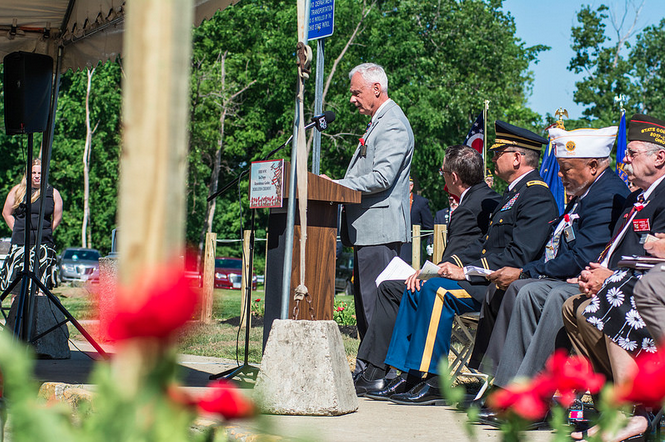 World War One Centennial Commissioner Thomas Moe speaks at Ohio Memorial Highway Dedication CeremonyStarting in 1985, First Lady Dottie Martin was inspired by an article she read in The Wall Street Journal about Texas’ wildflower program. She approached NCDOT about initiating a similar program to beautify the highways of North Carolina. This set the stage for the establishment of the Wildflower Program which is coordinated by the NCDOT Roadside Environmental Unit. To this day, the program has more than 1,500 acres of flower beds across the state.
Click here for the Wildflower Program Homepage.
Click here for a complete album with photos of the winning flowerbeds.
Here is the link for ODOT’s official press release: http://www.dot.state.oh.us/news/Pages/Poppy-Garden-Honors-Ohioans-Who-Served-In-WWI.aspx
Hosted by Bob Kendrick, news anchor for ABC 6 in Columbus, OH. Here is a link to the facebook page:
For additional information and photographs about ODOT’s highway garden program please visit: http://www.dot.state.oh.us/redpoppy/Pages/default.aspx
To view ODOT’s official photographs from the poppy dedication event please visit their online album: https://www.flickr.com/photos/ohiodot/sets/72157667326067737
For more information on Ohio’s World War One experience, please visit: https://www.worldwar1centennial.org/index.php/ohio-in-ww1-home-page.html
The significance behind the poppy as a connection and symbol for World War I arose from the wartime poem, “In Flanders Fields,” written in 1915 by Lieutenant Colonel John McCrae, M.D. (Canadian Army), who composed the poem while serving on the front lines. The poem was reprinted extensively in the United States to build public support of America’s entry into the war on the Allies side. The American Legion adopted the poppy as its official flower on September 27, 1920, and its representation memorializes those who fought and died during World War I.
Will Kaiser is a Summer 2018 Intern with the U.S. World War One Centennial Commission.
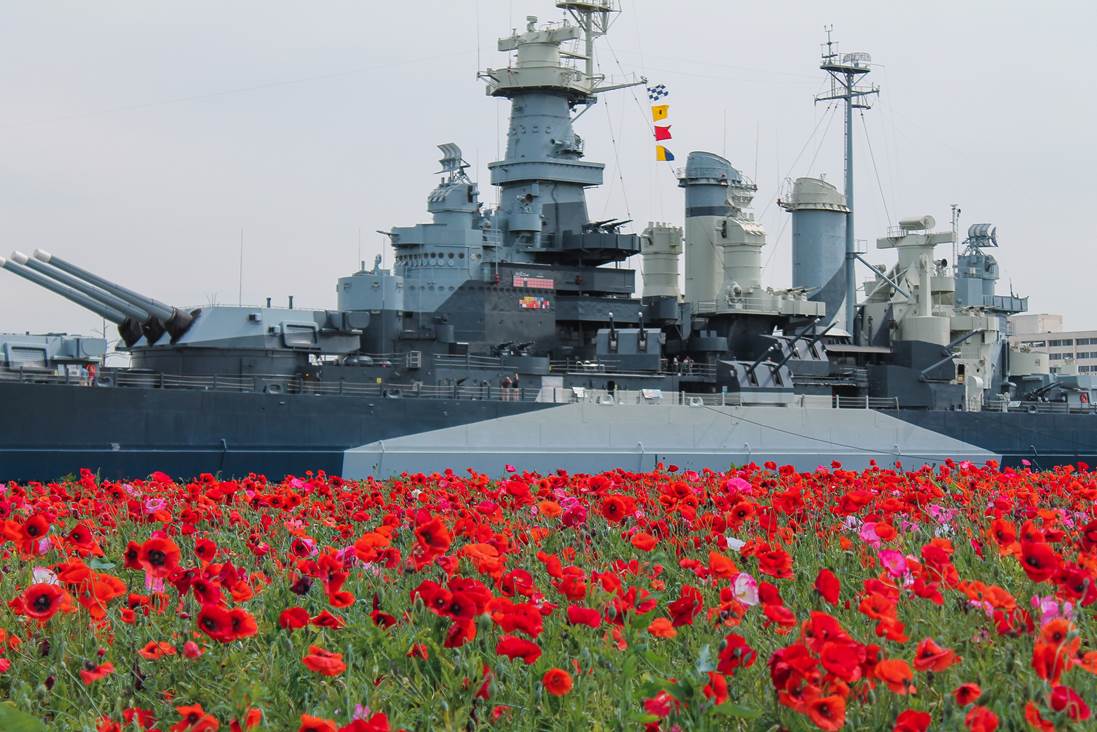 North Carolina DOT Poppies growing next to the USS North Carolina Battleship Museum.