































Battle of Belleau Wood was turning point for US
By Raf Casert
AP, via the Chicago Tribune newspaper web site
It was the spring of 1918, and the German army was making a final push toward Paris. The only thing in their way was a contingent of Allied troops, including untested U.S. forces near the Marne River in northern France.
 Among them: U.S. Army 1st Lt. Gordon Kaemmerling, a precocious and athletic Harvard graduate who had jumped at the opportunity to help the United States leave its shell of isolationism and join the war.
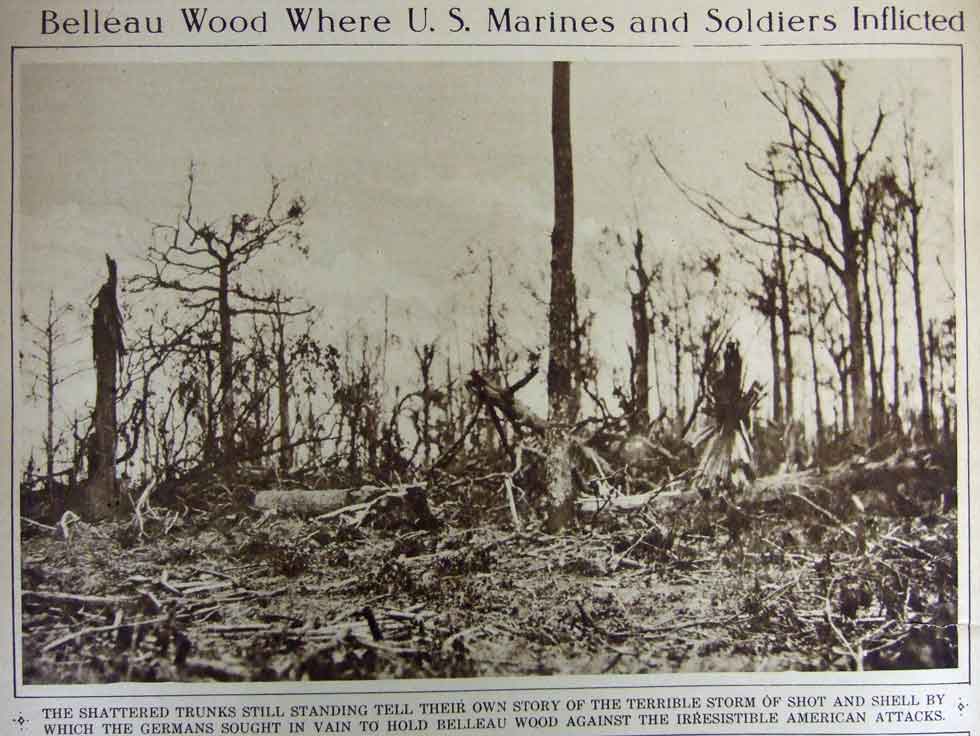
On June 6, 1918, the U.S. forces attacked, storming across the open fields near Belleau Wood. Germans sprayed them with shells and machine-gun fire from a densely forested hill. Without proper artillery cover, the Americans were mowed down easily at first.
In the chaos, the 26-year-old Kaemmerling rushed to help his comrades, and was nearly torn in two by shrapnel and bullets.
The bravery of Kaemmerling and others helped the Americans chase the German forces out of Belleau Wood by the end of the month. The battle became a defining moment in World War I, not just containing the German push along the Western Front but proving the Americans' military mettle for all to see.
Victory bonded the Allies, and that friendship became the cornerstone of global diplomacy for most of the last 100 years.
Read the entire article on the Chicago Tribune web site here:
External Web Site Notice: This page contains information directly presented from an external source. The terms and conditions of this page may not be the same as those of this website. Click here to read the full disclaimer notice for external web sites. Thank you.