





























From the World War I Centennial News Podcast
Commission News: An interview with Bells of Peace Program Coordinator Betsy Anderson
 In June 29th's WW1 Centennial News Podcast, Episode 78, Program Coordinator Betsy Anderson spoke with host Theo Mayer about Bells of Peace, touching on the historical background and purpose of the initiative as well as how people can participate. The following is a transcript of the interview:
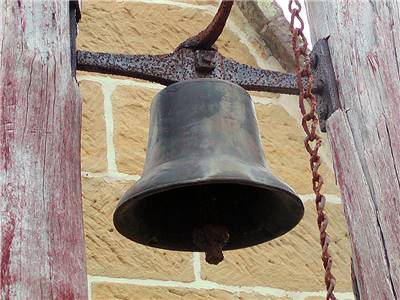
In Commission News: Bells of Peace, a World War I remembrance, is a collaborative program that brings the Centennial of the Armistice to communities and organizations across the nation, in a grassroots program to encourage the tolling of bells, and the commemorative activities and communities across the United States on Sunday, November 11th, 2018 at 11am, local time. Bells of Peace brings attention to the end of the fighting in World War I at the 11th Hour of the 11th day of the 11th month in 1918, a hundred years ago. Now with us to introduce you to the program is Betsy Anderson, the Bells of Peace program coordinator for the Commission. Betsy, welcome to the podcast.
Betsy Anderson: Thank you, Theo. It's a pleasure to be here.
Theo Mayer: So Betsy, let me start by asking you to explain the idea of the program.
Betsy Anderson: When we first got the idea of the program a few years ago, we reached out and found out that the Society of the Honor Guard of the Tomb of the Unknown Soldier first started doing this in 2015. It is such a perfect way to involve communities across the nation in the commemoration of the armistice that we picked up on this idea, and now we're promoting it nationwide.
 Theo Mayer: It's a national program, especially one that reaches into communities. The commission can't do this alone, so who are some of the supporting organizations for this?
Betsy Anderson: Besides the Society of the Honor Guard, we have partnered with the National Cathedral. They will be tolling their bell on November 11, as part of a sacred service that is planned for that day. Others are, our commemorative partners, our founding sponsor the Pritzker Military Museum and Library in Chicago, the American Legion, the Veterans of Foreign Wars, and of course, we'll be reaching out to all of our other commemorative partners, as well as our state partners.
Theo Mayer: So, we have listeners of all kinds on the show. Who should consider participating, and if somebody's interested in doing that, what should they do?
Betsy Anderson: Theo, this program is for everyone. Civic organizations, religious organizations, fraternal organizations, fire departments, state governments, local governments, school houses, are some of the organizations that we're encouraging to participate. Every time we sit down, we think of another group that could be involved. For example, the service academies, National Association of Carillons, which are bell towers across the nation. Everyone can register on our website, and there, you'll be able to see ideas and receive updates about how this idea is spreading across the nation.
Theo Mayer: Well, I know it's on a Sunday, but if I were Mrs. Smith's School in Oshkosh, you know, can I participate?
Betsy Anderson: Of course. You can participate by organizing a ceremony in your community, and we have ideas on our website for what to include in such ceremonies. We've downloaded links to poems and songs from the period of time around World War I. We also have links to performances of Taps, we have bagpipe suggestions, we have suggestions for readings, in either a sacred or a secular kind of ceremony.
Theo Mayer: You mentioned you have a bunch of tools for them. Are they on the website?
Betsy Anderson: All those tools are on the website, and yes, we are going to be reaching out as far as we can to national coordinators of organizations across the country. We're asking our state coordinators to reach out in their states and counties also, and we're already starting to pick up a few types of organizations that are very enthusiastic about this program.
Theo Mayer: You know, I mentioned to you that I was in San Francisco yesterday, and I talked to them about, can they get a proclamation from the city of San Francisco to participate. You have a whole proclamation concept going to help communities commit to this, don't you?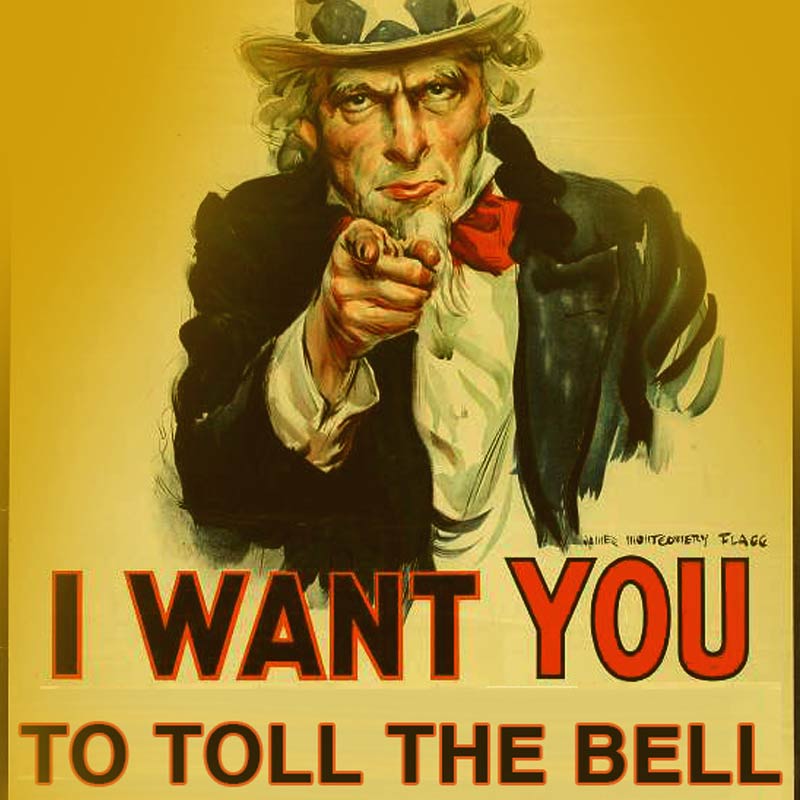
Betsy Anderson: That's right Theo. The commission has issued a proclamation, and we've put the elements of that on our website so that you can create or build your own proclamation, just by making a few changes to include the name of your organization and its location.
Theo Mayer: You know Betsy, every time we've presented this to groups of people, as we put out the initiative, people get very excited because it's simple, it's poignant, it's really easy to do, it doesn't cost anything to get yourself involved. What should people know about this initiative? What else?
Betsy Anderson: Theo, the really most important thing that people should know about this initiative, is its purpose, and that is to bring communities together, to bring communities together to toll the bells, gives us all the time we should take to reflect and remember the fallen, not only the World War I veterans who served and sacrificed, all of whom have passed away now, but also our current veterans and their families. November 11th is the perfect time to do that, and we want to make sure that everyone gets the word, so that their bells can be tolled in a solemn way on Armistice Day.
Theo Mayer: And very important to mention, in case somebody doesn't know this, that Armistice Day, which was the end of the fighting in World War I, also today's Veterans Day.
Betsy Anderson: That's right Theo, and it's one of the few national holidays that did not get changed to a Monday, because Congress recognized the importance and the significance of that actual date.
Theo Mayer: Betsy you're rolling out this week. It's your official launch, right?
Betsy Anderson: That's right. We're so excited to have that opportunity, and I hope you'll be able to hear from some of our partners going forward as well.
Theo Mayer: Thank you for joining us today.
Betsy Anderson: Thank you, Theo.