

































From the World War I Centennial News Podcast
Remembering Veterans: Doughboy MIA with Rob Laplander
 In July 6th's WW1 Centennial News Podcast, Episode 79, author and Doughboy MIA managing Director Rob Laplander spoke with host Theo Mayer about his work, and the ongoing effort to identify and commemorate Americans who went missing during the Great War. The following is a transcript of the interview:
Theo: This week, our remember veteran segment is very poignant for me. As the saying goes, “A man is only missing if he's forgotten.” There are several thousand American Doughboys who would both be missing and forgotten if it weren't for our next guest. Robert Laplander is the author of Finding the Lost Battalion: Beyond the Rumors, Myths and Legends of America's Famous World War I Epic. Beyond his very fine book, he's also the passionate and dedicated managing director for Doughboy MIA, an organization researching the fate and the service of World War I's MIA's. Rob, thank you for joining us. Doughboy MIA is dedicated to researching the fate and service of Americans who went missing in combat during WW1
Rob Laplander: Hi, Theo. Thanks for having me on.
Theo Mayer: Rob, when did the US government stop looking for the MIA's from World War I?
Rob Laplander: 1934.
Theo Mayer: That's a lot earlier than I thought.
Rob Laplander: What they did is they sent their crews out and they scoured the landscape and they slowly whittled the list down. The way that they felt is that they had put as much time as soon as they could when they got 1930. They were scheduled to handover the control of the cemeteries in 1934 and they decided what they would do is close all the cases by 1934. By that time, they had exhausted everything that they had, every resources they had.
Theo Mayer: How many MIA's are left from World War I?
Rob Laplander: 4,223. A good half of them are missing at sea.
Theo Mayer: They're lost at sea and will never be found?
Rob Laplander: No. They're totally unrecoverable. We know where they are and it is what it is for those guys. At least they're remembered.
Theo Mayer: Great point, Rob. For our soldiers that died on the battlefield, how did they get buried? Who took care of that?
Rob Laplander: It was the units themselves. Usually, a junior officer or chaplain of the unit who buried these bodies and each filled out what was known as a grave registration blank. He sent it back to Graves Registration Service. What they did is they kept track of all these, where all the graves were and then after the war, they went out and excavated some 80,000 burials. Again, over 5,000 temporary cemeteries to concentrate them into the big cemetery. Then they offered the family a chance to bring their loved one at home or not and the ones that didn't go home stayed in France. When they went out looking for these cemeteries, they knew where the cemeteries were and they knew where the bodies were reported to then. It doesn't necessarily mean that they were able to find all that stuff. We've got two marines right now that were looking for … We have statements by the man who buried them and he went back in the ‘80s and he even pointed out where he believed they were. They didn't have the technology we have now so what they did is they walked the ground. They had a man stationed every yard-and-a-half and they would send these picket lines through that would look for anything that looked like it had done a grave, a temporary grave or anything like that. Sometimes this happened five, six years after the war was over and there wouldn't be anything left and they just couldn't find them. 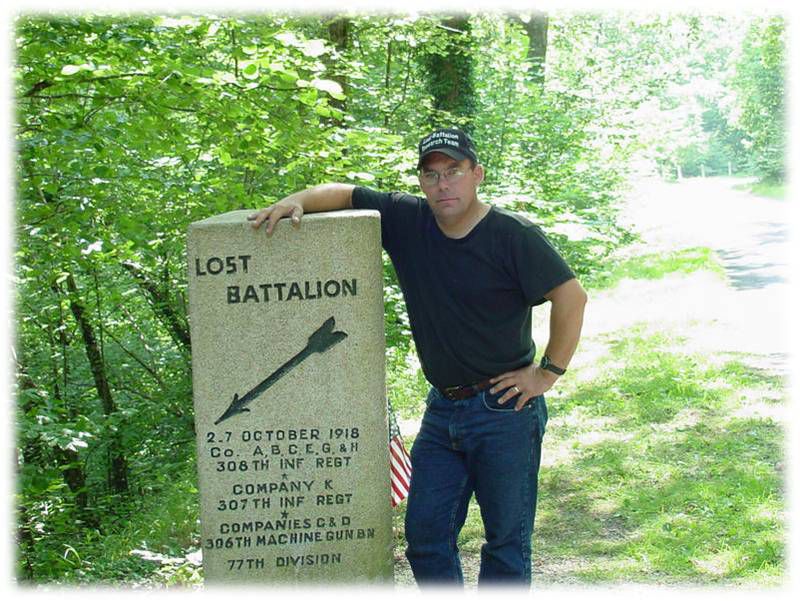 Robert Laplander, author and managing director of Doughboy MIA
Theo Mayer: Let me ask you this, what are some of the really hard parts of the challenges that you face in trying to resolve some of these cases?
Rob Laplander: The biggest problem that we have is finding this in paperwork. There are a lot of records for the American Expeditionary Force World War I and you're talking about records that have been shuffled here and there for a hundred years. A lot of things have gone missing and we're still trying to find all the records for the unknowns. The biggest thing that we depend on for information is the burial case files. Each man who died in service at that time had a burial case file and those are still in existence. We look at those on a regular basis. We have hundreds and hundreds of those. They tell you that man's story, there's usually a statement in there by somebody who saw the man killed or the last person seen alive and where they were. There will be statements in there of a searching parties that went out looking for the grave or looking for the remains. There's letters back and forth with families in there. Some of those letters are pretty hard to read and then information on the Gold Star Mothers tour because even if the man was missing in action, the mother or widow was offered the chance to go over to France and view the cemeteries and see the name on the wall.
Theo Mayer: Rob, I know you've had some successes in identifying these MIAs. Tell us about it.
Rob Laplander: Our first major win was Herbert Hammond Renshaw who was a sailor, who a year -and-a-half ago, we discovered had been forgotten in what they call The Walls to the Missing. Each cemetery has tablets in their chapel that are covered with names of the missing in action. At Brookwood Cemetery in England is where they have those who were missing at the sea. Herbert Renshaw was one of the first naval casualties to the war in May of 1917. He went missing and this past April, that was corrected. This past April for the first time since 1934, they carved a name in the wall.
Theo Mayer: Rob, you've written two books about World War I and the happenings in Europe. What were they?
Rob Laplander: The first book that came out was Finding the Lost Battalion. It's about the lost battalion of World War I which was 700 men who were trapped behind enemy lines for five days. At the end if the siege, 194 of them were able to walk out of their own power and my wife and I just recently released a coffee-table book, a picture book called Faces of the Lost Battalion and dedication of this project is really special.
Theo Mayer: I don't know who all and how all you can be thanked, but thank you.
Rob Laplander: Well, we take it seriously and it's something that I don't think I picked. I think it was picked for along with my team, we're going to France in September and October. We're gonna be doing some ground research for Doughboy MIA and lay the groundwork for what we hope to be actual expeditions and attempts at recovery.
 Robert Laplander is the author of Finding the Lost BattalionTheo Mayer: What is it that our listeners or people can do to help you?
Rob Laplander: The government has the Defense POW/MIA Accounting Agency, the DPAA, but their mission only goes back to World War II and that's where we pick up the ball. We don't take any government funding for what we do. It's all volunteer and it's all not-for-profit, under the umbrella of the United States Foundation for the Commemoration of the World Wars.. We come to a unique point in history now that we have technology available to us, affordable technology at our fingertips that nobody else has ever had, and with this we can go in there and we might be able to reclaim some of the remains and bring these boys home. The biggest thing that we need is funding. To that end, we have our own fundraiser. It's called 10 for Them, 10 bucks. Just donate 10 bucks. If you can give 10 for them then you did your part to try to help and we appreciate it.
Theo Mayer: Okay, listeners. You can go to ww1cc.org/mia and on the left side of the webpage, you'll find a place where you can give ten for them. Rob, keep up the great work.
Rob Laplander: A man is only missing if he's forgotten. We're at a unique point in history now where we can do all and get it together. It's the same thing with the Lost Battalion. If I never do anything else in my life ever again, I've done that and long after I'm gone, that book will be here, my research will be here and that story will live. If you can give to history like that, then everything that you did was worth it.
Theo Mayer: Rob Laplander is the author and the keeper of the flame for Doughboy MIA. Learn more at www.1cc.org/mia. Reach out on Twitter @theww1podcast or follow the links in the podcast notes.
Podcast Notes and links
www.ww1cc.org/mia
https://www.worldwar1centennial.org/index.php/doughboy-mia-home.html
https://militaryhistorynow.com/2016/03/09/the-lost-doughboys-the-hunt-continues-for-american-mias-from-ww1/