







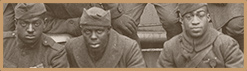






















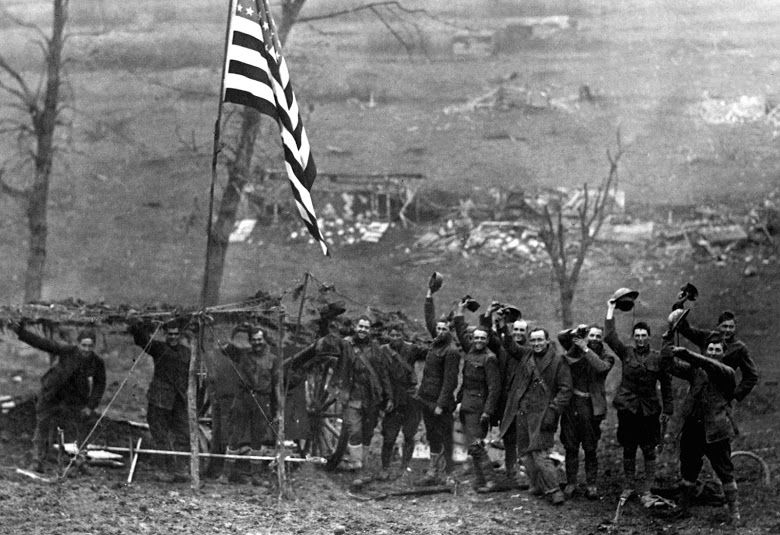
 Doughboys celebrating the 4th of July in 1918 on the battlefield.
How Doughboys Celebrated Independence Day in France
By Joseph Vesper
Staff Writer
July 4th, 1917: Imagine yourself, an American, on the streets of Paris. Crowds bustle and cheer in excitement as you march past them. Even though you have yet to fight you feel triumphant, as if the battle has already been won. The American and French flags fly in unison high above you and in the air the scent of American food cooking smells delicious. A French child gives you a flower as you march by, a symbol of gratitude for fighting as an ally. Back home it is Independence Day, but in this foreign land you are joined in celebration.
In June 1917 only 14,000 American soldiers had arrived in France. These first 14,000 U.S. infantry troops landed at the port of Saint Nazaire and were quickly organized into training camps by General Pershing. Though their numbers were still low in July that did not stop General Pershing nor his soldiers from celebrating America’s Independence Day with the local population.
Leave was not granted to American troops until after the close of the Fourth of July celebrations. If you were there as a Doughboy you would have marched in a massive parade down the streets of Paris with General Pershing. After the parade there were numerous events in which to participate. Baseball, boxing, and other athletic sports were at the forefront. In addition, the Young Men’s Christian Association took soldiers on sight-seeing tours throughout Paris using motor trucks.
 Around noon American troops received, what one newspaper reported as, “an excellent luncheon.” The menu consisted of; “roast beef, cold bologna sausage, baked potatoes, cucumber and lettuce salad, cream cheeses, bread and butter, coffee, and cherries and oranges for dessert.”
All the rations were supplied by Americas grateful hosts, France. In addition, local restaurants tried their best to recreate certain American foods for all to enjoy.
A year later in 1918, the entire 4th of July celebration would have been even grander. By now a little over a million American Doughboys had joined the fight to end The Great War and Paris’s streets would have been filled to the gills by locals and the massive surge of troops celebrating the 4th of July together.
Unlike the previous year’s holiday, however, this one was marked by combat and the first offensive action taken by an AEF unit serving under non-American command. A thousand men from the 33rd Division saw combat in the Battle of Hamel. And a Corporal named Thomas A. Pope was awarded the Medal of Honor for his brave actions during the battle that day.
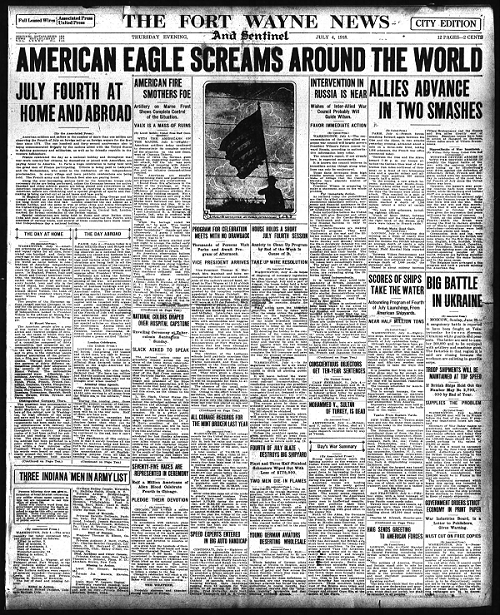
The holiday roused such patriotic spirits for the Americans that even the Germans felt it in their trenches. As one newspaper noted:
“The Germans also knew it was America’s great day, from the artillery, machinegun and rifle firing which was increased on the American fronts. It gave the enemy something to think about and made him keep his head down in the trenches and in the dugouts.”
~ French Observe The Fourth of July. (1918, July 5). The Tennessean
Joseph Vesper is a Summer 2018 Intern with the U.S. World War One Centennial Commission.
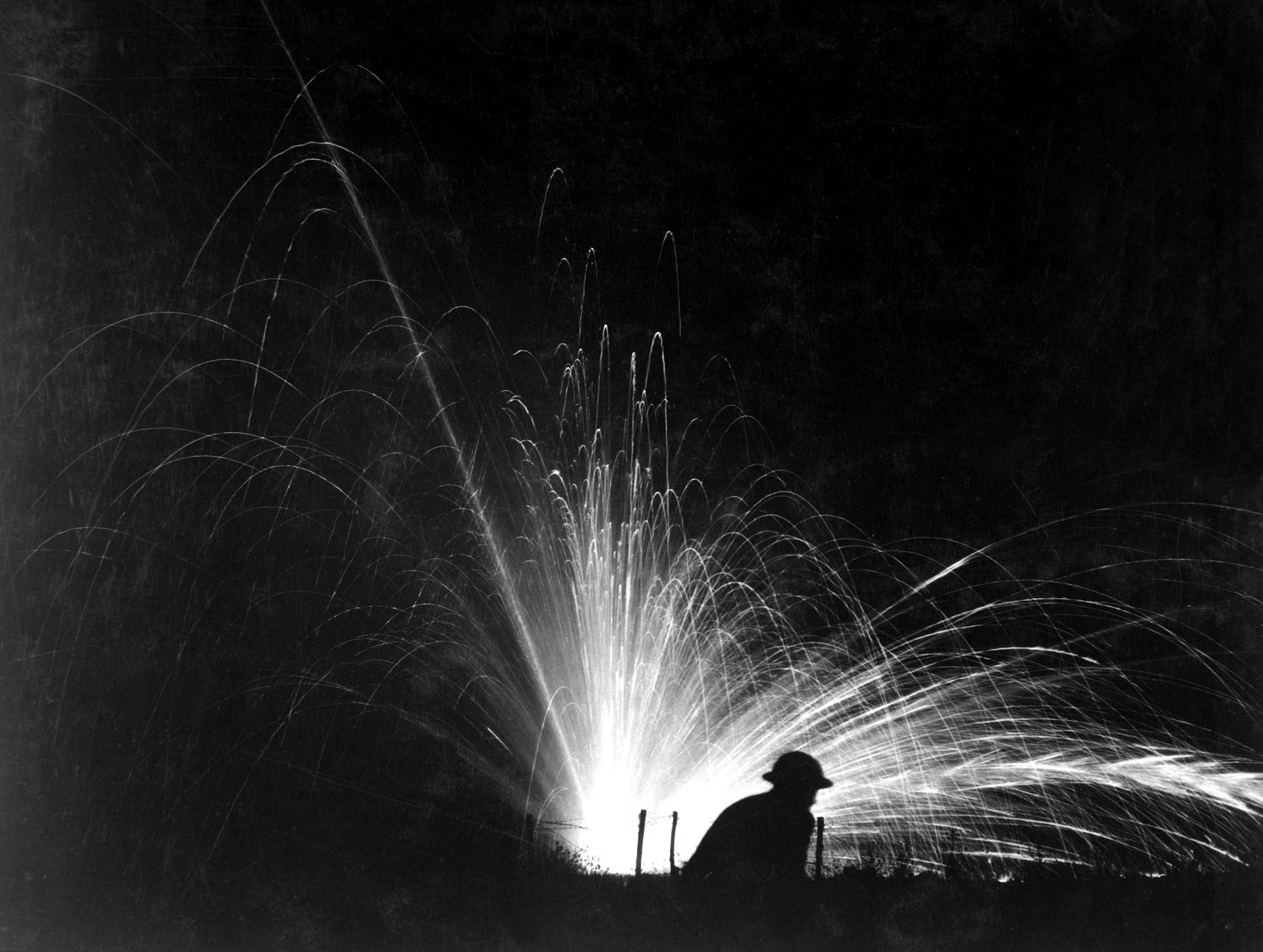 For Doughboys in 1918, the 4th of July fireworks were all-too-real on the battlefields of France.