






























Hollywood and WWI – Wild Bill William Wellman
By Aaron Rosenthal
Staff Writer
When the United States entered World War I, William Augustus Wellman, the great-great-great grandson of Francis Lewis, the New York Signatory of the Declaration of Independence, was eager to serve.1 He was quick to apply to the U.S. Air Service, but was denied, due to his lack of education.2 Undeterred, he quickly moved to join the Norton-Harjes Ambulance Corps, part of the British Red Cross. The organization accepted many American volunteers to serve in France during the war3, including a sixteen-year-old Walt Disney, who lied about his age to join.4 Wellman was then transferred to the French Foreign Legion and became the first American to join the Black Cat Squadron of the Lafayette Corps.5
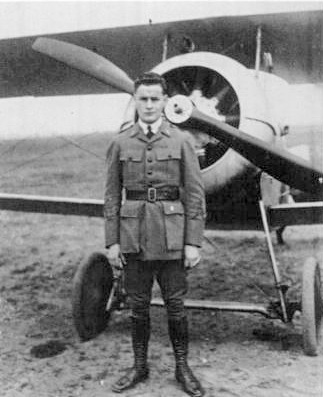 William Wellman in front of Nieuport aircraftWellman joined as a replacement for one of the squadron’s lost comrades, a hard circumstance to come into. In addition, being the only non-Frenchman in the squadron did not make this task any easier for him.6 However, an opportunity presented itself with the American’s first mission. The commanding officer of the Squadron came to the Black Cats with a new idea to get the jump on a German airfield. The idea entailed that rather than send the usual six planes to bomb and strafe an airfield, instead just one plane would be sent, flying close to the ground to avoid detection the pilot would catch the Germans sleeping. He calculated that this would give the pilot time for two passes before losing the element of surprise and having to return home. Considering the experimental and therefore highly dangerous nature of the mission, a volunteer was asked for rather than an assignment being given. Only Wellman raised his hand.7
The idea worked, and Wellman made it to his target undetected, completing not only his sanctioned two passes over the airfield, but an unsanctioned third as well. This daring third pass allowed the American airman to drop his entire payload of bombs, and resulted in not only the destruction of more enemy planes still on the runway, but also the death of many German pilots and mechanics. Then, upon his return to base, Wellman had largely gained the respect of his French comrades, and was given the nickname, “Wild Bill,” a name that would follow after the war, all the way to Hollywood.8
Wellman would not be the lone American in the Black Cat Squadron for the entirety of the war, Tommy Hitchcock, the famous polo player and future decorated World War II pilot9, would soon join him. The two were described as, “Fast friends, and fearless flyers,” and this newly formed friendship soon became known as the “A-team.”10 They were known for their daring stunts in the air, accompanied by several successful missions and at least five kills in the air between the two of them. Both would be awarded the Croix de Guerre after the war.11
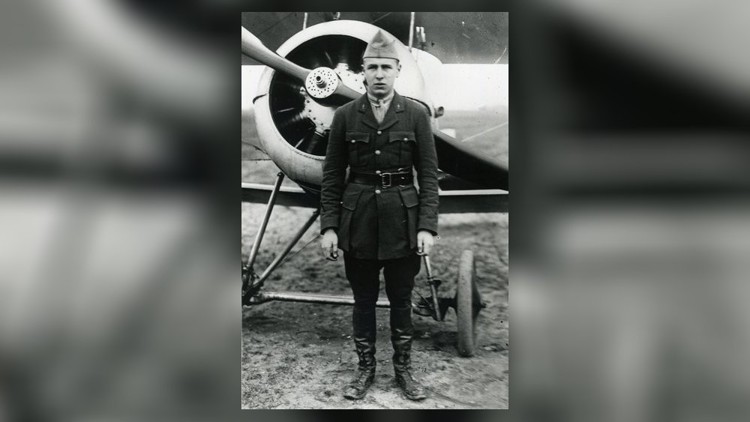 Tommy Hitchcock in front of planeOne day on a mission, Hitchcock and Wellman were engaged by the Germans in the air, and after giving the Germans all they could handle, Wellman returned home, but was shocked to find his buddy was not with him.
Unfortunately, Hitchcock had been separated from the rest of the squadron shortly after waving his friend off, allowing him to be picked off, and captured by the German military. The two had carefully watched each other’s backs since Tommy’s arrival in France, and William was not going to abandon his fellow American so easily.
Therefore he began going on solo patrols where he would look for the lost Hitchcock, ironically resulting in his own airplane being shot down a short time later. Though he survived, he was gravely injured and forced to return to the states without his wingman.12
Worth mentioning in this article is Hitchcock’s successful escape six months later, in which he jumped from a moving German railway car that was transporting him to a Prisoner of War Camp. He suffered eight days of hunger and cold, before eventually making his way back to the safety of the Swiss border, a neutral country.13
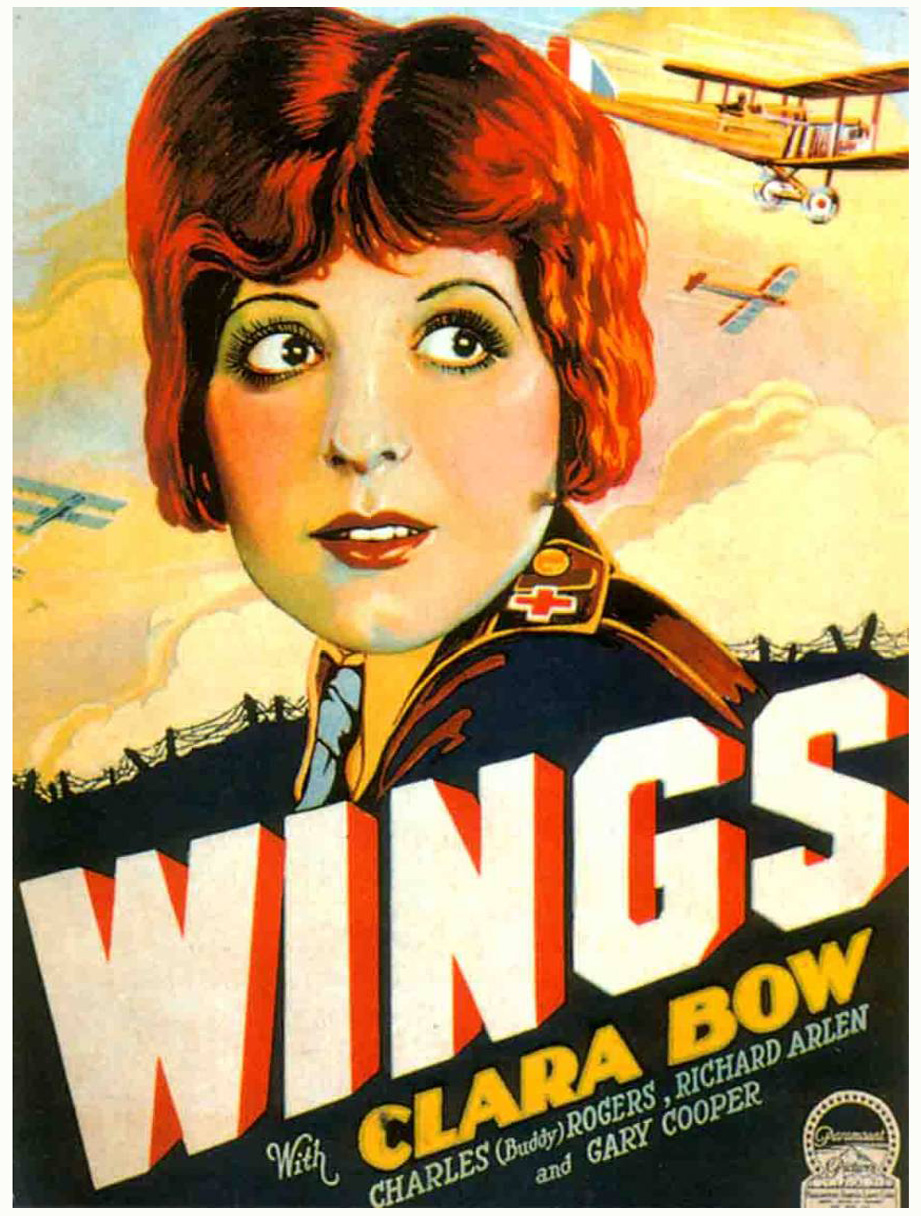
Wellman on the other hand would spend the rest of the war training new American airmen in fighter tactics at Rockwell field in San Diego. While in California, he would spend much of his free time flying around Los Angeles, where his skills were noticed by Hollywood and led to his career in the film industry.14 Today he is most well known for his film, Wings, a story of two pilots fighting above France in World War I, undoubtedly inspired by his own real-life experiences. The film is considered revolutionary in its use of aerial cinematography, paving the way for future aerial warfare films. Wellman demanded that his stars fly their own planes in the name of accuracy, that the cameras be mounted on the planes themselves, and was meticulous in achieving the perfect frame for every shot. Audiences all over the country were mesmerized by the film’s mix of action, friendship, and romance.15 Thus, Wings, would go on to become the first winner of the Academy Award for Best Picture back in 1929.16
Aaron Rosenthal is a Summer 2018 Intern with the U.S. World War One Centennial Commission.
- “William A. Wellman,” accessed June 6, 2018, https://www.geni.com/people/William-A-Wellman/6000000014838677914.
- William A. Wellman Jr, The Man and his Wings, (Westport, CT: Praeger Publishers, 2006), 6.
- “Richard Norton’s American Volunteers Motor-Ambulance Corps,” accessed June 7, 2018, https://www.geni.com/people/William-A-Wellman/6000000014838677914.
- Thomas Price, “Over There: Walt Disney’s World War I Adventure,” accessed June 7, 2018, https://waltdisney.org/blog/over-there-walt-disneys-world-war-i-adventure.
- Wellman, 27.
- Wellman, 27.
- Wellman, 28.
- Wellman, 30.
- Sarah Ballard, “Polo Player Tommy Hitchcock led a Life of Action from Beginning to End,” November 3, 1986, Vault, accessed June 25, 2018, https://www.si.com/vault/1986/11/03/114265/polo-player-tommy-hitchcock-led-a-life-of-action-from-beginning-to-end.
- Wellman, 38.
- Wellman, 39-43.
- Wellman, 43-46.
- Ballard, 1986.
- Stefan Andrews, “William Wellman was a WWI pilot who used his military experience to direct the war drama Wings in 1927. It was the first film to win the Academy Award for Best Picture,” February 9, 2017, accessed June 15, 2018, https://www.thevintagenews.com/2017/02/09/william-wellman-was-a-wwi-pilot-who-used-his-military-experience-to-direct-the-war-drama-wings-in-1927-it-was-the-first-film-to-win-the-academy-award-for-best-picture/.
- Dante A. Ciampaglia, “A Restoration that Earns its Wings,” Forbes Magazine, February 3, 2012.
- Wings, Awards, accessed June 6, 2018, https://www.imdb.com/title/tt0018578/awards?ref_=tt_awd.