
































From the World War I Centennial News Podcast
100 Cities, 100 Memorials: Saugerties, NY
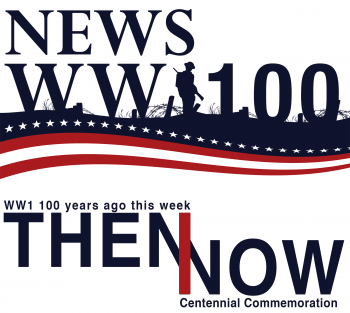 In July 13th's WW1 Centennial News Podcast, Episode 80, Lisa Polay, Vince Buono, and Bill Payne spoke with host Theo Mayer about the World War I centennial room at American Legion Post 72 in Saugerties, NY. The following is a transcript of the interview:
Theo Mayer: This week, we're headed to Saugerties, New York, where the Lamouree-Hackett American Legion post 72 has built a World War I Centennial room as a permanent exhibit to commemorate the town's World War I veterans. Here to tell us about the project are Bill Payne and Vince Buono, members of post 72. And Lisa Polay, a member of the community who's been helping with this project by doing the exhibition design and writing the grant application. Welcome to the podcast.
Lisa Polay: Hi Theo.
Bill and Vince: Hello.
Theo Mayer: Well, Saugerties, New York, that's sort of mid-state near Albany, isn't it?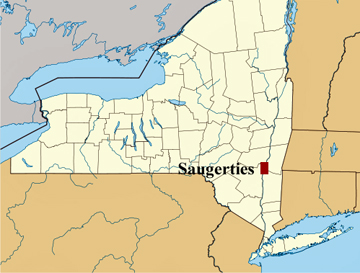
Bill and Vince: Saugerties, New York is located on the Hudson River, 50 miles south of Albany, about 100 miles north of Manhattan. Saugerties is a Dutch word which means "the little sawmill."
Theo Mayer: About how big is it?
Bill and Vince: Saugerties population is about 25,000 people from the villages within the town.
Theo Mayer: So how big was it around the turn of the century? Around the start of the war? Bill and Vince: It was a bigger population then, I would think. There were many factories.
Lisa Polay: I believe there was about 9,000 people.
Theo Mayer: Excellent. The town really does have a very rich history. Tell us a bit more about it.
Bill and Vince: From the point of view of the shared military history that this town has got, people from this town served in the French and Indian War, the Revolutionary War, and in the Civil War. Service continued, of course, in the Spanish American War, and we had a large population of soldiers who served, and many fell, in World War One. The post is named after Adele Burt Lamouree and Patrick Hackett, that reflects the Huguenot background and most of the Irish backgrounds. They both died in the big offensive in October of 1918, against the Germans. They were in the 77th Regiment and the 27th, both National Guard units. So they were very close to the end of the war, when both of them fell.
Theo Mayer: And when you built this Centennial commemoration room, can you tell us a little bit about it? What is it, and what am I going to find there?
Bill and Vince: Our post home, which we acquired in 1951, it's an old building, little over a hundred years old, was a home. In about 1982, we decided we would put in a museum of military service. So the centennial room had actually not been developed as a part of the exhibit until now. We have artifact that were brought back by the World War One veterans from Saugerties. Some of them were captured items from the enemies. Many of them are personal items from these soldiers, themselves.
Lisa Polay: I was very impressed because they really have a lot of material that's intact, and in very good condition.
Bill and Vince: Aviator's uniforms.
Lisa Polay: Right.
Bill and Vince: A list of sailor's uniforms, combat uniforms with helmets, and gas masks.
Lisa Polay: And we've got the information about the gentlemen who wore it, their portraits hanging next to them.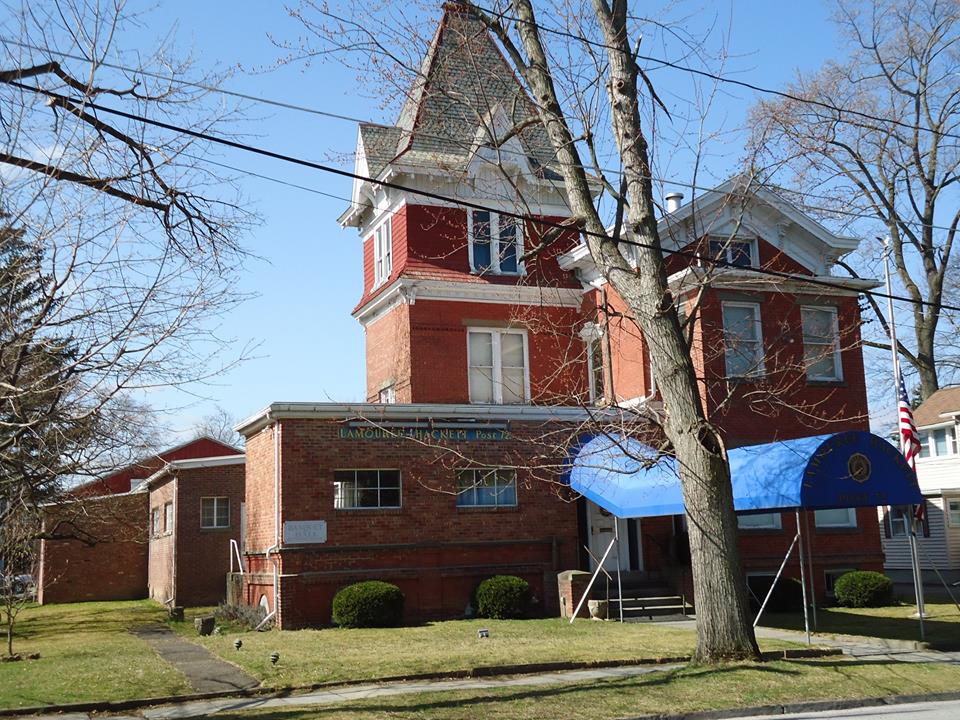 American Legion Post 72 in Saugerties, NY
Theo Mayer: So were all these artifacts something that you found locally in the town? Or how did you find them?
Bill and Vince: From about 1982 onwards, we had a lot of World War One veterans still living, and they brought them in. There are very few items that have not been donated by local people. Just about all of them really were. Certainly, everything, really, in the centennial room is local.
Lisa Polay: But I think what was most interesting were those letters, and that project that had been commissioned from the state archives. After the war, they had sent out surveys asking the veterans or their surviving family members to fill out what their experiences were in the war. And it just so happened that the pastor, who was the town historian at the time, was almost finished with the project. And he happened to have passed away, which meant that the material actually never made it to the state archives. And in the state archives, I believe, in 1962 or '63 they had a fire. And all of these projects were destroyed. So we, in fact, are the only ones, just by accident, that still have all of this original material that was collected.
Theo Mayer: We've heard about those forms that were sent out before, and the fact that most of them were destroyed. So it's really great that you guys have a trove of them. About how many are there?
Lisa Polay: Oh, there's got to be, what, 80 of them? If not more. Bill and Vince: We have them in a binder that's probably about six or eight inches thick, page after page after page. Also, with some of the photographs of soldiers, as well. We had some very interesting responses. The one that always sticks in my mind is, well the man wrote, "Well I went to Hell and came back, that's all I have to say."
Lisa Polay: But we also found scrapbooks that people kept in town, of the soldiers. Townspeople were keeping records. But we also have their obituaries, newspaper articles, and such.
Theo Mayer: With these artifacts that you have, and the letters that you have, can you read us something from one of them? Just so we get a feeling for what they are?
Lisa Polay: So I just pulled out a letter from one of the soldiers, Percy Becker, he actually died not long after he wrote this letter. I'll read you towards the end, "We will all be home soon, and we can tell more about France, and what we've seen, as we do not dare to write and tell what place we're in, or what line we're at, as that's the order, and we have to obey them. Myrtle, you wrote and asked me if I wanted any cigarettes or anything. I thank you very much, but I would not send anything if I were you, because maybe I would get them, and maybe I wouldn't. Myrtle, tell your husband I send best regards to him, and also your post from the baby. And when you see my folks, you can tell them I wrote to you. From a little soldier boy in France, doing his best."
Theo Mayer: You know, the first person accounts, they're really good.
Lisa Polay: We've digitized, actually, all of that. And it's also available here to read them in their entirety.
Theo Mayer: Well, how did you get involved in the 100 Cities, 100 Memorials project? Lisa Polet: Bob Chappel, who is the co-curator with Bill, had approached me and asked me if I would help. Then once we had that done in May, then we discovered all of these letters, it really seemed like a perfect fit. Especially since the town doesn't have a World War One memorial, and this was a perfect opportunity to create one.
Theo Mayer: And you also made a video, as part of your grant application, as I recall, it's actually quite nice.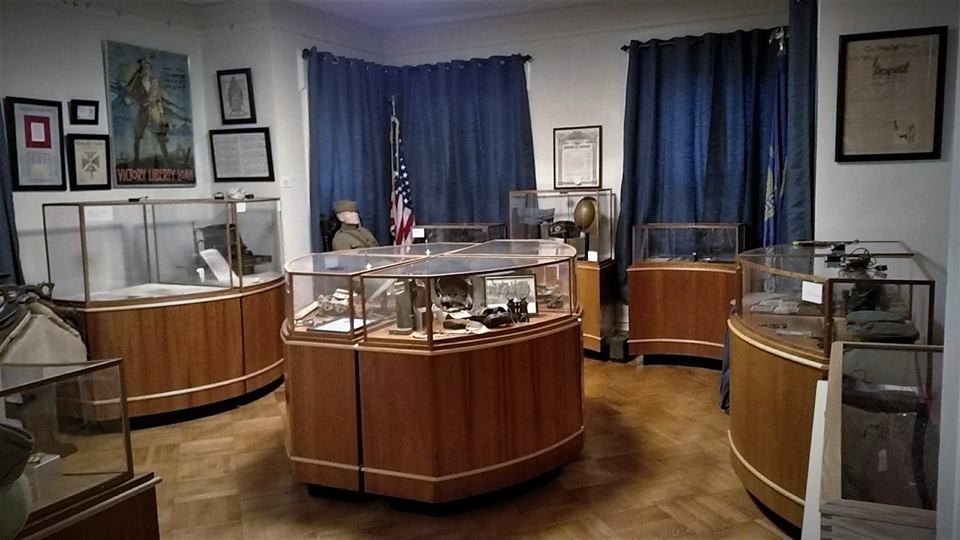 Post 72 features a museum with a variety of military artifacts, including a WW1 collection
Lisa Polay: Thank you. It felt like the soldiers' words spoke louder than anything that we could say or define about them. So it seemed fitting to just let them speak for themselves.
Bill and Vince: We sometimes thought the American Legion's like a closed, private club. We are very, very much out in the community. And this museum has become a vehicle, really for us to reach out to the community, especially young people who are learning about history, and bringing them in. We've acquired the library of congress veteran's history project. Unfortunately, we didn't get started in time to catch any of our World War One vets. We interviewed and recorded on video 60 veterans here, and we focused on our older World War Two vets to start with. From World War Two right now to the present, into the Smithsonian project.
Theo Mayer: Well thank you for all of the great work that you're doing, and for working with your community on this. It really sounds wonderful, and congratulations on being part of the 100 Cities, 100 Memorials grantees.
Lisa Polay: Thank you, it's been an honor.
Bill and Vince: Thank you very much, thank you.
Theo Mayer: Bill Payne, Vince Bono, and Lisa Polay are part of the team behind the Lamouree-Hackett American Legion post 72 World War I Centennial room project. Learn more about the 100 Cities, 100 Memorials program by following the link in the podcast notes.