

































WWI memorial plan gets support of panel; Arkansas designer calls it a ‘relief’
By Frank E. Lockwood
via the Arkansas Gazette newspaper's Arkansas Online web site
WASHINGTON -- After two years of reviews and revisions, the U.S. Commission of Fine Arts on Thursday backed a revised design for the new national World War I memorial despite opposition from some preservationists.
Fayetteville native Joseph Weishaar, the project's designer, smiled broadly after the unanimous vote. He had feared the proposal might encounter more opposition.
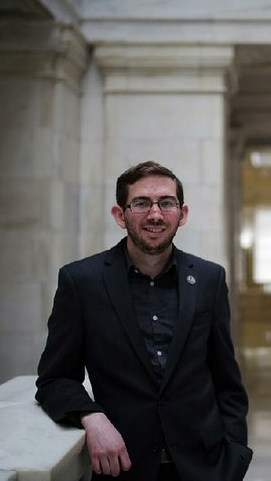 Joseph WeishaarMore meetings with the fine arts commission lie ahead as the project advances, but memorial backers portrayed the endorsement as a big step forward.
"I don't think that could have gone better, actually. I'm surprised," Weishaar said after leaving the meeting. "We're moving forward, and it looks positive. ...It's such a relief."
The memorial's supporters had appeared before the commission six times already.
Weishaar, a 2013 graduate of the Fay Jones School of Architecture and Design at the University of Arkansas, won an international design competition in January 2016 to design the memorial. He was 25 years old at the time.
The Arkansan teamed with New York sculptor Sabin Howard on the project, which initially featured a 200-foot bas relief sculpture at its core.
The design the commission backed features a 56-foot-long sculpture.
Former U.S. Sen. John Warner, D-Va., who served in World War II, and former U.S. Sen. Carol Moseley Braun attended Thursday's hearing and urged commissioners to support the latest design concept.
Terry Hamby, chairman of the U.S. World War I Centennial Commission, told the fine arts commissioners he was speaking on behalf of 4.7 million Americans who served during the Great War, "veterans who no longer can speak for themselves and have been forgotten by their nation."
"I speak for my grandfather, who lost his hearing in World War I and never heard my voice; my great uncle, who was killed in action at the Battle of Saint-Mihiel ... your relatives who served in World War I and millions of other families of World War I veterans," he said.
The design, Hamby said, would honor a "generation of Americans who served their nation, not to conquer, but to protect liberty and bring peace to a world gone mad."
Read the entire article on the Arkansas Online web site here:
External Web Site Notice: This page contains information directly presented from an external source. The terms and conditions of this page may not be the same as those of this website. Click here to read the full disclaimer notice for external web sites. Thank you.