

































From the World War I Centennial News Podcast
Remembering Veterans:
An interview with WW1 reenactors Seth and Garrett Moore
 In August 24th's WW1 Centennial News Podcast, Episode 86, Host Theo Mayer spoke with Seth and Garrett Moore, nineteen year old twin brothers with an incredible passion for WW1 history. The following is a transcript of the interview:
Theo Mayer: This week on "Remembering Veterans", we're joined by two young men that are very unique World War I reenactors. First of all, they happen to be twin brothers and they're also younger than most reenactors, which is incredibly compelling. When you see the brothers in Doughboy uniforms, you realize that they're really the age of the men or the boys that we sent over there, and it's quite powerful. Seth and Garrett Moore are from Columbus, Ohio, and their passion is the First World War. They collect relics and artifacts from the war and hope to someday open their own World War I museum. We introduced you to these young men a few weeks ago when they were in France participating in a number of ceremonies, but now they're here with us live today. Gentlemen at ease, welcome to the podcast.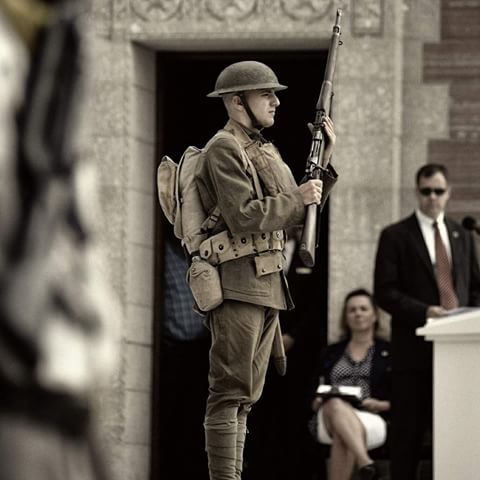 The Moore brothers have participated in numerous reenactments and ceremonies honoring the Doughboys
Garrett Moore: Thanks for having us.
Seth Moore: Yeah.
Theo Mayer: Okay, the first question and either of you can answer because I happen to know it's going to be the exact same answer, no matter who answers. How old are you?
Seth Moore: We are 19.
Garrett Moore: We are 19.
Theo Mayer: Double answer, thank you. When you I see you guys and when I see pictures of you guys, I have a whole different reaction because you really are the age of many of the boys we sent over there. Is there any special connection in your own minds that, that generates for you?
 Seth Moore: I guess, it's just more ...
Garrett Moore: You just feel more ...
Seth Moore: Connected to it.
Garrett Moore: Yeah. It's kind of hard to explain. It's like more of like an empathy link or something to it. You just feel like you could be there. It's like a real thing.
Theo Mayer: Yeah. And you know what? Watching you guys, the same happens for the people who see you. So, how did you get started and interested in World War I to begin with?
Garrett Moore: We had always been interested in history, when we'd go to the library at school or whatever. You'd check out history books, but five, six years ago, my great-grandmother [who] was born in 1915, told us about various times throughout her life and what she experienced. I kind of decided once to just ask about what she remembered of the First World War. And she told us that her uncle went off to fight the Germans in 1917. So, it kind of started from that point as a family history type thing and then it quickly evolved into what it is today, collecting and reenacting, and so on.
Theo Mayer: So, Seth, reenactment involves some really serious investment, not just time and interest, but money and focus. Is your whole family involved in your passion?
Seth Moore: When we first started, they kind of thought it was a phase but more recently, they've come to accept the fact that its Garrett and I's passion. So, yeah. They're pretty supportive. We wouldn't have all the opportunities we would've gotten without them.
Theo Mayer: Well, you're attracting a lot of national attention. And again, I think it's because you actually are representing the real experience. Now, you guys are collectors of uniforms and objects from the Allies and belligerents, and all that stuff. Each of you, what do you think is the highlight of your collection?
Garrett Moore: We got a tunic from Russia called a gimnasterka. And this particular one is from the Kerensky Provisional Government. So, it's not Czarist army and it's not Bolshevik, it's in between.
Theo Mayer: So, Seth, what about for you?
Seth Moore: Probably, some of the pictures we have, photographs with stuff written on them. Photo post cards where you get your picture taken and put on it and they send it off to people, that kind of thing. Because it tells a story. It kind of makes it more individual than just looking at a faceless mannequin kind of thing. Getting an idea, get people's mindset, what they were thinking about during the time.
Theo Mayer: So, guys, can you tell us about your recent trip to France. What were some of those highlights?
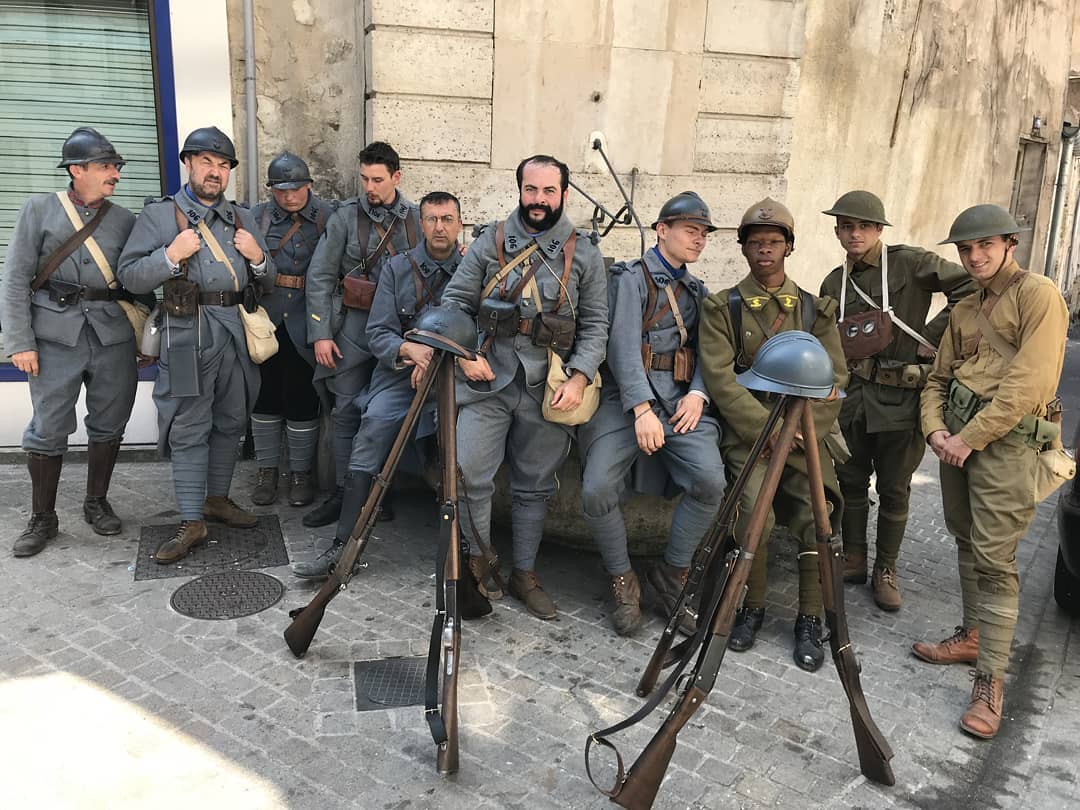
Seth Moore: Well, where do you begin. It was a great experience. It really kicked off at the airshow in Epernay. We were there, we heard about it, we went and they had some French reenactors from the association [foreign] de la mar. They're some topnotch World War I reenactors, really great guys. Really friendly. They told us about the event Château-Thierry. We're able to hang out with them outside of just doing World War I stuff, which was really cool because you got to get a taste of what it's like for the French reenactors and what they do for their World War I centennial commemoration events.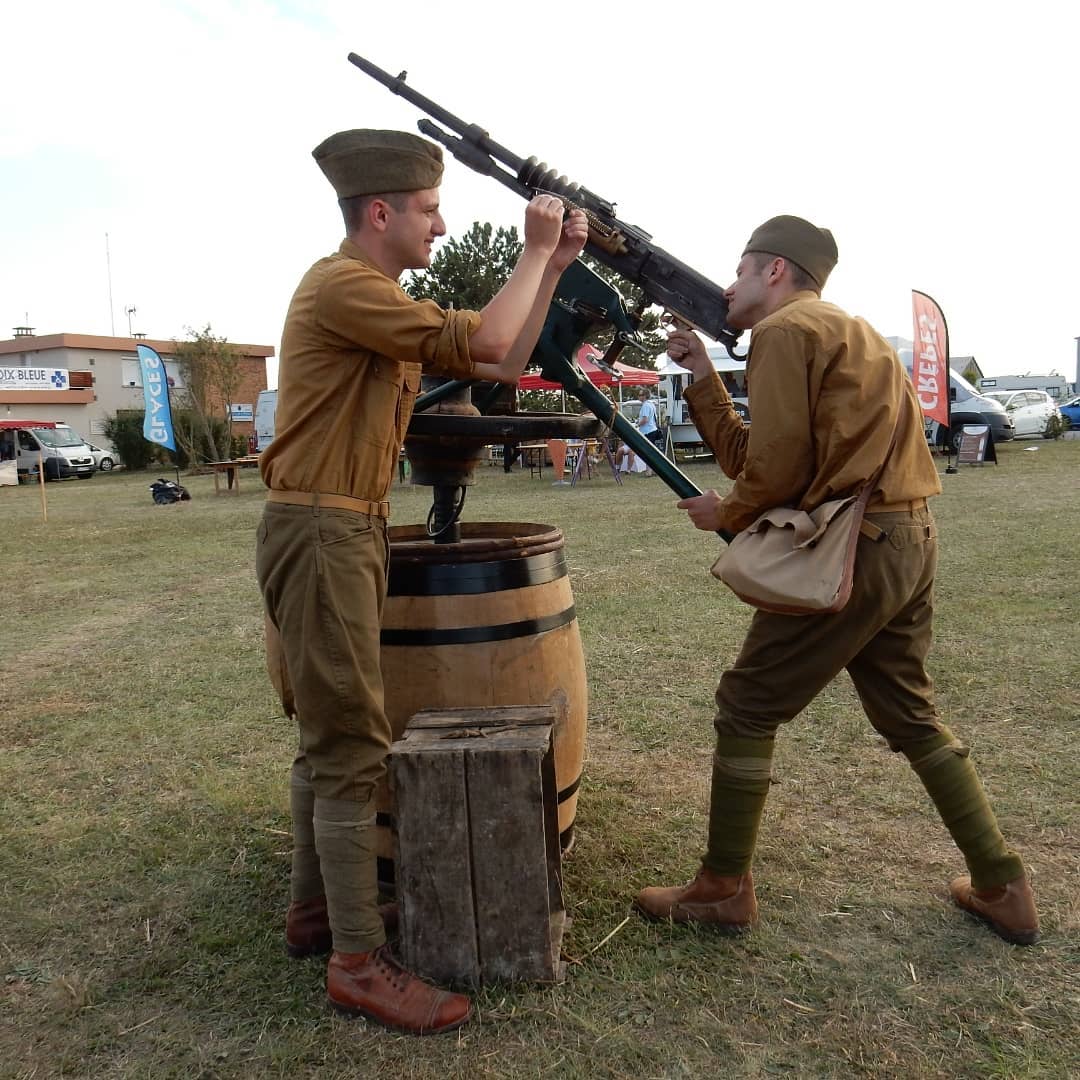 Seth and Garrett's passion for WW1 was originally sparked by family history
Theo Mayer: It's got to be quite different because the memory of war in France was completely different than the memory here. Somebody mentioned to me when we were starting the project that in Europe, they lost so many young men, that almost anyone who's living in Europe now is a descendant of a survivor. A little intense to think about.
Seth Moore: When we did the ceremony at an American Cemetery, we'd met the superintendent there and some of the guys that are employed by the AMBC to keep the cemeteries nice looking and everything. I'd like to thank them for making sure that the Americans that are still in France are still taken care of, hundreds of years on, they do a really good job over there. I want to thank Matt Amber, both, for giving us the opportunity to do the ceremony [there].
Theo Mayer: Was that the event where the local reenactor had fallen off and you all stepped in to support?
Garrett Moore: It was originally going to be somebody from the United States doing it, but they had something come up. Then, they couldn't get any local ones.
Seth Moore: We happened to be at the right place at the right time.
Theo Mayer: Well we heard that you did an awesome job. So, thank you.
Garrett Moore: Thank you I appreciate it.
Theo Mayer: Well, you're both really, really special guys. And thank you for what you're doing. You're really helping make the Doughboys come alive to a nation that's largely forgotten, so thank you.
Seth Moore: Thank you for having us.
Garrett Moore: Yeah.
Theo Mayer: Seth and Garret Moore are reenactors and World War I enthusiasts. Learn more about them and World War I reenactments at the links in the podcast notes.
Podcast Notes and Links
www.doughboyduo.com
https://www.instagram.com/thegreatwarwwi/?hl=en
https://www.instagram.com/ww1thegreatwar/?hl=en