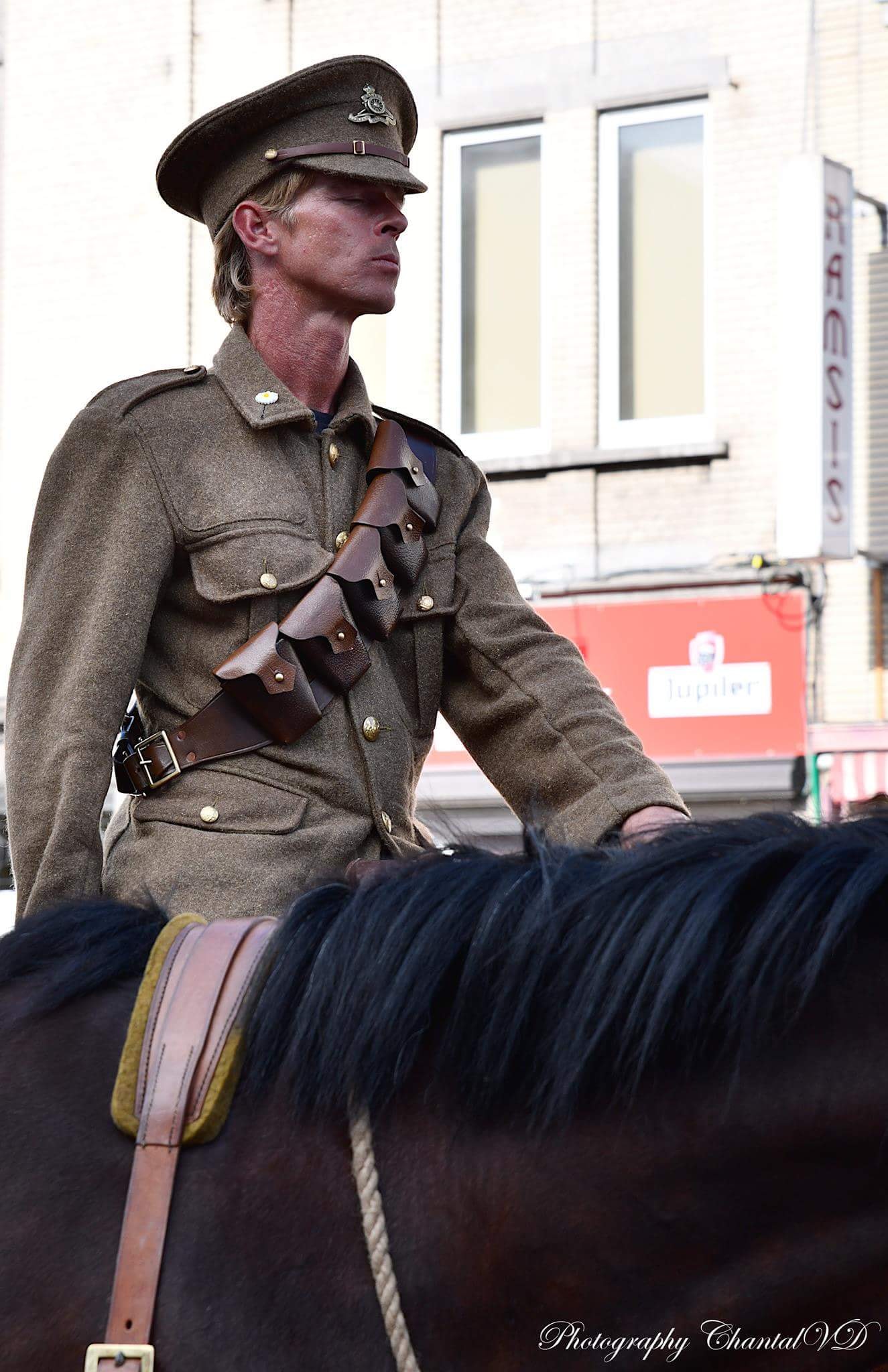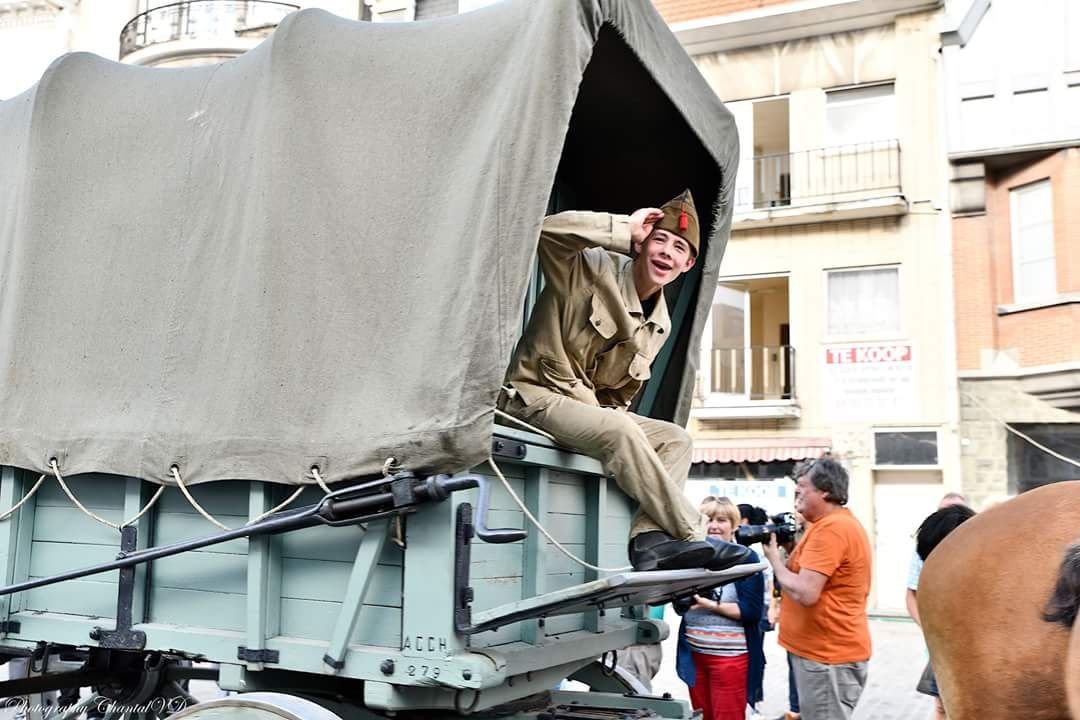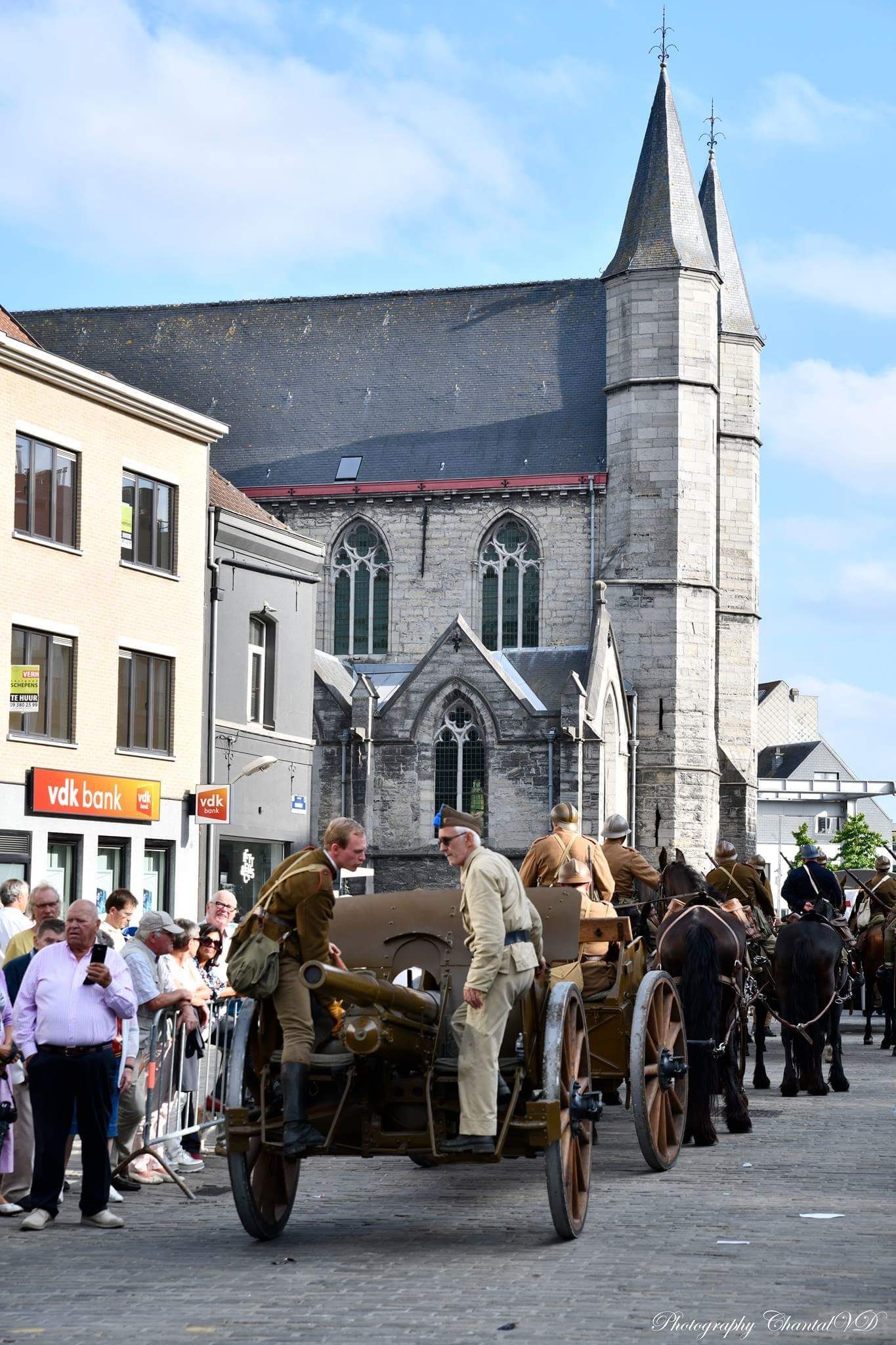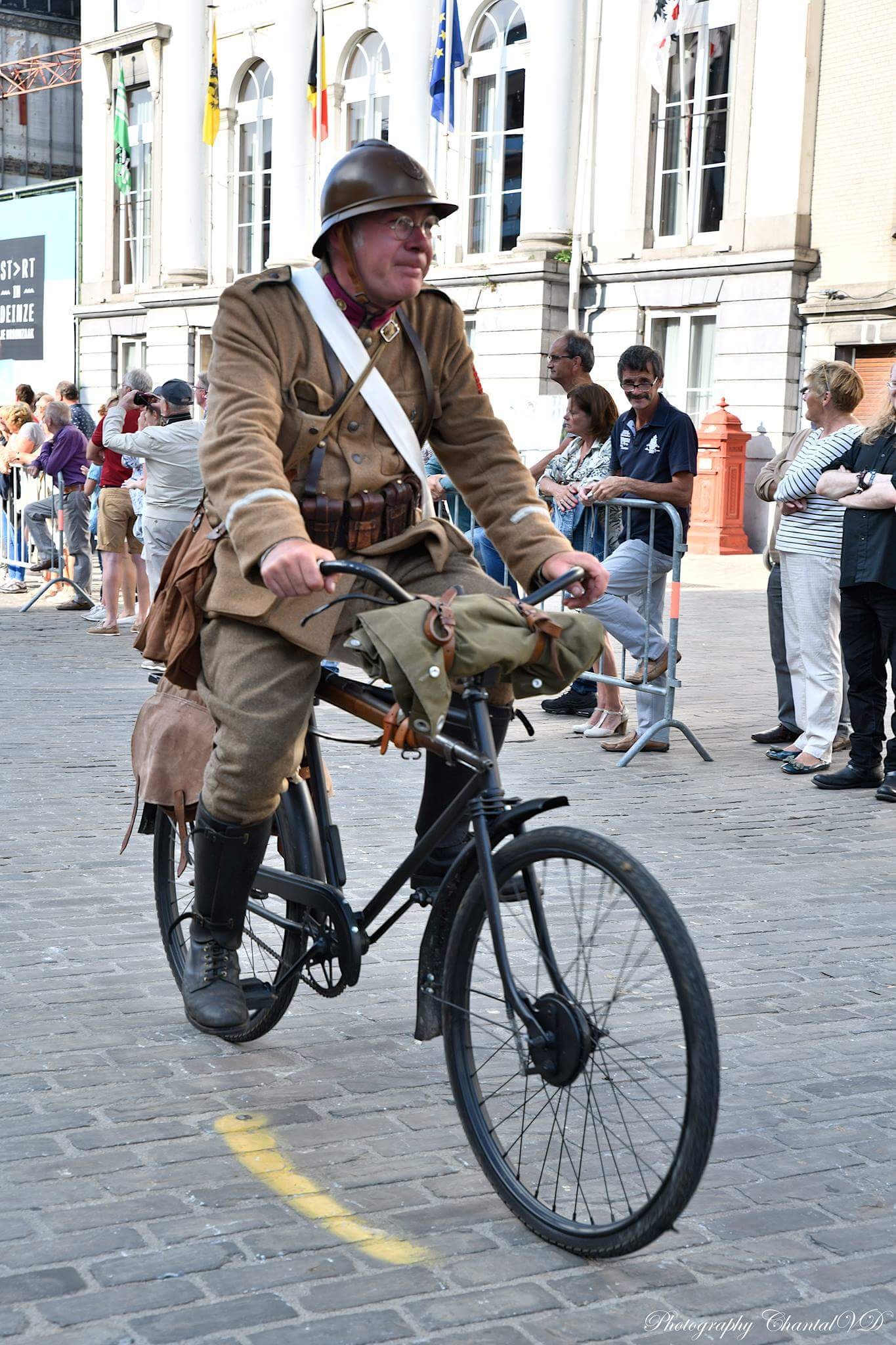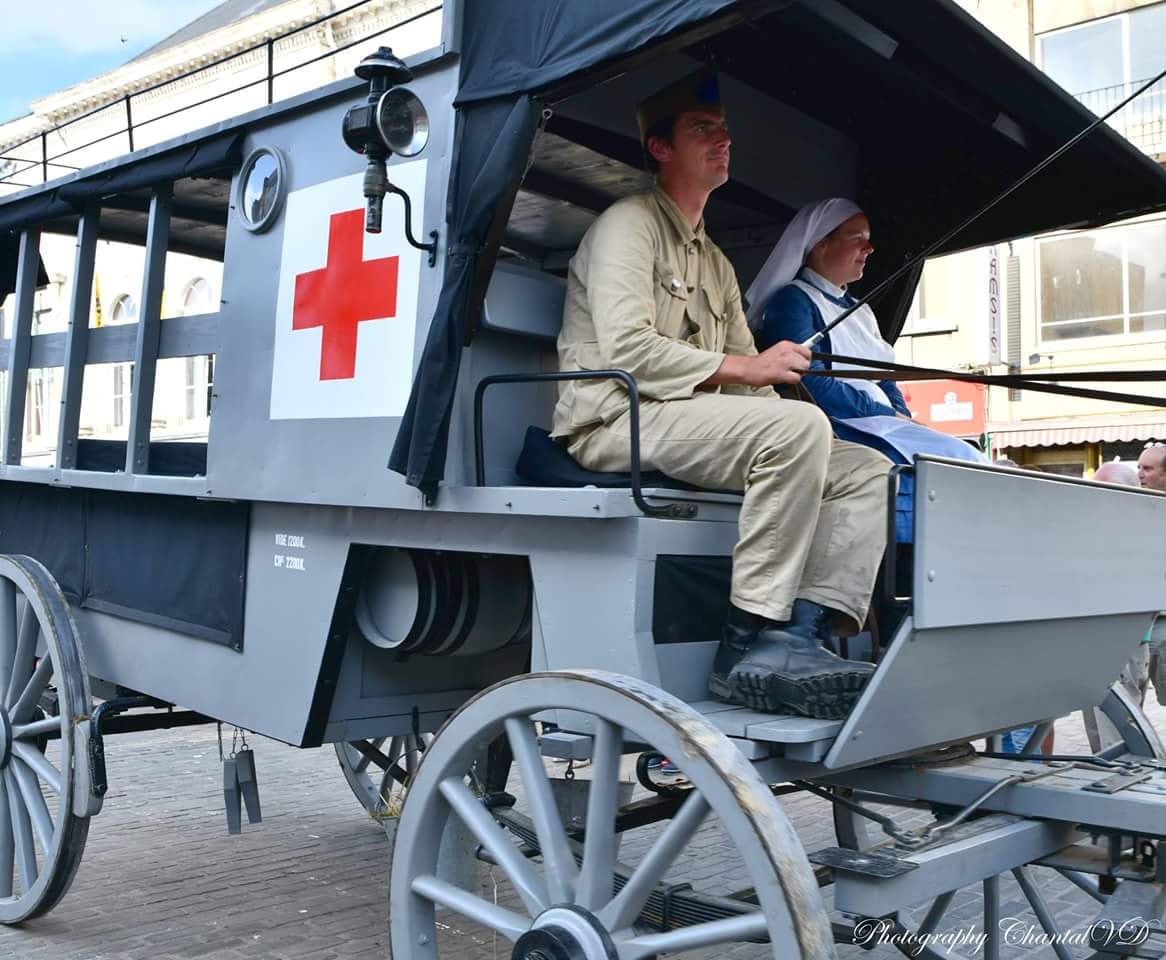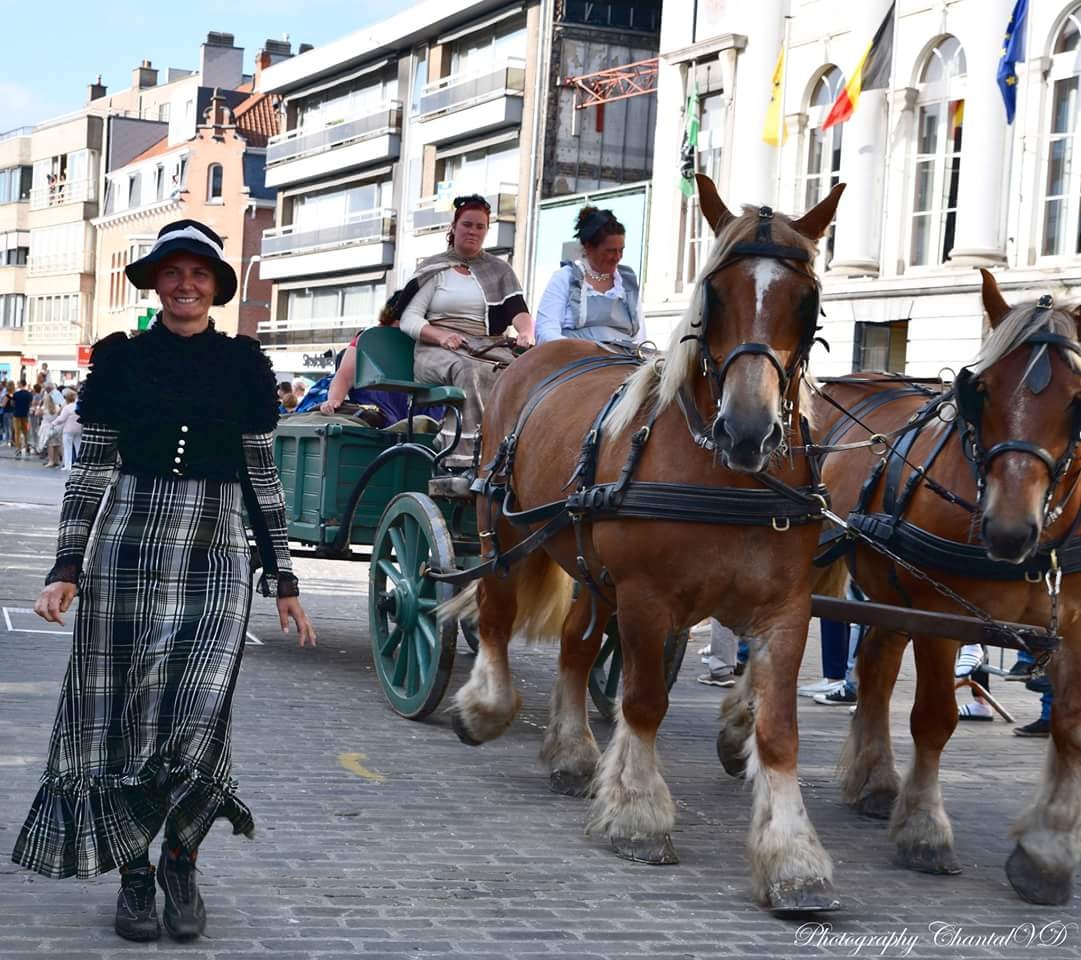
































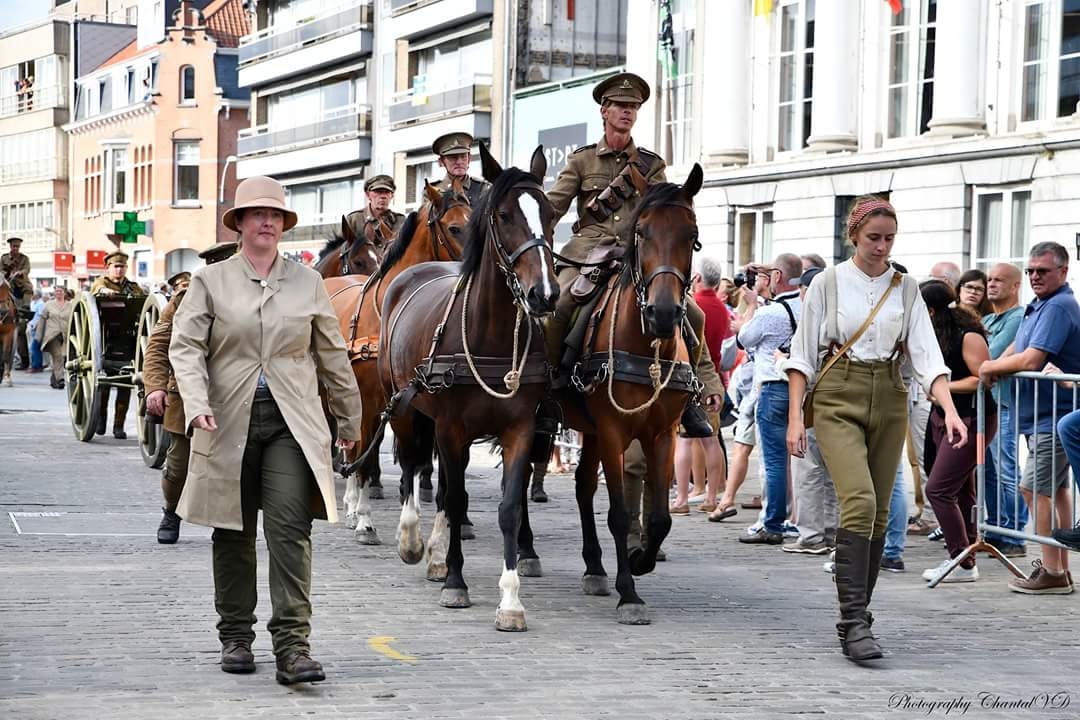
 "The Liberation 1918-2018" project consists of a column of dozens of WWI reenactors in period vehicles, wagons, costumes, uniforms, and equipment, who are trekking across Belgium, following the route of the final counter-offensive of the war.
Four Questions for David Moortgat
"The reaction of the audience was overwhelming."
By Chris Isleib
Director of Public Affairs, United States World War One Centennial Commission
An amazing WWI Living History event has been taking place this past week across Belgium. Called "The Liberation 1918-2018", the project consists of a column of dozens of WWI reenactors in period vehicles, wagons, costumes, uniforms, and equipment, who are trekking across Belgium, following the route of the final counter-offensive of the war. In Flanders Fields of September 1918 a massive campaign was launched by Belgian, British, Commonwealth, French and American forces against the German axis forces in a final effort to end the War of wars and liberate Belgium. To commemorate this final offensive, a historical multinational column embarked on an epic journey from Lo-Reninge to Deinze between 13 and 19 August 2018 -- stopping in several towns, at every memorial and battlefield to pay due homage to all of those who made the ultimate sacrifice for our liberty. The participants are doing this to teach modern people across their country about the important history, and the lessons, from WWI. They are also undertaking this journey as a tribute -- to honor the allied troops, including the American military members, who sacrificed so much in the name of freedom during WWI. Information on the event and the route can be found here: http://debevrijding.be/Home/home%20eng/index.html. We spoke to the leader of this unique living history event, Mr. David Moortgat, President, V.Z.W Platform for Belgian military history.
-- This is a remarkable project! Tell us all about it. Who's project is it? Who is participating in it?
I have started this project with our living history group 4 years ago. With his project there are more than 25 Belgian towns, groups and authorities involved.
It was hard work to have them all on the same line but after long meetings with the local authorities we managed to have the project rolling.
The reason that we started this project is to show the people the army and the end offensive of 1918 and to let them think about it.
Many soldiers died in those last months of the war in a part of the war that is in Belgium not really well known, most people think that the war ended in the trenches.
-- Where did the idea come from? Why did you pick this format of remembrance? How long has it been in the works, with planning & recruiting, etc.?
First the idea was to do a static exhibition but then you only attract people who have interest in the theme anyway.
With a mobile convoy, a living museum going from village to village you pull the people out of their houses to this event.
I roughly guessed that we reached between 75.000 and 100.000 people, what is big for a country as Belgium.
-- What obstacles did your team face to make this project happen? This tour is several days long -- How did you recruit the people to commit to it? Why did you pick the route that you did?
The route itself was quiet easy, we plotted a rout of the smallest roads between every village in the sector were the Belgian army operated in 1918.
With the use of the smallest roads we didn’t bother the regular traffic and also our people that work with horses are happy to stay away from the big stress full roads.
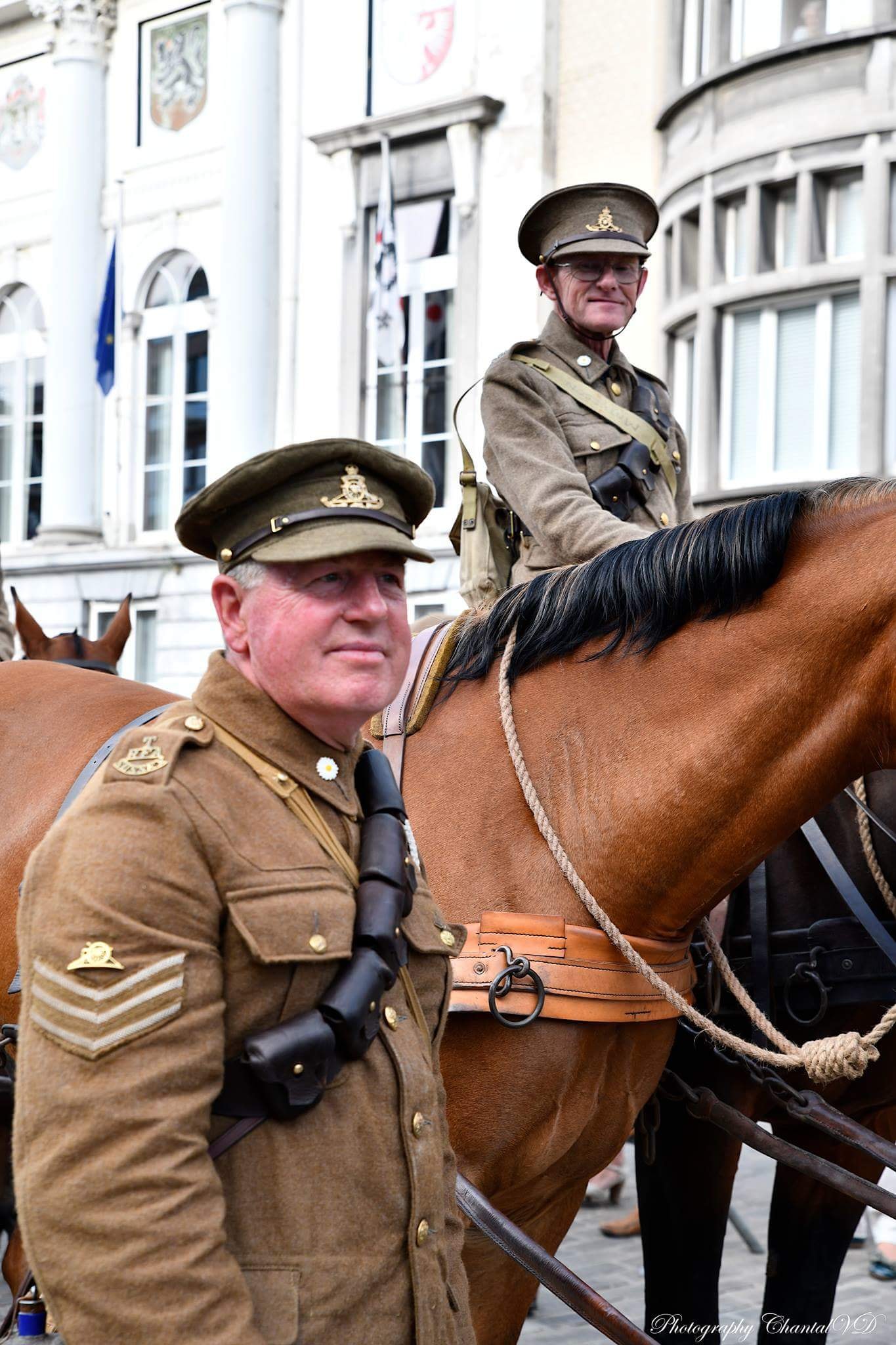 Recruiting people was easy, we have a lot of friends that do living history in another scene (WWII, Napoleonic,..) they like the idea to find out the experience to live as a soldier for a week on the road, and of course the adventure, but more important the honor to walk in the shoes of those soldiers who did this 100 years ago.
A lot of the soldiers in our column are active of ex-soldiers who find it very important to honor our predecessors.
Horses was something else, not every horse owner liked the idea to be away from home with their horses for a week in a uncomfortable circumstances, some were enthusiastic from the beginning other we had to convince to join our column.
After this event every all horse owners were very enthusiastic and they all learned a couple of new things.
-- What has the audience reaction been? What do you want audiences to take from the experience of seeing your folks on the road, and at the commemoration activities? What do the participants take from the experience of being part of the project?
Every day we marched from village to village and did a lot of ceremonies on all the monuments we passed.
The reaction of the audience was overwhelming, we didn’t thought that it would be such a big success. Some elderly people were very moved had the tears in their eyes after seeing our column, they think back to the stories of their dad of granddad.
We received feedback that the combination of the marching column and the ceremonies was a very good mix, once you begin on the ceremony in the town the people realize that this is serious, you take away the idea that this is just for fun.