



































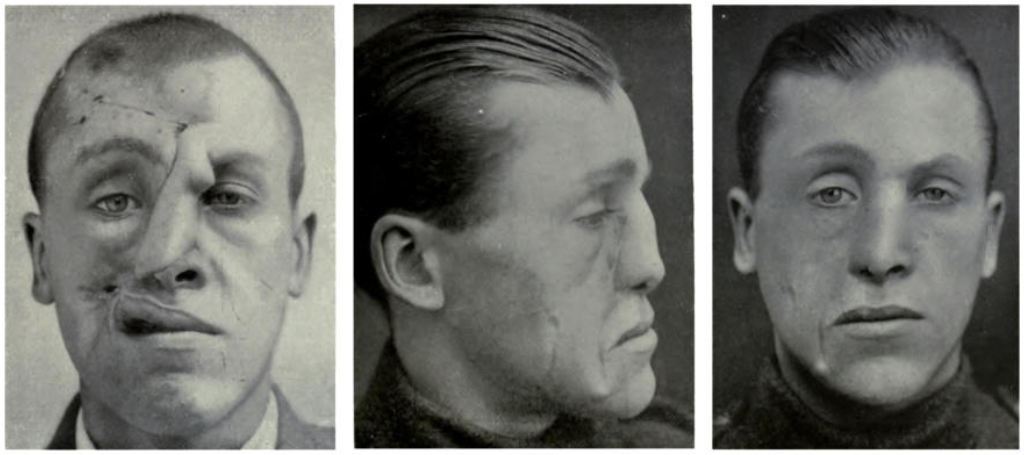
 An injured World War I veteran treated by Dr. Harold Gillies, featured in his 1920 book 'Plastic Surgery of the Face.' (Credit: Public Domain)
Innovative Cosmetic Surgery Restored WWI Vets' Ravaged Faces—And Lives
By Christopher Klein
via the History.com web site
The blue benches outside London’s Queen’s Hospital were reserved for men with shattered faces and smashed dreams. The colorful paint job warned the locals that they might want to avert their eyes, shielding them from coming face-to-face with the awful reality of the war and saving the terribly disfigured young men from another look of horror, another uncomfortable stare.
The soldiers who sat on those benches in the years during and after World War I had suffered facial wounds on the Western Front that had never been seen before in warfare. Hailstorms of bullets, exploding metal shells and shrapnel tore off the flesh and ripped off the faces of men who dared to peek out of their trenches or attempt to dodge machine gun fire.
“The sky was full of shattered iron. Usually the first thing exposed to this shattered iron were human faces. If soldiers were not killed immediately, those who survived could be horribly disfigured,” says Doran Cart, senior curator at the National World War I Museum and Memorial. “This was a graphic war. There were losses of cheekbones, causing the whole face to sink in. Jaws would be completely decimated. When you put up human flesh and bone against 8 millimeter machine guns, shell fragments and shrapnel, there was no contest.”
Improvements in anesthesia and treating infections also meant that these gruesome battlefield injuries had become survivable. However, facial wounds could be so severe that they left soldiers unable to eat, drink or even speak. As terrible as amputations were, soldiers who lost their faces also lost their identities. “It is a fairly common experience for the maladjusted person to feel like a stranger to his world,” wrote World War I surgeon Fred Houdlett Albee. “It must be unmitigated hell to feel like a stranger to yourself.”
Read the entire article on the History.com web site here:
External Web Site Notice: This page contains information directly presented from an external source. The terms and conditions of this page may not be the same as those of this website. Click here to read the full disclaimer notice for external web sites. Thank you.