





























New York City draftee Soldiers made history as the Lost Battalion in October 1918
By Eric Durr
via the U.S. Army Reserve official web site
SARATOGA SPRINGS, N.Y. — One of World War I’s most heroic battlefield stories features a bookish lawyer, a millionaire who charged up San Juan Hill with Teddy Roosevelt, a carrier pigeon that’s now in the Smithsonian, and draftee Soldiers from New York City who served in the 77th Division.
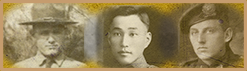
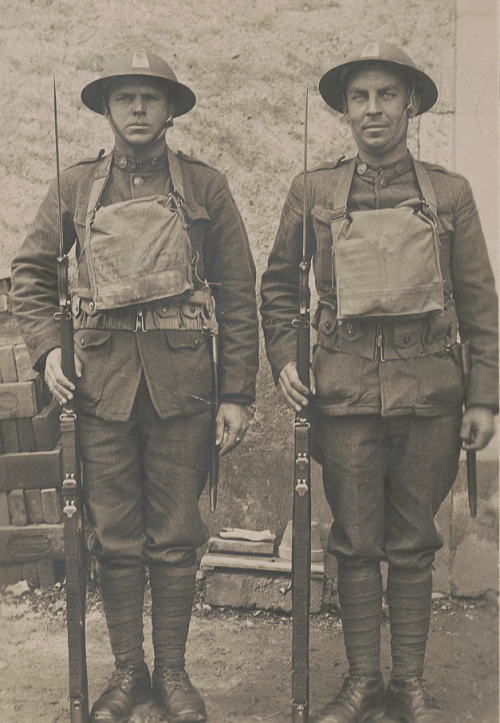 Two Soldiers of the 77th Infantry Division. The division was made up of Soldiers drafteed from New York City and was known as the Metropolitan Division. In October 1918 540 of the division's Soldiers were cut off behind German lines and because known as the Lost Battalion. (Library of Congress) (Photo by Library of Congress)One hundred years later, the story of the 550 men of the “Lost Battalion” – American Soldiers trapped behind enemy lines in the Argonne forest– still resonates.
It’s been the subject of countless books, a 2001 TV movie, and a 2016 song by the Swedish heavy metal band Sabaton.
But the “Lost Battalion” wasn’t actually lost, nor was it even a battalion.
Maj. Charles Whittlesey, the commander, knew right where his men were located. It was their higher headquarters who weren’t sure where they were.
And Whittlesey was only the commander of the 1st Battalion of the 308th Infantry Regiment. The regiment’s 2nd Battalion was also present, along with a company from the 307th Infantry Regiment. But as senior officer, Whittlesey took charge.
The regiments were part of the 77th Division of the "National Army," which was made up of drafted men who were not in the Regular Army and not part of the National Guard. The U.S. Army Reserve's 77th Sustainment Brigade, part of the 316th Sustainment Command (Expeditionary), traces its lineage from the 77th Division.
77th Division Soldiers were mostly from New York City, and the division was nicknamed the “Metropolitan Division” or “Times Square Division” because of that.
By October of 1918, the 77th Division had seen its share of action and taken casualties. A lot of casualties. New Yorkers had been replaced by Soldiers from Midwestern farms who had little training.
The American First Army had kicked off its offensive in France’s Meuse-Argonne region with a goal of reaching the city of Sedan and cutting the railroad, which supplied German armies in France.
The American offensive — the largest battle in American history — involved 1.2 million Soldiers and kicked off Sept. 26, 1918.
On Oct. 2, 1918, Whittlesey and his battalion were to attack north into the dense Argonne Forest with the 2nd Battalion of the 308th in support. Both units should have had about 800 men each at full strength, but now they barely had 800 men together.
Read the entire article on the U.S. Army Reserve official web site.
External Web Site Notice: This page contains information directly presented from an external source. The terms and conditions of this page may not be the same as those of this website. Click here to read the full disclaimer notice for external web sites. Thank you.