










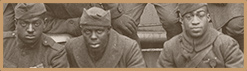
























From the World War I Centennial News Podcast
International Report: Dr. Monique Seefried, WW1 Centennial Commissioner

In September 14th's WW1 Centennial News Podcast, Episode 89, Host Theo Mayer spoke with Dr. Monique Seefried about the Commission's participation in upcoming commemoration events in France. The following is a transcript of the interview:
Theo Mayer: Part of our team is heading to France to participate in the commemoration events over there and leading those efforts is US World War I Centennial Commissioner Dr. Monique Seefried, who's joining us this week for our International Report. Bonjour Monique.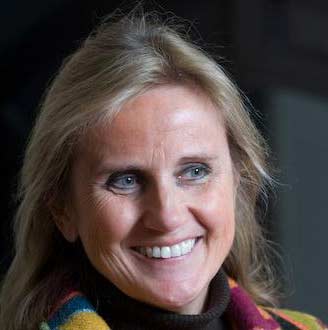 Dr. Monique Seefried is an accomplished educator, fluent speaker of four languages, and a US World War I Centennial Commissioner
Monique: Thank you so much for this introduction.
Theo: So, you're back in France now this week to represent the commission at more events. What's the lineup?
Monique: It's going to be a series of wonderful commemorations. This weekend we are first having a celebration in the town of Fismes, which is where the 28th division from Pennsylvania distinguished itself and a bridge was built after World War I to honor them. Now 100 years later, the city of Fismes has had a wonderful sculptor erect a very modern memorial to commemorate this Centennial. The next day I will be in Vauxaillon, where there is an all-weekend commemoration about the Soldiers of All Colors fight for peace and we will have the 370th regiment from Illinois with schools from Chicago and they will participate in concert and various events. Then, the following weekend will be the commemoration of the Battle of Saint Mihiel, with a parade from the city of Thiaucourt to the cemetery and the next day the commemoration of the Battle of Meuse-Argonne. For 24 hours, the names of the soldiers will be read one after the next and after the ceremony that starts at four PM on Sunday, the candles will be placed on the graves and the reading of the names will continue through the night.
Theo: Well, I understand that it's going to be a sea of candles, that it's quite touching.
Monique: Yes, absolutely. And that morning in fact, we will be visiting the incredible trail that has been set up by the French National Office of Forestry to commemorate the Americans. 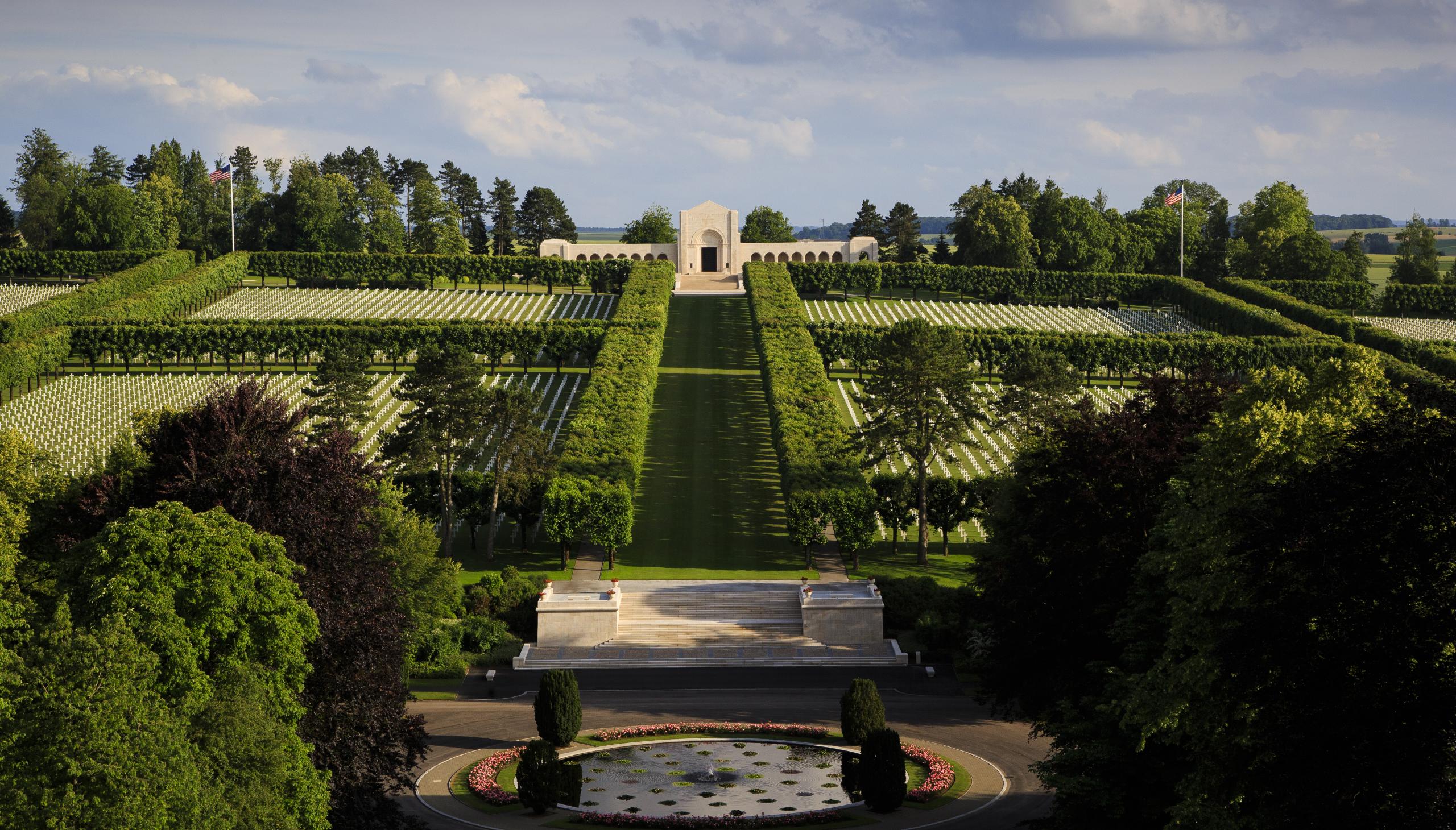 The Meuse-Argonne American Cemetery, the largest U.S. military cemetery in Europe, is one location participating in upcoming commemoration events in France
Theo: Well that's exactly what I was gonna ask you about. Tell us about that please.
Monique: This is one of the most moving projects I have been privileged to be engaged with. It was conceived by a French gentleman who has been working for nearly 40 years for the French National Office of Forestry. His name is Daniel Georges, he's a forest ranger, a forest warden whose duty was to care and supervise the national forests in the Argonne. They had requested our endorsement for a project where 1700 trees represent a Coat of Arms of the 1st Division. Douglas firs and sequoias for the field of the coat of arms and red oaks in the shape of the Big Red One to commemorate 1700 soldiers of the first division who died in those woods in October 1918. The project at the time was only focused on the 1st Division, but the French National Office of Forestry's ONF had also planned an orientation table overlooking the battlefields which saw the combat of the 1st Division, as well as two tourist information panels, a historical one about the 1st Division and a botanical one to highlight the invasive plants which arrived as a result of the war, brought to the region by the foreign armies that passed through.
Theo: Very interesting. It's a new way of thinking of invasive plants.
Monique: Absolutely. You had also German plants and you can see them all now growing together. It's quite an amazing endeavor. So while the geography of the forest itself has barely changed since 1918, these plants are an unexpected and moving witness to the globalization of the Great War. In a preserved environment, the landscapes bear the well-preserved traces of the fortification and the fighting, trenches, ditches, shelters, bunkers, surviving trees. So ONF undertook an Heritage Preservation Program to preserve these highly symbolic and historic places where the 35th, the 1st and the 42nd Division fought to ensure the memorization and look to the future. ONF was able to do so thanks to the support of local and national French public entities as well as private donations and also through the generosity of the McCormack Foundation, the Society of the First Division, and the 16th Infantry Association as well as thanks to the General Douglas McArthur Foundation and the Rainbow Division Veteran Foundation.
Theo: Great information. Monique, thank you for coming in.
Monique: You are very welcome. It was a pleasure and thank you for all you are doing to commemorate and to remember.
Theo: US World War I Centennial Commissioner, Monique Seefried.