

































From the World War I Centennial News Podcast
100 Years Ago: Run-Up To The Armistice
 From November 11th's WW1 Centennial News Podcast, Episode 97: Theo Mayer takes us through the dramatic events of the week leading up to November 11th, 1918. With her allies already out of the war, Germany's government begins to break down. Negotiations between the Allies and Germany continue for several days. Finally, on the 11th, the War That Changed the World ceases and the Allied nations celebrate. The following is transcript of the podcast:
Theo Mayer: The war is almost over! At least, it seems that way. The American and Allied peoples hold their breath. On November 5th newspapers announce an Armistice is at hand and the Austro-Hungarian Empire collapses. The American government simultaneously declares that it had reached complete agreement with its Allies on the terms of an Armistice - terms not to be negotiated but to be imposed on Germany.
November 5, 1918
Headline: “Allies Fix Terms that Germany Must Take; Demands Said to be as Severe as those in Armistice Signed by Austria.” “The end of the world war is in sight. With Austria-Hungary out of the conflict, an announcement was made by the State Department tonight that the allies had agreed on the terms German must accept.” Secretary of State Robert Lansing had announced on the evening of November 4: “According to an official report received this evening the terms of the armistice to be offered to Germany have just been agreed to unanimously and signed by the representatives of the Allies and the United States in Paris. The report further states that diplomatic unity has been completely achieved under conditions of utmost harmony.”
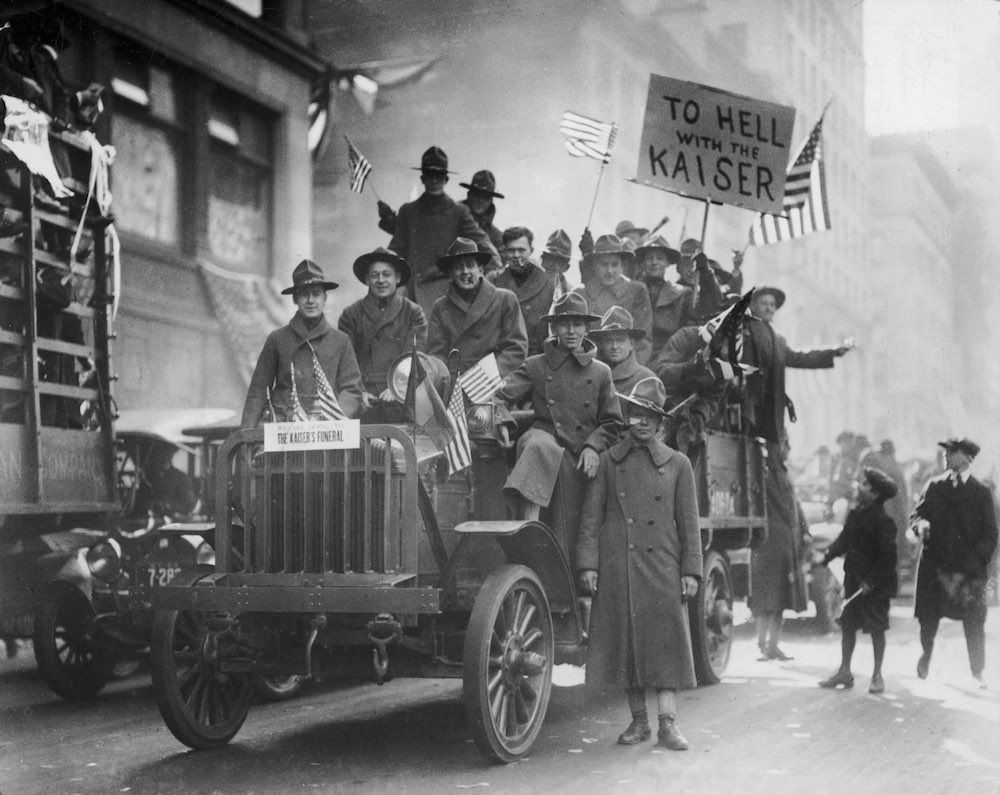 Jubilant Americans celebrate Armistice Day in New York City. Before the Armistice was signed on the 11th, Americans reacted strongly to false reports of the war's end And so the terms of the armistice were transmitted to Germany on the following day; ironically, the same day that the New York Times announced the results of the national election. Despite Wilson’s appeal for a Democratic Congress, the people had given him the opposite: one in which both the Senate and House were controlled by narrow Republican majorities.
With the German army rapidly crumbling and internal discontent on the rise, this time Germany did not hesitate. Immediately after receiving the Allied demands, the German government dispatched four representatives to the Allied lines on November 6, specifically empowered to conclude an armistice. As the delegates passed through the lines on November 7, on their way to meet Allied military commander Ferdinand Foch, news arrived that the German fleet had
mutinied and been taken over by “reds.”
Many Americans, indeed, thought that the war was already over. When false news of an armistice reached New York City on November 7, citizens went crazy.
November 7, 1918
Headline: “False Peace Report Rouses All America; City Goes Wild With Joy; Supposed Armistice Deliriously Celebrated Here and in Other Cities; Crowds Parade Streets; Jubilant Throngs Reject All Denials and Tear Up Newspapers Containing Them.”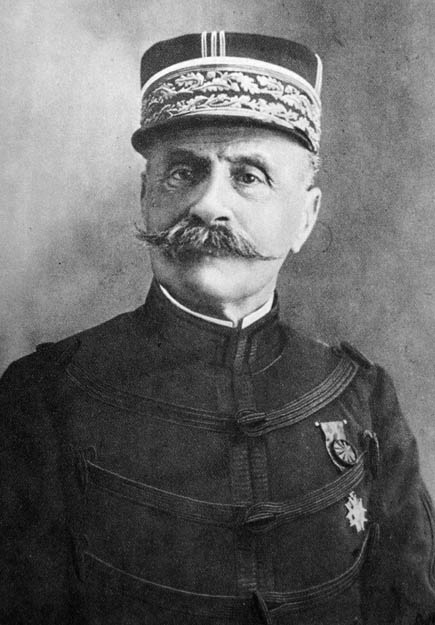 Supreme Allied Commander Marshall Ferdinand Foch
“When the sirens, whistles and bells rose in a resounding clamor, about one o’clock in the afternoon, carrying the news of the supposed signing of the armistice and the cessation of hostilities, men and women of all ages, all stations, in every part of the city, with an unspoken accord, suddenly stopped their business and poured out into the streets to join through the afternoon in a delirious carnival of joy which was beyond comparison with anything ever seen in the history of New York.”
Of course, the war was not quite over yet. Although the German delegates asked for an immediate but provisional truce, Foch refused, demanding that they make a clear response by 11:00 AM on Monday, November 11, or the war would continue.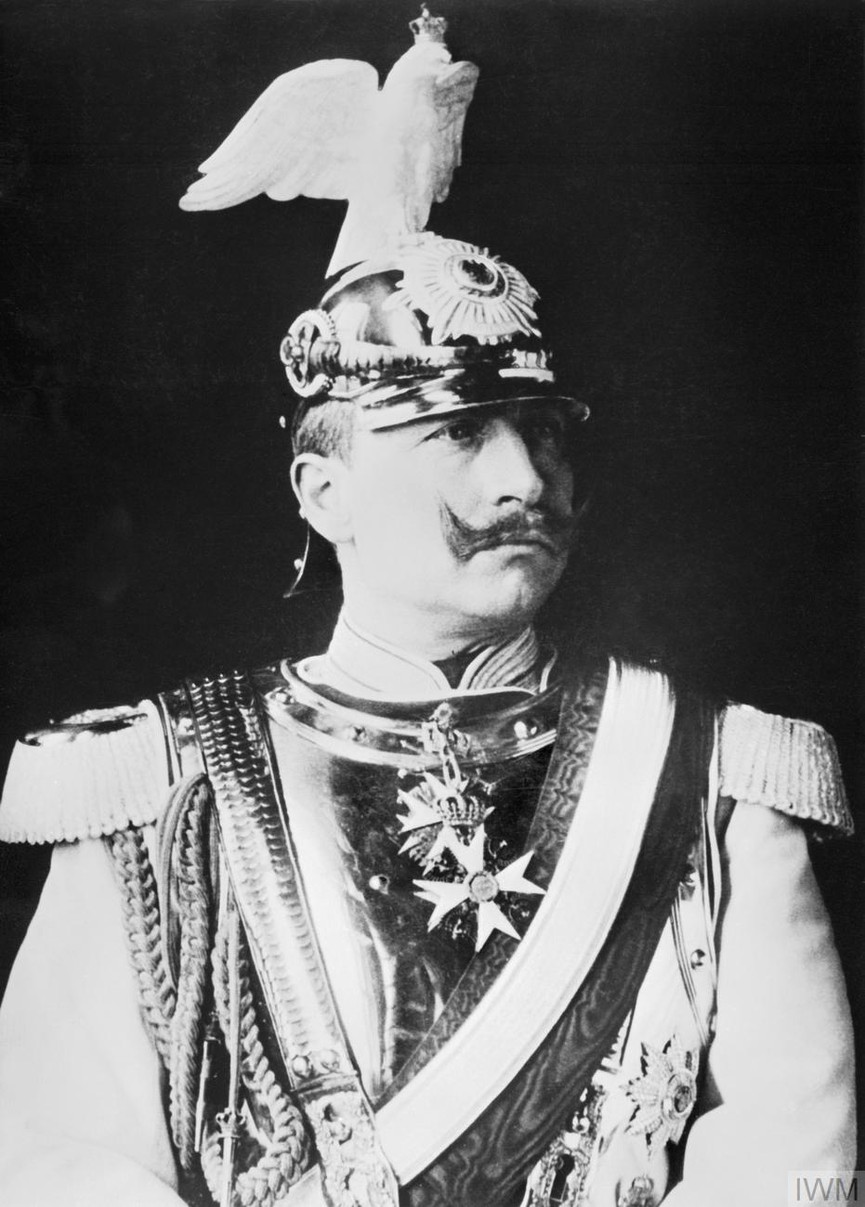 As Germany collapsed and sued for peace, Kaiser Wilhelm II fled the country for Holland
Prince Max resigned as chancellor and rebels in the German state of Bavaria declared a republic, but still Kaiser Wilhelm II hesitated, refusing to abdicate for fear that doing so would cause “anarchy.” And unlike previous moments when the American government warned the people that the war would likely continue, this time it predicted that Germany would, despite the Kaiser’s vacillation, accept an armistice very soon even though the “terms were not debatable.”
Which was the case.
On November 10, the Kaiser’s abdication was announced, along with new elections to choose a
democratic government for Germany as demanded by the armistice. And Prince Max’s farewell was published the same day, admitting that Germany had lost but sounding notes of defiance that would continue to resound well into the future:
“Our soldiers have fought to the last moment as heroically as any army has ever done. The homeland has shown unprecedented strength in suffering and endurance. In the fifth year, abandoned by its allies, the German people could no longer wage war against the increasingly superior forces. The victory for which many had hoped has not been granted to us.
But the German people has won this still greater victory over itself and its belief in the right of might. From this victory we shall draw new strength for the hard time which faces us and on which you also can build.”
The announcement came in the early morning of November 11 that the German representatives had signed the armistice and that the fighting would end at 11am Paris time.
Headline: “Armistice Signed, End of the War!”
“Berlin Seized by Revolutionists; New Chancellor Begs for Order; Ousted Kaiser Flees to Holland.”
Not until the following day, November 12, did the newspapers report that American forces had continued their advance right up until the last moment on the morning of November 11. Very little mention was made of the men who died in the process.