































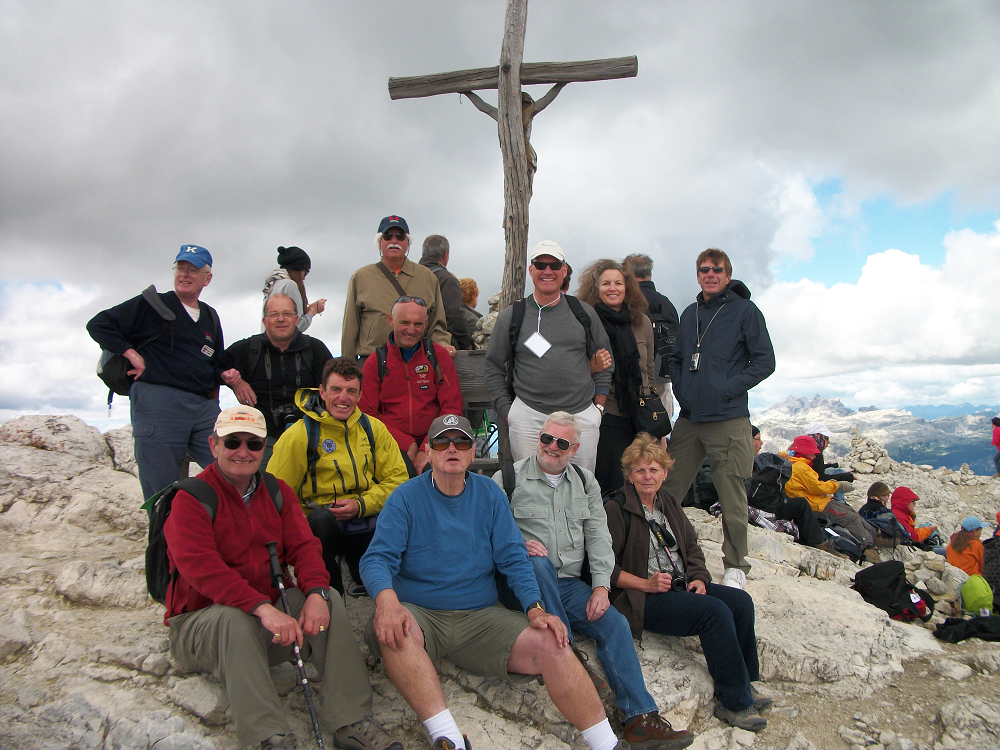
 Mike Hanlon (front row, second from left) with one of the many American tour groups he escorted to European battlefields during the World War I Centennial commemorative period.
WWI Centennial Reflections: Mike Hanlon
"I'm very proud of what we produced."
By Mike Hanlon
Special to the United States World War I Centennial Commission web site
Editor's note: Historian Mike Hanlon has been a WW1CC volunteer since the Commission's earliest days. He has been a frequent contributor to the weekly Sync Call and Podcast, and social media postings. A noted Battlefield Tour Guide, Mike led dozens of tour groups and official staff rides through the major sites in France, Belgium, and Germany during the Centennial period. He is also a formidable publisher, with a number of web sites and magazines focused on World War I. Mike has been interviewed previously in these pages (see here and here). Now, with the Centennial of the Armistice passed, he takes a look back the five year WWI Centennial commemorative period, and reflects of the activities therein.
 Mike HanlonFor over 30 years I've been fascinated by the First World War. I simply find it endlessly interesting and I never tire of learning about it. To share my enthusiasm, for most of that time I've been writing, speaking and publishing on the war, and additionally leading nearly three dozen tours of its battlefields, mostly to the Western Front, but also to Italy and Gallipoli.
As the Centennial approached, I could see that interest in the war would peak during the five-year period, that there would finally be a concerted effort to build a national First World War memorial in the nation's capital, and that there would be many commemorative projects around the country initiated by individuals, organizations, and agencies that would need support and visibility.
I wanted to encourage this nation-wide effort and to play a role myself, by sharing my own understanding of the war and information that I had gathered about it, especially concerning America's effort and sacrifices.
My Centennial work centered around three publications: a daily blog, Roads to the Great War; a monthly newsletter, The St. Mihiel Trip Wire, and subscription magazine, Over the Top. My unifying approach for these publications—and for my battlefield tour business—was to parallel the Great War as it unfolded 100 years ago, month-by-month, day-by-day.
My 2014 tours, for example, covered the opening Battles of the Frontier and the First Battle of the Marne on the anniversaries of the fighting.
In my publications, those events were also analyzed with in-depth articles and other important events the year, the run-up to the war, the assassination at Sarajevo, the July Crisis, the Race to the Sea, and the war on the Eastern Front were featured. This practice was repeated for every year of the Centennial.
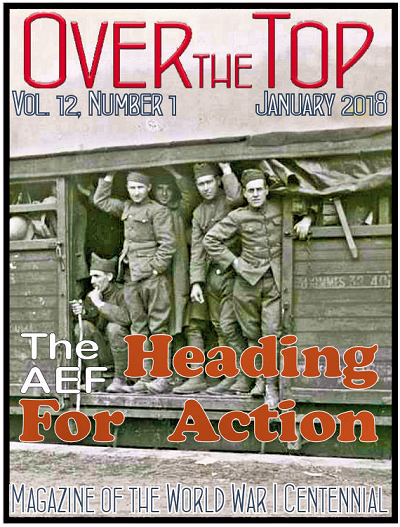 I thought helping our readers to recall and re-conceive the war at the same tempo as the battles and other major crises of the war took place would give them feel for the total phenomenon of the World War, something beyond a summing up of its major happenings. For Over the Top magazine, especially, I had a team of researchers and editors helping me and was able to gain in-depth articles and analysis for the Centennial series from a long list of historians of the war, such as Stephen Harris, Mitch Yockelson, Robert Doughty, Elizabeth Greenhalgh, John Mosier, and many others. I'm very proud of what we produced.
With my most recent, 144th, and final issue of Over the Top, though, my work on the 100-year cycle is complete. I've begun reflecting on our body of work and have come to ask myself how this experience of researching and publishing articles about all the main events of the war—in conjunction with visiting all its significant battlefields—affected my thinking and attitudes about the struggle.
Probably my strongest new impression is a sense of what the war was like for those deeply involved with it—soldiers, statesmen, families at home—specifically, how emotionally wearing and exhausting it must have been. There was bad news to absorb every day and a major emergency monthly; no wonder there were such overwhelming expressions of relief and joy when the Armistice came.
Another important thing I came to appreciate during the Centennial was how deeply America was involved in the war from its start—August 1914—diplomatically, economically, and through the decisions by individual Americans to get involved in the struggle as soldiers or volunteers despite their own country’s neutrality.
Mike Hanlon’s efforts to present the war in its entirety are now available on DVD in the complete collection of OVER THE TOP: MAGAZINE OF THE WORLD WAR I CENTENNIAL. Information on ordering it can be found at his website’s homepage: Worldwar1.com.
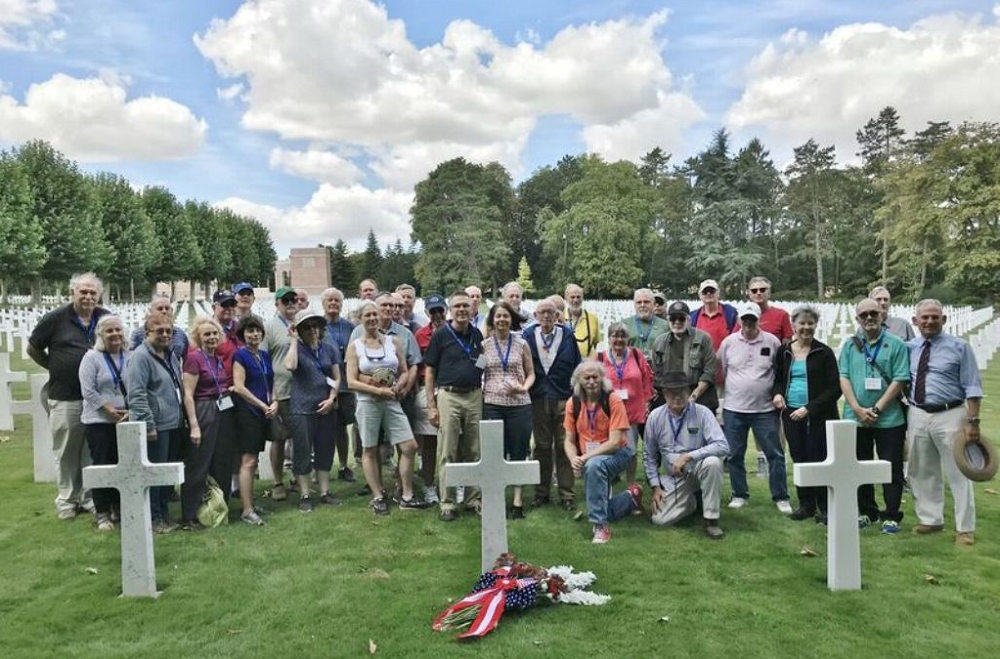 American tour group at the Oise-Anise American Cemetery.