

































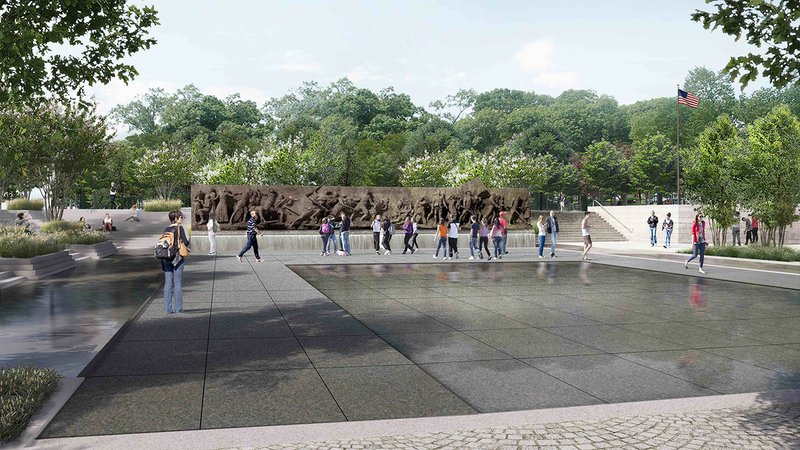
 Image courtesy UA "The design has always been relatively simple and straightforward, even through its many iterations," architect Joe Weishaar says of the World War I Memorial he's designing in Washington, D.C. "Everything in the design needed to look and feel timeless to help the memorial feel relevant even in 200 years, so we've gone with materials that are very timeless themselves: bronze, granite, water, etc."
Victory in design contest led to elation, despair for WWI project, UA grad says
National WWI Memorial winner tells of fits, starts
By Jaime Adame
via the Arkansas Democrat Gazette newspaper Arkansas Online web site
FAYETTEVILLE -- The elation of winning a design competition for a national World War I memorial at age 25 turned at times to cynicism as unexpected obstacles emerged in the months after, architect Joe Weishaar said Wednesday.
"There were times I thought about leaving this project entirely," said Weishaar, a 2013 graduate of the University of Arkansas, Fayetteville.
The team of Weishaar and sculptor Sabin Howard was selected from more than 350 entries to design the privately funded National World War I Memorial.
In what is sometimes known as the Great War, 116,516 U.S. soldiers died, a total that includes 53,402 battle deaths, according to data published by the Congressional Research Service. The World War I Centennial Commission offered the design competition.
Weishaar talked at UA about the trials that followed the January 2016 design competition win, including an unanticipated push to preserve Pershing Park in Washington, D.C., where the memorial is expected to be built. Backers hope to have the project complete by November 2021.
About 70 people in attendance saw Weishaar present images of 16 designs that he said were worked up and presented to agencies as part of the lengthy approval process. Ultimately, the updated design was approved in July, Weishaar said.
"From time to time, this design process leaves you sort of incredibly cynical and maybe even a little bit feeling snarky" Weishaar said.
In meetings, groups would "nitpick" aspects of the memorial, Weishaar said. Comments led him to redo the work.
But the result ended up being a kind of "wonderful sort of experimentation process," Weishaar said.
Read the entire article on the Arkansas Online web site here:
External Web Site Notice: This page contains information directly presented from an external source. The terms and conditions of this page may not be the same as those of this website. Click here to read the full disclaimer notice for external web sites. Thank you.