
































A corner of Virginia "that is forever England"
By Elizabeth Dinger
I love cemeteries. Always have. When I became a ranger at Petersburg National Battlefield in 1997, the best part was knowing I would watch over the Poplar Grove National Cemetery, and tell the stories of the soldiers buried there.
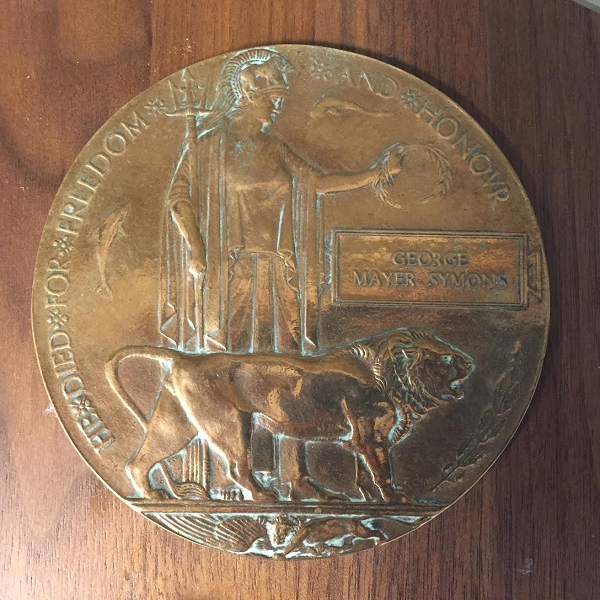 Being an Anglophile from childhood, the first grave I noticed was that of British Army Serjeant Major George M. Symons. How did he come to be buried in a predominately Civil War cemetery on this side of the Atlantic?
Providence must have wanted my questions answered.
Within a short time of my arrival in Petersburg, the family of George Symons began looking for his grave. Symon's niece and her husband, Joyce and Sid Fletcher, who had become U.S. citizens living in Michigan, were eventually able to visit the grave of her father's favorite brother.
And something unexpected happened.
We became connected, became friends, through a man none of us ever met.
To me, Symons is family, the man I call "Uncle George." Even my 10 year old nephew, Jake, who is the son of a U.S. soldier, knows of Uncle George. When Jake comes to visit, we make a trip to the cemetery to pay our respects to "Uncle George" who died on a "foreign field."
A native of London, George M. Symons joined The Royal Fusiliers (City of London Regiment) in 1908. His Army postings included India, the Mediterranean (where he participated in the last major attack of the Gallipoli campaign) and France.
By late 1917 Symons was assigned to the Army Gymnastic Staff as a physical training and bayonet fighting instructor. Promoted to Company Serjeant Major he arrived at Camp Lee, Virginia in August, 1918 where he helped to train the men of the 80th “Blue Ridge” Division.
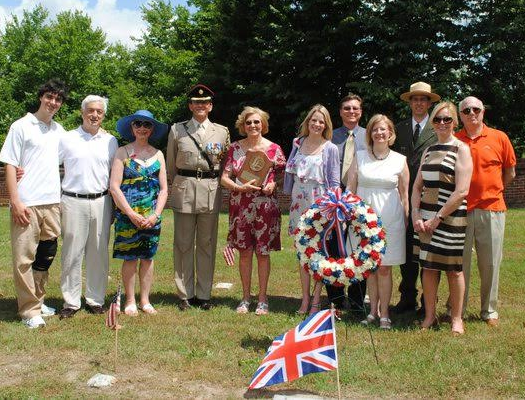 A month later the camp was hit with influenza. One of nearly thirty men who died in a 24-hour period, Serjeant Major Symons died at a camp hospital on 8 October 1918, with the end of the Great War almost in sight. He was 28.
He was buried at Poplar Grove National Cemetery, a unit of Petersburg National Battlefield. In a letter to the family an Army chaplain recounted Symon’s military service, writing “...I suppose, like all of us, he would have preferred to die on the field of battle. He did die on the field of battle, where men were trained by him to fight for all things that make life worthwhile.”
Of the funeral the chaplain wrote “Just below his grave on that hill side, where the Union Jack flies above his sacred remains there was another funeral immediately after, of an American soldier, with the Stars and Stripes above his remains...as I stood on the narrow ledge of earth, which separated these two open graves, and read the sacred words of the service which comes from the English prayer book, I prayed that God would unite their native hands forever in a friendship as unbreakable and as intimate as that quiet repose which was shared by a British and American soldier. “
Grave 5596 at Poplar Grove National Cemetery is truly, as the English war poet Rupert Brooke wrote “some corner of a foreign field that is forever England” made sacred by the earthly remains of Serjeant Major George M. Symons.
Elizabeth Dinger is a Park Ranger in the Poplar Grove National Cemetery at Petersburg National Battlefield in Petersburg, VA