|
|
|
|
|
|
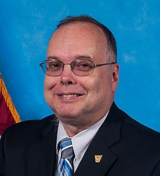
“We are ready now, sir” was the response to a question from the local British commander asking when newly-arrived U.S. Navy destroyers could commence operations against German U-boats. It became the most famous U.S. Navy rallying cry of the war. Navy action against the U-Boat menace spurred radical innovations in technology and tactics that would profoundly change the U.S. Navy, and naval warfare, ever after, according to RADM Sam Cox, USN (Ret.), Director, Naval History and Heritage Command,writing in a guest editorial published in Military Times.
|
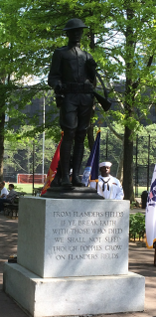
The Flanders House in NYC will host their Annual "In Flanders Fields" Memorial on Friday, May 19th at 11:45 AM at De Witt Clinton Park. In attendance from the government of Flanders will be Hon. Jan Peumans, President of the Flemish Parliament, and Hon. Rik Daems, Chair of the Foreign Relations Committee. The Flanders government is proud of their history and of their longstanding partnership with the American people. They have a number of activities underway for this centennial period to tell that story, to include support for historical exhibits, cultural events, both across the United States and in Europe. Details for the May 19th event, and for other programs can be found here: http://www.flandershouse.org/in-flanders-fields
|
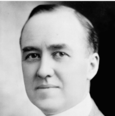
Underwriters Laboratories in the First World War
On April 5, 1918, UL’s founder William Henry Merrill, Jr. was named Chairman of the Fire Prevention Section of the War Industries Board at a salary of $1 per year. An experienced group of fire experts and insurance underwriters was quickly assembled under Mr. Merrill’s capable leadership to collect data related to existing fire hazards in U.S. munitions plants, conduct inspections and enforce adequate fire protections at each plant. Read how well they did on the Illinois site.
|
Mainers marched to make world safe for democracy
With the same patriotic fervor that Maine had responded to a call for troops in the Civil War, more than 35,000 men and women across the state joined the military in 1917 and 1918 to fight the “war to end all wars” to “make the world safe for democracy.” The entire University of Maine Band joined the 103rd Infantry Regiment, as did a squad of warriors from the Passamaquoddy Nation, including the chief’s own son, who was killed in action on Nov. 10, 1918. Read more about how Maine went to war here.
|
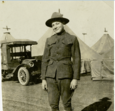
The Automobile in WWI
John Pavlik is a West Allis, Wisconsin native, who served as an ambulance driver with the 32nd Division in France and Germany during World War I. Pavlik enlisted at the age of 16 because he did not want to wait two more years to be drafted and wanted to server his country, specifically as an ambulance driver. The war gave Pavlik the chance a chance to drive a motorized ambulance, instead of using mules and wagon ambulances. Read how he liked his new wheels here.
|
 |
|
|
|
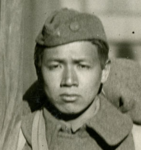
Lau Sing Kee
A Story of Service from the Stories of Service section of ww1cc.org
Submitted by: Guy Takamatsu
Lau Sing Kee served in World War 1 with the United States Army. The dates of service are: Known April 18, 1918 to April 25, 1919.
This writer learned of Lau Sing Kee on a visit to the Chinese Museum located at History Park, a subsection of Kelley Park in San Jose. His medals are on the display, courtesy on loan of his relatives. He won the Distinguished Service Cross and the Purple Heart from the United States and the Croix de Guerre from France. Lau Sing Kee was born in Saratoga, his family moved to San Jose. He died in New York City.
He received his medals for staying 3 days straight at a message center. In spite of his position being shelled and gassed, he refused to leave his post. At one point he was by himself for 24 hours. One wonders how he managed to survive and live until 1967. Others who had been gassed died shortly thereafter in about two years. After the war he received a hero’s welcome in San Jose.
|
|
|
|
|






























 Signature Events Major Moments
 Video Streaming video resources
 Publications Dispatch, Sync-Call and more