|
|
|
|
|
|
The 100 Cities/100 Memorials matching grant program has extended the submission deadline. The program will now accept preservation project submissions until July 10th, 2017. "The deadline was extended for a simple reason”, Kenneth Clarke, President and CEO of the Pritzker Military Museum & Library explained. "We are in touch with a number of people who needed just a little more time to get their packages in. We don't want to tell them 'No.' Those projects are absolutely important to us." Read more about the new deadline and how it affects teams that just missed the deadline.
|

Chemical warfare plays a key role in the "Wonder Woman" movie currently in theaters. Writer David Hambling in Popular Mechanics says that "while DC Comics may not be the obvious source to look for factual accuracy about military history, the movie's take on toxic weapons is more realistic than the usual Unobtainium-powered McGuffin you'd find in a superhero movie." To read more about Wonder Woman's portrayal of World War I history and poison gas, and whether the villain's super weapon really could have been true, check out Hambling's entire analysis here.
|

Sabin Howard, sculptor for America's new National World War I Memorial at Pershing Park in Washington, DC, was a member of a lively arts discussion last week, at the Paul Booth Gallery in midtown Manhattan, New York City. He was invited to provide his insights on the World War I Memorial project on a panel entitled "Heroic and Public Art." The event was attended by an enthusiast crowd of artists and arts supporters, and Howard was pleased with the response from the attendees. Read more about the Public Art panel discussion in New York here.
|

One of America's most comprehensive university archives on World War I is at Brigham Young University. Richard Hacken is the European Studies Librarian at the BYU campus in Provo, Utah. He was kind enough to answer some questions for us about his work developing their World War I Document Archive. His answers show how he feels about this important work, and how important the contributions from relatives of WWI soldiers are to the expansive and ever-growing archive. Read the interview, and find out more about the document archive.
|
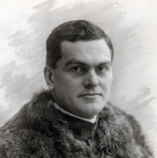
Capt. James E. Miller, one of the first aviators in the U.S. military and the first U.S. aviation casualty in World War I, has been named recipient of the Distinguished Flying Cross more than 99 years after his heroic actions over France in 1918. On the 242nd birthday of the U.S. Army, during a twilight tattoo ceremony at Joint Base Myer-Henderson Hall, Va., Acting Secretary of the Army Robert M. Speer presented the Distinguished Flying Cross to Miller's great-grandson, Byron Derringer. Read about Miller's heroic World War I service and the award ceremony here.
|

Forty miles south of Washington, DC, off of Maryland’s Charles County shoreline near a little town named Nanjemoy, the weather- and water-beaten remains of more than two hundred ships lie in their final resting places in the shallow waters of the Potomac River’s Mallows Bay. “Mallows Bay is the richest marine heritage site in the United States,” according to Samuel Orlando, Chesapeake Bay Regional Coordinator at the National Oceanographic and Atmospheric Administration’s (NOAA) office of National Maritime Sanctuaries. “In addition to being reflective of America’s emergence as a naval superpower during World War I, the Ghost Fleet provides the structure for a unique marine ecosystem.” Read how the industrial complex and economy that grew out of World War I led to the fleet’s demise.
|
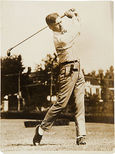
One-hundred years ago this week, the 1917 US Open was cancelled due to the recent American involvement in the First World War. Even though he wasn’t playing in the Open, Bobby Jones made some of his most important contributions to the war effort and to the game of golf. Through the two years spent touring, Jones earned $150,000, all of which he donated to the war effort. Read more about how Jones put the war effort number one here.
|
In our WWRITE blog, this week's post is: "Echoes of Sassoon: A Conversation with Matti Friedman".
The post is written by Brian Castner, co-editor of "The Road Ahead" author of All the Ways We Kill and Die and The Long Walk.
In this post, Castner interviews award-winning author and journalist, Matti Friedman, who is both Israeli and Canadian. He wrote and they discuss his memoir, Pumpkinflowers.
As Friedman and Castner point out, more Canadian soldiers died in the Great War than in any other conflict, and its influence can be felt throughout Pumpkinflowers.
This puts Friedman at odds with many contemporary American veteran-authors, who often reach to other conflicts for comparison when writing about their wars. —Vietnam for Iraq, and Korea for Afghanistan,
Don't miss this fascinating post about how and why WWI would color a Canadian’s view of a very different war in Middle East
|
The WW1 Centennial News Podcast is about WW1 THEN: 100 years ago this week and its about WW1 NOW: News and updates about the centennial and the commemoration.
Available on our web site, iTunes, Google Play, and TuneIn.
Highlight this week include:
100 Year Ago: Flag Day 1917 like no other
100 Year Ago: First Liberty Bond drive big success
Guest: Mike Shuster - Pershing Arrives in Europe
Guests: Eileen Dumont & Paul Callens on Ralph Talbot
Feature: The Storyteller and The Historian: on the selective service
PTSD Month: Charles Whittlesey’s Suicide
Education: Edu-Newsletter “Animals at War” comes out
Feature: The Violin of Private Howard
Media: Wonder Woman - Three theories on why it’s set in WW1
Instagram: Pershing Pic hit on social media
And much more….
|
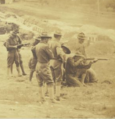
These Maine men answered the call when the US entered the Great War
On April 6, 1917, the United States entered the Great War. Six days later, a telegram from the War Department arrived at Camp Keyes in Augusta: The 2nd Maine Regiment was ordered into active service.
“I am, in consequence,” the letter from Secretary of War Newton Baker read, “instructed by the President to call into the service of the United States forthwith, through you, the following units of the National Guard of the State of Maine.” President Woodrow Wilson and Congress had exercised their right to mobilize the National Guard in a state of war for the first time since the signing of the National Defense Act of 1916.
The 15 companies of the 2nd Maine began recruiting to wartime strength in towns across the state. On July 5, the companies began to assemble at Camp Keyes in Augusta.
Who were the men who made up this 2,002-man organization? Find out more about the 2nd Maine here.
|
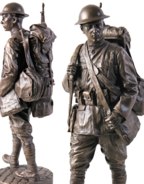
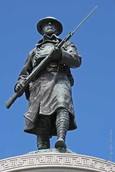
Limited Edition Doughboy Statue: $175.00
Inspired by the WWI U.S. Army infantryman, this 12” cold cast bronze collector statue is a tribute to those who fought in The Great War.
Imagine a scene somewhere in France mid- 1918. The U.S. infantryman wears standard issue M1917 khaki drab tunic and breeches, is equipped with M1917 cartridge belt, M1910 canteen, haversack and pack carrier, and the U.S. Springfield M1903 30 .06 caliber rifle. A Colt .45 pistol serves as his sidearm and his helmet and gasmask may be British or U.S. made. All other equipment is U.S. issue, right down to the hobnails on his M1917 “Pershing” trench boots.
These finely sculpted limited edition statues are cast and finished one at a time - no two are truly alike. Extensive research and fine sculpting ensures that the over 200 hours of sculpting time, often spanning over two years, result in a statue that is historically and physically accurate as possible. Each limited edition statue is stamped with individual serial numbers and comes packaged in a high quality color presentation box. A portion of the proceeds from the sale of this item will help fund the America's WWI Memorial in Washington, D.C., commemorating the valor and sacrifices of all U.S. WWI soldiers.
A Certificate of Authenticity as Official Merchandise of the United States World War One Centennial is included.
This and many other commemorative items can be found at the Official WW1 Commission merchandise shop.
|
 |
|
|
A Story of Service from the Stories of Service section of ww1cc.org
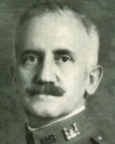
Submitted by: John Robertson
John D. Guthrie served in World War 1 with the United States Army. The dates of service are: Known July 12, 1917-July 29, 1919.
Prior to volunteering, John D. Guthrie was the forestry supervisor of Coconino National Forest. He was commissioned Captain on June 26, 1917, and ordered to active duty as commanding officer of Company C, 1st Battalion, 10th Engineers at Camp American University on July 12th. The 10th Engineers was a forestry regiment, and consisted of volunteers from the US Forestry Service and other lumbermen from across the country.
After several months of training at Camp American University, they departed for Europe on the Carpathia on September 10, 1917. The 10th Engineers arrived in Glasgow on October 2nd, and entrained for Southampton. After a night crossing of the Channel on "La Marguerite", the regiment landed in Le Harve, France on October 7th. They entrained again on French "40 and eights" arriving at Nevers, France and establishing camp on October 9th.
|
|
|
|
|




























 Signature Events Major Moments
 Video Streaming video resources
 Publications Dispatch, Sync-Call and more