|
|
|
|
|
|
Final fifty “WWI Centennial Memorials” announced in wrap-up of competition phase of 100 Cities / 100 Memorials

The U.S. World War I Centennial Commission and the Pritzker Military Museum and Library announced the final 50 WW1 Memorials to be awarded grants and honored with the official national designation as "WW1 Centennial Memorials". Now the 100 selected memorial, which each will receive a $2,000 matching grant, towards the restoration, conservation and maintenance of these local historical treasures, are hard at work on bringing their respective memorials up to top condition. Read more about the final fifty selectees, and where 100 Cities / 100 Memorials goes from here.
|
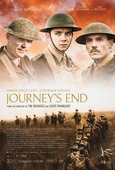
The movie Journey’s End opened widely across the U.S. in April. Journey’s End tells the story of Captain Stanhope and his British regiment during World War I. The regiment of about 120 soldiers goes back to a front line with knowledge of an enormous upcoming attack and the knowledge that they will likely be on the front to face it. The film portrays how these men waited as time tick by until the attack and the ways in which each of these individuals deals with their fear. The World War I Centennial Commission had a chance to interview director Saul Dibb on our weekly WW1 Centennial News podcast a few weeks ago about his vision for the film. Read the entire interview here.
|
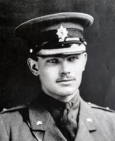
Lifelong friends Ed Nef and Doug Hartley, are both 84 years young, and they recently undertook a remarkable project -- to create a documentary film about Doug's uncle, Charles Fletcher Hartley. One hundred years ago, Charles Fletcher Hartley was an American living overseas, who left a comfortable life in order to join the British Army. He served in the trenches as an infantry officer with the famous Coldstream Guards. The film, An American Martyr, is a remarkable finished project. We caught up with Ed and Doug recently to find out more about their movie.
|
A new scholarly journal tackles a dual subject - Pennsylvania oil and World War I - and outlines how the two topics were closely intertwined. The special Oilfield Journal edition, timed to mark the 100th anniversary of America's entry into the War to End All Wars, lays out "the impact of the global war on the local region." Petroleum products, from lubricants to gasoline, played a crucial role in World War I, and nowhere was that impact more dramatic than in Pennsylvania's oil patch. Read more about the surprising connections between Pennsylvania oil and World War I here.
|
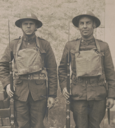
By the time German forces launched Operation Michael on the Western Front on March 21, 1918, only six full American divisions had arrived in France. Desperate to ramp up the American contribution as fast as possible, AEF Commander General John J. Pershing and French Generalissimo Ferdinand Foch agreed to increase the tempo of troop shipments across the Atlantic Ocean. It was time to send in the draftees of the so-called. The first of these divisions departed New York City one hundred years ago: the 77th “Metropolitans” and the 82nd “All-Americans”. Read more about the impact these two New York units had when they arrived "Over There" in 1918.
|
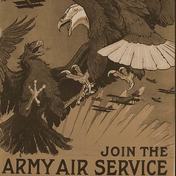
Episode #66
Highlights: April 1918 Preview
April 1918 Preview Roundtable - Dr. Edward Lengel & Katherine Akey | @ 02:50
Spring Offensive on Easter - Mike Shuster | @ 14:50
War in The Sky - Pilots and PTSD - Mark Wilkins | @ 18:30
Basketball in WWI - Dr. Lindsay Krasnoff | @ 27:05
100 Cities / 100 Memorials - Round#2 awardees announced | @ 32:50
Speaking WWI - “over the top” | @ 36:05
WWI War Tech - The Paris Guns | @ 37:15
Dispatch 4/3/18 highlights | @ 39:20
Centennial Social Media - Katherine Akey | @ 41:00
|
Break of Day - Poet Isaac Rosenberg
“Dawn has never recovered from what the Great War did to it,” writes Paul Fussell in The Great War and Modern Memory. This week's post explores the unprecedented notions of dawn in the WWI poetry of British soldier, Isaac Rosenberg, who died on Easter Sunday, 1918. Dawn, an almost-universal symbol for renewal, became one of the most painful times of day for soldiers in the trenches because it revealed the reality of the nightmares that battle brought them in the dark. Don't miss this post on one of the most important, prolific poets of the Great War, Isaac Rosenberg.
|
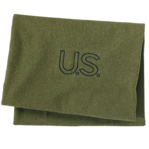
Woolen U.S. Army Blanket
Keep warm while showing your American pride with this classic green woolen U.S. Army blanket.
Still proudly Made in the USA by Woolrich, Inc., the oldest continuously operating woolen mill in the United States since 1830, the blankets were originally purchased by the U.S. military to supply our troops. Designed to be used by soldiers in the barracks, this Limited Edition blanket features a heat-marked “U.S.” emblem on the center and an exclusive fabric garment label commemorating the U.S. centennial of World War One. A portion of the proceeds from the sale of this item will help fund the National WW1 Memorial in Washington, D.C. Fabrics and Features: 66”W x 84” L; 24 oz. 65% wool/35% recycled wool. Overseamed at all four sides. Made in USA.
This and many other items are available as Official Merchandise of the United States World War One Centennial.
|

|
|
|
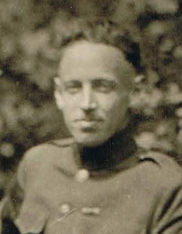
Submitted by: Tish Wells {grand-niece}
Donald Chapman born around 1889, Donald Chapman served in World War 1 with the United States Army. The enlistment was in 1917 and the service was completed in 1919.
Story of Service
The story of Donald Chapman
In November 1917, Donald Chapman, 28, wrote to his mother, Ella, living in Ithaca, New York, “I have not been called yet.” He was a prolific letter writer to his sister, Mildred, and his mother.
He had expected to be drafted at any time. The Selective Service Act had been enacted on May 18th, 1917.
In the meantime, he was working with automobiles in Detroit, Michigan, and thinking ahead. “If I do not have to go to war,” he wrote, “I can make a lot of money in the spring. Second-hand cars will sell like hotcakes, as they are cutting down on the output of new ones.”
On December 15, he’d taken advantage of an “opportunity to enlist at my trade as auto mechanic… in the Ordinance Dep.” of the Third Division.
|
|
|
|
|






























 Signature Events Major Moments
 Video Streaming video resources
 Publications Dispatch, Sync-Call and more