|
|
|
|
|
|
CFA meeting July 19 could bring go ahead for building National World War I Memorial in DC
The Commission of Fine Arts (CFA) in Washington, DC will meet on Thursday, 19 July 2018, 9 a.m. at 401 F Street, NW, Suite 312, with the design for the National World War Memorial being the second item on the meeting agenda. The CFC will take written public comments regarding the design to be distributed to CFA members for their consideration. The CFC does not guarantee that comments received after 4:00 p.m. the day before a Commission meeting will be reviewed prior to presentations. Therefore, if you want to support the National World War Memorial in Washington, DC, submit your written comments here before 4:00 p.m. on Wednesday, July 18, 2018.
|
Senators Tester, Heller introduce measure to honor WWI "Hello Girls"
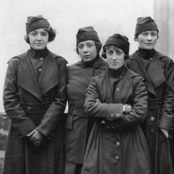
U.S. Senators Jon Tester (D-Mont.) and Dean Heller (R-Nev.) are honoring the groundbreaking service of the women who connected American and French forces on the front lines during World War I. The Senators’ bipartisan Hello Girls Congressional Gold Medal Act will award the women of the U.S. Army Signal Corps, dubbed the Hello Girls, with the Congressional Gold Medal for their service and subsequent 60 year fight to be recognized as veterans. Read more about this bipartisan proposed legislation here.
|
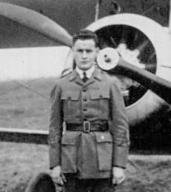
When the United States entered World War I, William Augustus Wellman, the great-great-great grandson of Francis Lewis, the New York Signatory of the Declaration of Independence, was eager to serve. He was quick to apply to the U.S. Air Service, but was denied, due to his lack of education. Undeterred, he quickly moved to join the Norton-Harjes Ambulance Corps, part of the British Red Cross. The organization accepted many American volunteers to serve in France during the war, including a sixteen-year-old Walt Disney, who lied about his age to join. Wellman was then transferred to the French Foreign Legion and became the first American to join the Black Cat Squadron of the Lafayette Corps. In the second of our series on Hollywood and World War I, read how.Wellman's wartime aviation performance earned him the the nickname “Wild Bill,” a name that would follow him after the war, all the way to Hollywood., where that wartime aviation expertise would help shape the first motion picture to win the Academy Award.
|
The U.S. World War I Centennial Commission announced the formation of an educational partnership with the Gilder Lehrman Institute of American History, National History Day (NHD), and the National World War I Museum and Memorial. This new educational program will educate both teachers, and school students, on World War I, through a series of over 100 teaching events nationwide, which will include workshops, webinars, and other means of instruction. Additional components of the program will include:
- Integrated meetings with incorporating assets from all partners
- Webinars
- “Master Teacher" trainings
- Additional content development for online, newsletter and adult programming
Read more about this new and enduring partnership to teach new generations about America in World War I.
|
From the World War I Centennial News Podcast
Remembering our World War I Veterans: Doughboy MIA with Rob Laplander
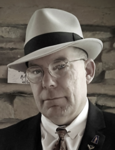
In July 6th's WW1 Centennial News Podcast, Episode 79, author and Doughboy MIA managing Director Rob Laplander spoke with host Theo Mayer about his work, and the ongoing effort to locate, identify, and commemorate Americans who went missing in action during the Great War. The Doughboy MIA motto is “A man is only missing if he's forgotten.” Laplander and his team of volunteers, supported by the U.S. Foundation for the Commemoration of the World Wars, is not letting the World War I MIA be forgotten. Read the transcript of the interview with Robert Laplander here.
|
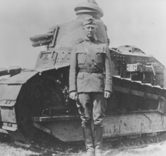
In July 6th's WW1 Centennial News Podcast, Episode 79, host Theo Mayer spoke with Karlen Morris, retired veteran from the Kentucky National Guard and commander of the Patton Battalion USABOT, and currently project manager for the new U.S. Tank Corps Monument, and Phil Wilburn, sergeant first class retired, also with USABOT, and a Patton Battalion board member and member of the monument committee, about George Patton and the US Tank Corps Monument in Fort Knox, Kentucky. Read a transcript of the interview here:
|
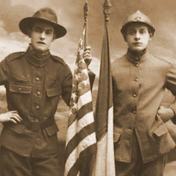
Episode #80: Our Friends in France
100 Years Ago: Why America Celebrated Bastille Day | @02:05
War In The Sky: Quentin Roosevelt falls | @10:05
America Emerges: Marne and more - Dr. Edward Lengel | @12:15
Great War Project: Writing WWI - Mike Shuster | @18:40
Commission News: $1.8M education partnership | @23:30
Remembering Vets: Finding you WWI Ancestors - Debra Dubek | @25:15
Stories of Service: Archiving those Stories of Service | @34:05
100 Cities / 100 Memorials: Saugerties NY - Bill Payne, Vince Buono & Lisa Polay | @36:20
Speaking WWI: “Alleyman” | @43:50
WWI War Tech: Minenwerfer and Trench Mortars | @45:55
Dispatch: Newsletter highlights | @48:15
The Buzz: Selected Social Media - Katherine Akey | @51:05
|
The Story of California's Muwekma Ohlone Indians in WWI
Check out this great post this week in the WWrite blog!
In 1925, the Muwekma Ohlone Indians were erroneously declared extinct in California.
Ethnohistorian Alan Leventhal has dedicated his life and career to correct this mistake. Don't miss WWrite's look at his work on writing and telling the story of Ohlone WWI veterans, who have proved that they have never stopped living...or fighting.
|
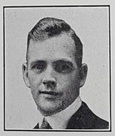
A man is only missing if he is forgotten.
Monday's MIA this week is Corporal Edward Graham. Corporal Graham was born May 27th, 1889, at Burnettsville, Indiana and was a telegraph operator by trade. He enlisted in the regular army in July, 1917 and was sent to Ft. Leavenworth, Kansas in November of that year. Assigned to Company C, 5th Field Signal Battalion, he went to France in March of 1918. During the Meuse-Argonne Offensive, he served around the Montfaucon area of operations, patrolling and repairing communication wires; a particularly dangerous assignment which exposed him to regular shell fire. On October 6th, 1918, Corporal Graham was reported Missing in Action. Nothing further is known at this time.
Would you like to help us solve this case? Give 'Ten For Them' to Doughboy MIA and help us make a full accounting of the 4,423 American service personnel still listed as missing in action from WW1. Make your tax deductible donation now, with our thanks.
|
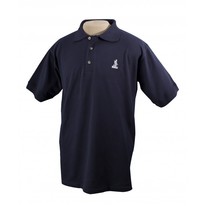
Perfect for summer! Inspired by the iconic image of an American Doughboy, you can wear your American pride with this Made in the USA polo shirt. An informal term for a member of the U.S. Army or Marine Corps, “Doughboy” is especially used to refer to the American Expeditionary Forces in World War One. Largely comprised of young men who had dropped out of school to join the army, this poignant lone silhouette of a soldier in trench warfare serves as a reminder of those who sacrificed so much one century ago. Shirt features: Navy with white Doughboy embroidery. 100% combed cotton pique, 6.2 oz. pre-shrunk fabric. Shirt has 3 wood-tone buttons, and side seam design for shape retention. Mens’ sizes available S – 2XL. Proceeds from the sale of this item will help to fund the building of the national World War One Memorial in Washington, D.C.
This and many other items are available as Official Merchandise of the United States World War One Centennial. A Certificate of Authenticity is included.
|
|
|
|
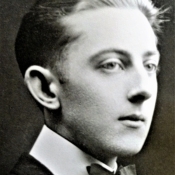
Submitted by: Stephen Nelson
Samuel L. Derby born around 9/7/1891, Samuel Derby served in World War 1 with the United States Army. The enlistment was in 1918 and the service was completed in 1918.
Story of Service
Samuel L. Derby was Killed in Action in the Battle of Argonne Forest, France 1918. The Battle of Argonne was deemed the largest battle in the United States history. The battle lasted 47 days and involved 1.2 million American soldiers and over 26 thousand died.
Born on September 7, 1891. He was one of seven children of Silas and Celia (Burch) Derby. Samuel L. Derby grew up on Institute Street, Frewsburg, New York. Called Sammy, he was active in the normal activity of the time, camping, fishing and canoeing on the Conewango Creek. during Winter months he and friends would ice skate on the Conewango flats or coast on the nearby snow-covered hills.
The coming year of 1917, America entered the World War and for the boys, the carefree days were at an end. All through that summer, fall and following winter the boys of Frewsburg were leaving for army camps. Sammy had graduated from Frewsburg Schools and worked at a local furniture factory until he joined the Army.
|
|
|
|
|



























 Signature Events Major Moments
 Video Streaming video resources
 Publications Dispatch, Sync-Call and more