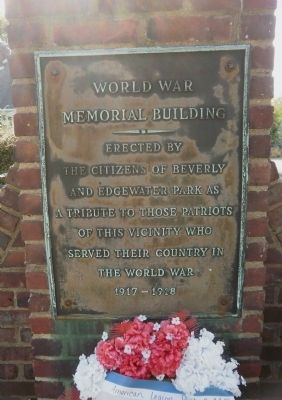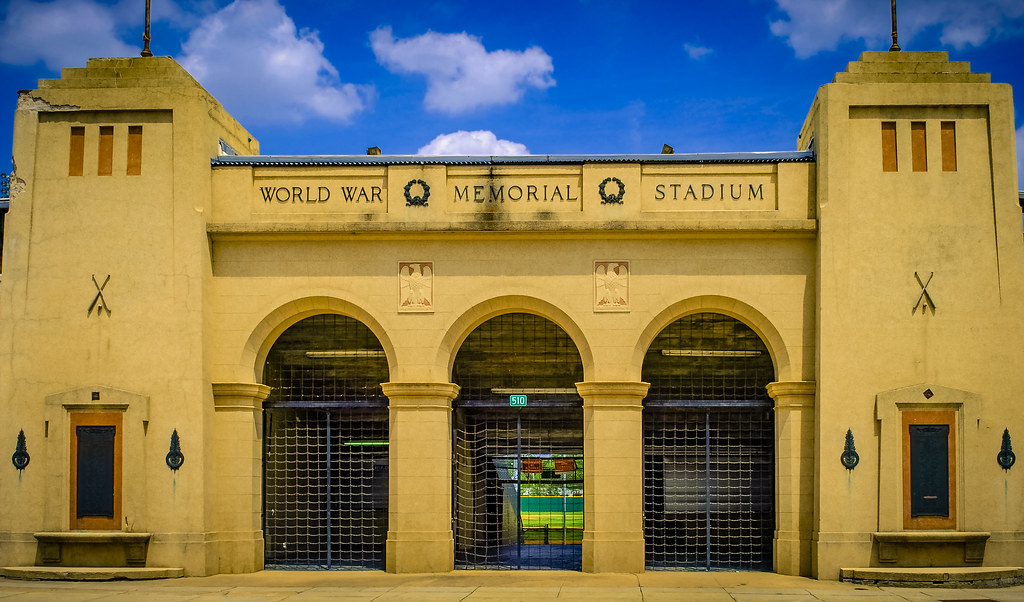
































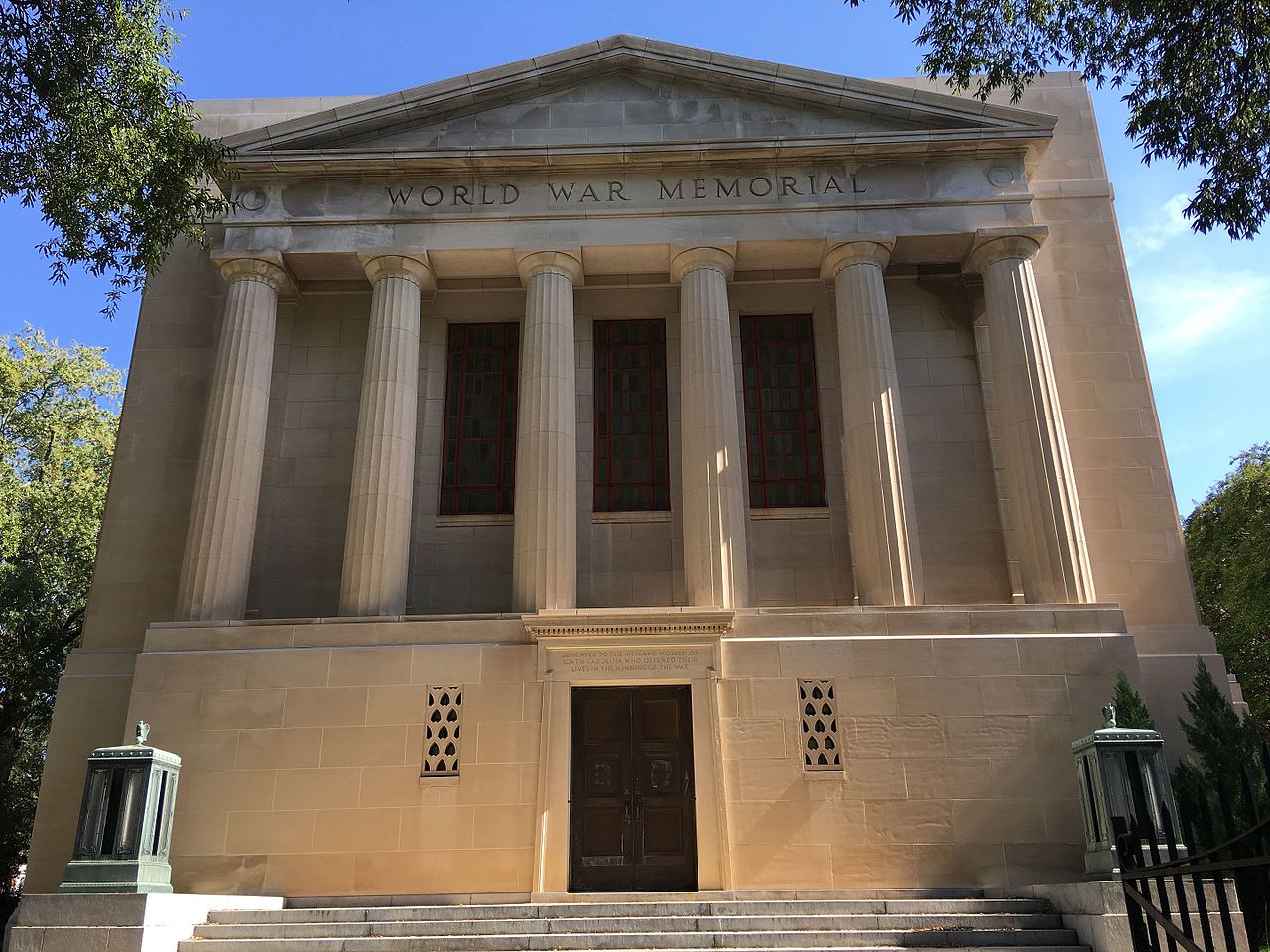
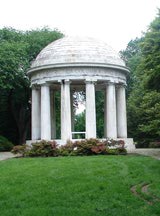
The World War Memorial Building, built in 1935 in Columbia, is significant as an excellent example of early twentieth-century Classical Revival architecture. The building also has the distinction of being designed by the prominent local architectural firm, Lafaye and Lafaye. This Classical Revival memorial was built to honor the men and women who served in World War I and still maintains the architectural integrity of its original construction. The memorial was first proposed by Governor Richard Manning and approved by the General Assembly in 1919. In that same year the Assembly appropriated $100,000 towards its construction, which was later withdrawn due to the Depression economy. From 1919 to 1935 the War Memorial Commission raised building funds primarily through private subscriptions. In 1934, the state received $33,200 in a grant from the Pubic Works Administration, and in 1935, construction began without the funds originally appropriated by the state. The Memorial Building portrays a sense of strength and fortitude with its solid limestone construction and massive temple form columned facade. The carved detail of medallions, laurel, and memorial inscriptions remain in complete integrity. Listed in the National Register May 26, 1995
From its construction until 1960 the building was the home of the South Carolina Department of Archives and History. Then it was used by the University by the Department of International studies. From 1972-2002 the building became the home of the South Carolina Confederate Relic Room and Museum. It is now used by University Publications.
Above the front door it is inscribed:
Dedicated To The Men And Women Of
South Carolina Who Offered Their
Lives In the Winning Of The War
Monuments & Memorials
"The centennial of World War One offers an opportunity for people in the United States
to learn about and commemorate the sacrifices of their predecessors."
from The World War One Centennial Commission Act, January 14, 2013
 World War One was a watershed in American history. The United States' decision to join the battle in 1917 "to make the world safe for democracy" proved pivotal in securing allied victory — a victory that would usher in the American Century.
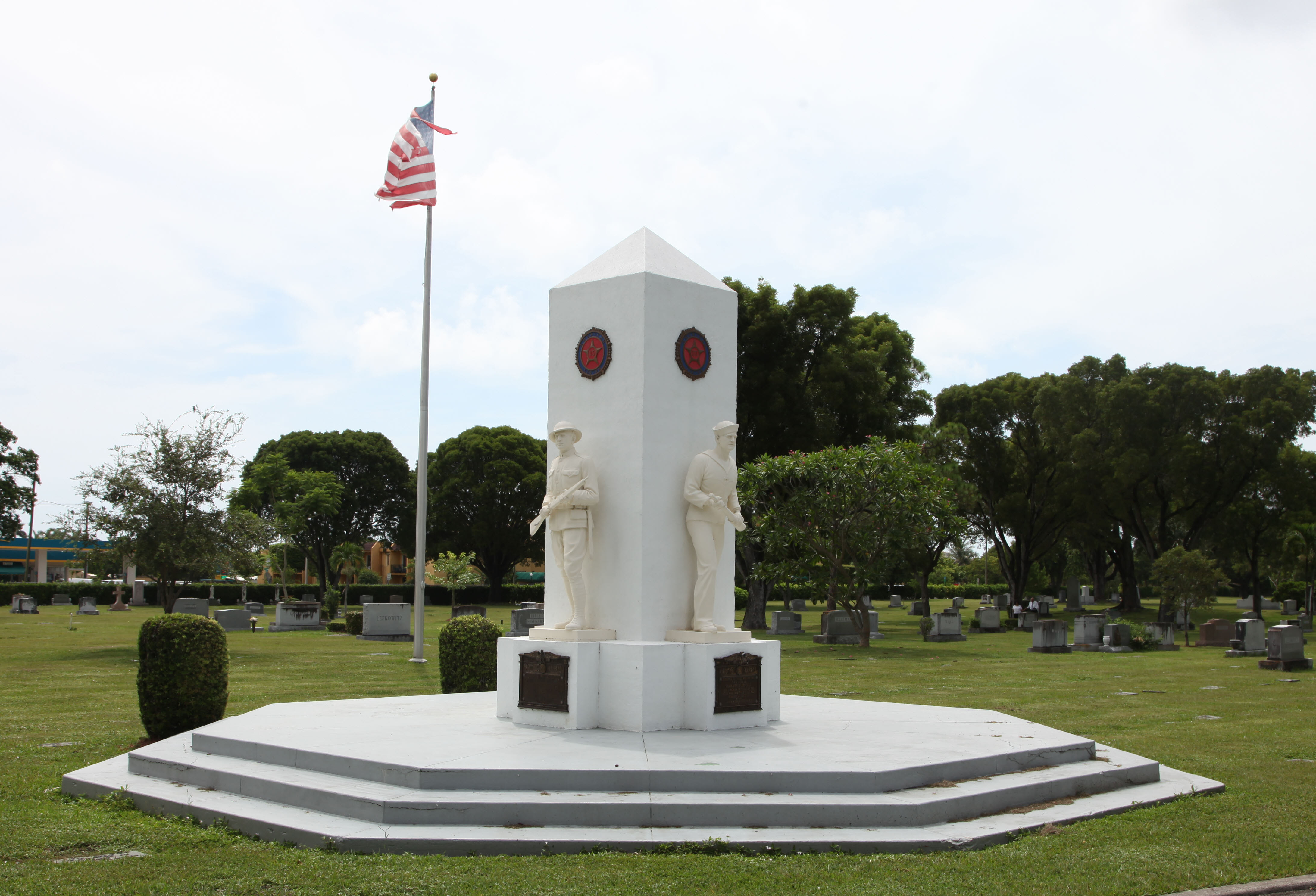
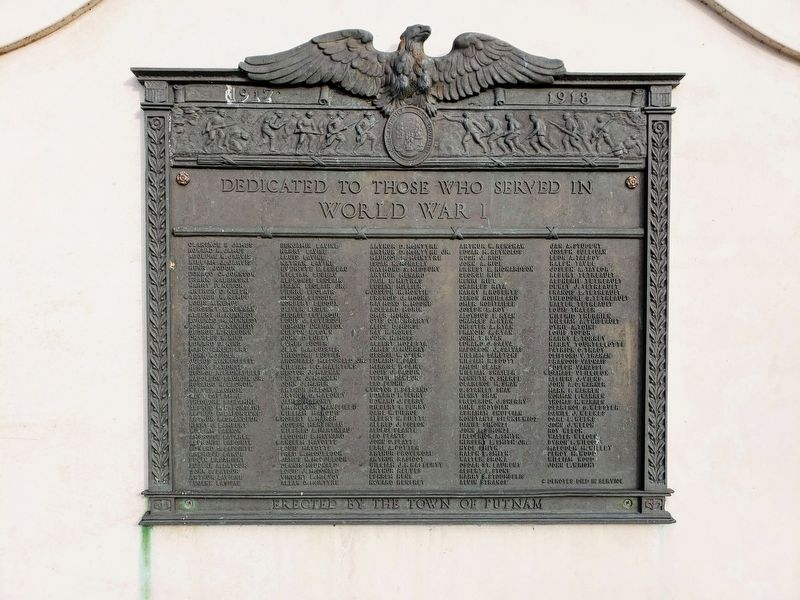
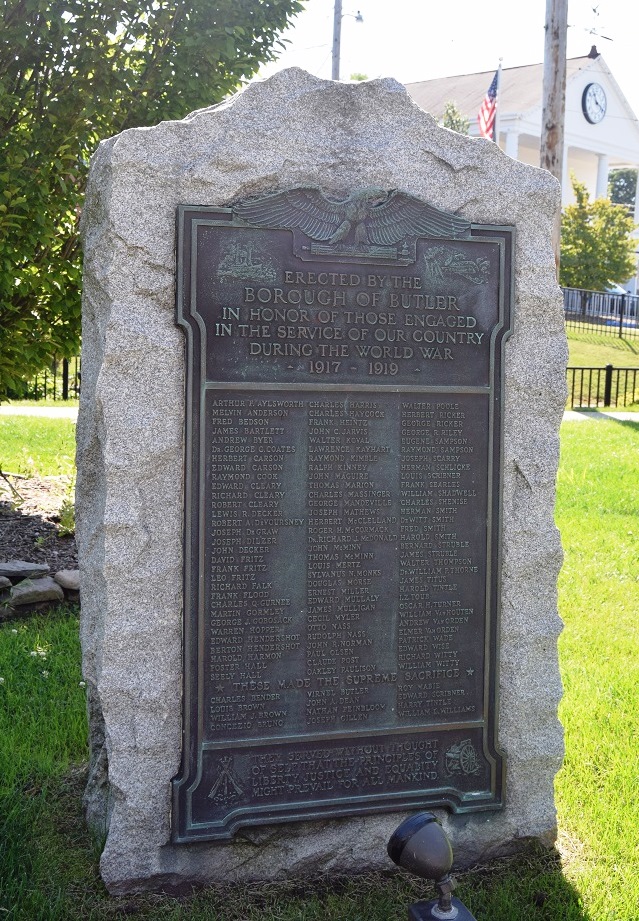
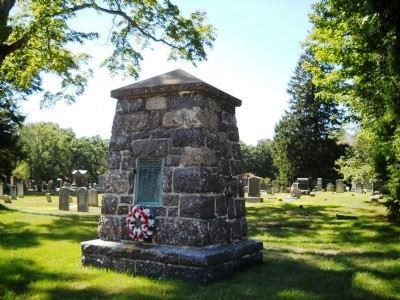
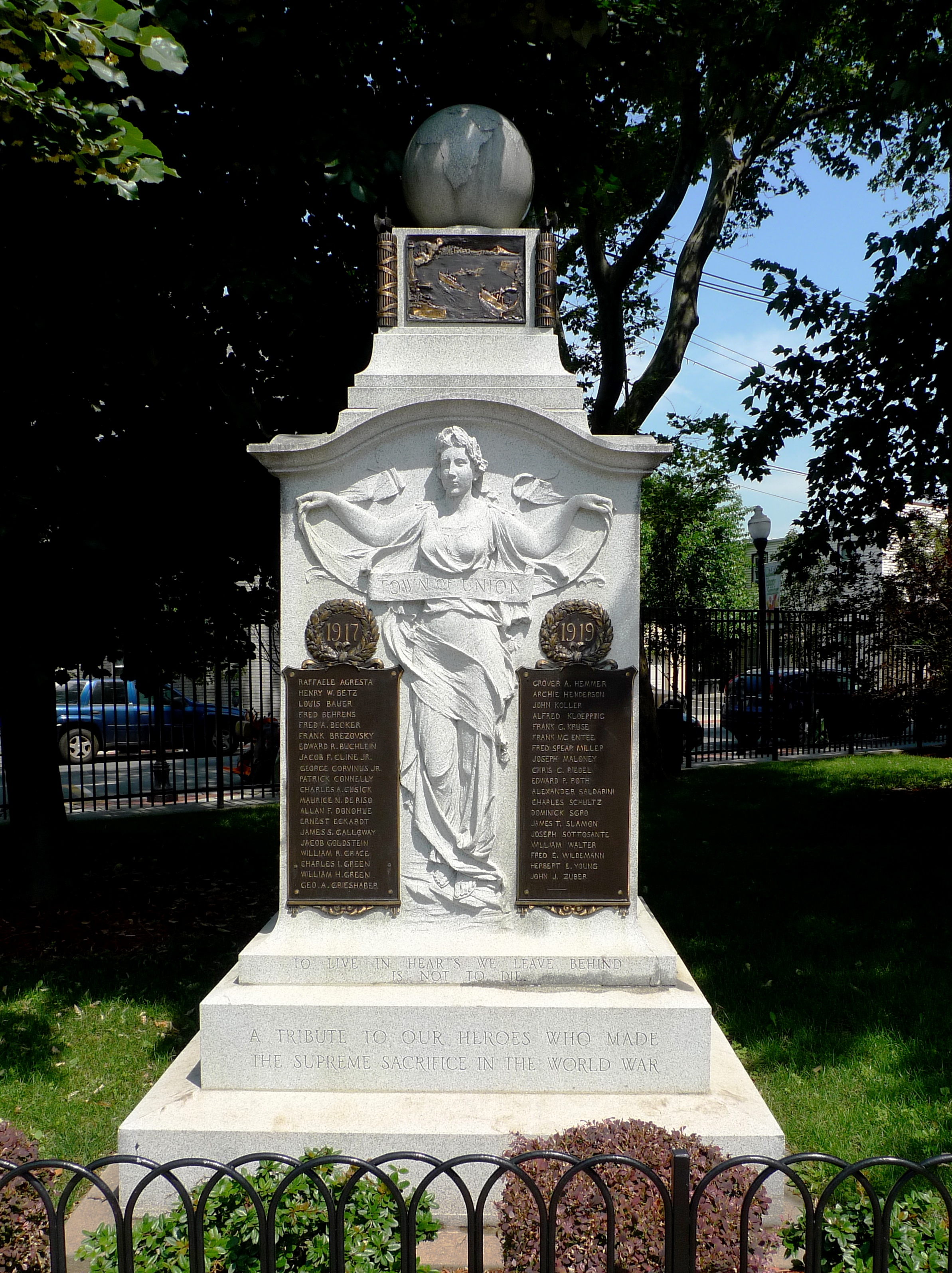
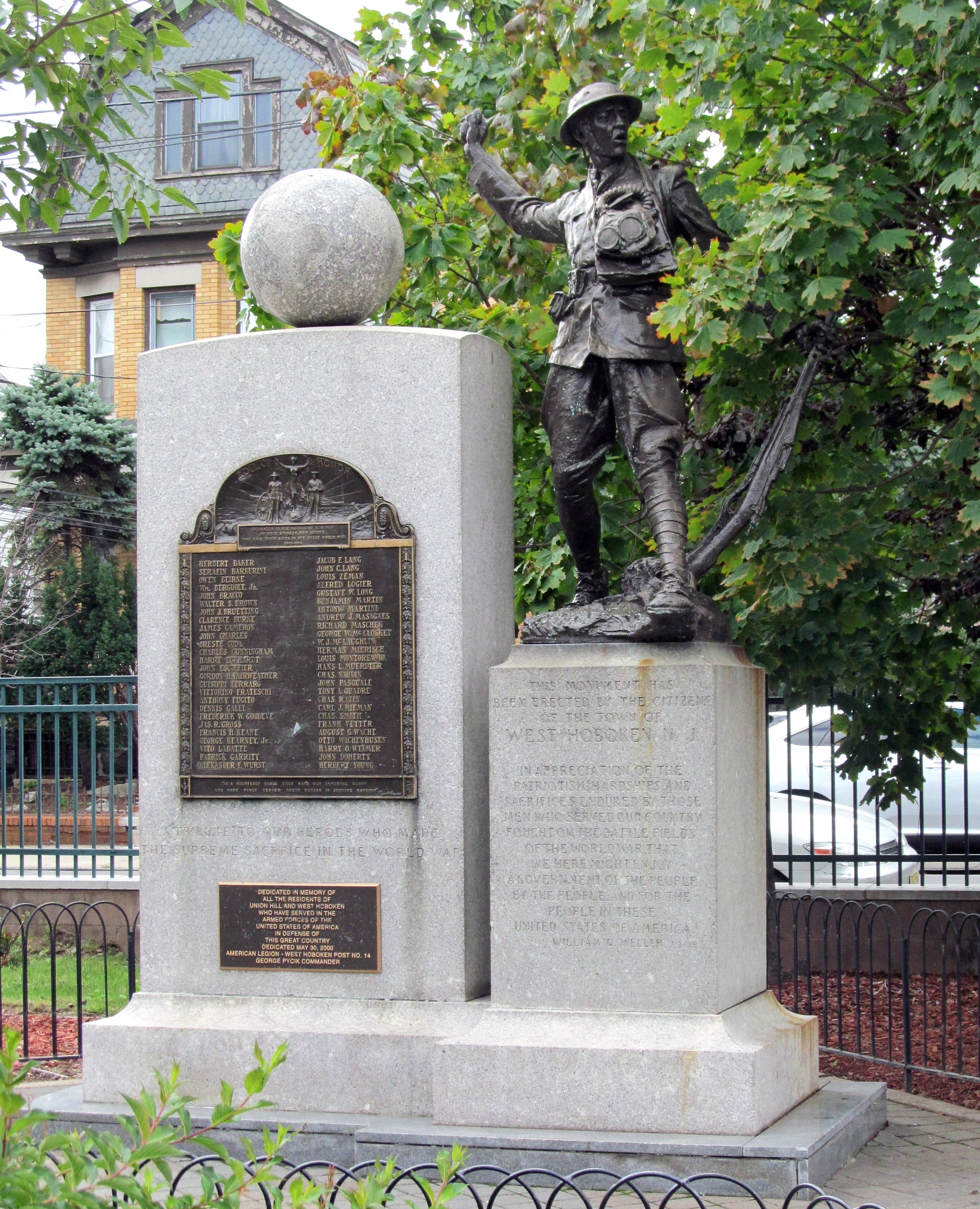
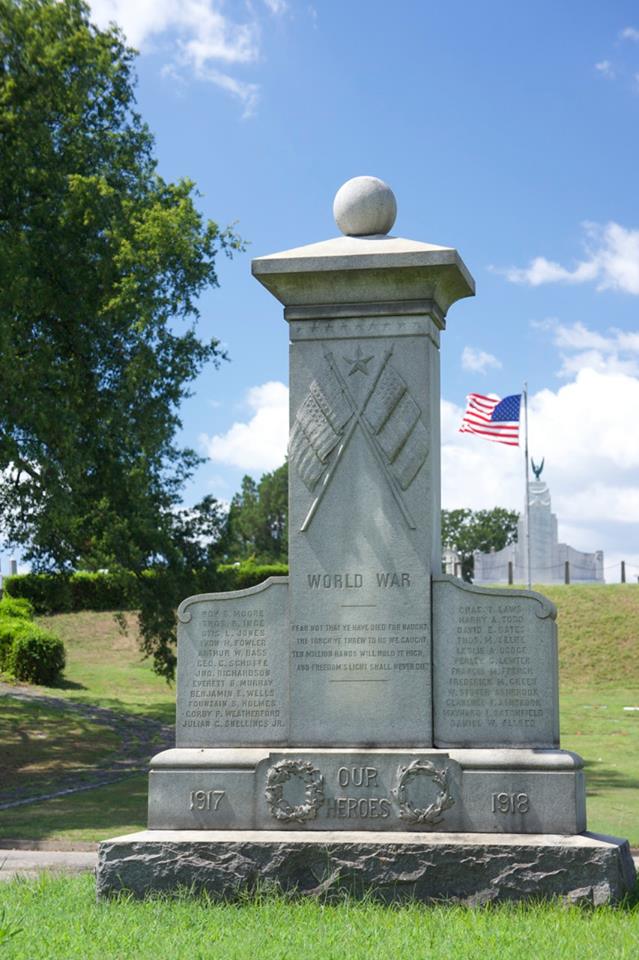
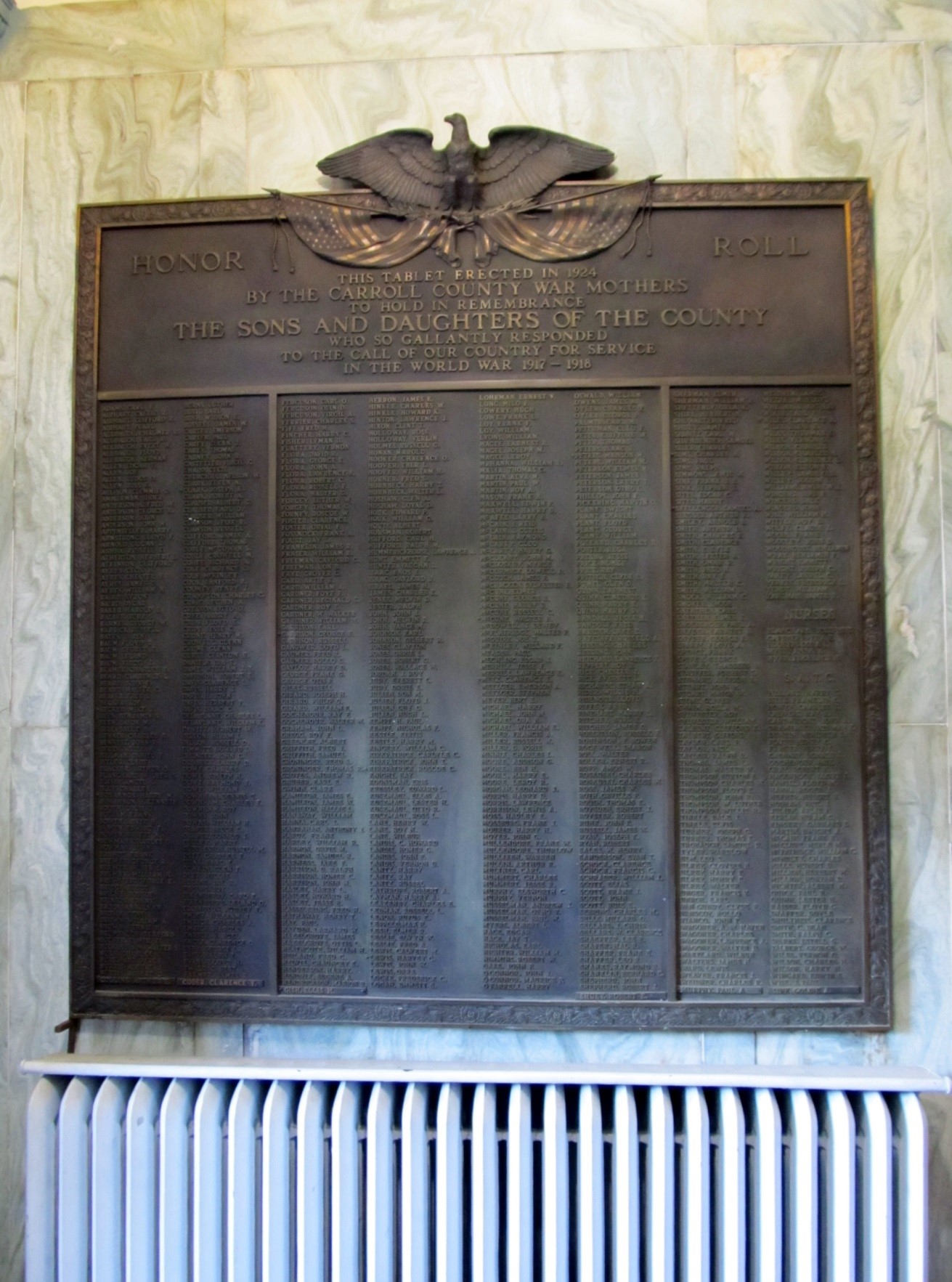
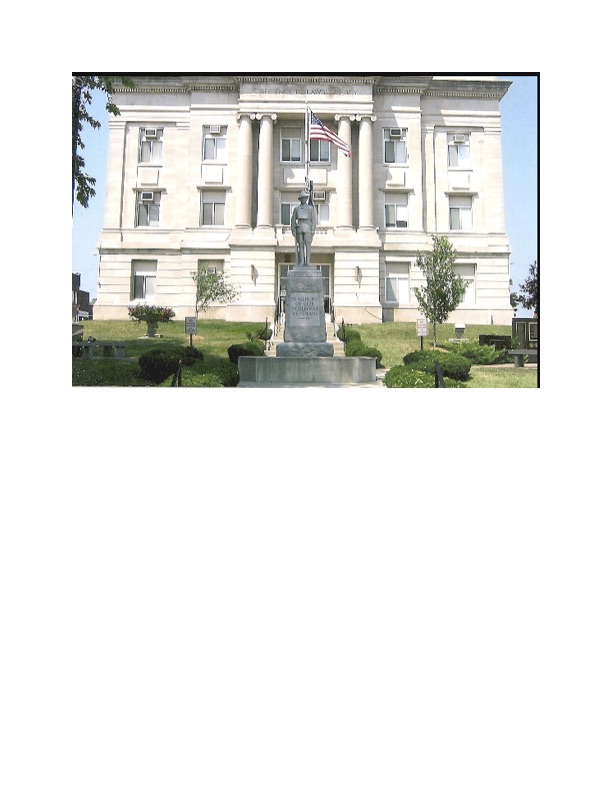
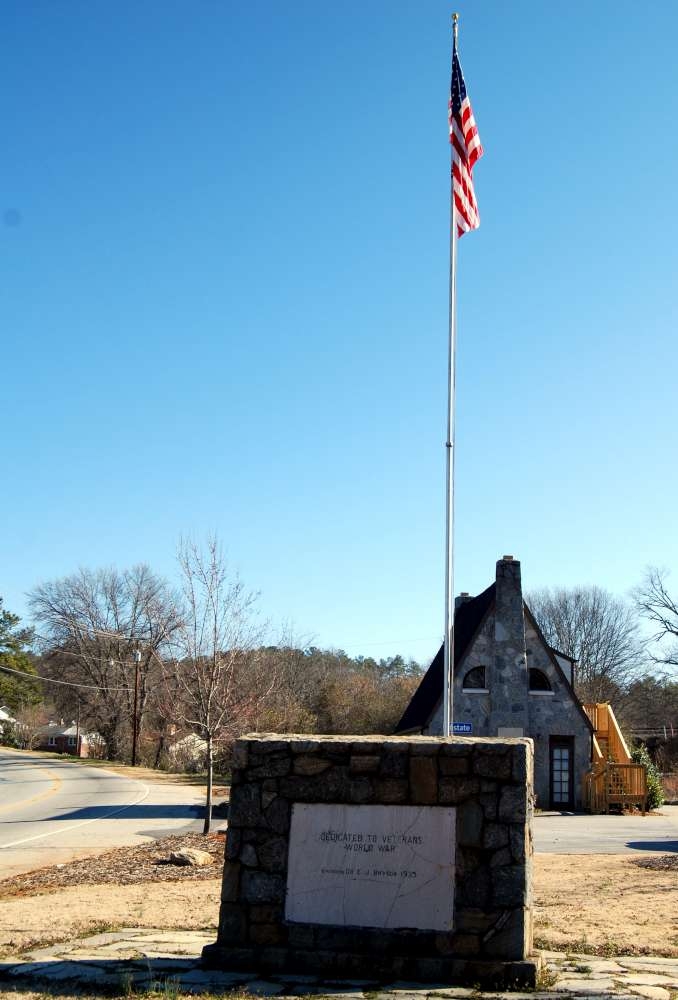
In the war's aftermath, individuals, towns, cities, counties, and states all felt compelled to mark the war, as did colleges, businesses, clubs, associations, veterans groups, and houses of worship. Thousands of memorials—from simple honor rolls, to Doughboy sculptures, to grandiose architectural ensembles—were erected throughout the US in the 1920s and 1930s, blanketing the American landscape.
Each of these memorials, regardless of size or expense, has a story. But sadly, as we enter the war's centennial period, these memorials and their very purpose—to honor in perpetuity the more than four million Americans who served in the war and the more than 116,000 who were killed—have largely been forgotten. And while many memorials are carefully tended, others have fallen into disrepair through neglect, vandalism, or theft. Some have been destroyed. Watch this CBS news video on the plight of these monuments.
The extant memorials are our most salient material links in the US to the war. They afford a vital window onto the conflict, its participants, and those determined to remember them. Rediscovering the memorials and the stories they tell will contribute to their physical and cultural rehabilitation—a fitting commemoration of the war and the sacrifices it entailed.
Memorial Hunters Club
We are building a US WW1 Memorial register through a program called the Memorials Hunters Club. If you locate a memorial that is not on the map we invite you to upload your treasure to be permanently archived in the national register. You can include your choice of your real name, nickname or team name as the explorers who added that memorial to the register. We even have room for a selfie! Check the map, and if you don't see the your memorial CLICK THE LINK TO ADD IT.