































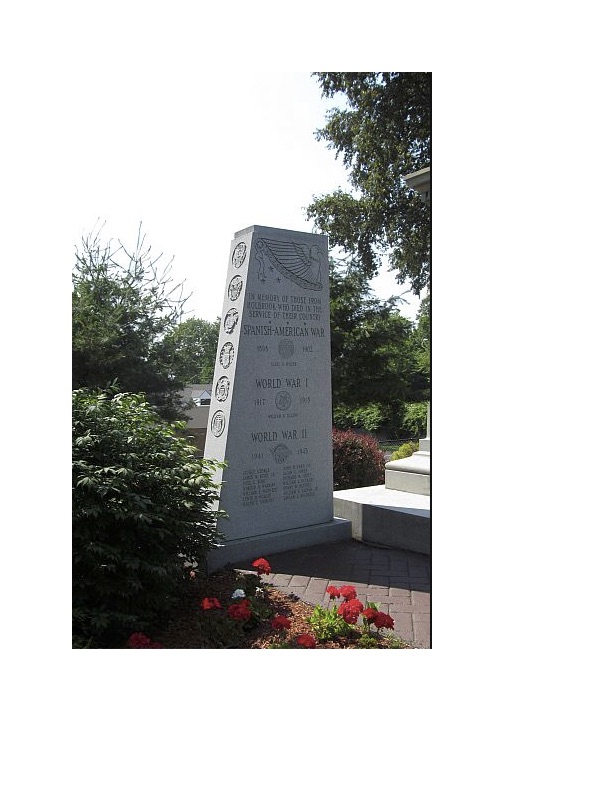
A bronze walking Civil War soldier has his rifle resting on his shoulder, and his long belted coat blows open slightly at the bottom. He stands on a tall granite base flanked by two granite markers added in 1989 honoring the men from Holbrook who died in the Spanish-American War, WWI, WWII, and the Korean and Vietnam Wars. Ir was sculpted by John Horrigan and dedicated in 1918, with half of the funds coming from the Holbrook family.
100 Cities - 100 Memorials
Memorial Inventory Project: There is one other existing partial database to consult - The WWI Memorial Inventory Project [CLICK HERE]. It contains some memorials our map doesn't. The listings on this database are fair game for the Memorial Hunters Club. So if you want to search for treasure from your desk - find missing listings here and submit them. Remember though, you will need to come up with pictures and the history of the memorial. You might be able to hunt that down through www.Proquest.com and Google.
- Details
This monument was made by Smith Granite Co. and dedicated on May 30, 1913 as a tribute to the Griswold men who served in the Civil War. Nearby granite slabs list the names of those who served in World War I, World War II, and the Korean and Vietnam Wars. The monument and park were rededicated on April 30, 1989.
- Details
- Memorial Hunters Club Submission: Robert Shay, PH3, USNR-R, 1964-70 and D&M Bolstad
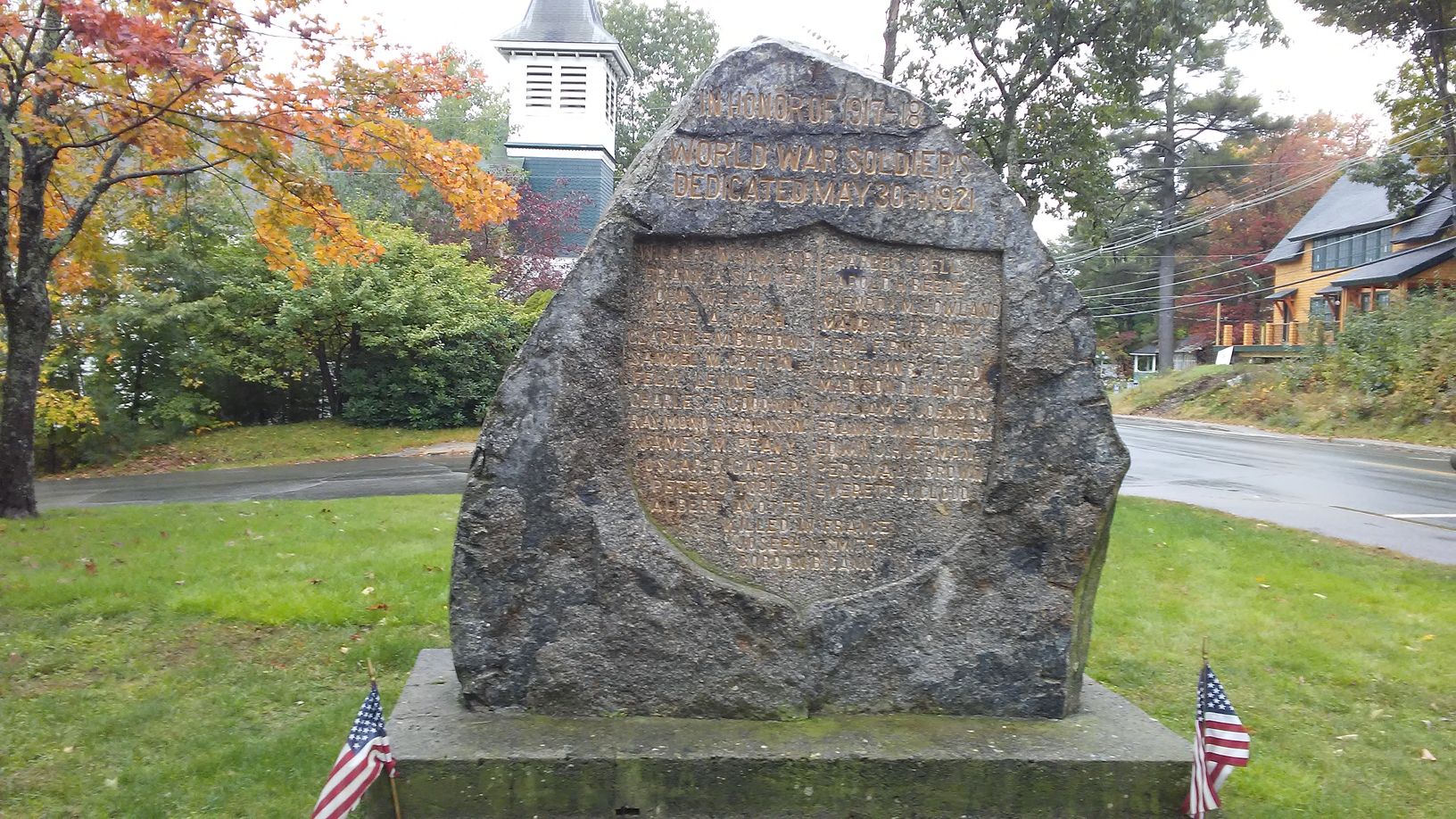
This triangle park, just south of downtown North Woodstock, contains Monuments
and Memorials to the soldiers from this community who served and those who
Made The Supreme Sacrifice in “The World War”, World War 2, Korean War and
the Vietnam War. It also has an MIA Plaque on the reverse side of the Vietnam
Memorial Monument and a plaque In Memory of an Army Air Corps crew killed in
the crash of a B-18 Bomber on a training flight during WW2.
IN HONOR OF 1917-1918
WORLD WAR SOLDIERS
DEDICATED MAY 30, 1921
Followed by the names of 25 residents who served, followed by the names of those
who, to quote Abraham Lincoln, “…gave their last full measure of devotion…”
KILLED IN FRANCE
JOSEPH N. SMITH
GORDON B. CANN
- Details
- Width: 80
- Dedication Date: 08/22/1930
- state and city
- government
- $661,000
- J. E. Greiner Company, engineers
- William Gehron & Sidney Ross, architects; Lee Lawrie, sculptor
- Pennsylvania Department of General Services
- Bridge
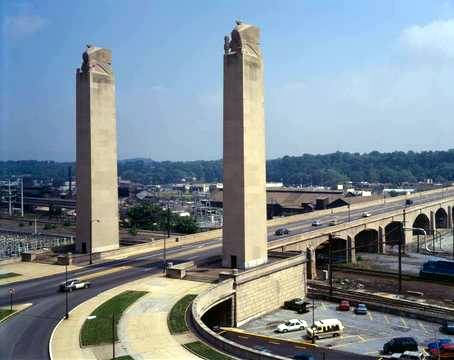
The Soldier's and Sailors' bridge was completed in 1930 as the principal entrance to Center City and the State Capitol Complex from the east, terminating at Fisher Plaza. The bridge was named "Soldiers' and Sailors' Memorial Bridge" in honor of the service of Pennsylvania's soldiers and sailors. It connects the East Harrisburg area to Capitol Hill.
The bridge is made up of seventeen arches with towering pylons at the western end which dramatize bridge’s gateway importance. The pylons are 145 feet high and 16 feet wide. Two eagle figures (Lee Lawrie, sculptor) are perched at the top of each pylon, signifying the Union of the United States. One pylon represents the Army, and the other represents the Navy. The four faces of the pylons are inscribed with the dates of eight of the wars the United States had participated in up to that point.
The keystone to each arch on the bridge contains stylized carvings by Lee Lawrie of various implements of warfare that were developed during WWI. These include tanks, battleships, hand grenades, and aerial bombs.
- Details
- Memorial Hunters Club Submission: Lynandro Simmons
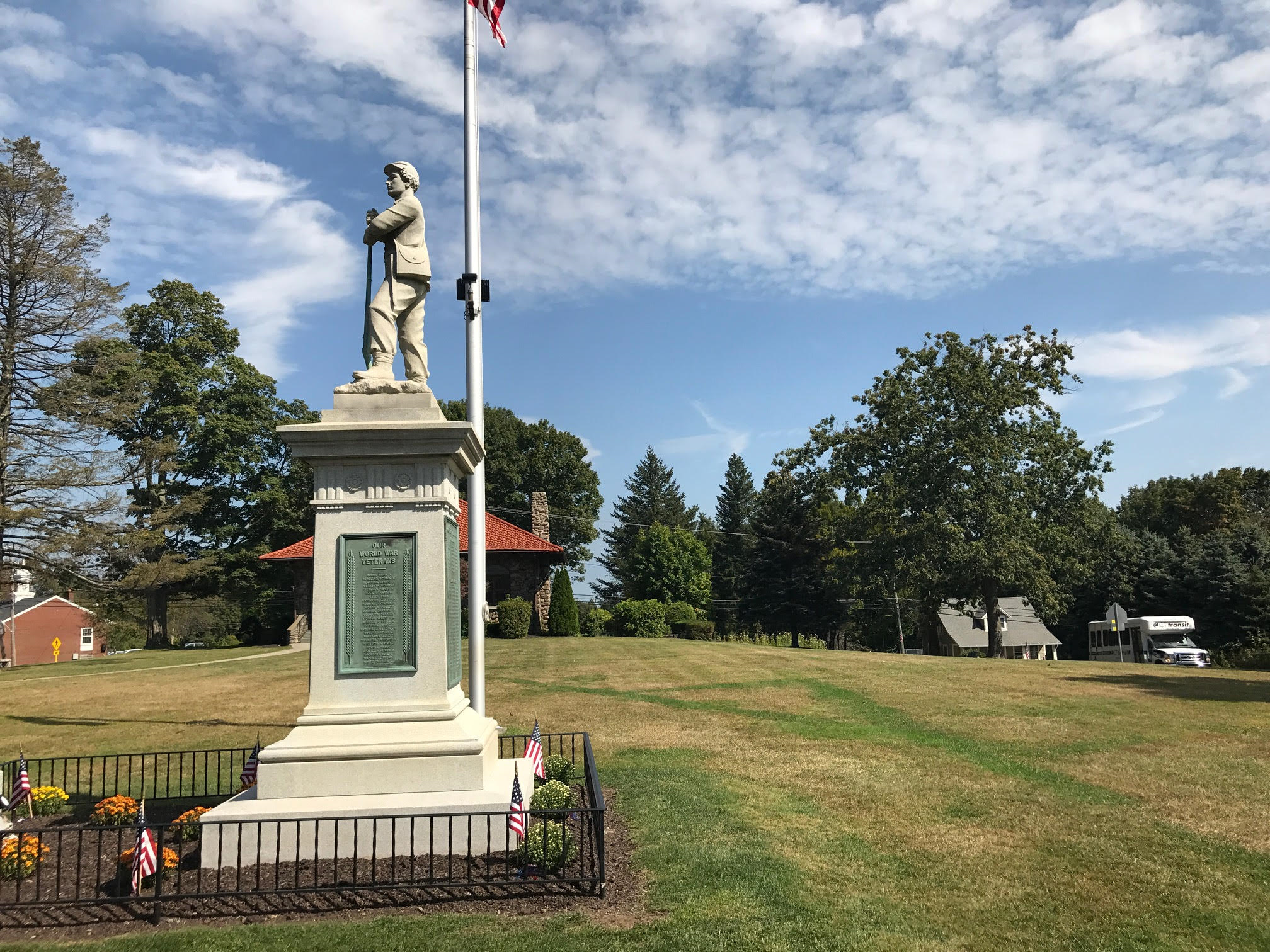
This is a life-sized granite statue of a civil war soldier, erected in 1906 and made by the Thomas F. Jackson Company. He wears a jacket, trousers gathered at the boot tops, and has a knapsack slung over his shoulder. He holds the muzzle of his bronze rifle in front of him. Beneath him is a neo-classical revival style granite pedestal with bronze plaques on three sides. This monument was originally dedicated in 1907 to honor the Prospect citizens who served in the Revolutionary War and the Civil War. The plaque with the World War I names was added in 1920 (it is the only one with some decoration, which consists of vertical lines of anthemia on each side). On a low stele in front of the monument is incised a May 30, 1977 dedication to the Prospect veterans of World War II and the Korean and Vietnam Wars.
- Details
Solomon War/Veterans Memorial
100 Cities / 100 Memorials
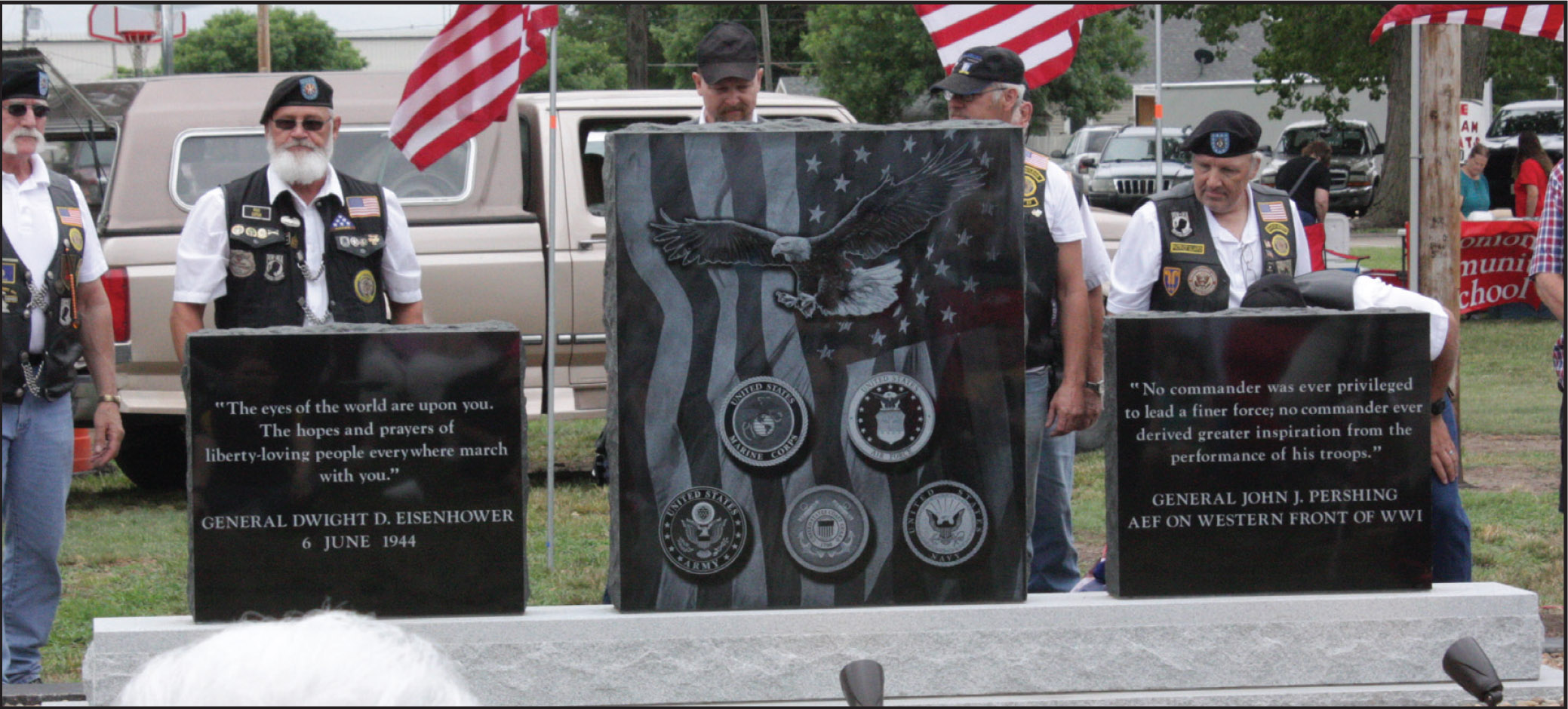
 This new war/veterans memorial in the Solomon, Kansas city park commemorates the 100th anniversary of World War I and includes a time capsule to be opened on the 150th anniversary of the war. The building of the memorial, which serves to educate and commemorate our past wars and veterans, involved civic groups, school groups, and veterans from the community.
- Details
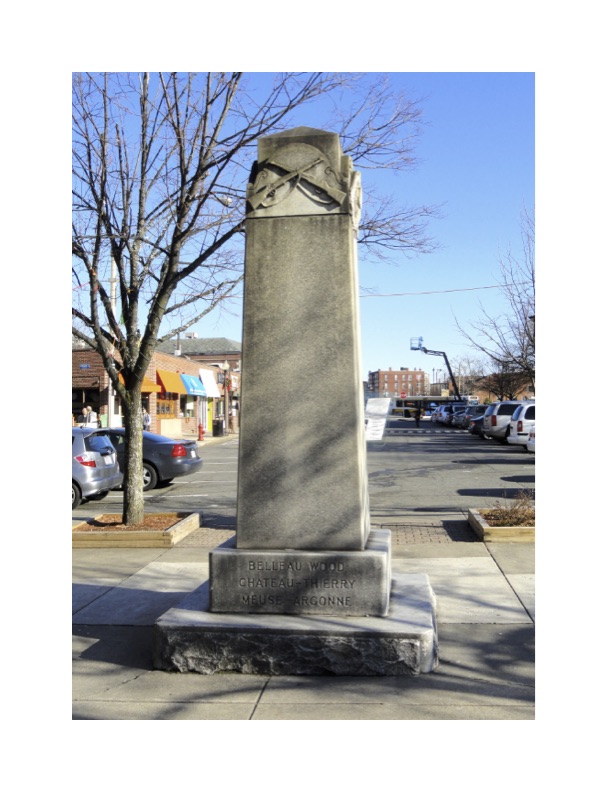
Dedicated on September 6, 1920, this is a square granite shaft about eleven feet tall. Near the top are reliefs of an eagle perched on a shield, crossed anchors and ropes on the east face, an eagle perched on a laurel branch on the south, crossed rifles on the west, and the city seal including a soldier holding a flag on the north. lt was erected to honor the Somerville natives who died in WWI.
- Details
- Dedication Date: 1937
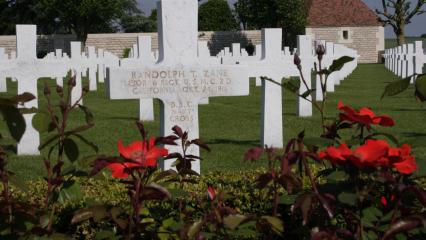
Dedicated in 1937, the World War I Somme American Cemetery and Memorial is sited on a gentle slope typical of the open, rolling Picardie countryside. The 14.3-acre cemetery contains the graves of 1,844 of U.S. military dead. Most lost their lives while serving in American units attached to British armies, or in operations near Cantigny. The headstones, set in regular rows, are separated into four plots by paths that intersect at the flagpole near the top of the slope. The longer axis leads to the chapel at the eastern end of the cemetery.
A massive bronze door surmounted by an American eagle leads into the chapel, whose outer walls contain sculptured pieces of military equipment. Once inside, light from a cross-shaped crystal window above the marble altar bathes the subdued interior with light. The walls bear the names of 333 of the missing. A rosette marks the name of the soldier listed on the Walls of the Missing that has since been recovered and identified.
- Details
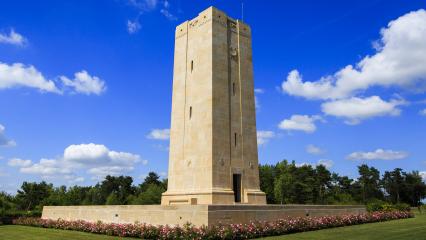
The World War I Sommepy American Monument, dedicated in 1937, commemorates the achievements of the American units that served in combat with the French Fourth Army during the summer and fall of 1918. More than 70,000 Americans served in the region during this time. The architect of the monument is Arthur Loomis Harmon of NY, NY.
The monument, situated on Blanc Mont Ridge, is surrounded by vestiges of World War I trenches, dugouts and gun emplacements. It is essentially a tower of golden-yellow limestone with an observation tower on top affording an excellent view of the battlefields. Inside the entrance to the monument is an inscription describing American operations in the vicinity. The monument's site was captured by American troops.
On the front of the monument: "ERECTED BY THE UNITED STATES OF AMERICA TO COMMEMORATE THE ACHIEVEMENTS OF HER SOLDIERS AND THOSE OF FRANCE WHO FOUGHT IN THE REGION DURING THE WORLD WAR"
Engraving on the inside of the monument: "IN EARLY JULY 1918 THE 42D AMERICAN DIVISION ENTERED THE BATTLE LINES WITH THE 13TH AND 170TH FRENCH DIVISIONS NEAR SOUAIN. THERE IT GALLANTLY ASSISTED IN REPELLING THE LAST GERMAN MAJOR OFFENSIVE OF THE WAR. WHEN THE ALLIES BEGAN THEIR GREAT CONVERGENT OFFENSIVE IN LATE SEPTEMBER, THE 2D AND 36TH AMERICAN DIVISIONS WERE ASSIGNED TO THE FRENCH FOURTH ARMY. ON OCTOBER 3 THE 2D DIVISION, SUPPORTED ON THE LEFT BY THE 167TH, IN A BRILLIANT OPERATION CAPTURED BLANC MONT RIDGE ON WHICH THIS MONUMENT STANDS. THE 36TH DIVISION RELIEVED THE 2D ON OCTOBER 10 AND CONTINUED THE ADVANCE NORTHWARD AS FAR AS THE AISNE RIVER. THREE INFANTRY REGIMENTS OF THE 93D AMERICAN DIVISION, SERVING WITH THE 157TH AND 161ST FRENCH DIVISIONS, ENGAGED IN INTERMITTENT FIGHTING DURING SEPTEMBER AND OCTOBER TAKING PART IN THE CAPTURE OF RIPONT, SECHAULT AND TRIERES FARM."
- Details
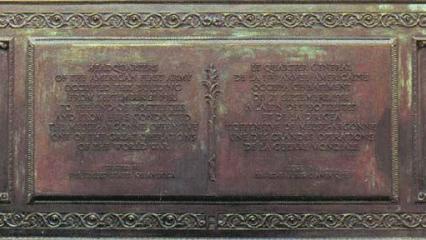
On the outside of the town hall of Souilly, France is a bronze tablet identifying this building as the headquarters of the American First Army towards the end of World War I. Inscribed in French and English is the following:
Headquarters of the American First Army
occupied this building from September 21, 1918
to the end of hostilities, and from here
conducted the Meuse-Argonne Offensive,
one of the greatest operations of the war.
- Details
- Memorial Hunters Club Submission: Memorial Hunter: Robert Shay, PH3, USNR-R, 1964-70
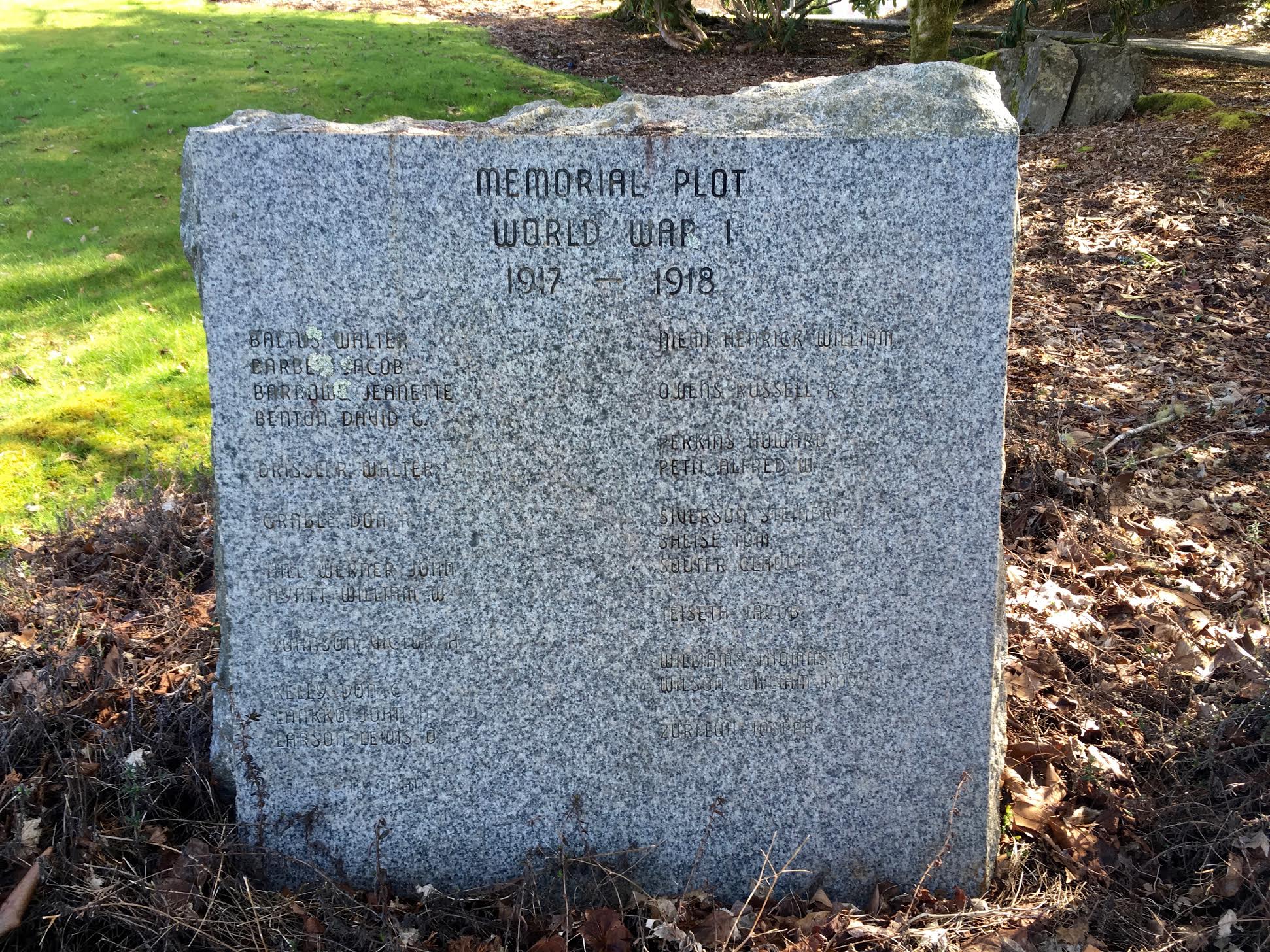
These memorial plots outside the historic Pacific County Courthouse are dedicated to the John C. Fremont Post No. 69 of the Grand Army of the Republic (GAR), a fraternal organization composed of veterans of the US Army, Navy, Marines, and now-defunct Revenue Cutter Service. One memorial honors service in WW1 and the other honors service in WW2.
- Details
- The Boston Arts Commission is the responsible party of these portraits, although they are not actively maintained by them.
- Bench
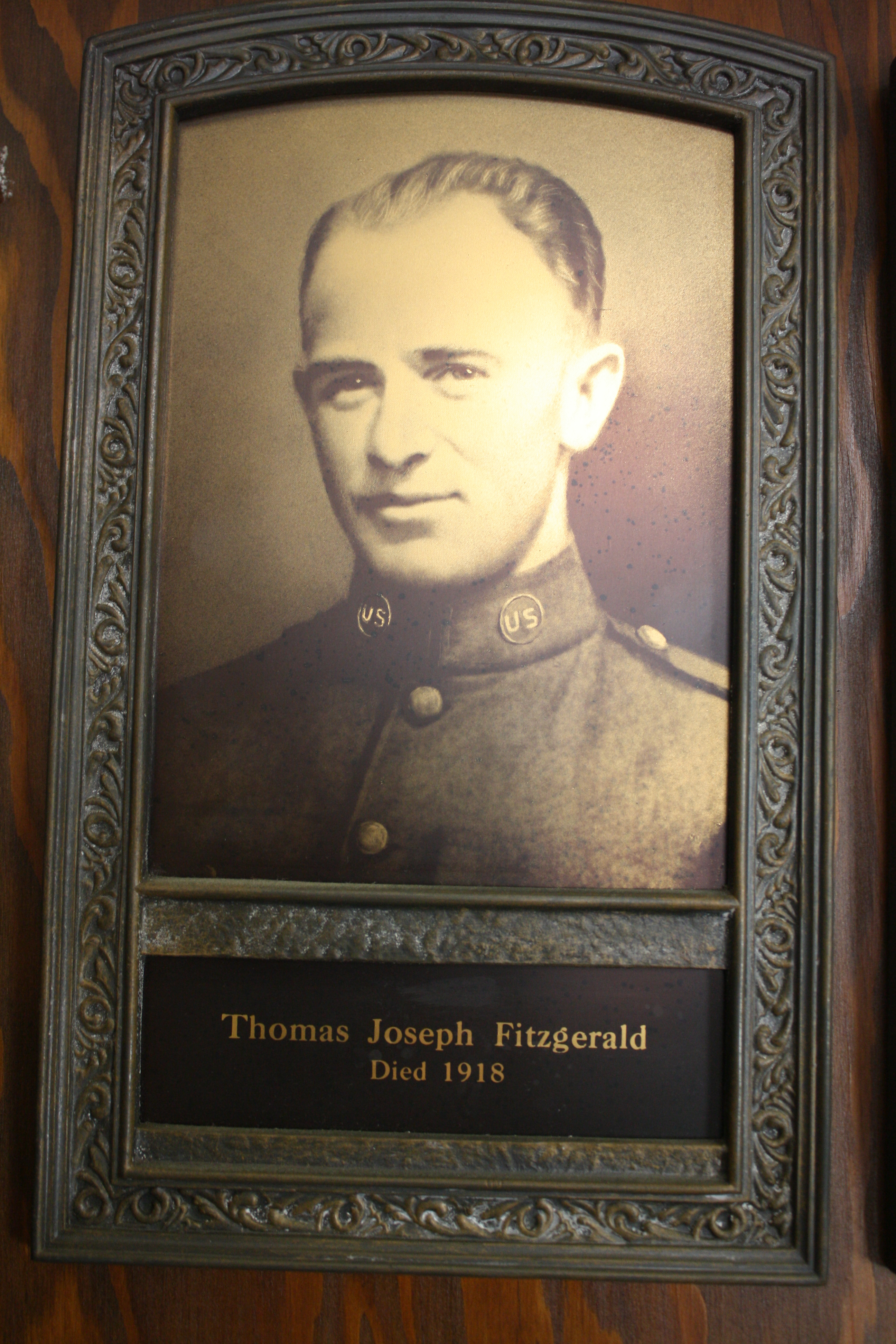
This Memorial consists of 99 gold-tone, etched portraits made from photographs of Boston men that died during World War I. These portraits are located inside the South Boston High School. They were commissioned by Mayor James Curley of Boston and dedicated on Nov. 11, 1932 to a crowd of 2000 people at South Boston High School. Originally, there were over 1100 of these portraits dedicated throughout various Boston public schools. Sadly, the whereabouts of the rest of the other 1000 portraits is unknown since most of the other schools where they resided have since closed. The portraits inside South Boston High School are the only known remaining surviving Memorial portraits to Boston men and women that lost their lives in WWI.
Contact information for responsible party: Anyone that wishes to view these portraits must do so during school hours, and it is advisable that one call the school in advance. Sgt George Machado is the JROTC director at the high school, and an excellent contact. He can be reached at 978-503-4421.
Questions or Additional Information::
Photo Credit: Mr. Kevin Conroy
License: Place these works in the public domain
- Details
- 1931
- Memorial Hunters Club Submission: thewanderer
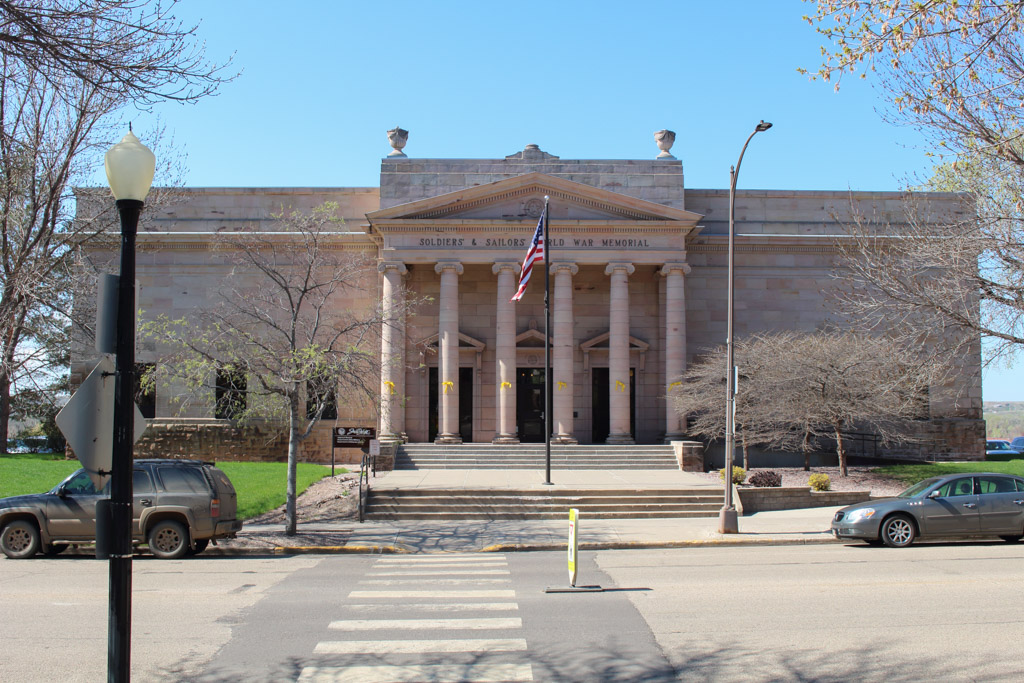
The Soldiers & Sailors World War Memorial is a rare and elegant example of the Neoclassical style of architecture and an illustration of what Americans have done to honor those who served the nation in the military.
The memorial is constructed of steel and has sandstone facing. The front of the building has an impressive entry pediment with dentil molding and six Ionic columns as well as individual pediments over each of the doors. The interior contains a central hallway that opens to the second floor and flanking galleries, which are on both the first and second floors.
The idea for the memorial came after World War I, and the first fund drive to build it was in May 1919. A. N. Walters directed the drive. When this drive failed, the plan lay dormant for 10 years until the Chicago and North Western Railroad Company made a gift of land to the State. The State accepted the land in 1931 with the sole purpose of erecting a Soldiers Memorial Building to house the South Dakota State Historical Society.
In 1930, the State hired the firm of Wilford F. Blatherwick and John C. Hugill to design the memorial building.
The Soldiers and Sailors World War Memorial building currently houses the South Dakota Department of Military and Veterans Affairs. It was also the home of the State Historical Society and Robinson Museum.
- Details
- American Art Bronze Foundry
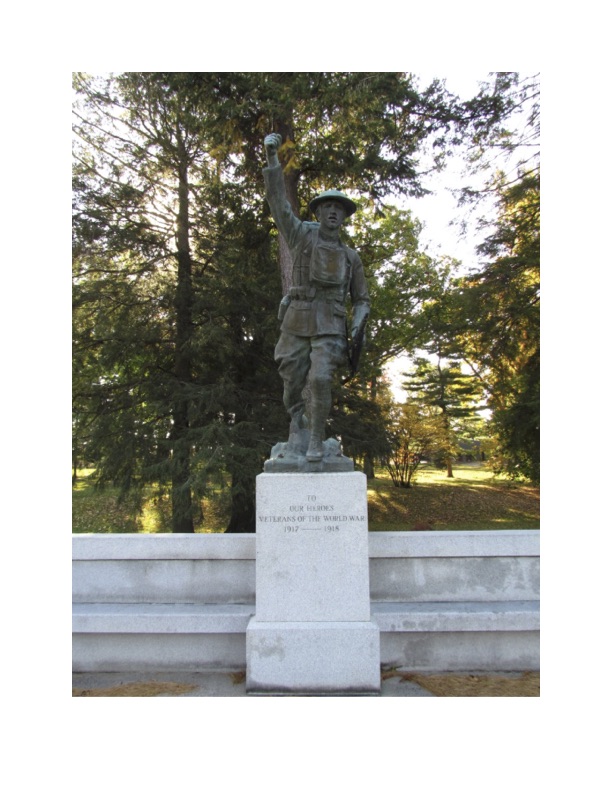
This is a life-size metal sculpted by John Paulding, depicting a WWI infantryman advancing through the slumps and barbed wire of No Man's Land, carrying a rifle in his left hand and a grenade in his upraised right hand.
It is sometimes referred to as "Over the Top" and others as "The American Doughboy". The original was cast at the American Art Bronze Foundry and like so many of these statues copies placed around the country.
- Details
- 1921
- Dedication Date: 1921
- South Pasadena's Register of Cultural Heritage Landmarks
- Norman Foote Marsh
- South Pasadena's War Memorial Building, designed by Norman Foote Marsh, has served both as a memorial to veterans and as a meeting place for South Pasadena's American Legion Post No. 140. In 1921, Marshal Ferdinand Foch laid the cornerstone of the building; in 1923, General John J. Pershing planted a redwood tree on the grounds. The building is #2 on South Pasadena's Register of Cultural Heritage Landmarks.
- Memorial building
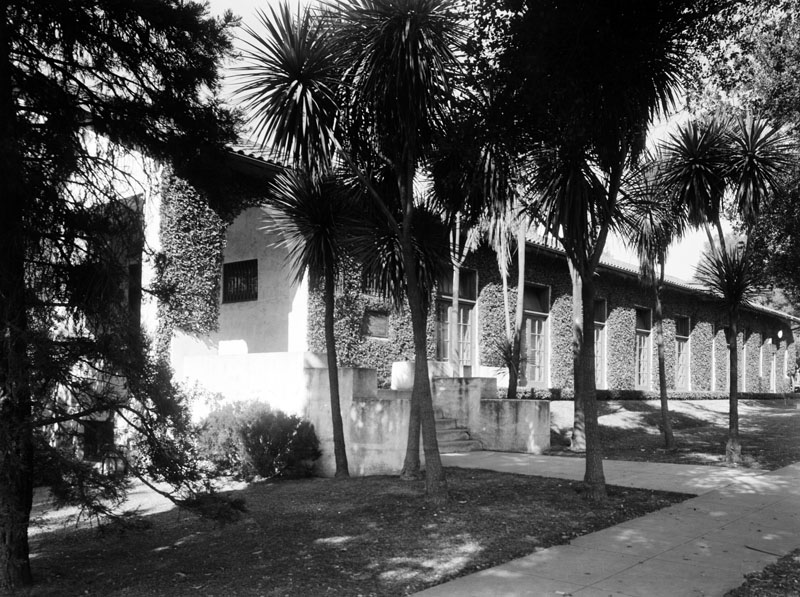
The two-acre War Memorial Park located on Fair Oaks Avenue provides a site for the two-story 12,000 square feet War Memorial building.
The War Memorial building was built in 1921 and is identified as a city cultural heritage landmark. The building was built on the former Oak Lawn Park with funding from city bonds and donations from the American Legion. The upper floor of the building includes a kitchen and a large multi-purpose room for dancing, meetings, banquets and other activities for groups up to 200 people. The lower consists of smaller rooms, storage and restroom facilities.
In 1921, Marshal Ferdinand Foch laid the cornerstone of the building. In 1923, General John J. Pershing planted a redwood tree on the grounds. The building is #2 on South Pasadena's Register of Cultural Heritage Landmarks. North of the building, grounds are dedicated for a landscaped memorial garden.
- Details
- Memorial Hunters Club Submission: The Wanderer
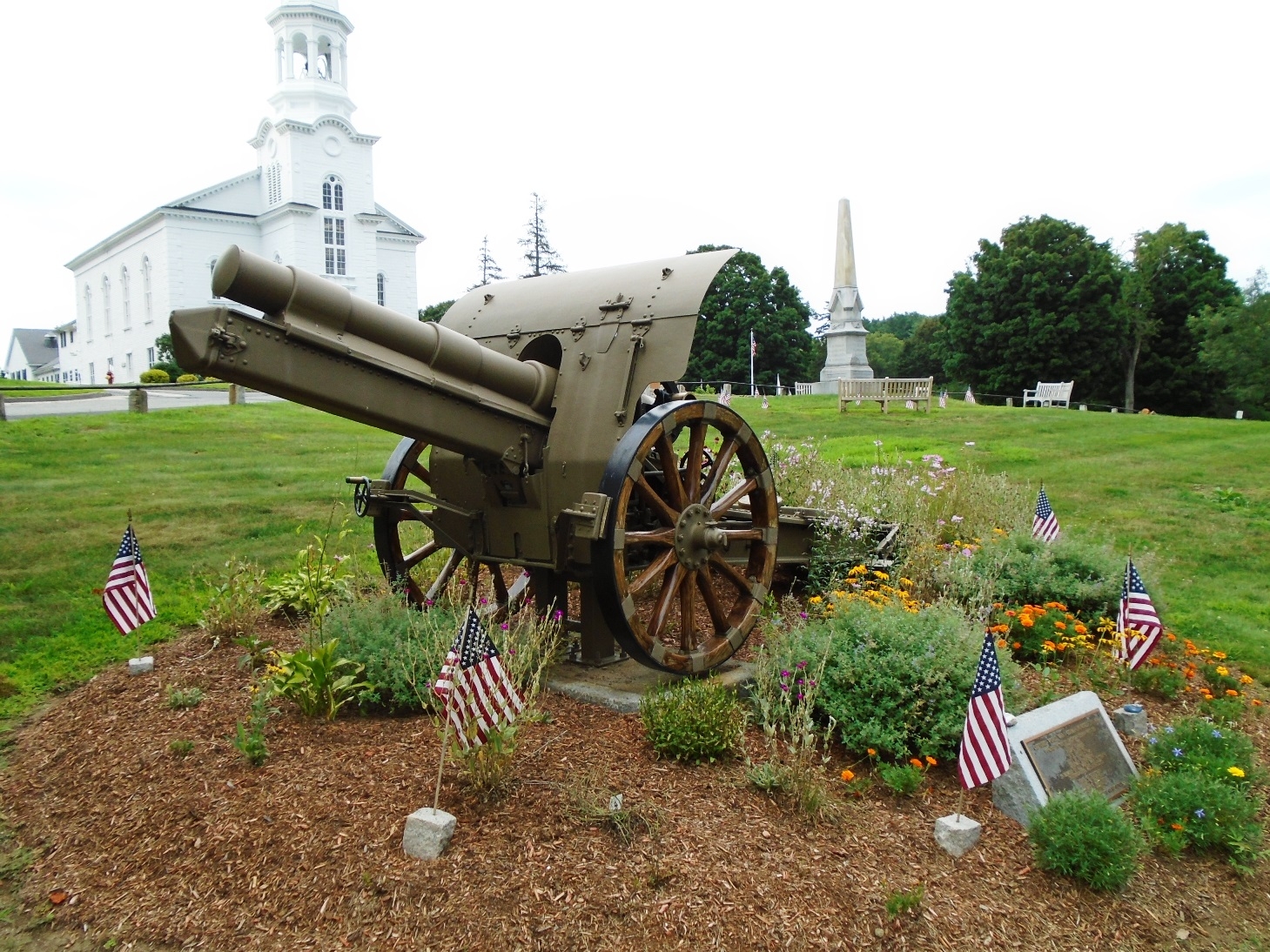
The inscription on this memorial reads:
Captured World War I German Howitzer 155 mm
Donated in 1919 by
American Legion Post 132
Restored 1991
In memory of
All World War I Veterans
Southborough, Massachusetts
- Details
- Memorial Hunters Club Submission: The Wanderer
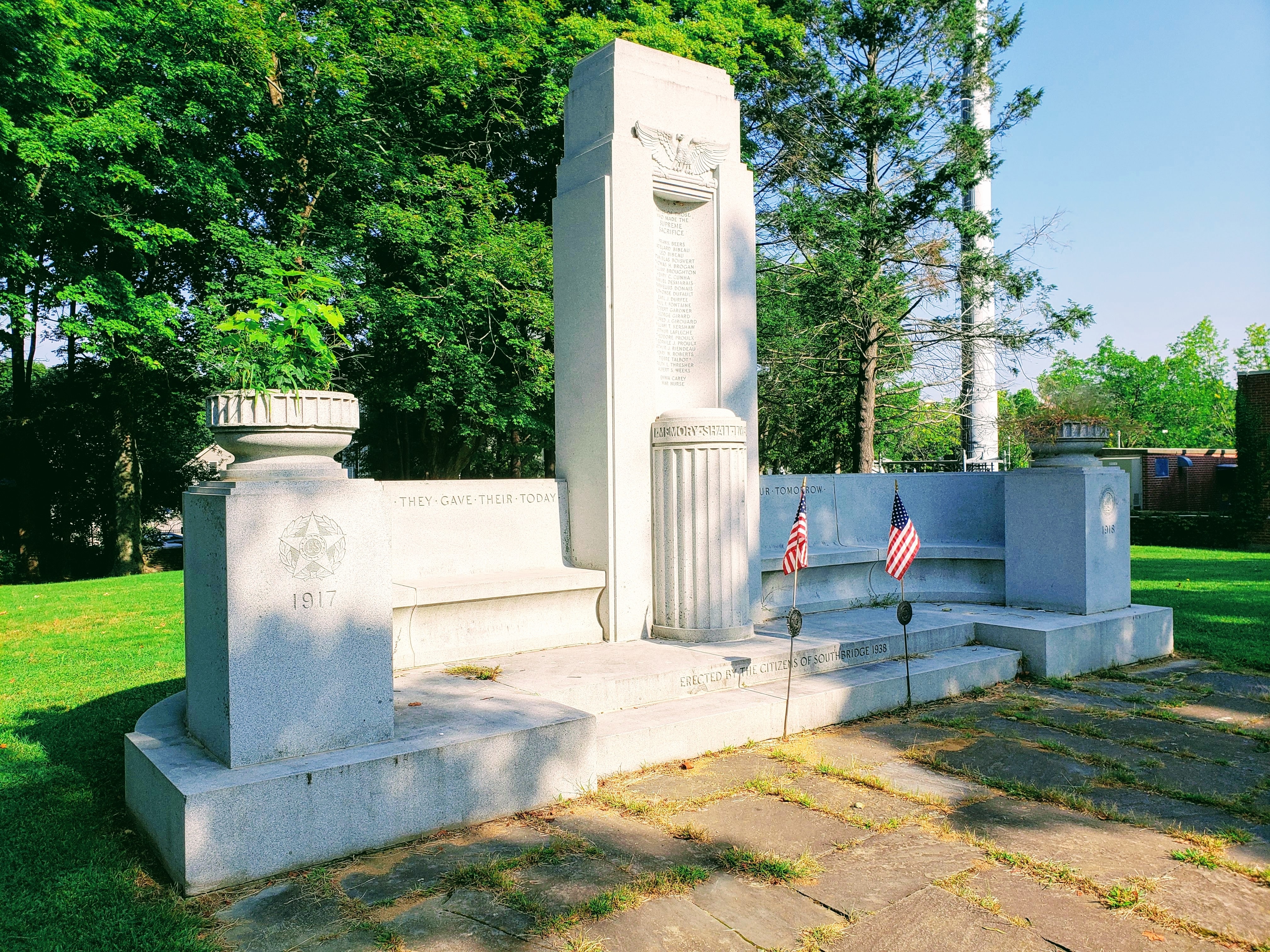
Dedicated on January 1, 1938, the inscription on this memorial reads:
Names of Those
Who Made The
Supreme
Sacrifice
Frank Beers
Adelard Bibeau
Leo Bibeau
Stanislas Boisvert
Thomas H. Brogan
William Broughton
Henry C. Cunha
Samuel Desmaris
Parmelius Donais
Alphonse Dufault
Earl J. Durfee
Paul F. Fontaine
Robert Gardner
George Girard
Wilfred J. Girouard
William T. Kershaw
Arthur Lafleche
Theodore Proulx
Theophile J. Proulx
Henry W. Roberts
Pierre Talbot
Ralph L. Thresher
Albert S. Weeks
Emma Carey
War Nurse
Glory Shall Live Forever
They Gave Their Today For Our Tomorrow
Erected By the Citizens of Southbridge 1938
- Details
- Memorial Hunters Club Submission: Robert Shay, PH3, USNR-R, 1964-70
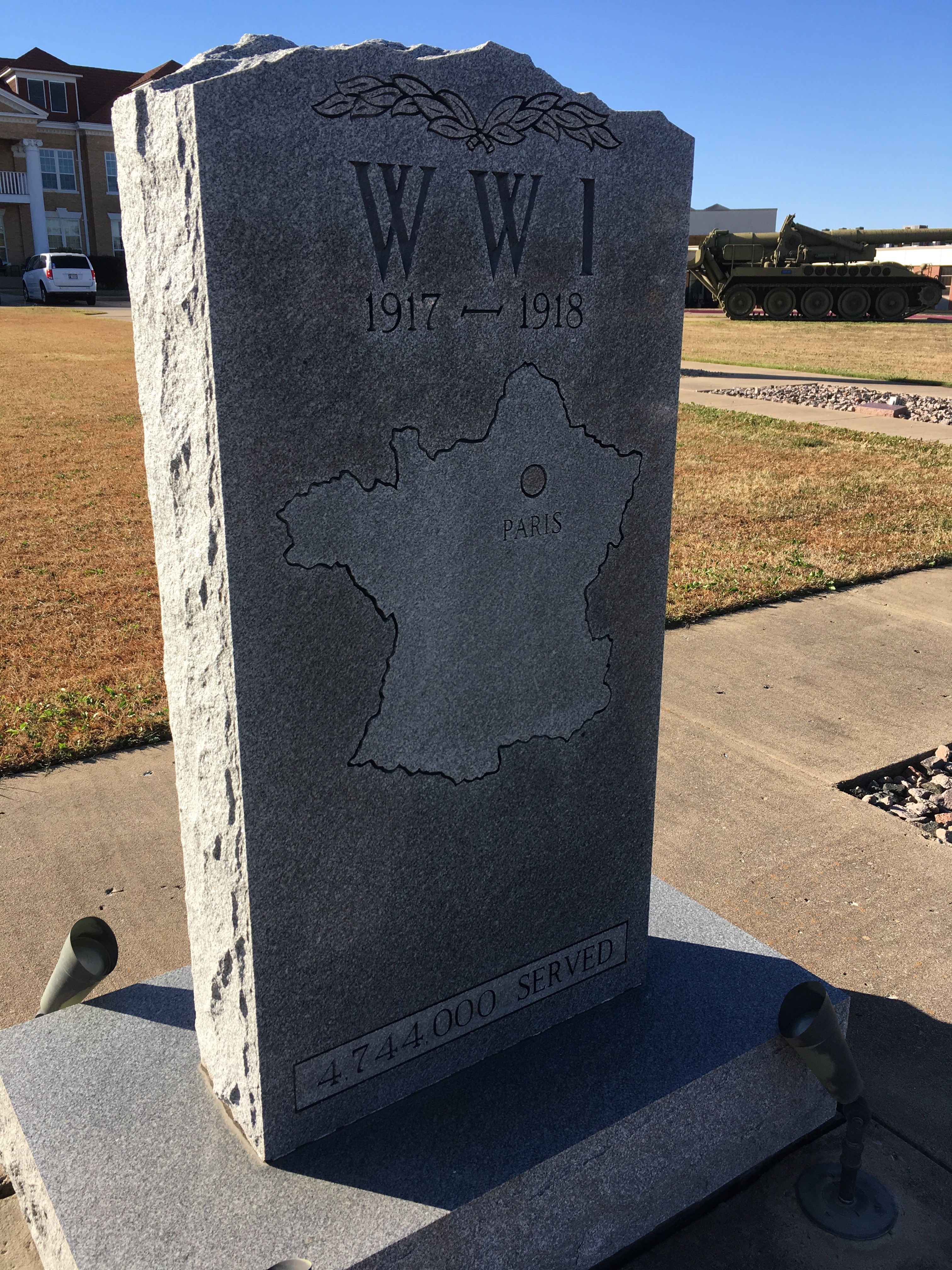
Located at the historic Ardmore Veterans Center, where the original buildings of the home were constructed in 1910 to care for Civil War Veterans. There are many Memorial Monuments to the veterans and casualties of all wars of the United States.