





























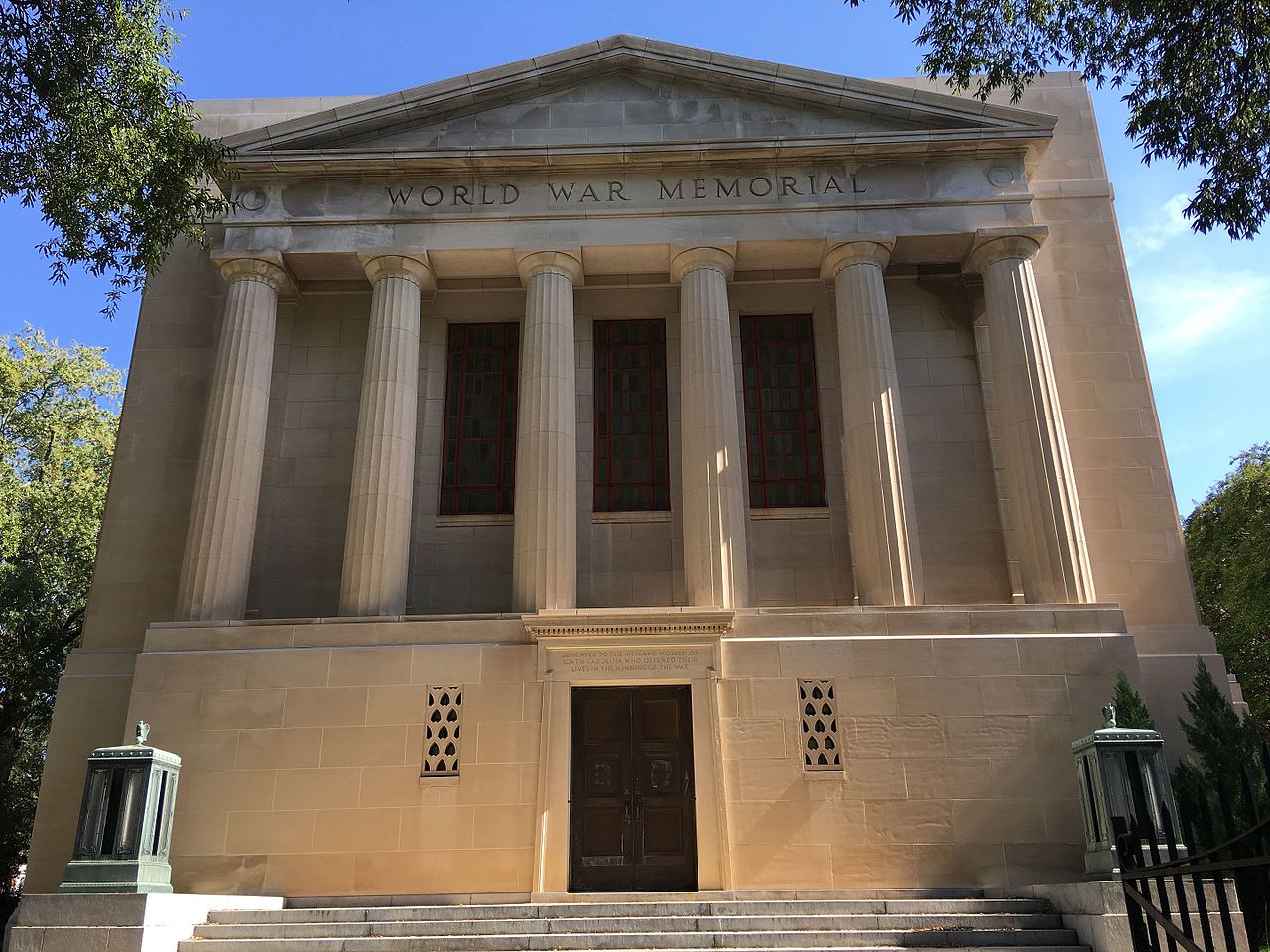
The World War Memorial Building, built in 1935 in Columbia, is significant as an excellent example of early twentieth-century Classical Revival architecture. The building also has the distinction of being designed by the prominent local architectural firm, Lafaye and Lafaye. This Classical Revival memorial was built to honor the men and women who served in World War I and still maintains the architectural integrity of its original construction. The memorial was first proposed by Governor Richard Manning and approved by the General Assembly in 1919. In that same year the Assembly appropriated $100,000 towards its construction, which was later withdrawn due to the Depression economy. From 1919 to 1935 the War Memorial Commission raised building funds primarily through private subscriptions. In 1934, the state received $33,200 in a grant from the Pubic Works Administration, and in 1935, construction began without the funds originally appropriated by the state. The Memorial Building portrays a sense of strength and fortitude with its solid limestone construction and massive temple form columned facade. The carved detail of medallions, laurel, and memorial inscriptions remain in complete integrity. Listed in the National Register May 26, 1995
From its construction until 1960 the building was the home of the South Carolina Department of Archives and History. Then it was used by the University by the Department of International studies. From 1972-2002 the building became the home of the South Carolina Confederate Relic Room and Museum. It is now used by University Publications.
Above the front door it is inscribed:
Dedicated To The Men And Women Of
South Carolina Who Offered Their
Lives In the Winning Of The War
100 Cities - 100 Memorials
Memorial Inventory Project: There is one other existing partial database to consult - The WWI Memorial Inventory Project [CLICK HERE]. It contains some memorials our map doesn't. The listings on this database are fair game for the Memorial Hunters Club. So if you want to search for treasure from your desk - find missing listings here and submit them. Remember though, you will need to come up with pictures and the history of the memorial. You might be able to hunt that down through www.Proquest.com and Google.
- Details
- Memorial Hunters Club Submission: TheWanderer63
- Details
- American Legion post
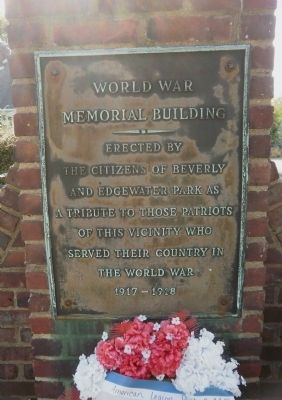
Beverly's memorial library is dedicated to its local citizens who served in World War I. A plaque reads, "World War Memorial Building / Erected by the citizens of Beverly and Edgewater Park as a tribute to those patriots of this vicinity who served their country in the World War / 1917-1918."
Photo courtesy of: Deb Hartshorn & Historical Marker Database
- Details
- Memorial Hunters Club Submission: Richard Bareford
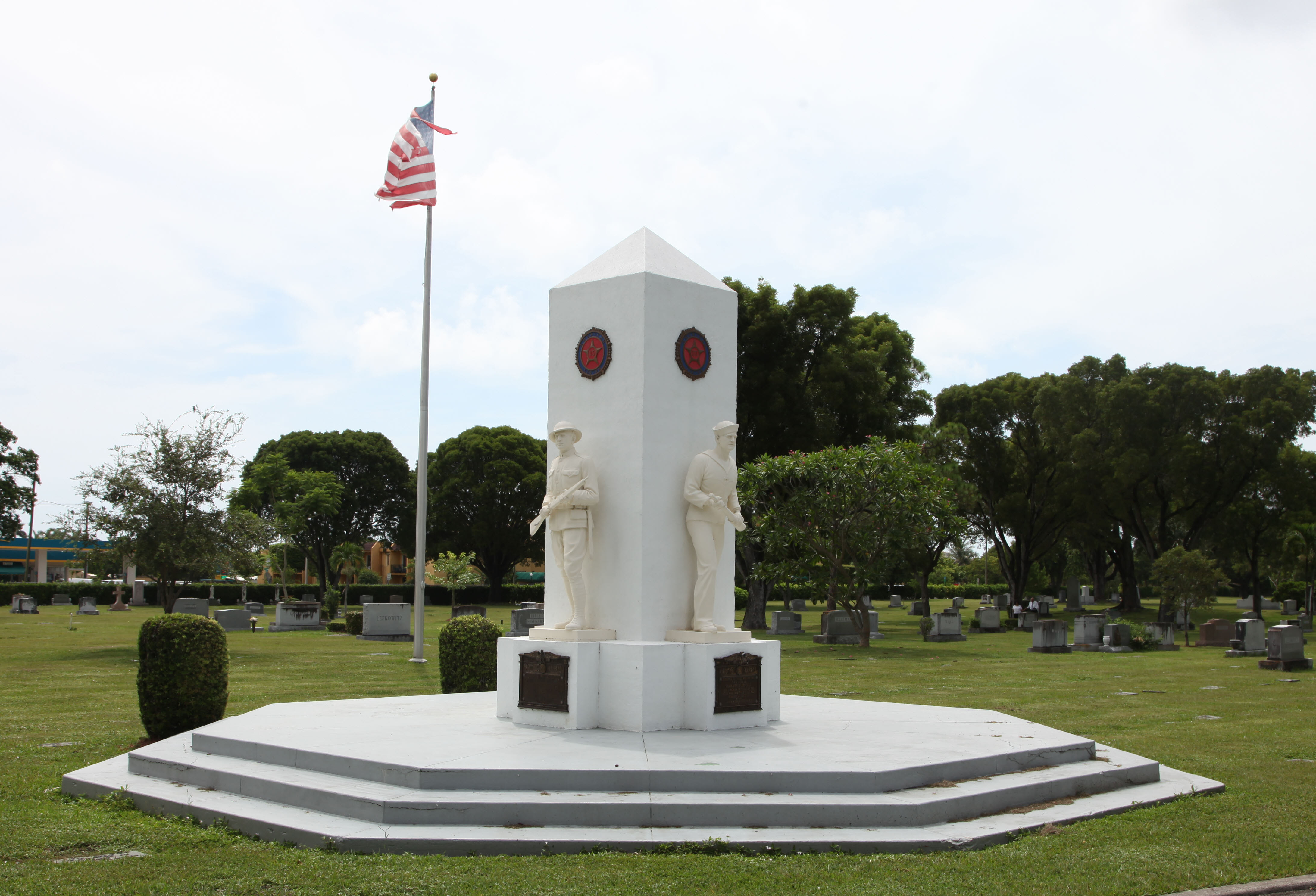
Between 1923 and 1930 Harvey W. Seeds American Legion Post 29 erected a World War memorial at Woodlawn Park Cemetery. It depicts a sailor, soldier, marine and an Army nurse. The sculptor was Robert Paul Goldie. He used local military personnel as models. Unfortunately the monument has been a frequent target by vandals. In 2010 Felix Sosa-Camejo American Legion Post 346 completed a major restoration, stripping off decades of paint and replacing missing limbs. These pictures were taken on September 1, 2013, still looking great.
- Details
- Dedication Date: May 30, 1926
- Single figure -- soldier
- Details
- Dedication Date: May 30, 1926
- Bench
the Auxiliary of
Edwin H. Ewing Post No. 76
American Legion
in honor of the men
of Mason County who served
in the World War of 1914-1918
- Details
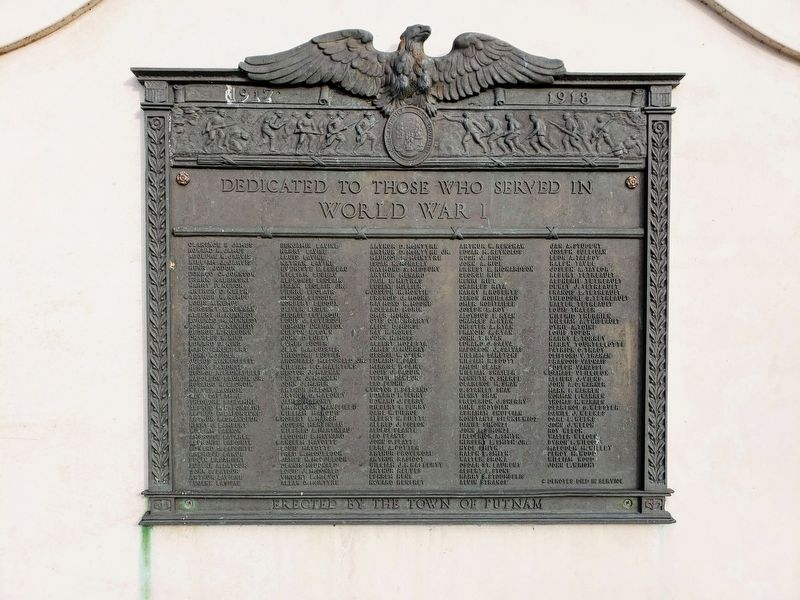
There are several plaques on the Putnam Memorial Bridge, spanning the Quinnebaug River, honoring the Connecticut citizens who served in World War I. On each of the north and south bridge parapets were a set of three plaques, a large central one with an eagle over a scene of infantrymen moving toward a center state seal, and two smaller flanking ones depicting air and sea battles. The two smaller plaques are missing from the north end of the bridge.
- Details
- 1926
- Memorial Hunters Club Submission: Alec Rieder
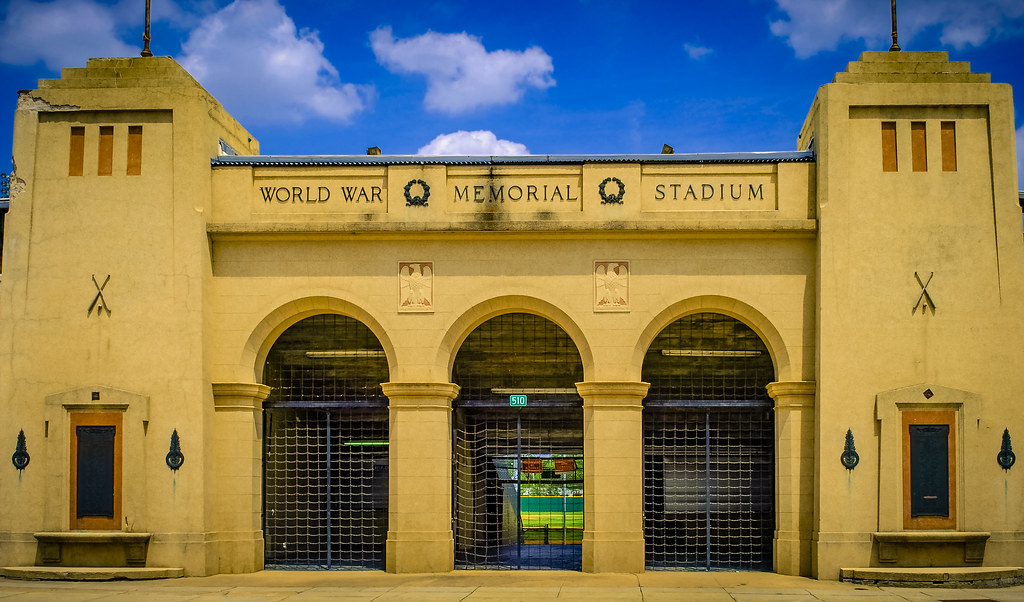
Opened in 1926, World War Memorial Stadium has been the home of minor league and college baseball in Greensboro up until the 2000s. NC A&T University's baseball team still uses it. The stadium was dedicated on Armistice Day, November 11, 1926.
The stadium made a cameo appearance in the 1988 film "Bull Durham."
- Details
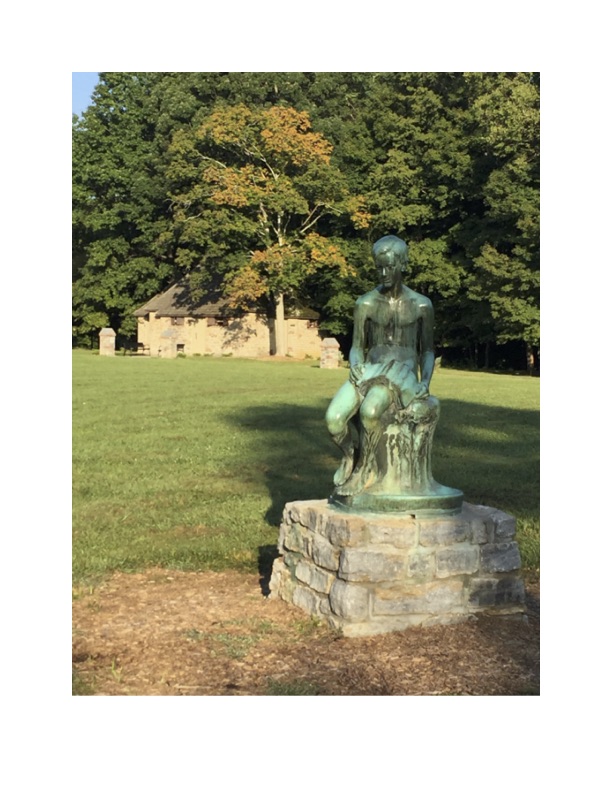
A bronze figure of a nude boy sits on a stump, holding in his lap an open book. Water flows from a spout at the top of the stump into a basin near the bottom. It was sculpted by Arthur Ivone and was dedicated in 1938 to honor those who served in World War I.
- Details
- Memorial Hunters Club Submission: Susie Gardner
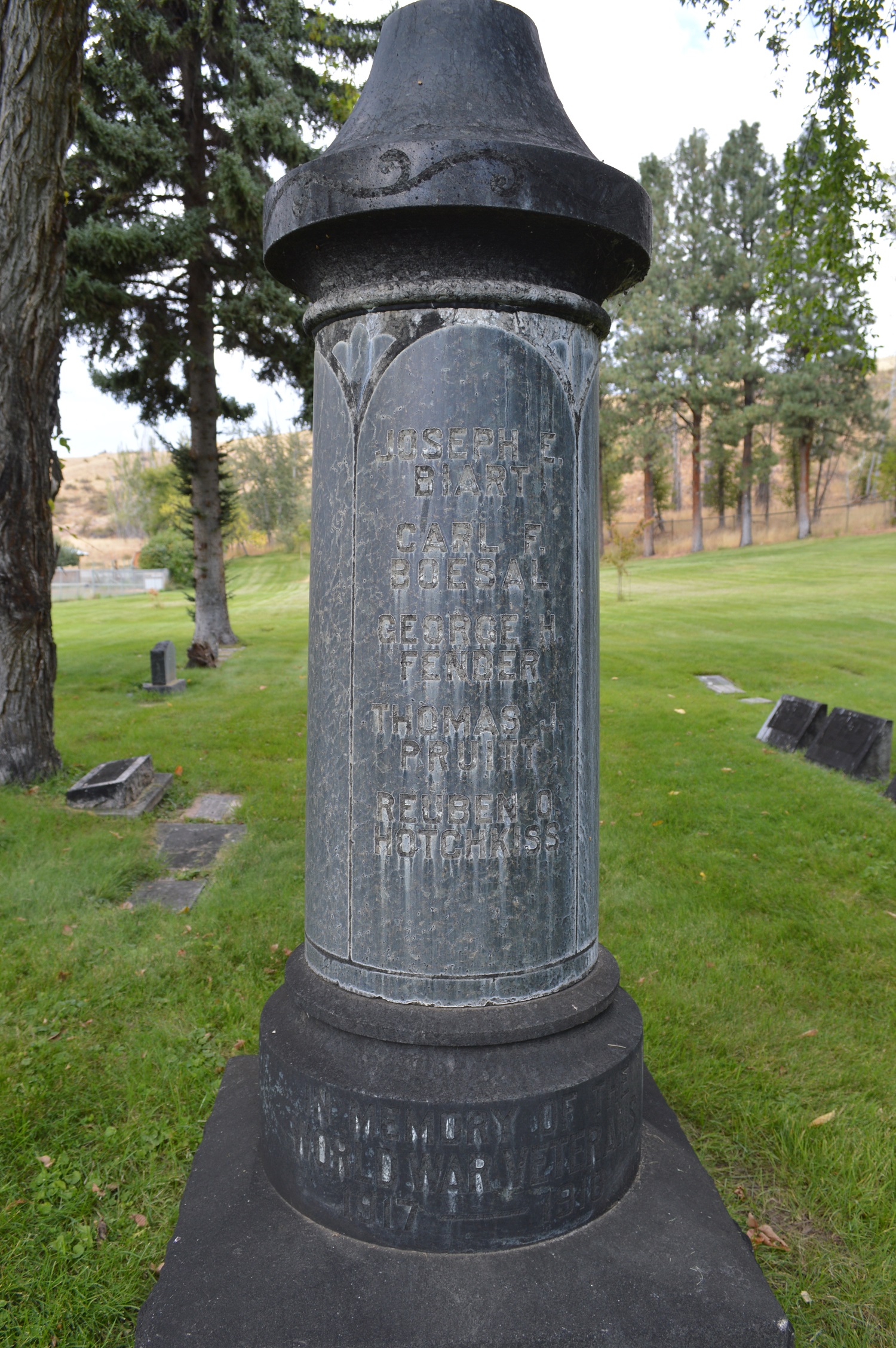
This monument was provided by the All American Legion Post 120; an unveiling was held on May 30, 1936. Names on the Monument are: Joseph Biart, Carl Boesel, George Fender, Thomas Pruitt (s/b Prewitt) and Rueben Hotchkiss
- Details
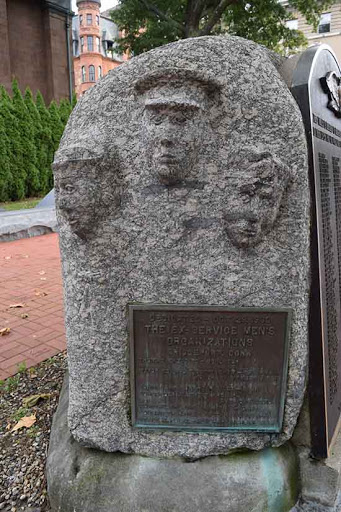
The Bridgeport War Memorial, originally dedicated to World War I veterans, is a boulder carved with faces of a soldier, sailor, and marine, modeled after photographs on a magazine cover. A small plaque is below the faces with the dedication date of October 29, 1933, and the officers of the ex-servicemen's organizations who sponsored the memorial. A larger plaque elsewhere on the boulder has a relief of an eagle and a list of the Bridgeport citizens who died in World War II. The original monument to the WWI veterans was sculpted by Thomas A. Sabatino.
- Details
- Dedication Date: 1924
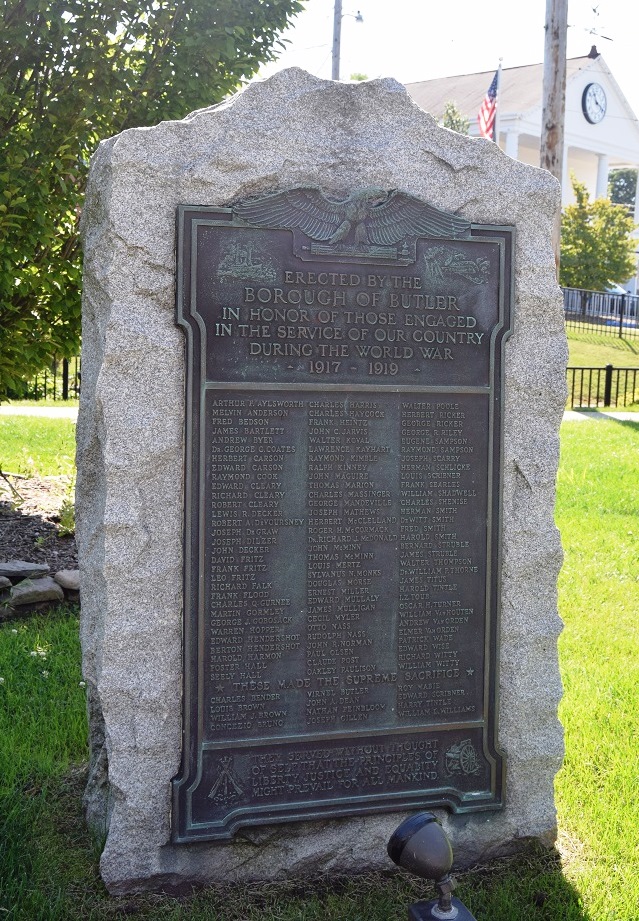
This World War I monument consists of a quarry-faced stone slab with a bronze plaque mounted on the front. The plaque is topped by the image of an eagle with its wing spread extending beyond the raised frame. The honor roll lists the names of all Butler residents who served in the war.
Photo courtesy of: NJ State Historic Preservation Office
- Details
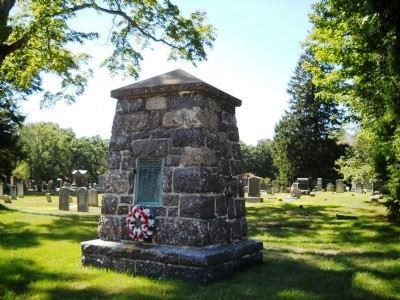
The Oak Ridge monument is located in a community cemetery. It consists of a massive structure of quarry-faced stone blocks topped by a pyramidal concrete cap, all resting on a square stone slab.
A bronze plaque is set beneath a stone lintel on the front face, listing an honor roll of Oak Ridge area residents who served in WWI.
Photo courtesy of: Bill Coughlin & Historical Marker Database
- Details
- Width: 7 ft.
- Depth: 7 ft/
- NJ000575
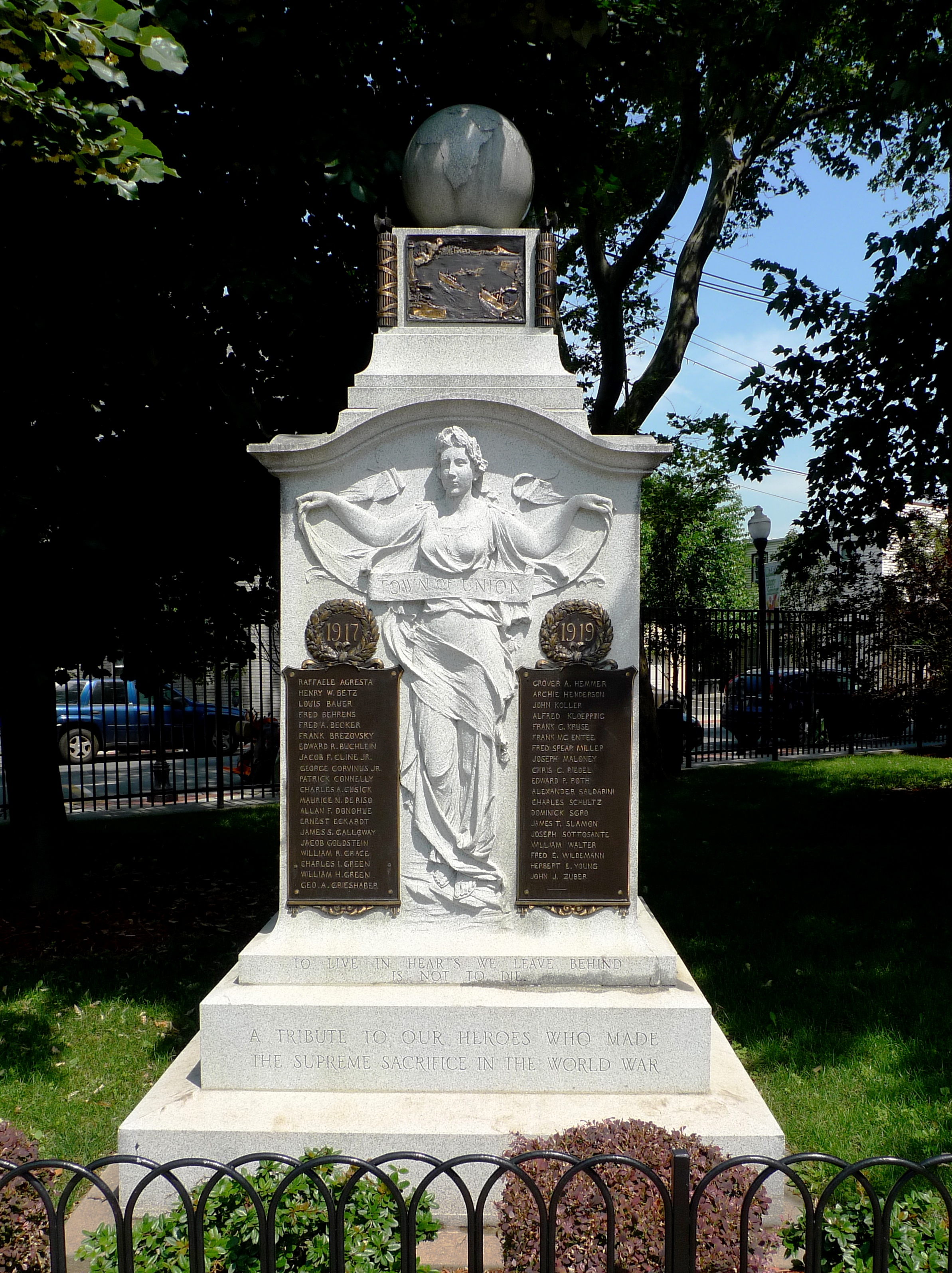
A concrete monument with a full-length bas-relief female figure clad in flowing robes and wearing a laurel wreath. Her arms are outstretched, and she holds a ribbon in her hands. The monument is topped with a round ball below which are four bronze bas-relief panels depicting scenes of war. The monument stands on a multi-tiered base.
Narrative adapted from Smithsonian Institution Research Information System (SIRIS) inventory #NJ000575.
Photos courtesy of: NJ State Historic Preservation Office
Vintage postcard - Rutgers University Libraries, Special Collections and University Archives
- Details
- Testi
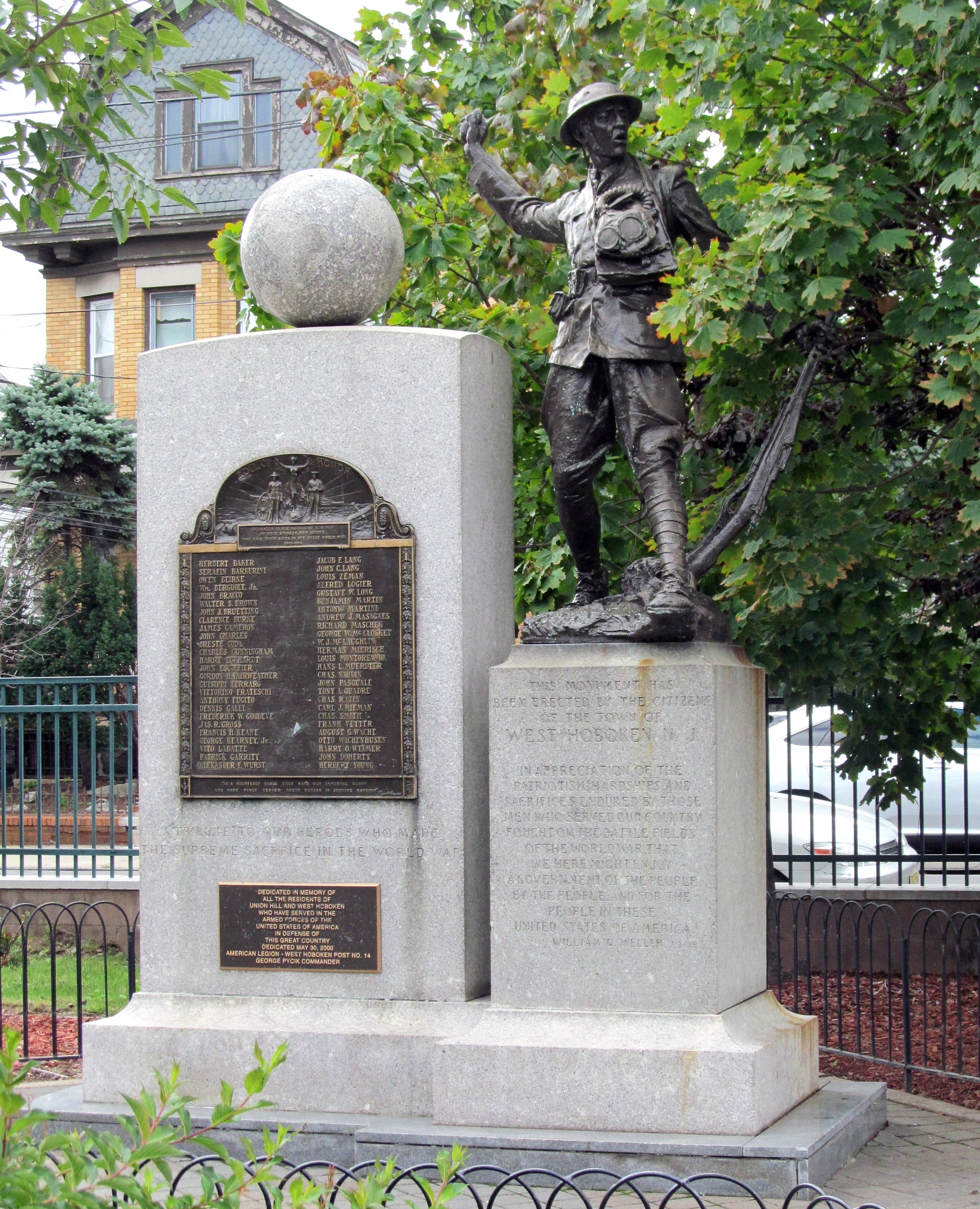
This World War I monument is a two-columned structure.
On the right is a bronze doughboy statue atop a rectangular granite pedestal engraved with a dedication to the men who served the US in the war. It was erected by the town of West Hoboken, NJ (now part of Union City, NJ).
The uniformed soldier is ready to throw a grenade with his right hand; in his left he holds a rifle, the butt of the gun resting on the ground.
On the left is a taller rectangular granite pedestal topped by a granite orb. It contains a bronze honor roll plaque with a bas-relief across the arched top. The image is of a striding Liberty flanked by a soldier on her right & a sailor on her left. in the bottom two corners are images of a tank & an airplane. The plaque lists those men of West Hoboken who gave their lives in the war.
Narrative adapted from Smithsonian Institution Research Information System (SIRIS) inventory #NJ000574.
Photos courtesy of: NJ State Historic Preservation Office
- Details
- Other

Adamson, Patrick M
Adamson, William J
Alderson, William Henry
Allison, Horace Ralph
Allison, William David
Amend, George Alvin
Bailey, Charles Ward
Ball, James
Ball, Jethro
Ball, William
Barrett, John W
Beadling, Wilford Arms
Beater, Orlando
Behen Jr., Edward M
Bennett, James Gordon
Bigley, Frank Michael
Bower, William Roy
Brautigam, Edwin D
Brautigam, Walter G
Brautigam, William O
Colhouer, Samuel Raymond
- Details
- Dedication Date: 1924
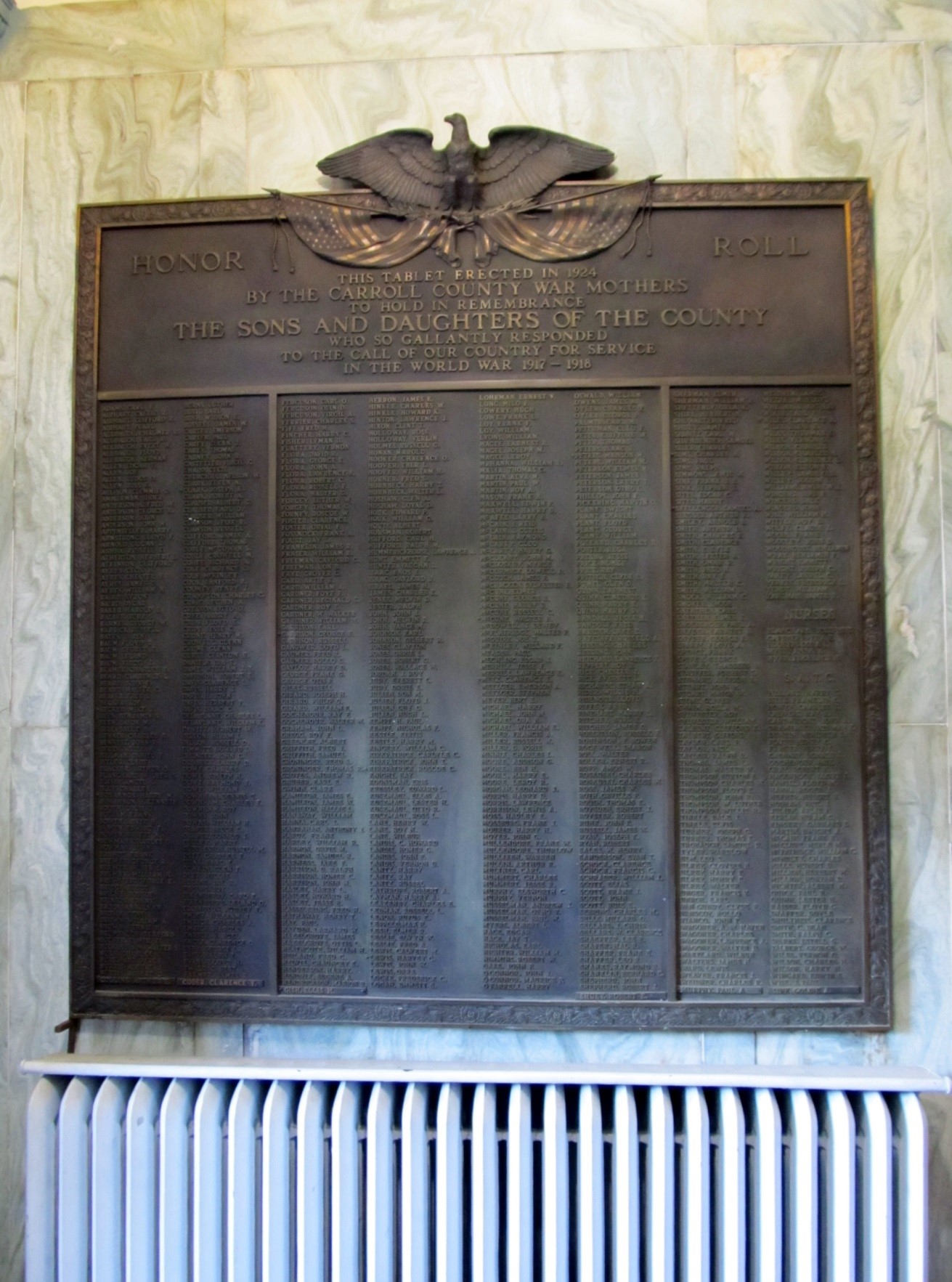
This tablet erected in 1924 by the Carroll County War Mothers to hold in remembrance the sons and daughters of the county who so gallantly responded to the call of our country for service in the World War 1917-1918.
Placement of this plaque and the location of it was sanctioned by Elmer Dunlap, architect of the Carroll County Courthouse in February of 1924 during a visit to Delphi, Indiana.
"The tablet will be placed on the west wall of the south entrance vestibule." - Carroll County Citizen Times, Saturday, February 9, 1924.
- Details
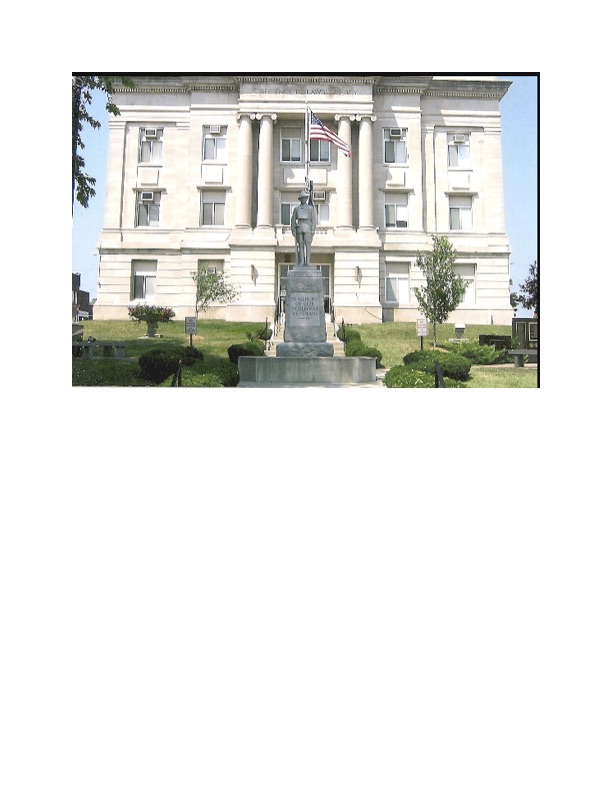
This is a white granite full-sized figure of a WWI soldier standing at attention, dedicated on May 30, 1930, as a tribute to the WWI veterans. It was rededicated in 1950 to include the veterans of WWII.
- Details
- Memorial Hunters Club Submission: The Wanderer
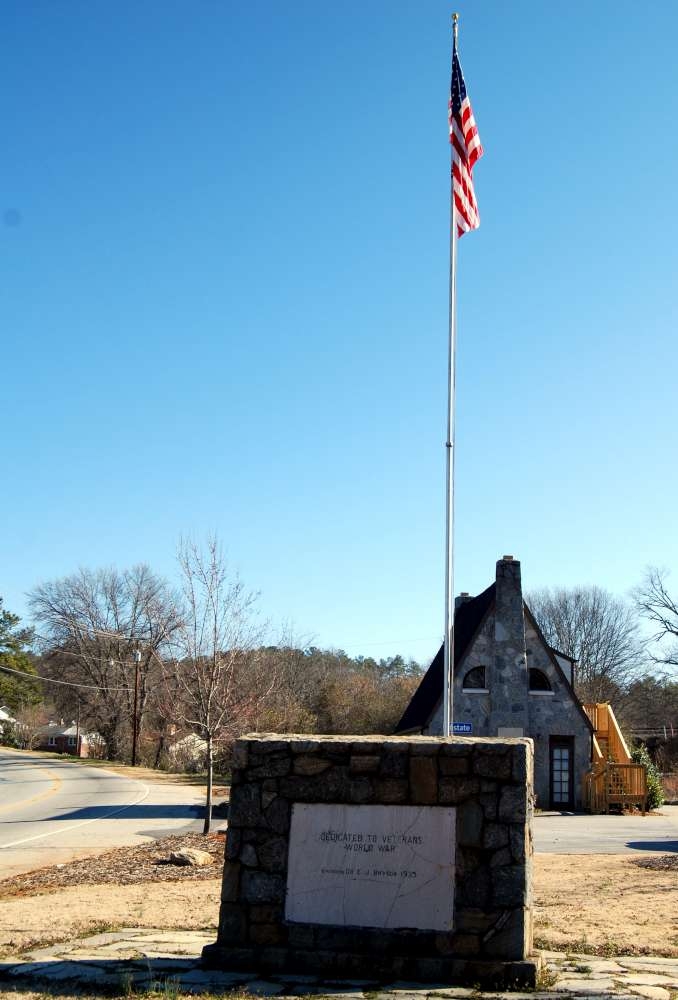
The Veterans Service Station was built in 1935 using local stone from the nearby Liberty Rock Quarry. The cornerstone of the building indicates that it was built by "CA_JC, & JS Newton". A marble plaque on the side of the building lists the mayor, council and other public figures at the time of the building's dedication, and also gives a history of the town, which claims that the town of Liberty was "founded in 1776 by a group of patriots." While this history is etched in granite on the building, it contradicts what is generally known about the area during the colonial period, when all of the land in Greenville, Anderson, Oconee, and Pickens counties was still Cherokee Territory.
A granite monument was erected next to the Veterans Service Station by Dr. E.J. Bryson soon after the building's completion. The monument includes a flagpole, lists the names of the local soldiers who fought in the first World War, and is "Dedicated to Veterans World War". The marker was struck by an automobile and broken in pieces many years ago. The pieces were collected by Mrs. Julia Jean Woodson, who kept the broken monument under a magnolia tree at her home on Main Street. In 2002, a Liberty councilman, Rick Clark, recovered the broken monument pieces from Mrs. Woodson, had them repaired and returned to the Veterans Service Station site.