































No additional information at this time.
100 Cities - 100 Memorials
Memorial Inventory Project: There is one other existing partial database to consult - The WWI Memorial Inventory Project [CLICK HERE]. It contains some memorials our map doesn't. The listings on this database are fair game for the Memorial Hunters Club. So if you want to search for treasure from your desk - find missing listings here and submit them. Remember though, you will need to come up with pictures and the history of the memorial. You might be able to hunt that down through www.Proquest.com and Google.
- Details
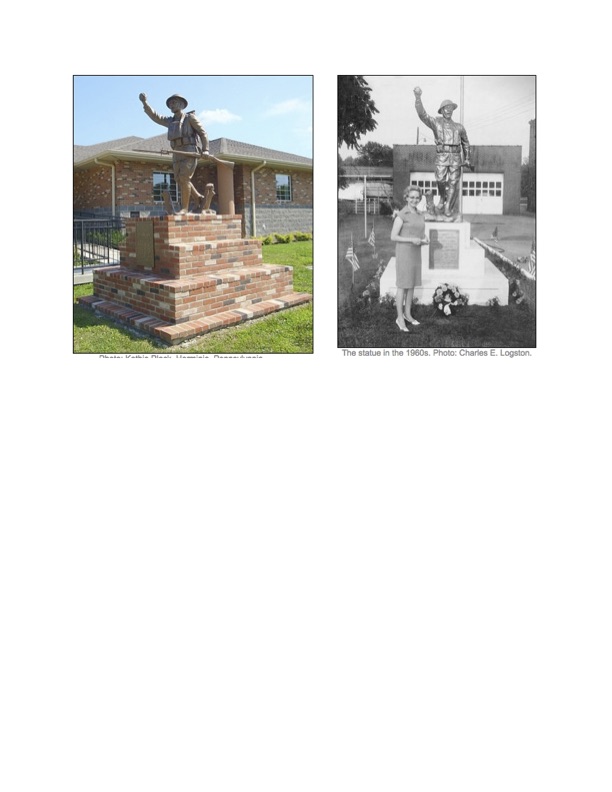
E.M. Viquesney sculpted this life-size metal statue of a WWI doughboy advancing through No Man's Land, carrying a grenade and a rifle. Beneath is a brick pedestal with a plaque dedicated to the veterans of WWI.
The dates it was moved from the cemetery to the past location at 22 China Street, and from there to its current location in front of the city's new Municipal Building have not been determined, though the last move occurred sometime after September, 2005.
- Details
- 1918
- 1921
- Dedication Date: 1921
- Memorial Hunters Club Submission: thewanderer
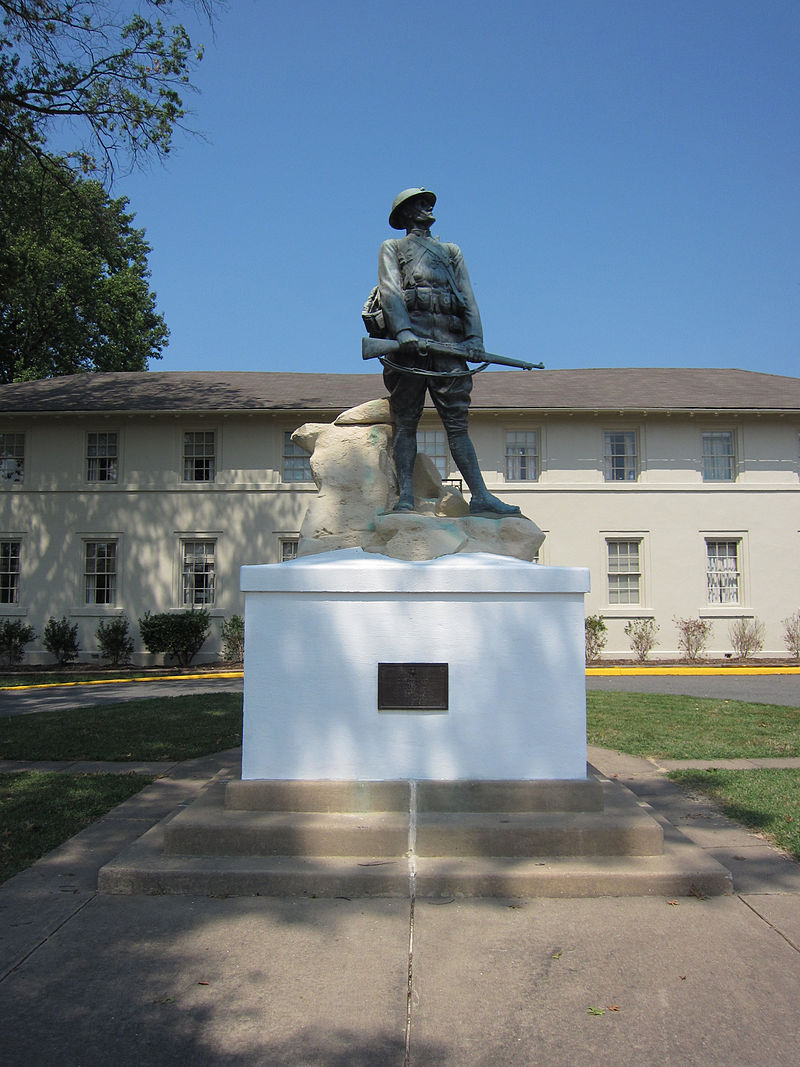
Full-length bronze figure of a World War I United States Marine. He wears a uniform with hat and boots. In his hands he holds a gun horizontally across the front of his body. His gaze is directed to the left. The figure stands on a stone base resembling a pile of stones. The back stone rises behind the figure to knee height. The sculpture and base stand on a square pedestal of concrete covered with stucco.
The original sculpture, “Crusading for Right” by the French sculptor, Charles Raphael Peyre, was commissioned by U.S. Army General Pershing at the end of WWI. Pershing wanted the sculpture to commemorate the U.S. Army Doughboy. Peyre, who was not aware of the differences between the U.S. services, used a Marine Private as the model for the statue. He made the sculpture in full detail of the Marine – right down to the eagle, globe and anchor on the helmet.
Army Gen. Pershing was not happy with the finished design and declined the sculpture. Fortunately, Marine Gen Smedley Butler did like the sculpture. Gen. Butler took up a collection from Marines, purchased the original full scale sculpture and had it placed in front of the Headquarters Building (Butler Hall) on Marine Corps Base Quantico where the sculpture became known as "Iron Mike".
The statue was begun in 1918 and first exhibited at the Exposition des Beaux Arts of the Grand Palaise des Champs-Élysées, in Paris in May 1919. Marine Officers and Enlisted donated money to purchase the statue, and it was sited in front of the Base Headquarters, Building 1019, in Quantico, Virginia, some 75 miles from DC. Three tablets were erected in the memory of the officers and men of the 6th Machine Gun Battalion, 5th Regiment and 6th Regiment, United States Marines, "who gave their lives for their country in the World War in 1918" by the Thomas Roberts Reath, Marine Post No. 186, American Legion, on November 10, 1921. On December 8, 1921, the statue was dedicated.
Today, a replica of this statue stands in front of the National Museum of the Marine Corps in Triangle, Virginia. On that statue's base is the name "Iron Mike". The original statue remains in front of Butler Hall, home of the Marine Corps Training and Education Command.
- Details
- Memorial Hunters Club Submission: Memorial Hunter: Mark Hilton
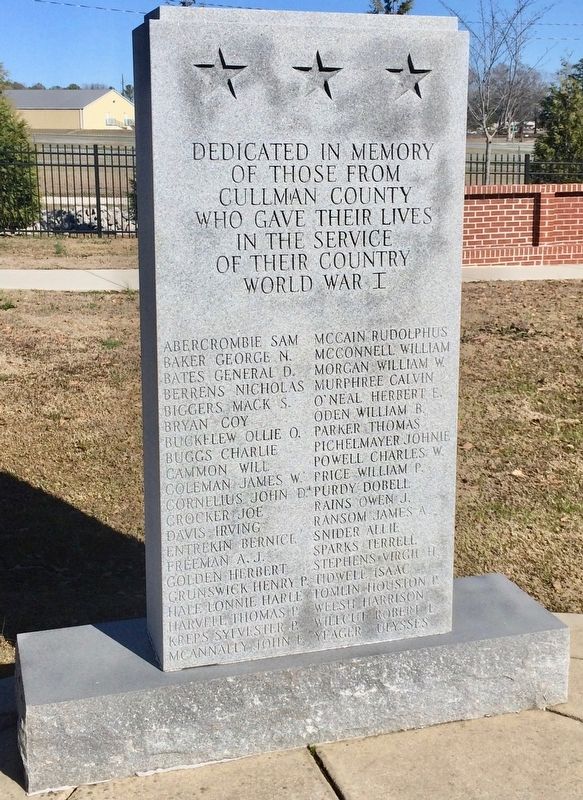
This stone monument formerly located at the Cullman County Courthouse is now part of the larger Cullman Veterans Memorial Park at Sportsman Lake Park. It lists the names of the servicemembers from Cullman County who gave their lives in service during WWI.
- Details
- Materials (select all that apply): Brick
- Dedication Date: 10/23/1922
- Federation Interalliee des Anciens Combattants (FIDAC)
- Veterans group
- Culver Legion War Memorial
- Culver Academy alumni who died in service
- Current location of tablet not confirmed. Information and image from the 1924 dedication program for the Culver Legion War Memorial.
- Bench
Nearly rectangular bronze plaque with decorative border (laurel leaves punctuated by flowers). Besides lettering, the plaque contains the logo of the FIDAC at top and of Culver Academy (bottom)
- Details
- Materials (select all that apply): Glass
- Dedication Date: 11/02/1924
- Culver Legion (alumni association)
- alumni
- plaque in honor of those Culver academy students (unnamed) killed in the war from the Federation Interalliee des Anciens Combattants at the base of the staircase (presented and dated October 23, 1922).
- Culver Academy alumni who died in service
- Memorial building
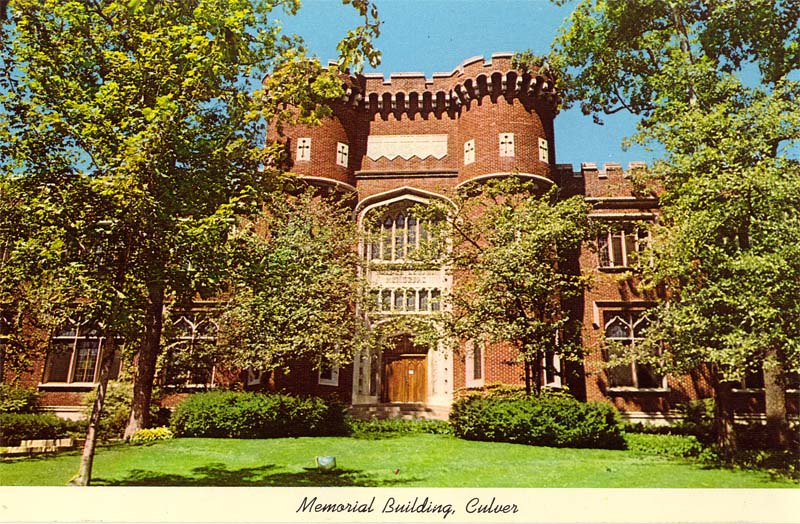
The Legion War Memorial Building was a monumental structure with a monumental mission when it was completed and dedicated: to stand as a memorial to war veterans -- both alive and fallen -- from Culver's ranks. Famous for its Gold Star at the entrance and its classical, exquisite architecture, the memorial building, of course, still stands today. The site features an imposing three-floor memorial building with a Gold Star room, Gold Stars on exterior, and a plaque in honor of those Culver academy students (unnamed) killed in the war from the Federation Interalliee des Anciens Combattants at the base of the staircase (presented and dated October 23, 1922).
- Details
- Dedication Date: November 02, 1924
- American Legion post
- Details
- Dedication Date: December 07, 1922
Three Memorial Elms were planted for the three Culver Military Academy cadets who died in the First World War. These were planted in a ceremony attended by General Pershing.
- Details
- Memorial Hunters Club Submission: thewanderer
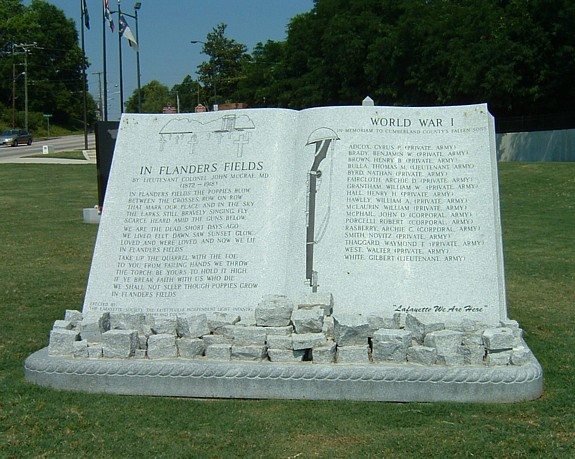
The Cumberland County World War I Memorial is shaped like a giant open book that stands about six feet tall and lists the names of the 17 Cumberland County soldiers who gave their lives for their country in World War I. It also includes the memorable poem "In Flanders Field." The text of the poem by Canadian Lieutenant Colonel John McCrae, MD is a fitting addition to this memorial. (McCrae also died in World War I of pneumonia.)
- Details
- Photos Courtesy of Lamar Veatch
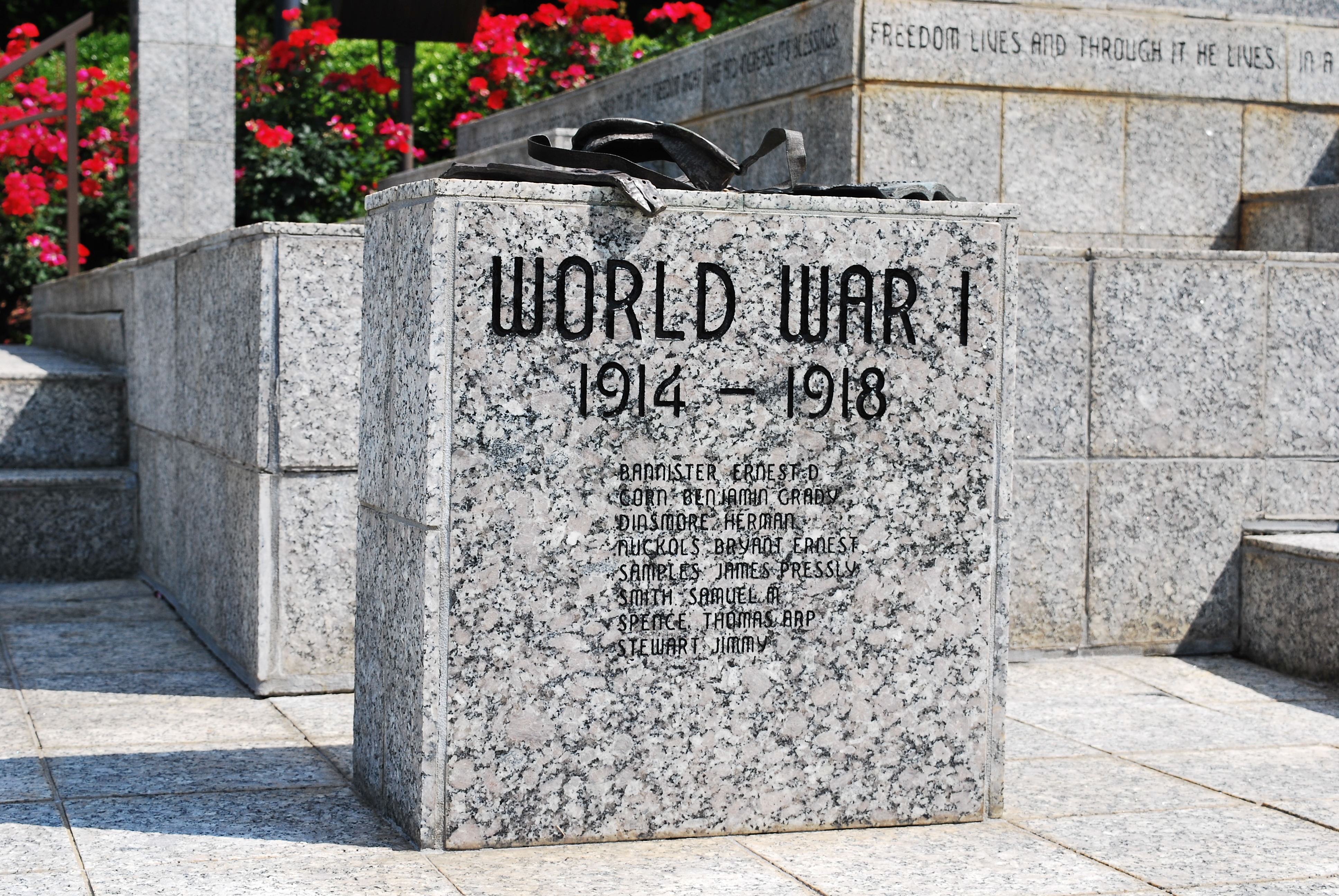
This memorial is located at 301 Veterans Memorial Boulevard, one block from City Square. Dedicated in May, 1992, by the City of Cumming, the memorial consists of individual pedestals to the different conflicts. Each pedestal is topped with bronze replicas of appropriate historical artifacts of that war.
- Details
- Memorial Hunters Club Submission: The Wanderer
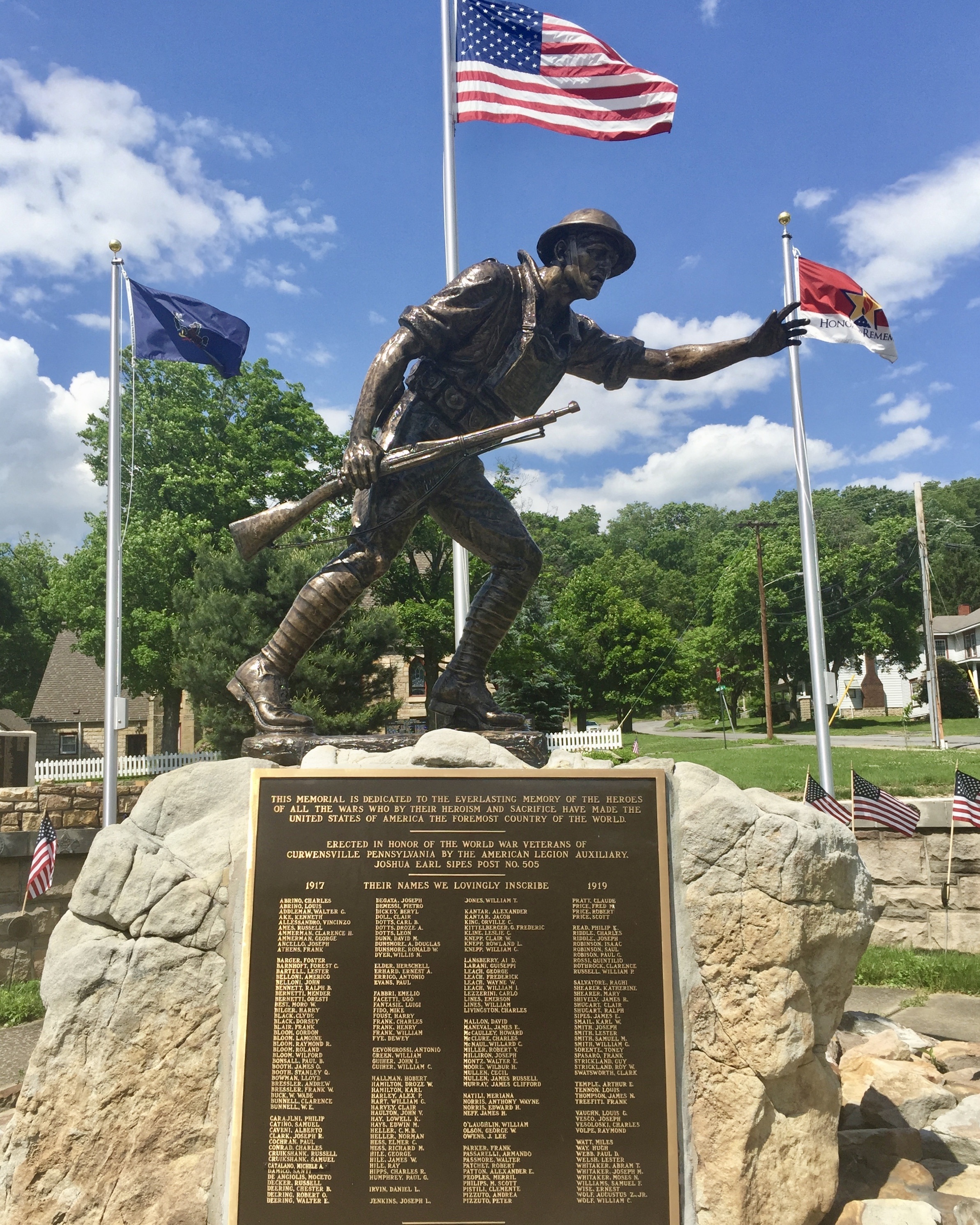
This memorial was dedicated by the American Legion Auxiliary on June 14, 1925 and was rededicated after repair and refurbishing on May 3, 1988. The inscription reads:
This memorial is dedicated to the everlasting memory of the heros of all the wars who by their heroism and sacrifice have made the United States of America the foremost country of the world.
Erected in honor of the World War Veterans of Curwensville, Pennsylvania by the American Legion Auxiliary, John E. Sipes Post No. 505.
1927 -- Their names we lovingly inscribe -- 1918
[Followed by a listing of names]
Those who made the supreme sacrifice
Di Pasquali, Alfonzo • Ferguson, Robert • Haddon, Clair. • Pistilli, Mariano • Predellini, Ferdinando • Salvatore, Mingnoui • Sipes, Joshua Earl
In a righteous cause they have won immortal glory and have nobly served their nation in serving mankind.
- Details
- Dedication Date: November 9, 1975
- Photos courtesy of Lamar Veatch
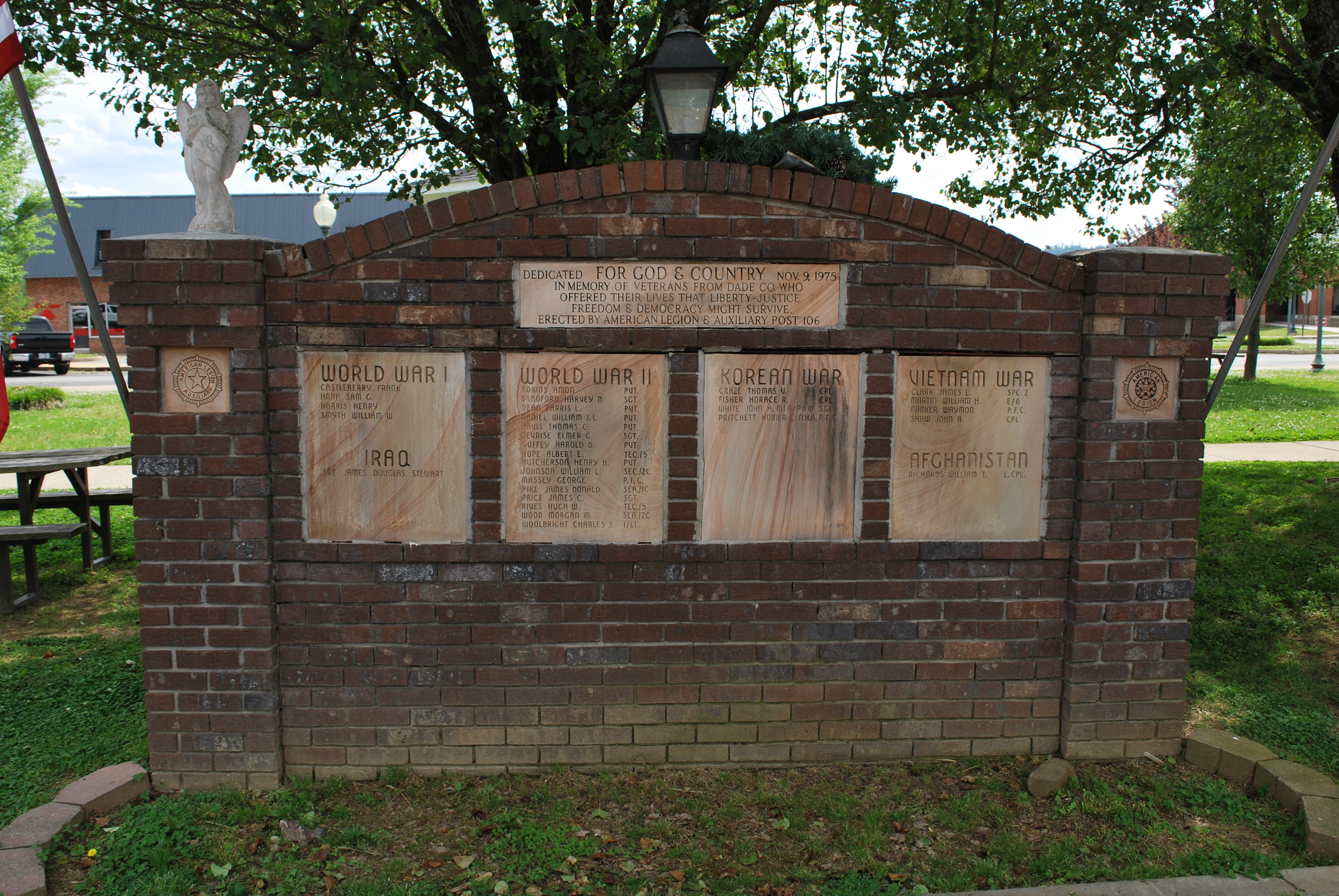
Description: Brick monument inlaid with inscribed plaques, for WW1, WW2, Korean War, Vietnam War, Afghanistan and Iraq. The WW1 portion contains the names of 4 Dade County residents who died in that war.
Inscription: For God and Country - In memory of veterans from Dade County who offered their lives that liberty, justice, freedom, and democracy might survive. Erected by American Legion and Auxiliary Post 106.
A granite marker on the site is inscribed: Dade County Veterans Memorial Park - Dedicated April 26, 2002 - For Those Who Serve.
- Details
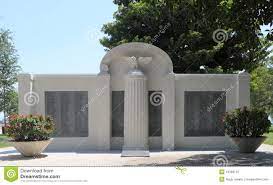
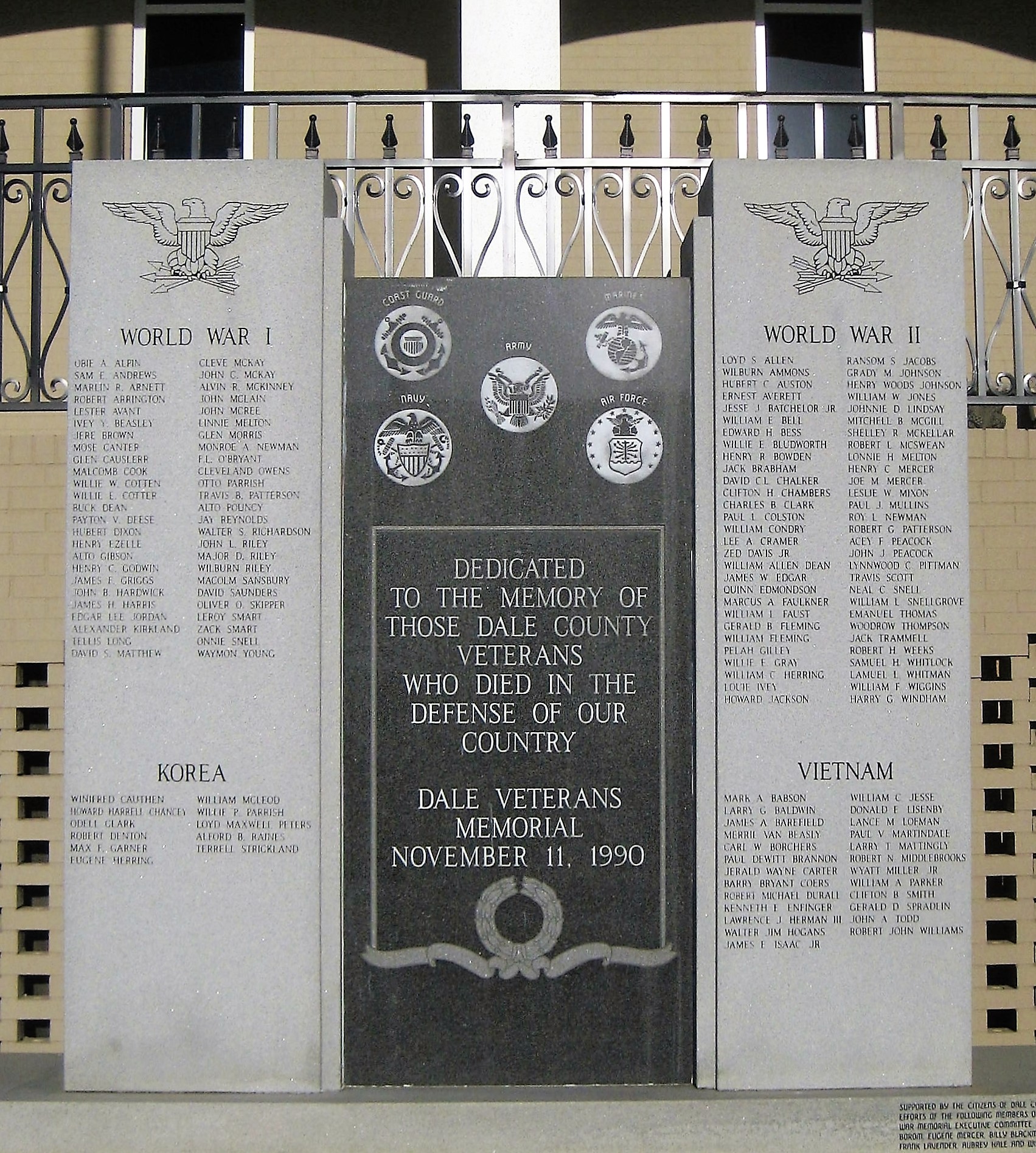
The Dade County War Memorial, by sculptor Edward Codere, was originally dedicated in Bayfront Park in 1943 with the names of eighty-seven individuals from Dade County who lost their lives during World War I. It was rededicated in 1946, with the addition of 553 names of those from Dade County who lost their lives in World War II. In November 1990, the memorial was rededicated following reconstruction due to vandalism. The 11-foot 8-inch tall, 24-foot 6-inch wide painted stone wall is adorned in the center with bronze inscription plaques and a fluted column topped by an eagle. Quotes by Franklin D. Roosevelt and General MacArthur are inscribed on the sides.
Franklin D. Roosevelt: "It is far better to die on our feet than to live forever on our knees."
General MacArthur: "We shall win or we shall die."
- Details
- Dedication Date: 1949
Erected by American Legion Post 20 and V.F.W. Post 3016.