




































The Old Razzle Dazzle
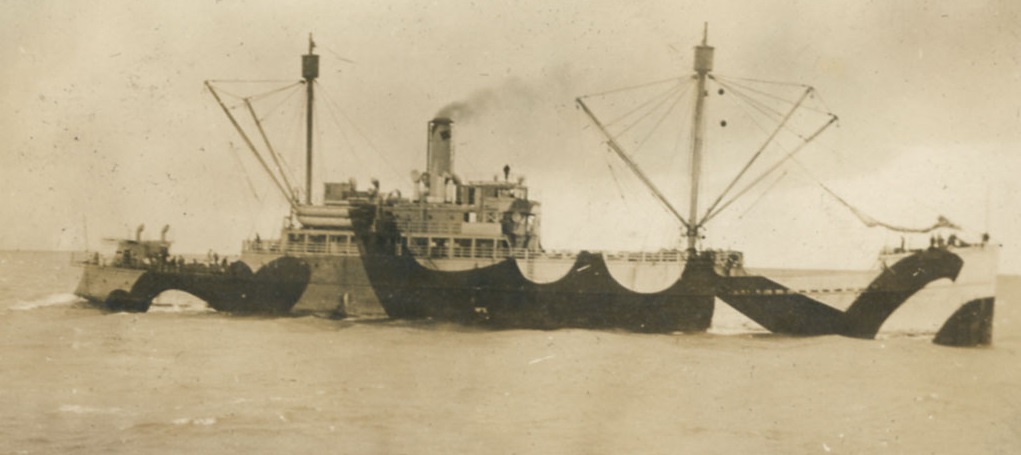
- Harry McComb, 48th Coast Artillery Corps, Janesville, WI
Dazzle camouflage, or "razzle dazzle," was implemented in 1917 due to heavy losses from Germany's unrestricted submarine warfare. The intent of the dazzle pattern was not to hide the ship completely, but to break up the ship's speed, direction, and dimensions. Each dazzle ship contained a different pattern to prevent any similarities or associations from being established by the Germans. The break up of the traditional ship's coloring, concealed t he ship from German U-boat rangefinders. The success of dazzle camouflage is unknown, as dazzle ships were still attacked. The jarring patterns of dazzled ships may seem counterproductive up close, but between March 1st and November 11th, 1918, 85 unpainted ships were sunk, and only 18 dazzled ships were sunk.