

































Journalist Tweets WWI to French Youth. Plus! Her Exclusive Twitter
Feed from Bastille Day in Paris
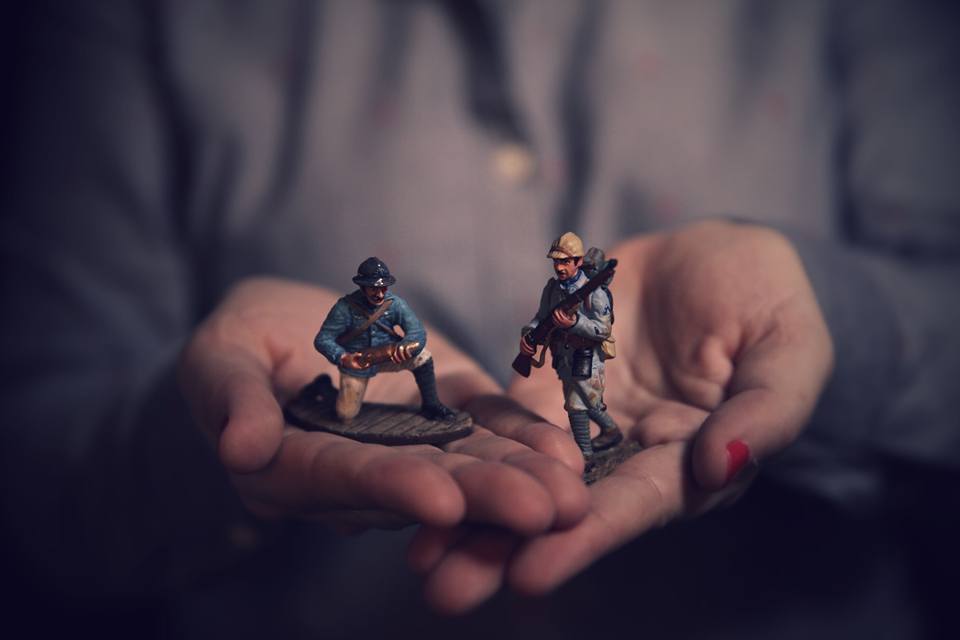 Stéphanie Trouillard's Facebook Cover Photo, WWI figurines in her hands
Stéphanie Trouillard, 33 years old, is a T.V./web journalist and WWI Centenary Correspondent for French main media source, France24. With over 12,000 people following her blog and Twitter accounts about WWI, she explains her personal and professional passions driving her innovative historical writing project.
A Personal and Professional Project
*I have been working a journalist for the France 24 website, a main French media source, for over four years. Most of my work covers international news,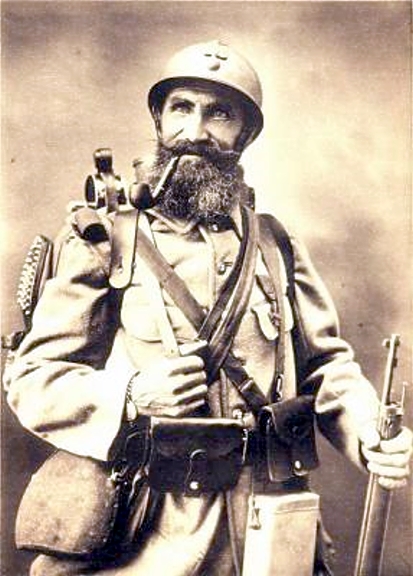 A French WWI "Poilu"but since the beginning of the centennial of the First World War in November 2013, I have also been dealing with this war. In three years, I have written more than a hundred articles on the Great War. This has allowed me to broach many subjects—military, but also cultural, sports, and even scientific subjects. Every day, I compose a press review on my Twitter account and give the news about the centenary. In parallel to my professional activities, I research the Poilus of my family. [Poilu is the French term for WWI soldiers. It means “hairy,” which is how the French press described the haggard, and, yes, hairy soldiers]. I tell their stories in articles and I go to the field to try to trace their different paths. Three of my great-uncles lost their lives during the conflict and two of my great-grandfathers were involved. They were all in different armies and regiments: the infantry, the artillery, and the navy. The family connection has allowed me to have a more intimate approach to this great story.
Thanks to the community France24 created on Twitter, I regularly receive messages from the descendants of Poilus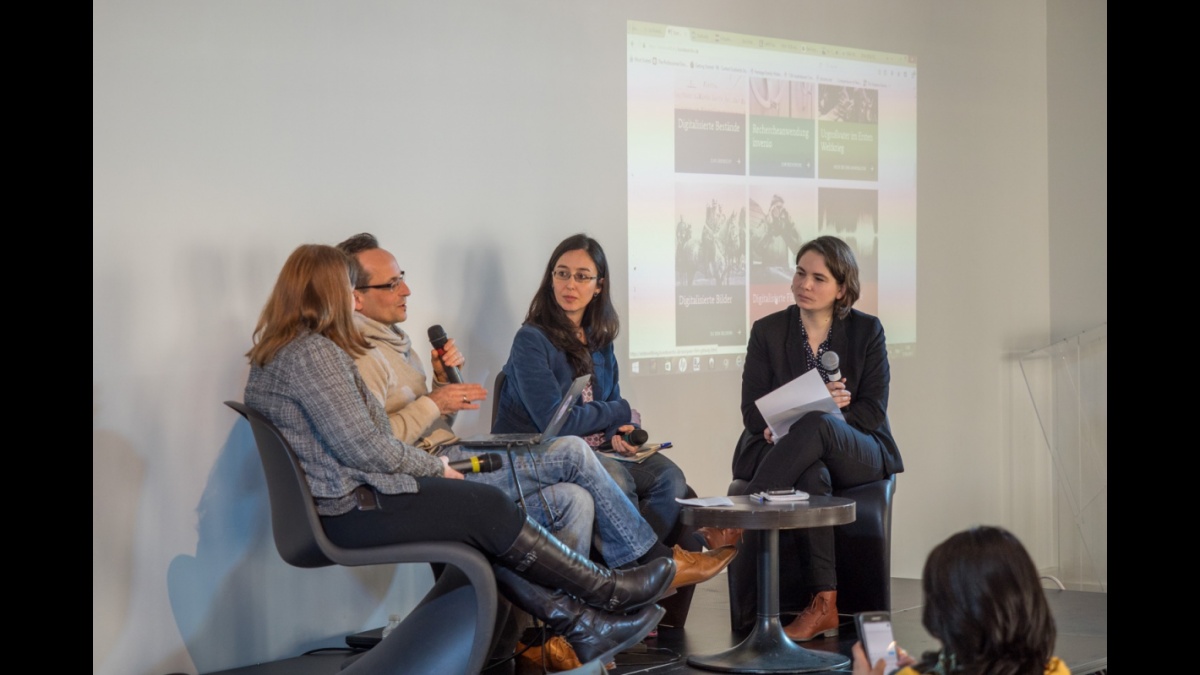 Stéphanie Trouillard (far right) leading a roundtable in March 2017 on the centenary in other countrieswho send me documents directly belonging to their family. These are very important sources because they are often unpublished, never seen before. Above all, they are particularly moving because they are personal stories.
I am also increasingly contacted by high schools or colleges to talk about my work on the First and Second World Wars. I love this exchange with the students and understanding their outlook at our past. Digital resources make it easier to interest them in history. They use modern tools to immerse themselves in events that took place one hundred years ago or seventy years ago. It is a gateway to encourage them to go to the actual archives because, in the end, nothing is worth the direct contact with documents of time. I have experienced very strong emotions in touching old papers with my hands, whether it be a military registry, an obituary, or a simple newspaper clipping. Nothing replaces this direct contact with the past.
Twitter and “Twittos”: A Tool for Writing and Understanding History for Students
**Twitter is a great tool for reaching a wide audience, especially the younger ones. I often get messages from high school students who follow me and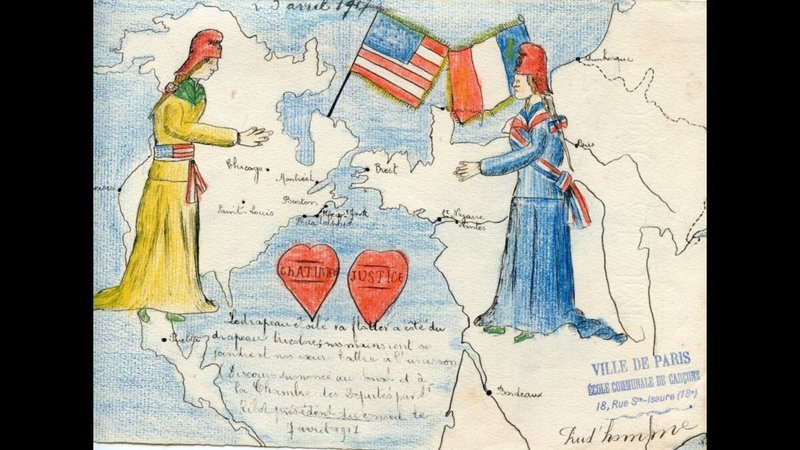 America's entry in WWI as seen by a French schoolchild, April 1917who are passionate about this period. I am also followed by history teachers who often rely on my articles to talk about the Great War with their students. During a whole school year, I attended a class at a Sotteville-Lès-Rouen high school in Normandy thanks to Twitter. The students asked me questions directly about their research on Poilus. I also came to the class to meet the students and explain my work to them. This shows them that we can study the past with the tools of today.
This is what has allowed me to say that the Great War is not old fashioned. Just look at the success of the hit video game Battlefield that takes place during the war! Admittedly, I am astonished by the over 12,000 people on my Twitter account. One might think that history is not necessarily a very trendy subject and that it only attracts higher age groups, but I see a diverse community created around the First World War.
When I go in the field to report for France 24, I don’t hesitate to interact with Internet users. During the centenary of the Battle of Verdun, I asked the "Twittos" [Twitter users] if they themselves had soldiers from their families who had participated. Many have sent me very moving messages with pictures of their ancestors. And, when I go to such and such a cemetery, some people ask me to take a picture of the grave of someone in their family. Some people ask me about this event. I really like this interactive and instant side.
In 1914, the Internet didn’t exist, which includes Twitter or Facebook. Would social networks have influenced the unfolding of the Great War? Today we are flooded with images of conflicts whether in Iraq or Syria. Every day on our Twitter or Facebook feed, we see photos or videos of fights or injured children. Social networks are moving Internet users, but it's regrettable they don't have the power to stop wars.
Below, you will find parts of my Twitter feed for France24 covering France's 2017 Bastille Day commemoration of America's WWI participation in 1917. These are excerpts from the photographic story I told to my followers. Enjoy!
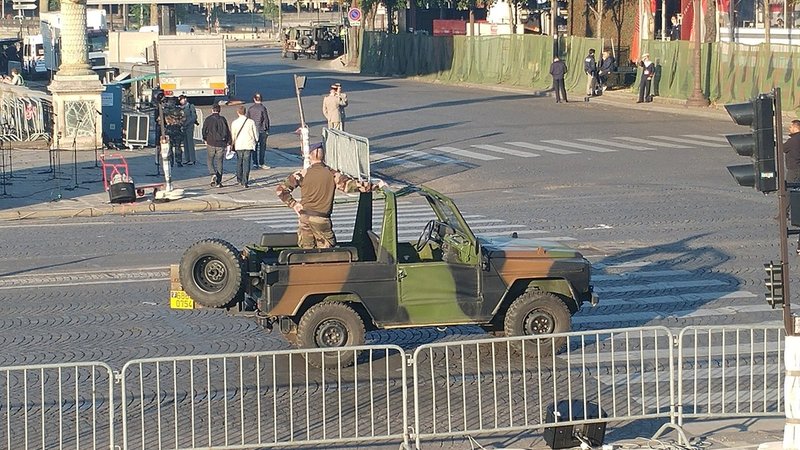
On the Place de la Concorde, the military continues preparations for the July 14th parade. Meanwhile, let's do some history.
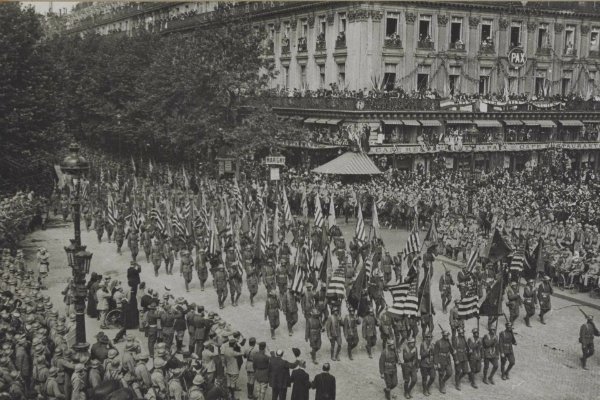
July 14, 1919. American soldiers march in Paris after the WWI victory.
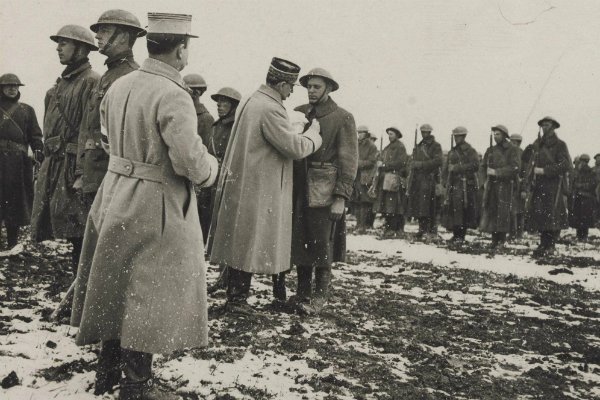
260,000 American soldiers were wounded in WWI.
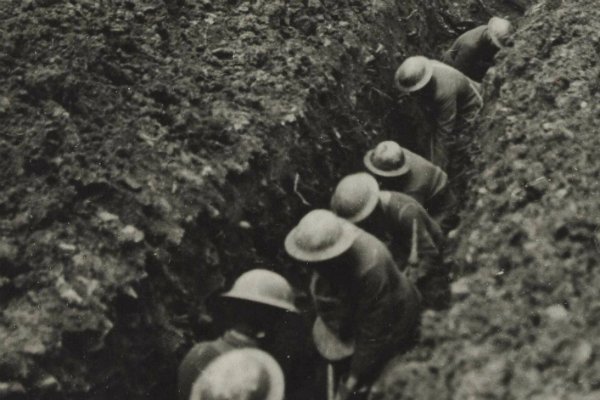
According to official statistics, 18,116, 516 Americans lost their lives in WWI (53, 402 in combat and 63,114 due to accidents or disease).
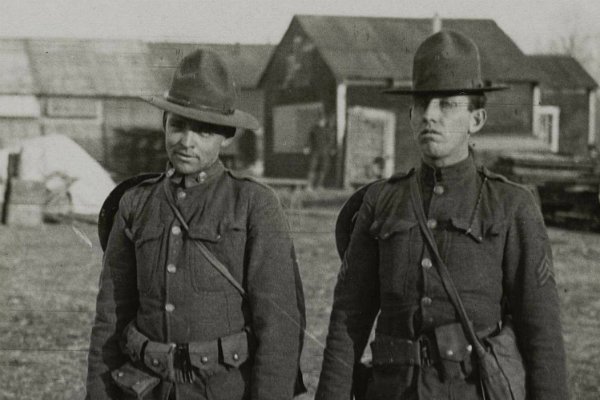
At the time of the Armistice, Nov. 11, 1918, around 2 million American soldiers were in France (1 million in combat).
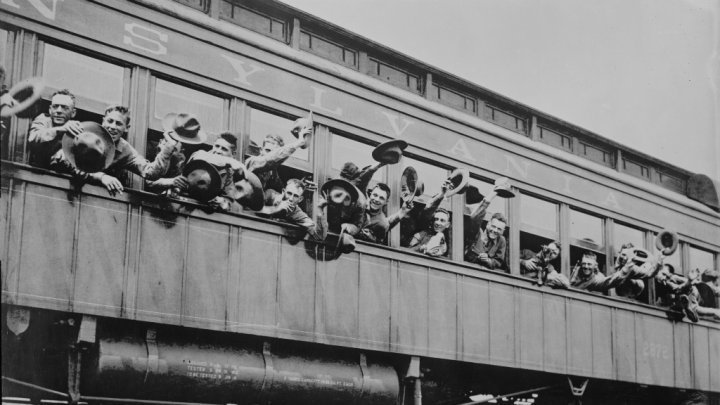
Finally, the first American soldiers arriving in France, April 26, 1917.
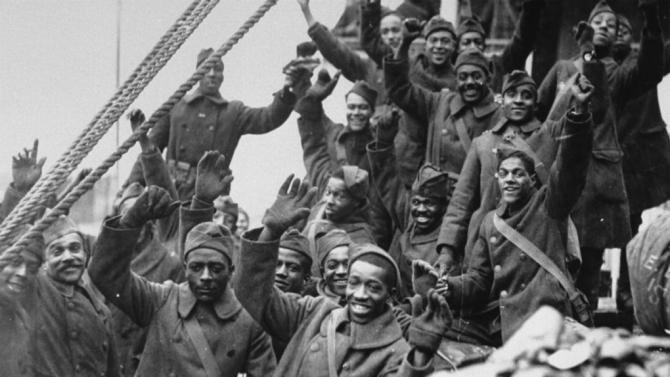
These soldiers were nicknamed the Harlem Hellfighters and were decorated with the Croix de Guerre. 171 of them received individual recognition for meritorious service.
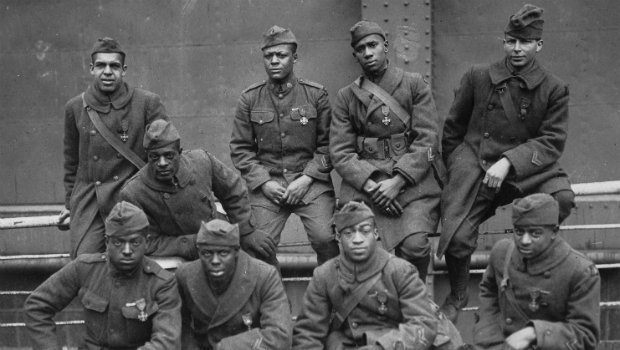
But some of them from the 369th regiment served side by side with the Poilus.
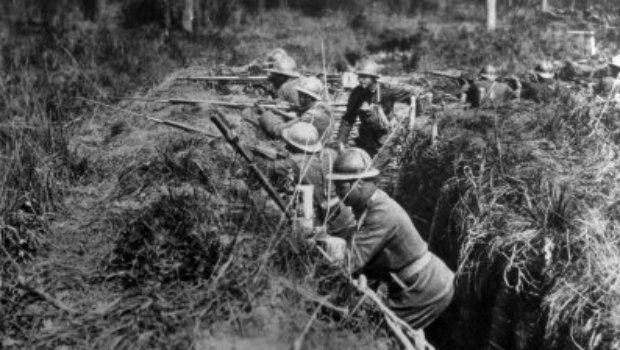
During the conflict, African American soldiers were relegated to food or munitions services.
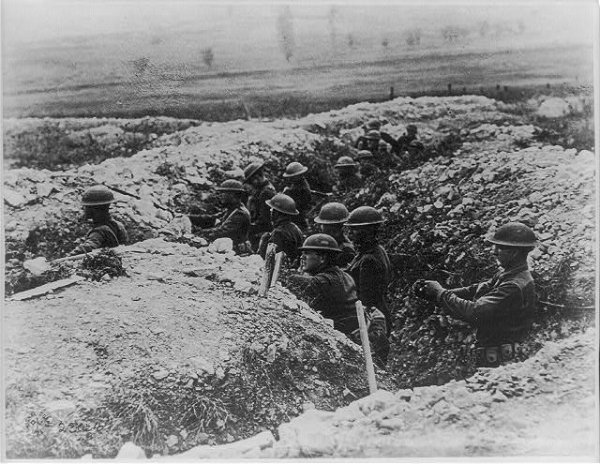
The first WWI battles weren't easy for the Americans.
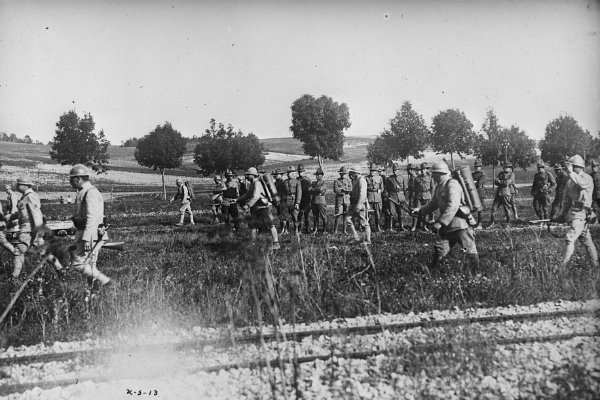
It wasn't the American Army we know today. They weren't well-equipped and they need many long months of training.
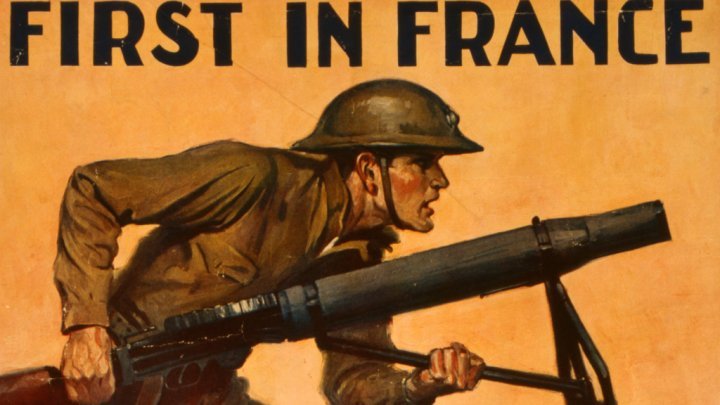
On April 6, 1917, the U.S. finally entered the war on the side of the Allies.
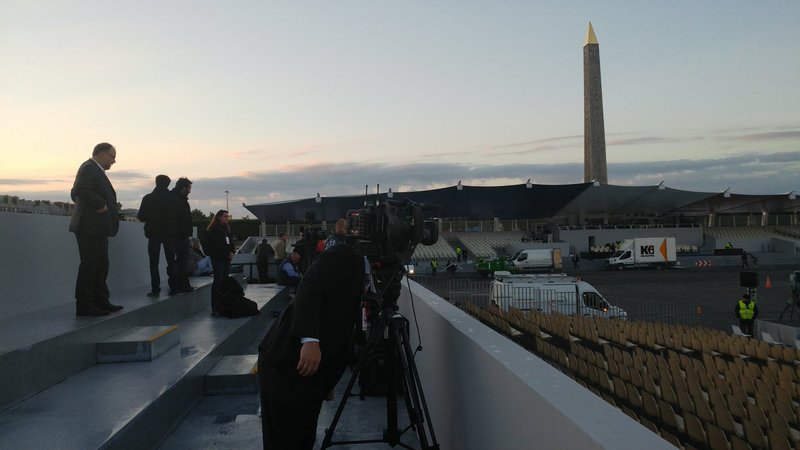
The sun is rising in Paris and the journalists are taking their places.
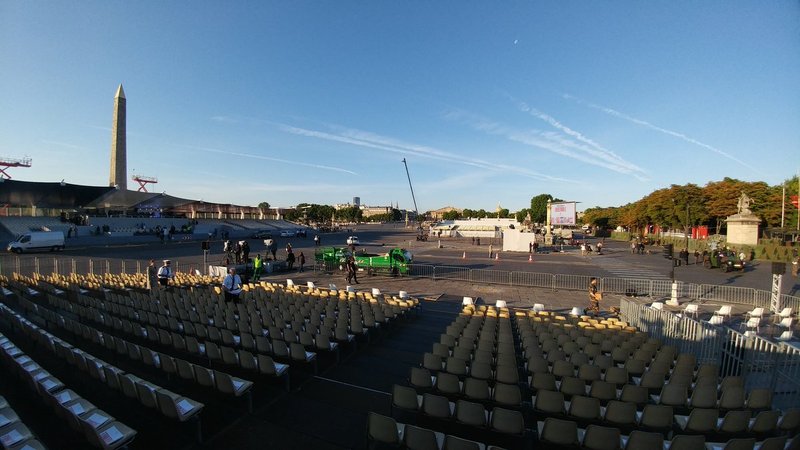
July 14th parade preparations happening amidst a gesture of Franco-American friendship commemorating the 100th anniversary of the U.S. WWI entry. Place de la Concorde, Paris, morning of July 14, 2017.
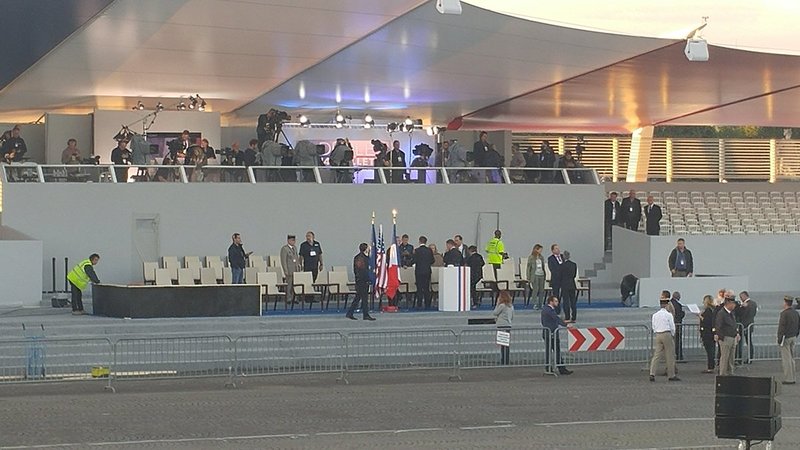
The American and French flags are in place. This is where Presidents Trump and Macron will watch the parade.
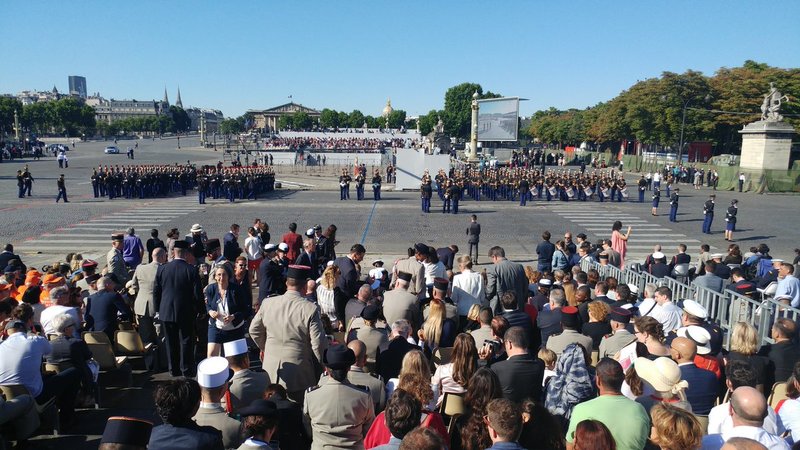
A loudspeaker announces that this parade is also the occasion to remember the victims of the Nice attack, which happened one year ago today.
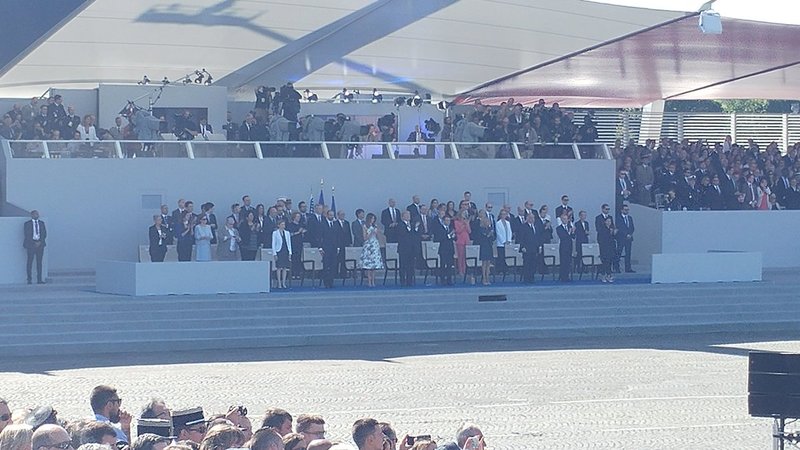
While representatives from French military schools go by, Donald Trump stands up to clap.
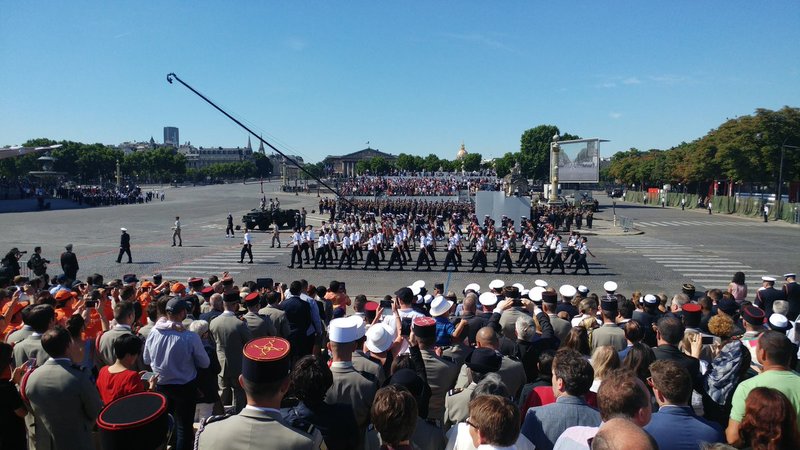
French soldiers engaged in Operation Chammal, fighting against Daech, were at the parade's head and honored first.
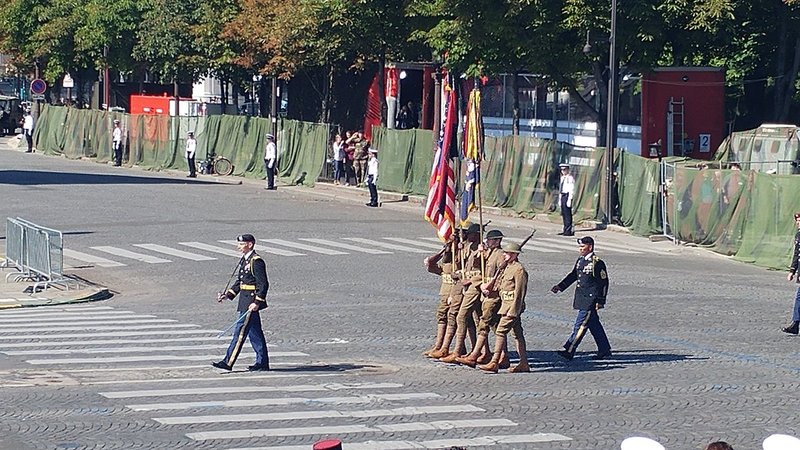
American soldiers wearing authentic WWI uniforms lead the parade.
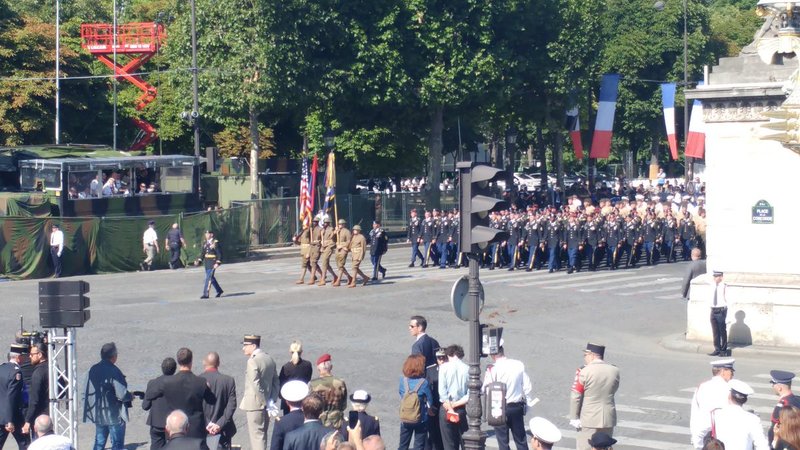
The July 14th parade also begins by featuring different divisions of the American military.
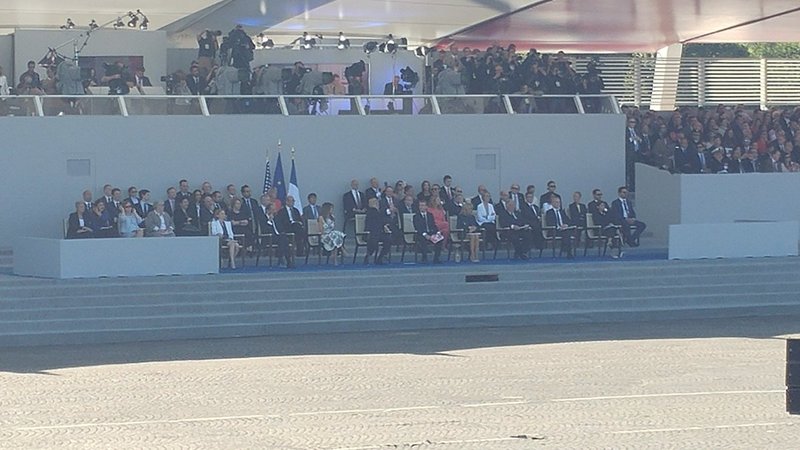
Macron talks a lot with Donald Trump during the parade.
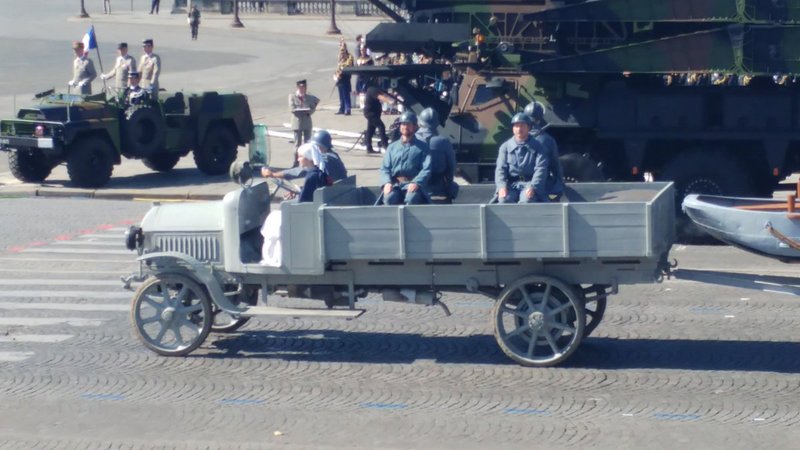
And, a special nod to these Poilus who seem real in their authentic WWI vehicle. It's great to see them ride.
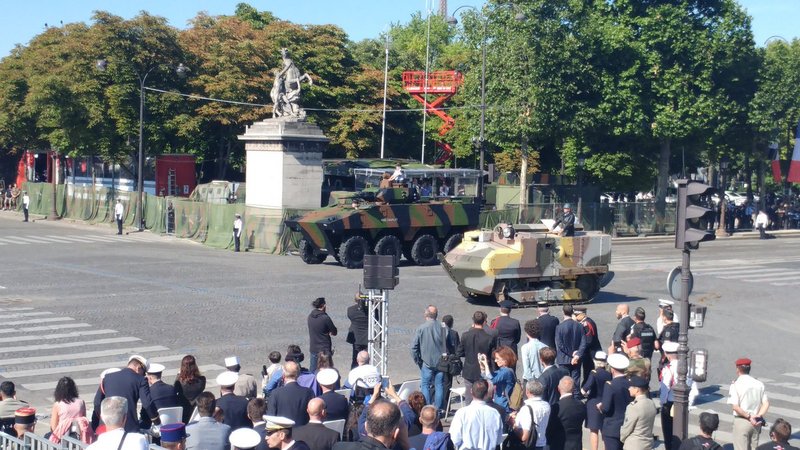
This year, the parade theme "1917-2017: 100 years of Technology" encouraged the display of the Schneider Tank and the Saint Chamond Tank from WWI.
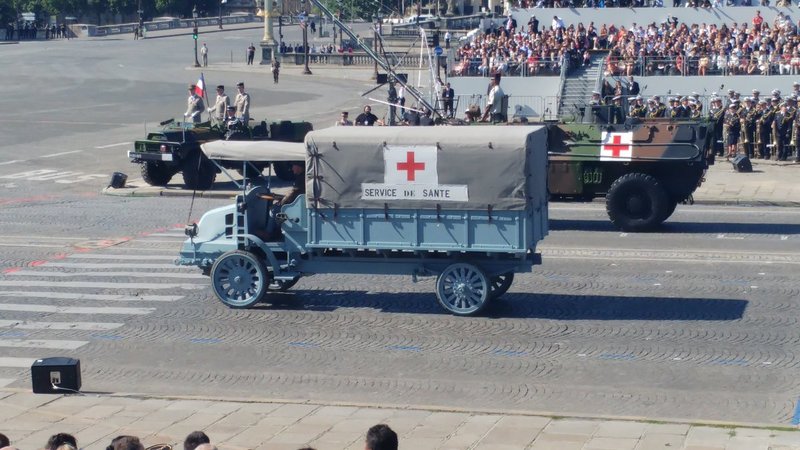
A Latil Truck Ambulance used in WWI.
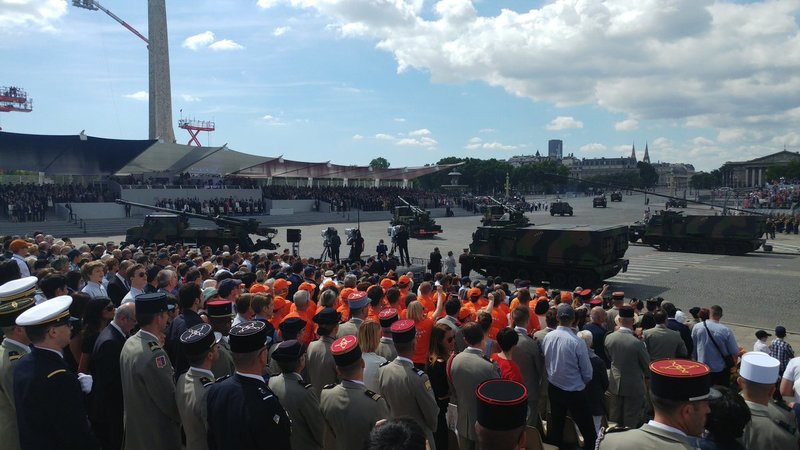
American President, Donald Trump, seems to enjoy the parade of military vehicles.
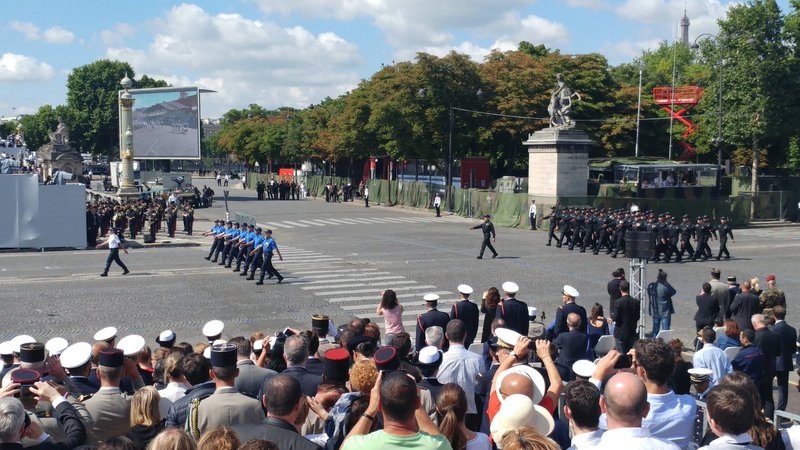
A lot of applause for the National Police.
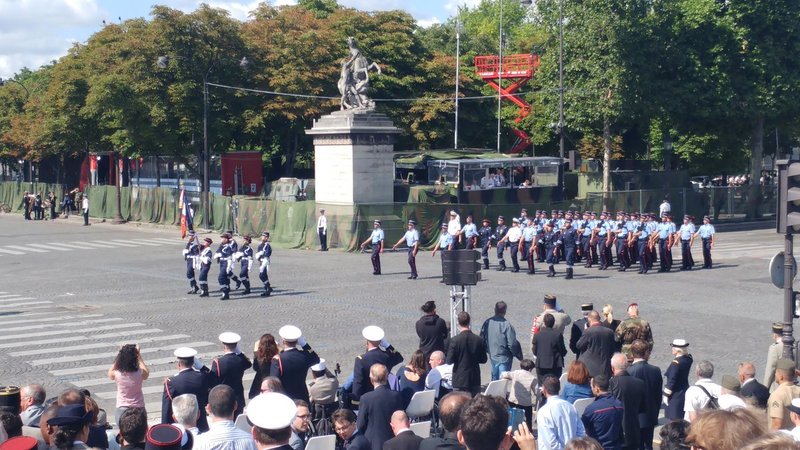
Border and custom police march too. My grandfather was one of them.
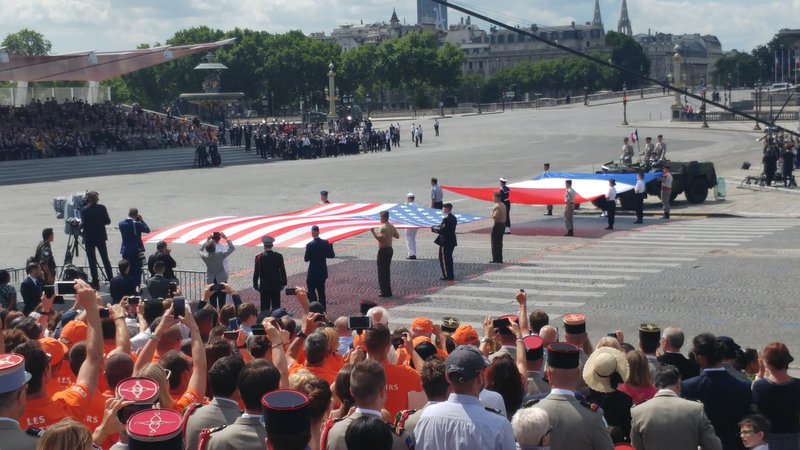
The parade ends with a beautiful display of French and American flags.
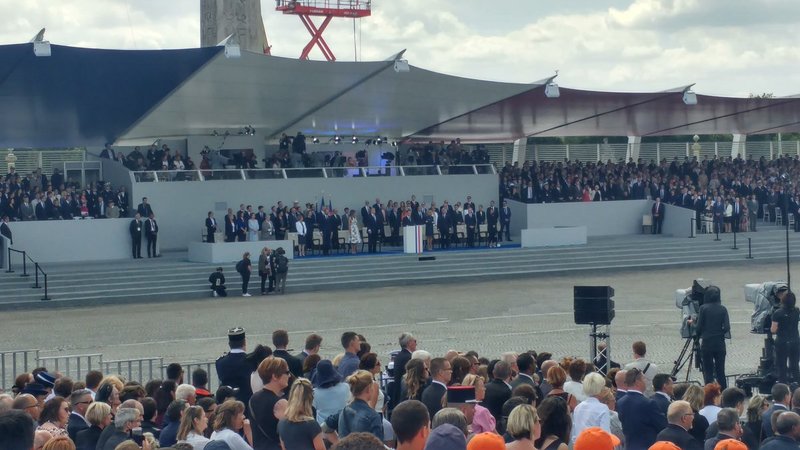
President Macron begins his speech by thanking Donald Trump for the U.S.'s choice to enter into WWI 100 years ago.
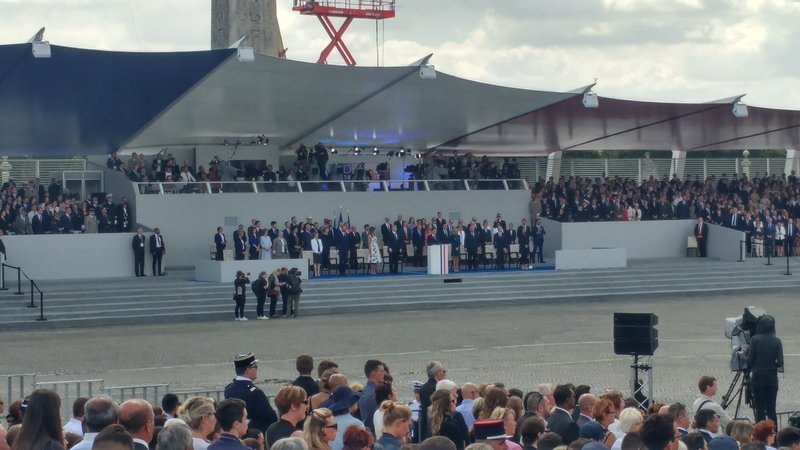
In his 7-minute speech to the country, Emmanuel Macron specifically addresses the "Wards of France" - children who have lost one of more parent during a French conflict and have become adopted by the French nation [discussed in the WWrite Weekend Update for July 16th].
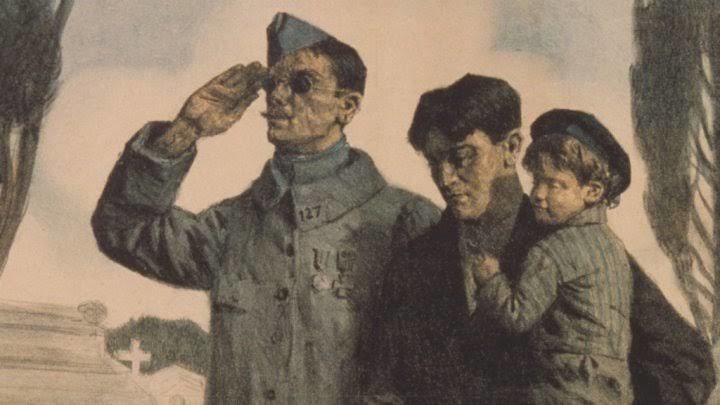
The "Ward of France" was created during WWI. I talked to you about this here france24.com/fr/20151126-pu…
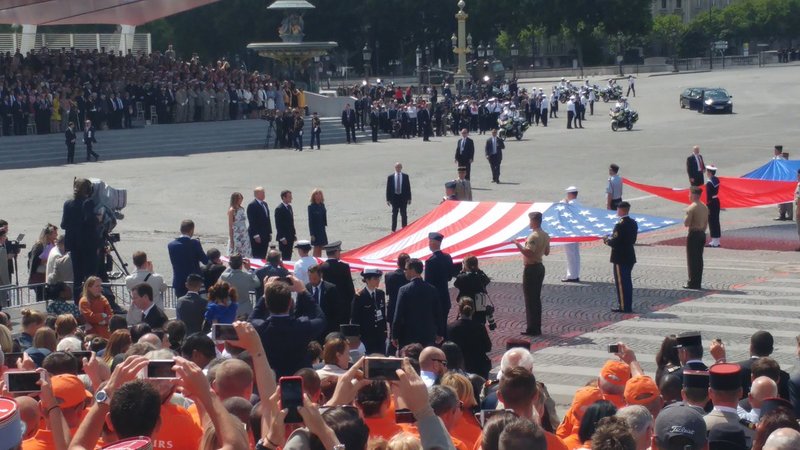
Emmanuel Macron and Donald Trump move towards the two flags.
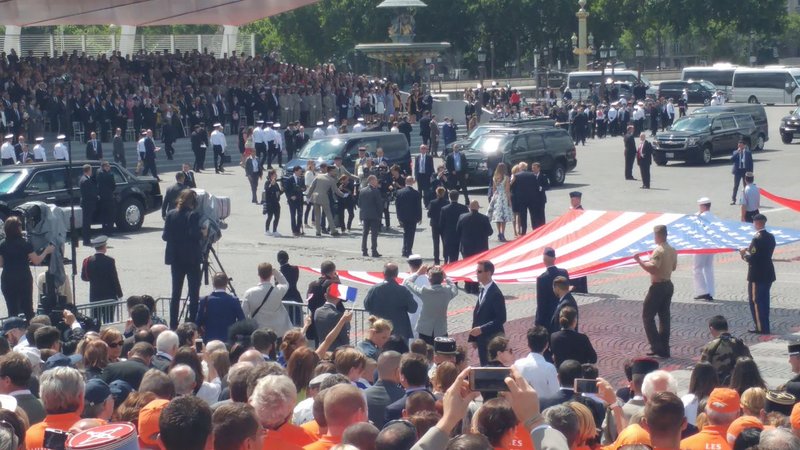
The two presidential couples give their goodbyes before leaving each other.
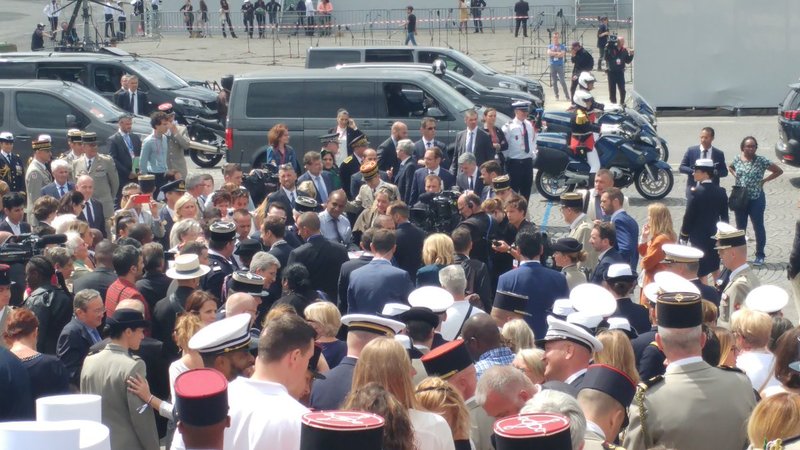
Emmanuel Macron is still at the Place de la Concorde. He continues to greet the crowds in front of him. No one can leave until he finishes.
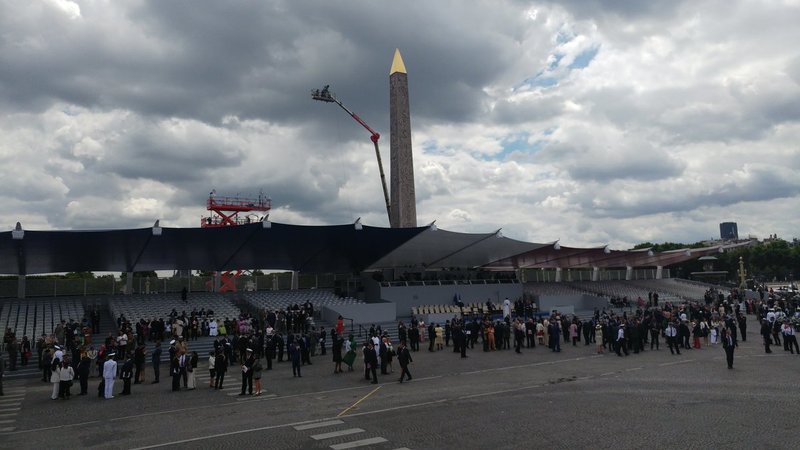
This is the end of my live Tweet. Thanks for following and we'll continue to follow together the 14-18 centenary. Don't forget to check out France24's page in English, which features WWI news stories, articles, and information!
Author's bio
 Stéphanie Trouillard works as a TV and Web journalist in Paris and has spent three years as a correspondent in Morocco and Canada. She specializes in international news and sports. She is also in charge of coverage for the WWI Centenary of 14-18 and 70th-year-anniversary of the Liberation of France during WWII. Thanks to these enriching experiences, she is practiced in several journalistic domains: writer, presenter, and TV director. Most recently, she co-wrote, directed, and produced the web documentary, "If I Come Back One Day:" Louise Pikovsky's Recovered Letters, a film about the 2010 discovery of letters written by Louise Pikovsky, a young high school student, to her literature teacher in 1944. Pikovsky and her family were deported and died in Auschwitz.
*The first two paragraphs come from text translated and adapted from "Quand une gallicanaute nous fait revivre la grande guerre : portrait de Stéphanie Trouillard, journaliste à France 24." Published by Isabelle Degrange December 20, 2016 in Du côté des Gallicanautes.
**The last four paragraphs come from text translated and adapted from "Des passionnés font revivre la Grande Guerre sur les réseaux sociaux," published by Eric Turpin for France Bleu, Nov. 10, 2016.