



































Albert Louis Agnew
Submitted by: Benjamin Woodard
Albert Louis Agnew born around 1899, Albert Agnew served in World War 1 with the United States Army. The enlistment was in 1917 and the service was completed in 1918.
Story of Service
Albert Louis Agnew was born in Keokuk, Iowa, to Charles Agnew. He was living in Rock Island, Illinois, when the war broke out, but his father would not let him enlist. He ran all the way to Huntington, West Virginia, so he could join up in Jun 1917. He stated that he was born Oct 23, 1895, but most likely lied about his age s it was said that he was 18 in Jul 1918.
He sailed for France about 2 months later on the ANTILLES. He was assigned as a Private to Company A, 28th Infantry Regiment, 1st Division, American Expeditionary Force, US Army. He was in action during the operations relating to the capture and defense of Cantigny (May 27-31, 1918). He was awarded the Silver Star, the nation’s fourth highest award, for gallantry in action. He “displayed unusual courage during the attack and later in evacuating wounded under heavy artillery and machine gun fire.” During the latter action, he was wounded himself.
Agnew was back in action by the Second Battle of the Marne in July, where he became missing in action on the 20th.
He was memorialized on the Tablets of the Missing at Aisne-Marne American Cemetery in France.
Clyde C. Handley
Submitted by: Benjamin Woodard
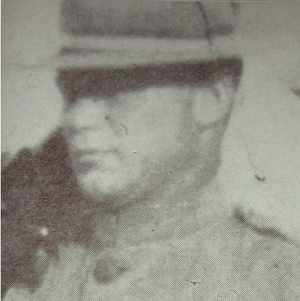 Clyde C. Handley born around 1894, Clyde Handley served in World War 1 with the United States Army. The enlistment was in 1918 and the service was completed in 1918.
Story of Service
Clyde C. Handley was born Mar 21, 1894, to Jefferson and Ella Handley. He lived and worked on a farm in the Culloden area. He was inducted into service on May 25, 1918. He trained at Camp Lee, Virginia, before being shipped overseas on Aug 6, 1918, on the MADAWASKA. He was transferred between several units but ended up as a Private in Company C, 131st Infantry Regiment, 33rd Division, American Expeditionary Force, US Army.
According to a Private in his company, “During the Meuse-Argonne offensive, in our action east of the Meuse, Company C was occupying a position on the bald hill about a kilometer north of the Bois de Plat-Chene. On October 11th at about 3:30 PM. I was returning with other stretcher bearers from the rear when, upon reaching a point in the ravine between Bois Plat-Chene and Bois de Chaume, the enemy began to shell the locality heavily and we entered a dug-out for protection. Before we emerged from the dug-out to continue, Pvt. Handley and Worden of our company passed along with a supply of water which they were carrying to the front.
Walter Verlin Dial
Submitted by: Benjamin Lee Woodard
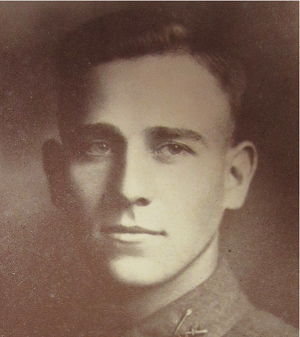 Walter Verlin Dial born around 1894, Walter Dial served in World War 1 with the United States Army. The enlistment was in 1917 and the service was completed in 1918.
Story of Service
Walter Verlin Dial was a graduate of Huntington High School, an employee of Huntington Hardware Company, and Scoutmaster of Huntington’s Boy Scout Troop No. 4.
He entered service on May 10, 1917, for the first Officers’ Training School at Fort Benjamin Harrison. He was commissioned as a Second Lieutenant in the Cavalry (but transferred to the Machine Gun service) and volunteered for immediate overseas service, leaving Huntington in August and sailing for France Sep 11, 1917 on the MONGOLIA.
He caught pneumonia while training overseas and was in the hospital several months, but, upon recovery, was sent to the front. He served with Company B, 2nd Machine Gun Battalion, 1st Division, American Expeditionary Force, US Army, and was in action from 12 Jul 1918 to the time of his death.
Delbert Hull Ferguson
Submitted by: Renelda Sather {Granddaughter}
Delbert Hull Ferguson born around 1893, Delbert Ferguson served in World War 1 with the United States Army. The enlistment was in 1918 and the service was completed in 1919.
Story of Service
Registered for service in Litchfield, MN on June 5, 1917. He served from July 26, 1918 to July 5, 1919.
We know he was in France in the trenches and suffered lung damage from mustard gas. He never talked about his service other than that he did what he had to do to stay alive. He had a 100% disability from the VA and died at the Minneapolis VA hospital on June 6, 1967.
After returning from the war he married and had two children, one son Gordon who served in WWII, and one daughter, my mother Frances Ferguson Hess. He is buried at Ft. Snelling cemetery in Minneapolis.
H. (Henry) Stuart Hotchkiss
Submitted by: T.J. Cullinane, community historian
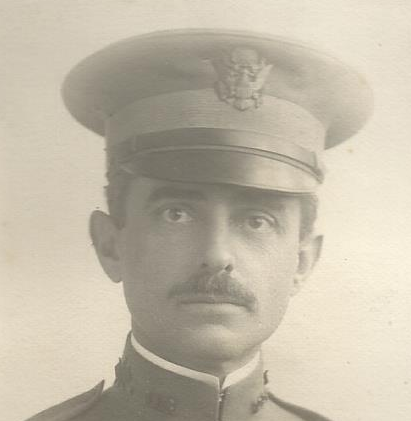 H. (Henry) Stuart Hotchkiss born around 1878, He served in World War 1 with the United States Army. The enlistment was in 1917 and the service was completed in 1919.
Story of Service
H. (Henry) Stuart Hotchkiss, a prominent and successful manufacturing executive, served as a commissioned officer on the Bureau of Aircraft Production both in Washington D.C. and France during the First World War.
Hotchkiss was born in New Haven, Connecticut on October 1, 1878 to Henry L. and Jane (Trowbridge) Hotchkiss. A graduate of the prestigious Phillips Academy (Class of 1897) he went on to earn a Bachelor of Philosophy degree from Yale in 1900.
Hotchkiss gained his first bit of military experience while serving in the Connecticut Naval Reserve from 1899 – 1901. He began his career in the manufacturing industry by joining L. Candee & Company, a subsidiary of the United States Rubber Company in 1901. He would remain with the firm for 29 years, advancing to position of vice-president.
Clarence Mathias Hensel
Submitted by: T.J. Cullinane, community historian
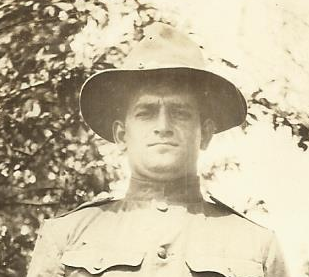 Clarence Mathias Hensel born around 1893, Clarence Hensel served in World War 1 with the United States Army. The enlistment was in 1917 and the service was completed in 1919.
Story of Service
Ohio farmer Clarence Mathias Hensel was a soldier of the Great War serving as an infantryman in both the 84th “Rail-splitter” Division and the 78th “Lightning” Division.
Clarence was born on April 16, 1893 to John Hardin and the former Elizabeth Casper in Cessna Township, a small community located in Hardin County in northwestern Ohio. From his draft registration card we learn that Clarence was 24 years old when America entered the World War One and was employed as a farmer on the farm belonging to his father, John Hensel. The farm was located on Rural Route Number 4 in Kenton. Kenton lays claim to great American military heritage as John Wilson Parrot, a Union soldier and the first recipient of the Medal of Honor, would call Kenton home after the Civil War.
Clarence was of medium height and medium build with blue eyes and dark hair. He noted on his registration card that he had weak eyes. In spite of his defective eye sight, Clarence was inducted into the U.S. Army on June 28, 1918 and given serial number 3533412.
Oscar Lubchansky
Submitted by: Gene Fax {Grandson}
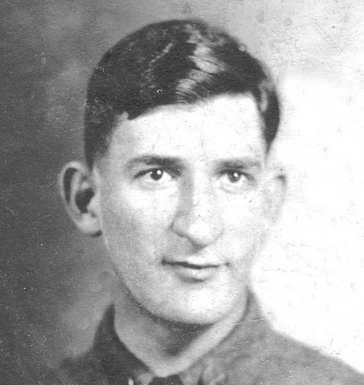
Oscar Lubchansky born around 1896, Oscar Lubchansky served in World War 1 with the United States Army. The enlistment was in 1917 and the service was completed in 1919.
Story of Service
An AEF Veteran’s War Stories
These stories were told to me by my grandfather, former Sergeant Oscar Lubchansky (d. 1958), 2nd Battalion, 313th Infantry Regiment, 79th Division, American Expeditionary Forces.
Whether they are historically accurate is debatable, but they are an accurate representation of a veteran’s memories. At this late date, second-hand memories are all we’ve got.
American soldiers had an insatiable appetite for fresh eggs. Whenever Lubchansky and his comrades were en route and a halt was called, the soldiers would crowd around the kitchen door of the nearest farmhouse shouting, “Oofs! Oofs!” The farm wives would be frightened at first, but would soon figure out that the Americans wanted des oeufs and would pay for them. After that, all went well.
I have been able to partially corroborate this story. Bruce Bairnsfather, the British war cartoonist, writes in his memoirs about the American soldiers’ astonishing capacity for eggs.
John William Tarter
Submitted by: T.J. Cullinane, community historian
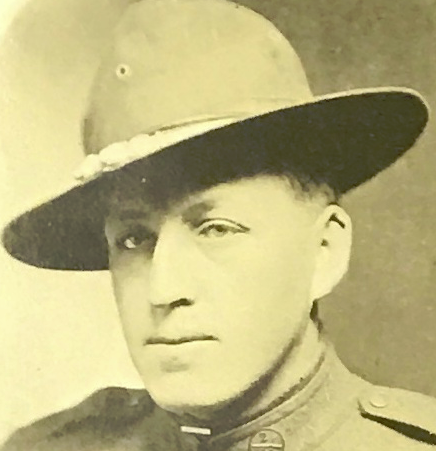 John William Tarter born around 1895, John Tarter served in World War 1 with the United States Army . The enlistment was in 1917 and the service was completed in 1919.
Story of Service
John William Tarter was a soldier of the Great War who was felled by to disease rather than German bombs and bullets.
He was born in Hartline, Washington on April 3, 1895 to Joseph Henry Tarter (1862 – 1925) and the former Nancy Ann Epperley (1864 – 1945). Hartline is a small town in Grant County located in central Washington. Tarter had four siblings: Joseph Clinton Tarter, Bonnie B. Tarter Neal (1886 – 1983), Maude D. Tarter Zetty (1890 – 1979), and Lonnie Clinton (1893 – 1966).
From John’s draft registration card, we learn that was tall with a medium build and had blue eyes and dark brown hair. When the United States entered the war in 1917, John was employed as a miner with the Federal Mining and Smelting Company in neighboring Shoshone County, Idaho.
At some point in 1917, John journeyed back home and enlisted in the Washington National Guard. He was given serial number 76284 and assigned to Company H of the 2nd Infantry Regiment. The insignia for this unit can be seen on the collar disc affixed to John’s uniform in his Army photo. John’s unit was called into federal service on March 25, 1917. In a series of consolidations carried out by the War Department, John’s unit was combined with elements of the 3rd Infantry Regiment belonging to the District of Columbia National Guard. The new unit was re-flagged as the 161st Infantry Regiment and assigned to the 41st Infantry Division.
John Mohamed Mondo
Submitted by: Tanveer Kalo
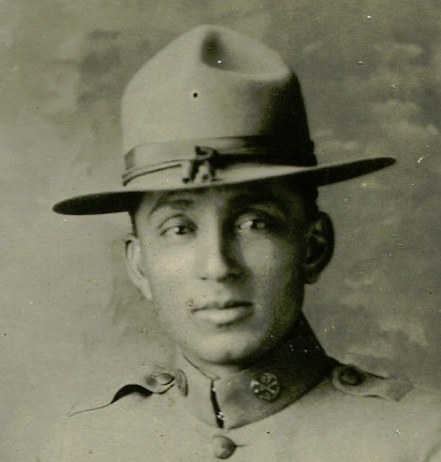 John Mohamed Mondo (or Mando) served in World War 1 with the United States Army. The enlistment was in 1917 and the service was completed in 1918.
Story of Service
John Mohamed Mondo (or Mando) was born in the late 1890s in Calcutta, British India or Punjab, East India to Mohamed Noor.
At the age of 21, John immigrated to Laredo, Texas from Mexico on July 9, 1909 or 1910. His Border Crossing Card recorded his race as East Indian, as a polygamist, and birth place as Calcutta, India.
By 1917 John Mohamed settled in California and worked as a laborer. His World War I draft card recorded his race as Caucasian and his place birth as Punjab, East India.
The dates and unit(s} of his service are unknown. Two photographs with unknown dates show him in a U.S. Army uniform.