



























Doughboy Foundation Home
transition01.jpg
transition03.jpg
Belvedere-Stone-View-3.jpg
Belvedere-to-Sculpture.jpg
Belvedere-Stone-View-1.jpg
Rendering-2.jpg
Rendering-3A.jpg
Rendering-4.jpg
Rendering-5.jpg
Terrace-Planters2.jpg
_P3_3855_250118-Edit_250118.jpg
_P3_3934_250118_250118.jpg
_P3_3941_250118_250118.jpg
previous arrow
next arrow

Monuments & Memorials

"The centennial of World War One offers an opportunity for people in the United States
to learn about and commemorate the sacrifices of their predecessors."

from The World War One Centennial Commission Act, January 14, 2013
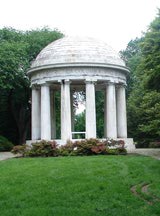
DCWorldWarMonumen 1World War One was a watershed in American history. The United States' decision to join the battle in 1917 "to make the world safe for democracy" proved pivotal in securing allied victory — a victory that would usher in the American Century.

In the war's aftermath, individuals, towns, cities, counties, and states all felt compelled to mark the war, as did colleges, businesses, clubs, associations, veterans groups, and houses of worship. Thousands of memorials—from simple honor rolls, to Doughboy sculptures, to grandiose architectural ensembles—were erected throughout the US in the 1920s and 1930s, blanketing the American landscape.

Each of these memorials, regardless of size or expense, has a story. But sadly, as we enter the war's centennial period, these memorials and their very purpose—to honor in perpetuity the more than four million Americans who served in the war and the more than 116,000 who were killed—have largely been forgotten. And while many memorials are carefully tended, others have fallen into disrepair through neglect, vandalism, or theft. Some have been destroyed. Watch this CBS news video on the plight of these monuments.

The extant memorials are our most salient material links in the US to the war. They afford a vital window onto the conflict, its participants, and those determined to remember them. Rediscovering the memorials and the stories they tell will contribute to their physical and cultural rehabilitation—a fitting commemoration of the war and the sacrifices it entailed.

Memorial Hunters Club

We are building a US WW1 Memorial register through a program called the Memorials Hunters Club. If you locate a memorial that is not on the map we invite you to upload your treasure to be permanently archived in the national register.  You can include your choice of your real name, nickname or team name as the explorers who added that memorial to the register. We even have room for a selfie! Check the map, and if you don't see the your memorial CLICK THE LINK TO ADD IT.

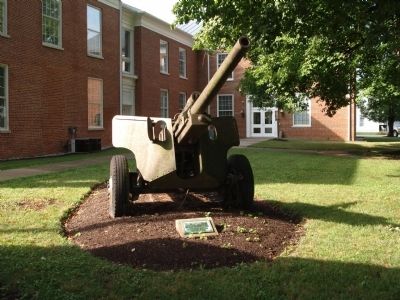
100 Cities - 100 Memorials

Filters
Geolocalisation bp
  • Dedication Date: May 31, 1948
47040 Rising Sun
IN
USA
  • Dedication Date: November 11, 2000
47040 Rising Sun
IN
USA
  • Dedication Date: 1930
  • Arthur Ivone
  • Group
Ohio Statehouse, 1 Capitol Square
43215 Columbus
OH
USA

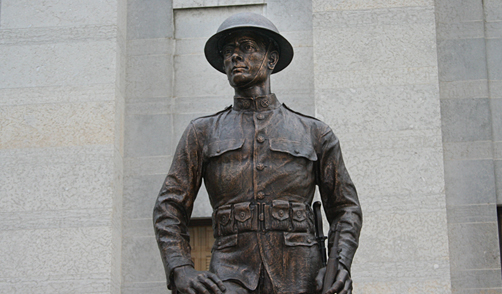
The Ohio World War Memorial was erected in 1930, the work of Arthur Ivone and marks Ohio's participation in the First World War. Referring to rank and file soldiers as "doughboys" is closely associated with World War I but the term goes back further and has several possible explanations. The most common of these explanations is that the large buttons on the men's uniforms looked like the doughy dumplings eaten in soup. A sweeter story is that the name is connected to the enthusiasm that soldiers had for fried dough-doughnuts!

  • Dedication Date: 1937

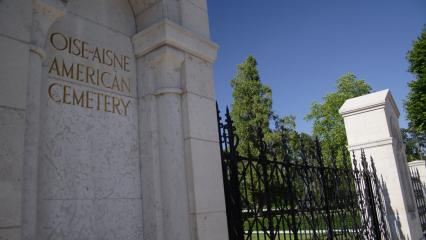
 Dedicated in 1937, the Oise-Aisne American Cemetery and Memorial contains the remains of 6,012 American war dead, most of whom lost their lives while fighting in this vicinity in 1918 during World War I. Their headstones, aligned in long rows on the 36.5-acre site, rise in a gentle slope from the entrance to the memorial at the far end. The burial area is divided into four plots by wide paths lined by trees and beds of roses; at the intersection are a circular plaza and the flagpole.

The memorial is a curving colonnade, flanked at the ends by a chapel and a map room. It is built of rose-colored sandstone with white trim bearing sculptured details of wartime equipment. The chapel contains an altar of carved stone. Engraved upon its Walls of the Missing are 241 names. Rosettes mark the names of those since recovered and identified. The map room contains an engraved and colored wall map portraying the military operations in this region during 1918.

  • Memorial Hunters Club Submission: Memorial Hunter: Robert Shay, PH3, USNR-R, 1964-70
123 5th Ave N # 115
98840 Okanogan
WA
USA

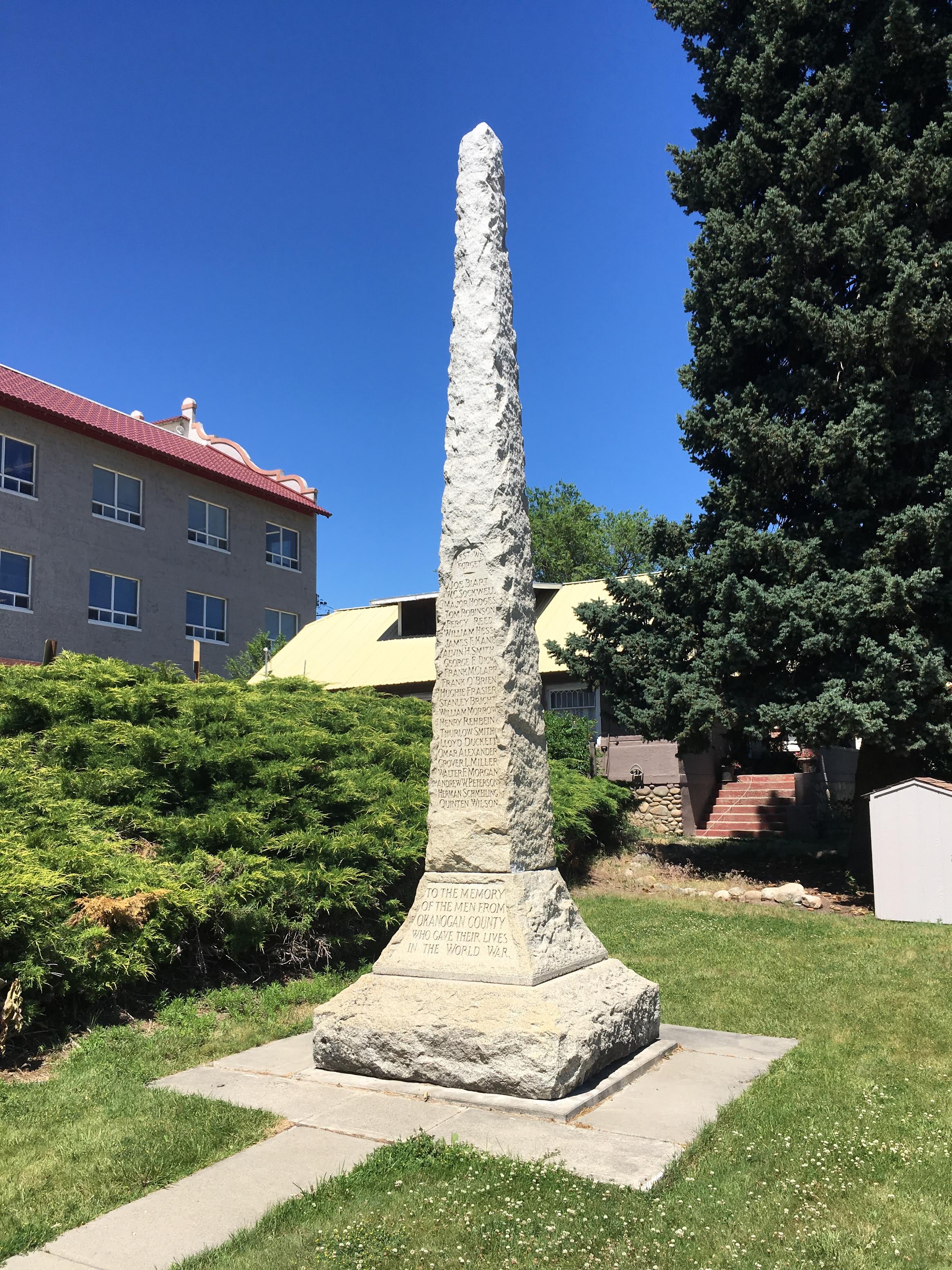
This stone obelisk lists the names of the servicemembers from Okanogan County who lost their lives in World War I. It is located outside the Okanogan County Administration Building.

326 W. 1st Street
71962 Okolona
AR
USA

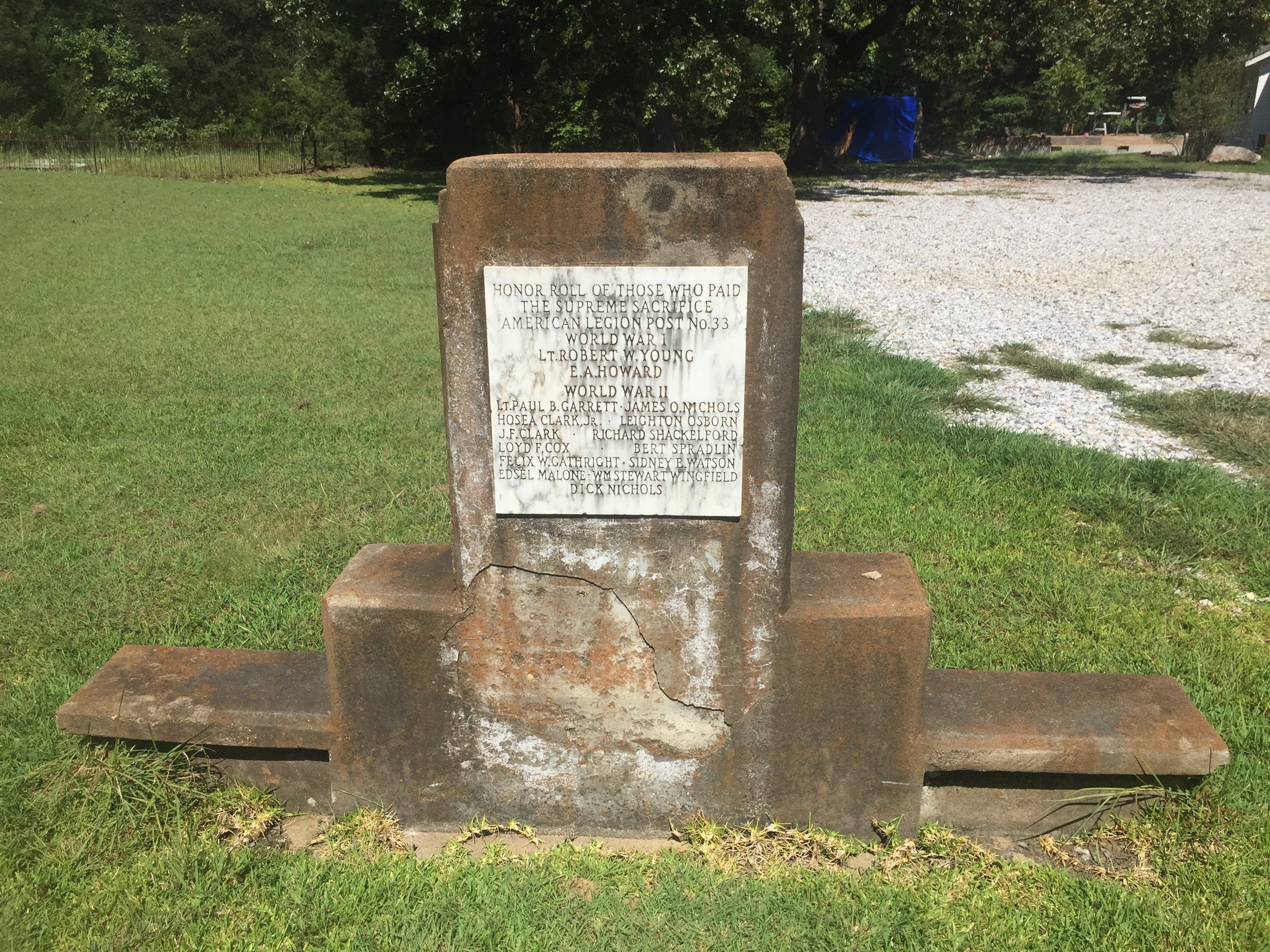
No additional information at this time.

  • Dedication Date: 1926
  • American Legion Post 153 and the parents of Earl Collier
  • IAS KS000601
  • American Art Bronze Foundry
  • Paulding, John, 1883-1935, sculptor. Olathe Monument Company, contractor. American Bronze Company, founder.
  • Single figure -- soldier
Olathe Memorial Cemetary
Olathe
KS
USA

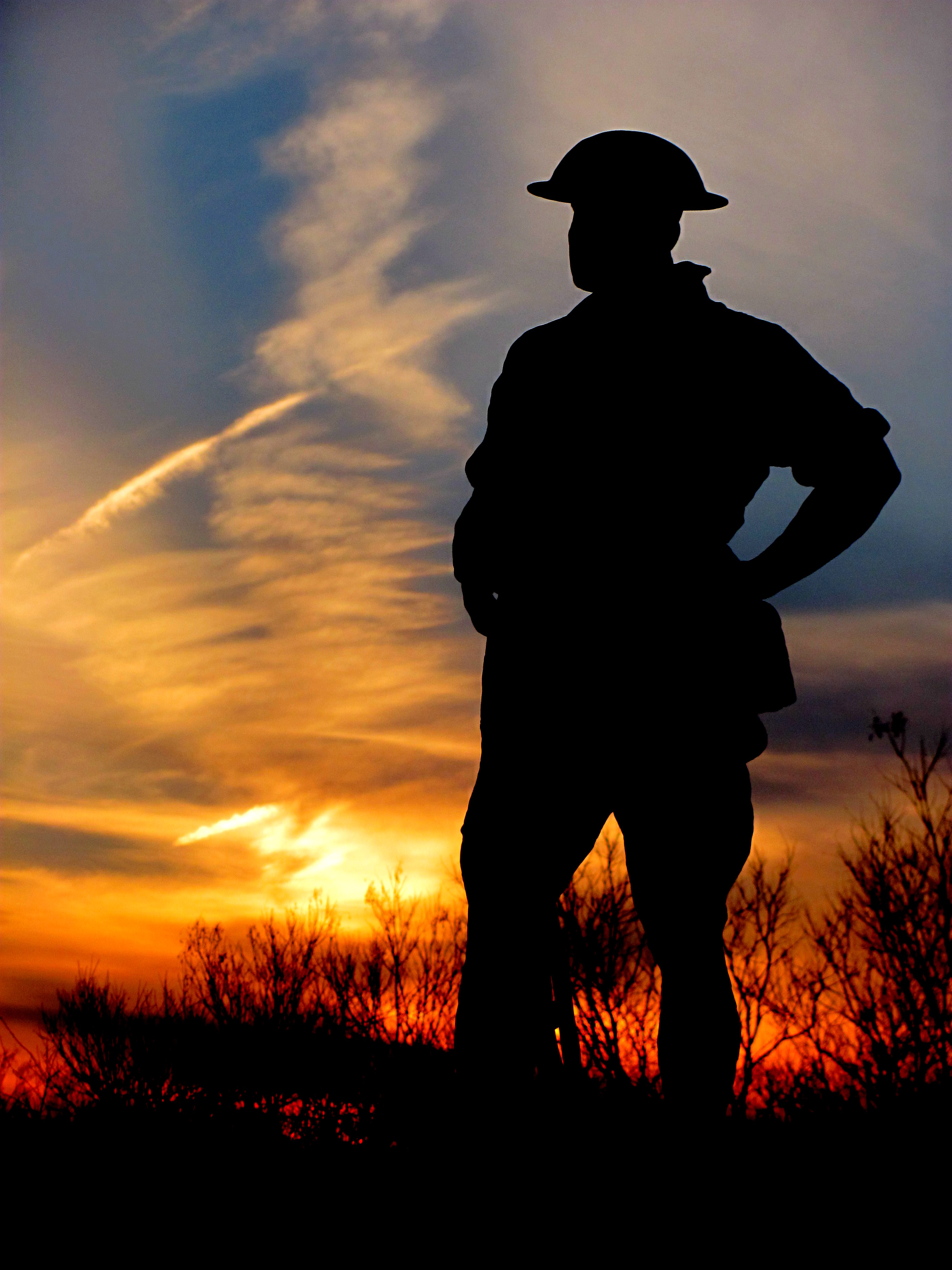
This bronze sculpture on a grey granite base is located in the southwest part of the Olathe Memorial Cemetery. He wears a military uniform with helmet and boots. His proper right hand is on his waist. In his proper left hand he holds the barrel of his gun, the butt of the gun rests on the base. He has a knapsack slung across his shoulder which rests on his proper left hip. The statue was dedicated on Memorial Day 1926 and was donated by American Legion Post 153 and by the parents of Earl Collier, the first Johnson County soldier killed in World War I. The American Legion Post in Olathe is named after Earl Collier.

Inscription: In Memory of World War Veterans.

  • Memorial Hunters Club Submission: Memorial Hunter: Terra Schramm
1 E. Edenton Street
27601 Raleigh
NC
USA

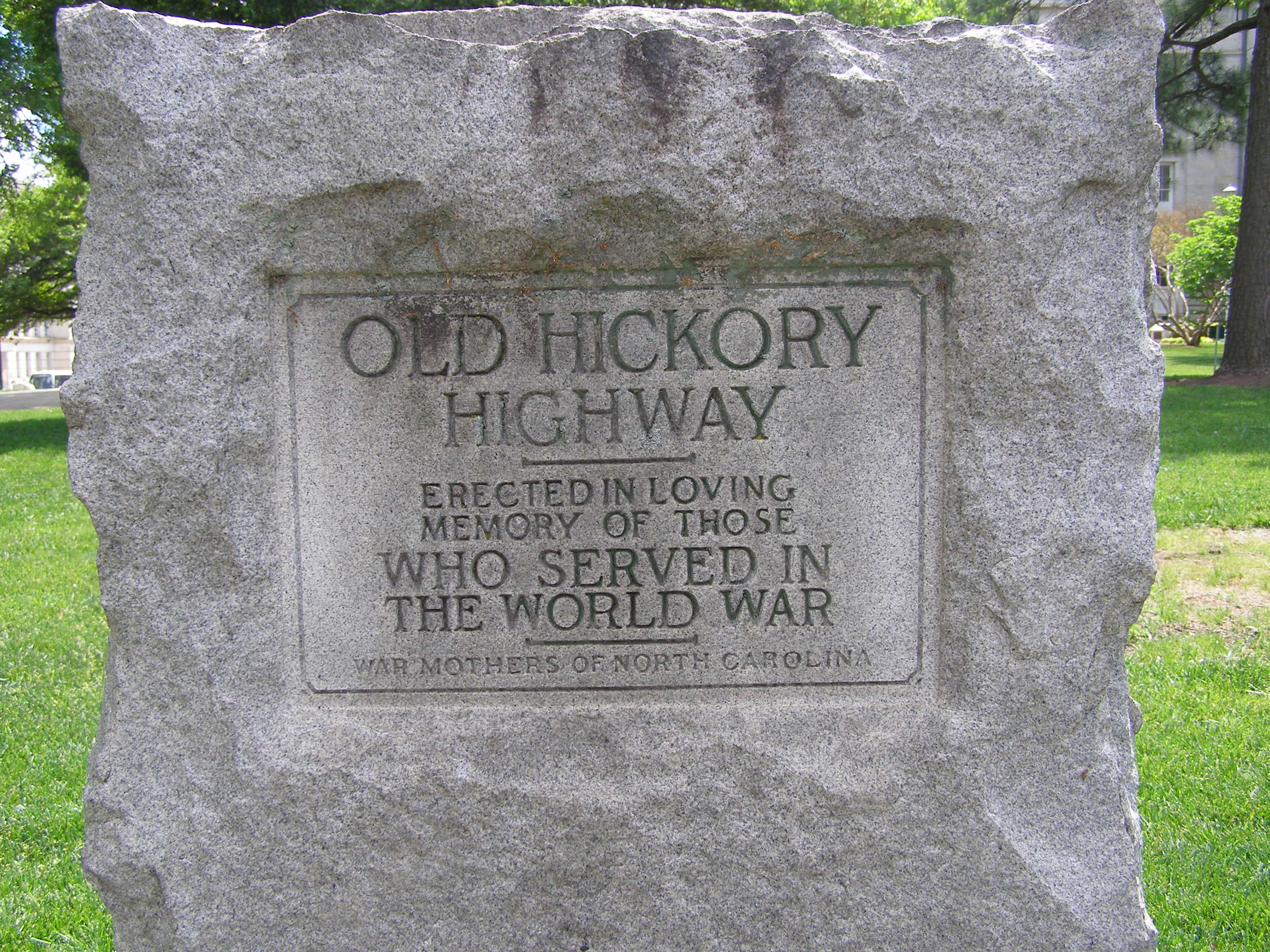
Located on the grounds of the State Capitol, the Old Hickory Highway Marker honors the North Carolina soldiers of the US Army’s 30th Division, nicknamed the “Old Hickory Division,” who fought in World War I. The Division received this nickname in memory of General Andrew Jackson, known as Old Hickory, because the soldiers were said to have exemplified Jackson’s endurance and tenacity in battle. The 30th Division was initially composed of National Guard units from North Carolina, South Carolina, and Tennessee. More North Carolinians served in the 30th Division than in any other division in the war. In May 1918 the division traveled to New York and then left for Europe. After a two-week voyage, the division landed in England, and then departed for France. In June 1918 the division underwent extensive combat training under British supervision, and exchanged their American equipment and firearms for British equivalents. On July 2, 1918, the 30th Division was sent to the trenches near Ypres, Belgium, where they attacked and captured German positions with a loss of 37 dead and 128 wounded. In September, the division withdrew from Belgium and was sent to the front opposite the German Hindenburg Line near Bellicourt, France. On September 29, the 119th and 120th infantry regiments (formerly the 2nd and 3rd North Carolina, respectively), attacked the German lines. Despite high casualties, the 30th Division broke through the Hindenburg Line. In the 3,000-yard advance made against enemy lines, the division suffered about 3,000 casualties. This was the greatest loss for North Carolina since the Civil War. The division continued driving back the German army in repeated and costly attacks, until October 19, when it was pulled out of combat for the last time. Between July and October, the division's casualties were 1,641 dead, 6,774 wounded, 198 missing, and 27 taken prisoner. In all the “Old Hickory” lost a total of 8,415 men. After the war, the Division remained in France, but did not take part in any more of the operations. In April 1919, the 30th Division soldiers were sent home and discharged. The division garnered several outstanding distinctions in the war: it was the first to break the German Hindenburg Line on the Cambrai-St. Quentin front, and its soldiers were awarded more Congressional Medals of Honor than soldiers in any other American division. The monument to the division was sponsored by the Raleigh Chapter of the American War Mothers. The dedication, which was reportedly sparsely attended, took place on September 29, 1930, to mark the 12th anniversary of the Battle of the Hindenburg Line. In order to remember the North Carolina participants in this battle, the War Mothers designated NC Highway 10 as the Old Hickory Highway. At this time, it was common for chapters of War Mothers throughout the state to place such markers along the state’s highways within their chapter’s jurisdiction. NC Highway 10 ran the length of the state from Murphy, through Raleigh, to Beaufort. This route is roughly equivalent to the present US Highway 19 and ran past this spot on Edenton Street.

239 S Main St
72958 Waldron
AR
USA

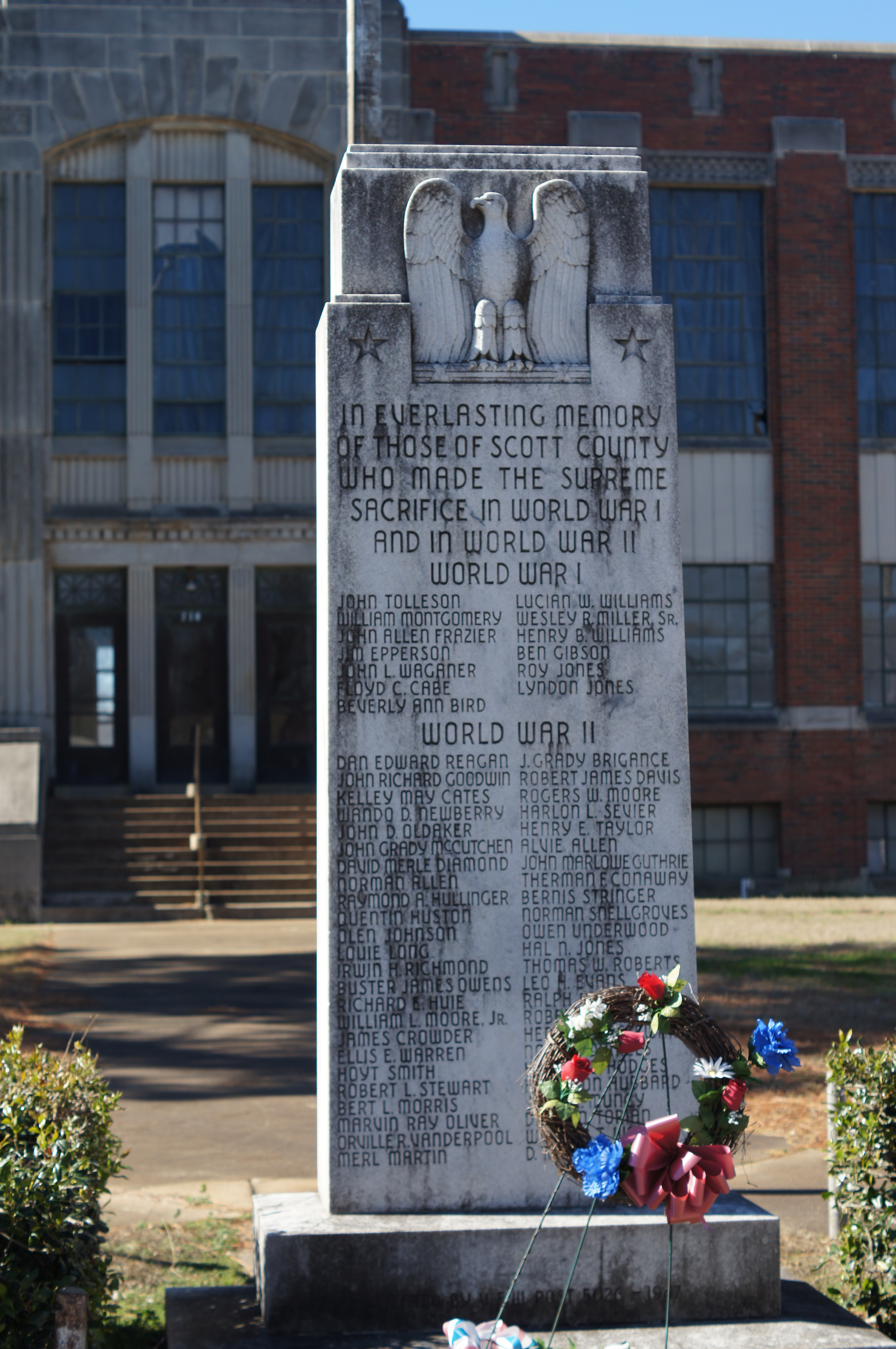
No additional information at this time.

  • William Steene
4 South College Fayetteville AR 72701
72701 Fayetteville
AR
USA
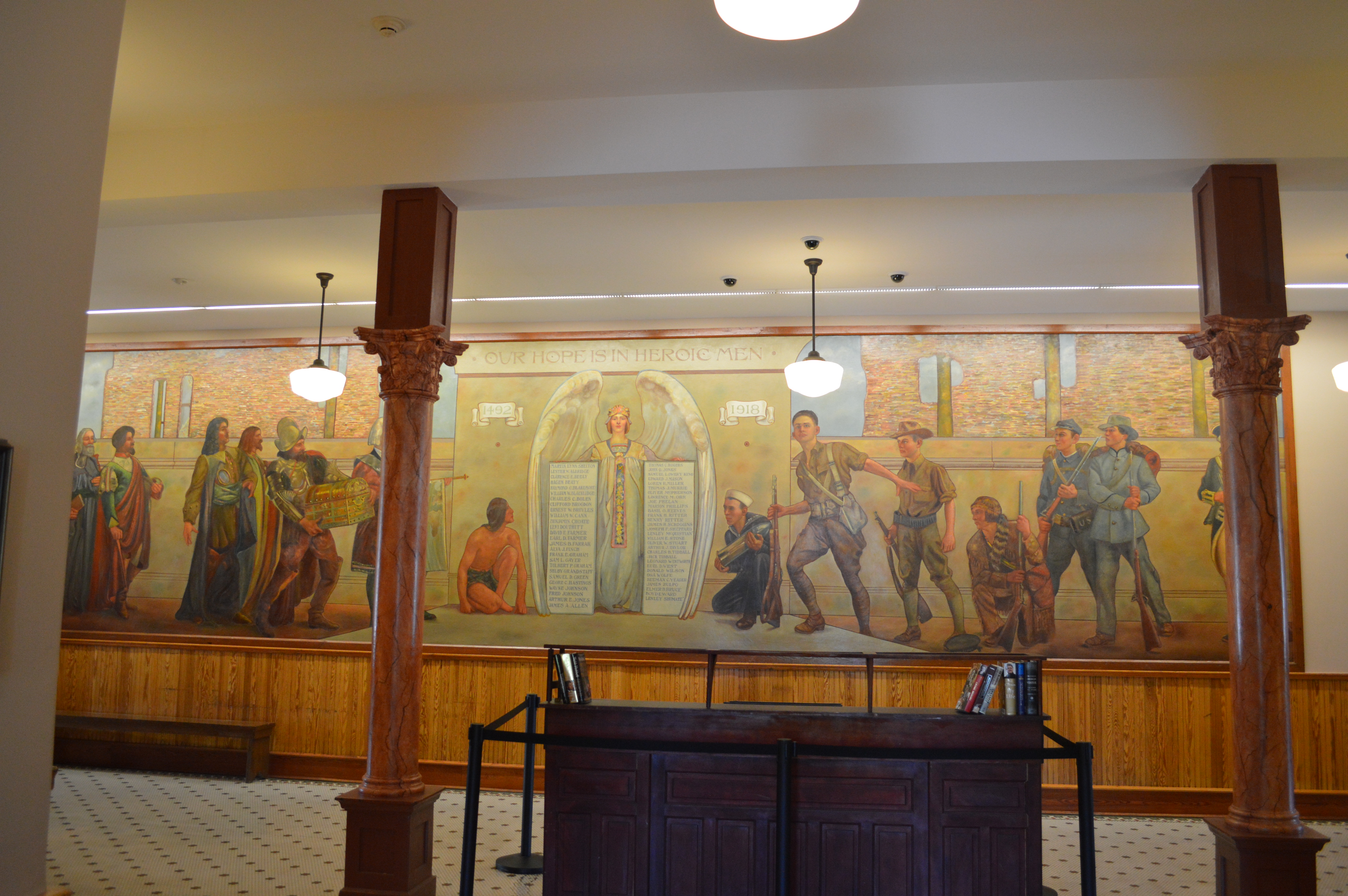
The WWI mural inside is by William Steene.
  • Memorial Hunters Club Submission: thewanderer
03909 York
ME
USA

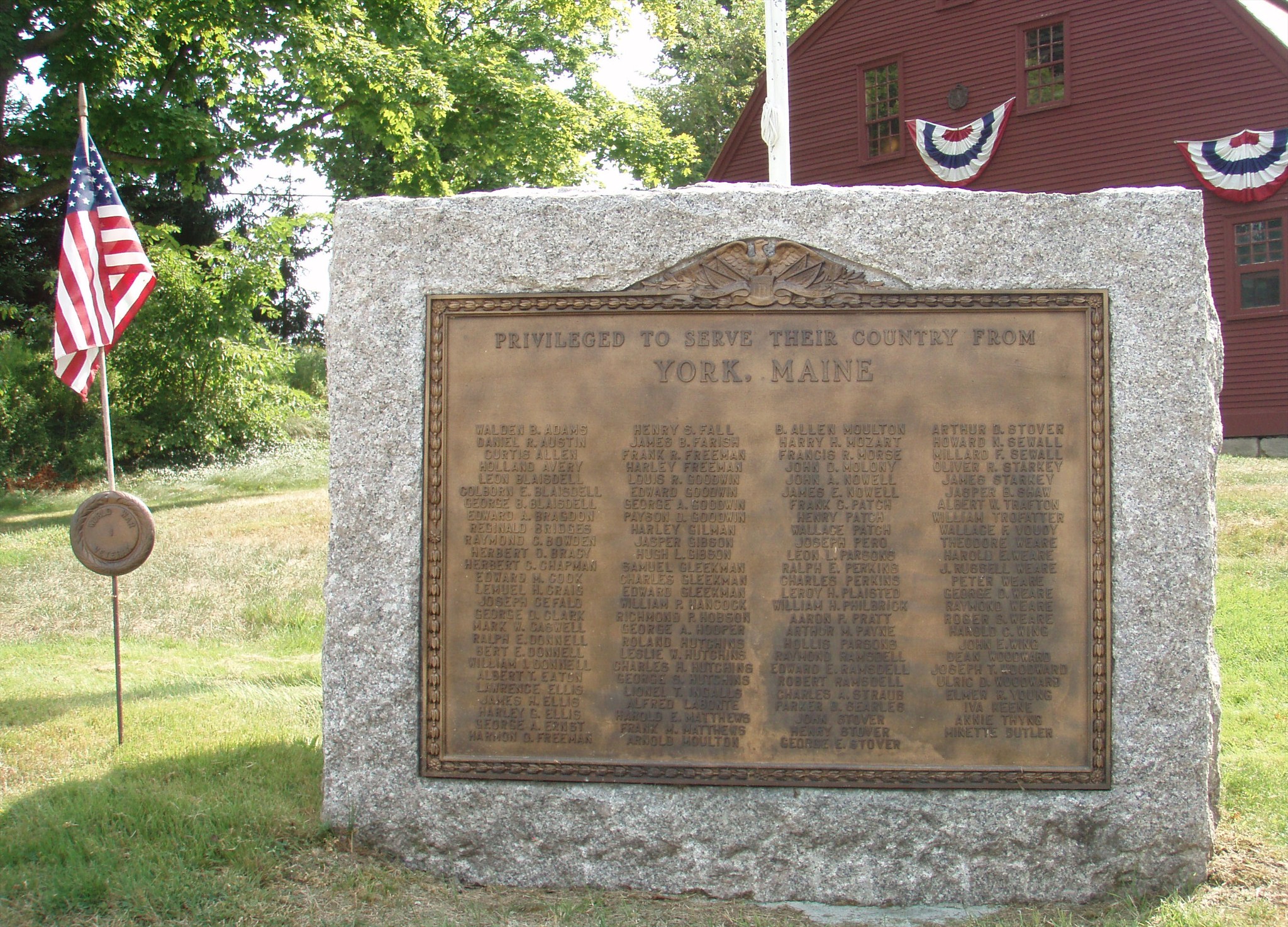
This bronze plaque is mounted on a granite stone at the site of the Old York Gaol, a National Historic Landmark. It simply lists the names of WWI veterans from York.

  • Width: 15'8
  • Depth: 10'
  • Other Measurements: Pedestal H:7'7
  • Sepetmber 29,1927
  • Dedication Date: September 29, 1927
  • 7th Regiment and 107th Infantry Memorial Committee
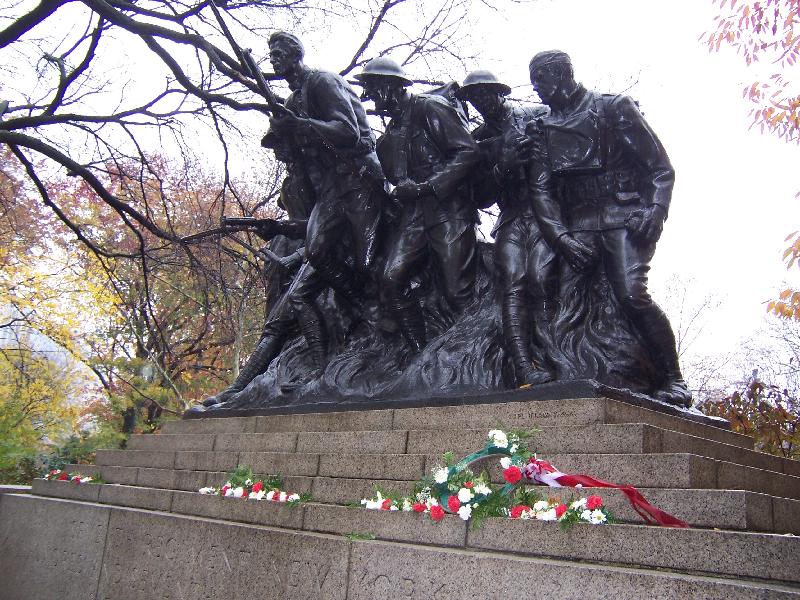
  • Group of seven figures (over life-size) with integral plinth, on a pedestal
  • Fond. G. Vignali, Firenze
  • Karl Morningstar Illava
  • Single figure -- soldier
Central Park
New York
NY
USA

SEVENTH REGIMENT NEW YORK / ONE HUNDRED AND SEVENTH UNITED INFANTRY / 1917 IN MEMORIAM 1918

  • Dedication Date: 2007
3294 W Mason St
54313 Green Bay
WI
USA

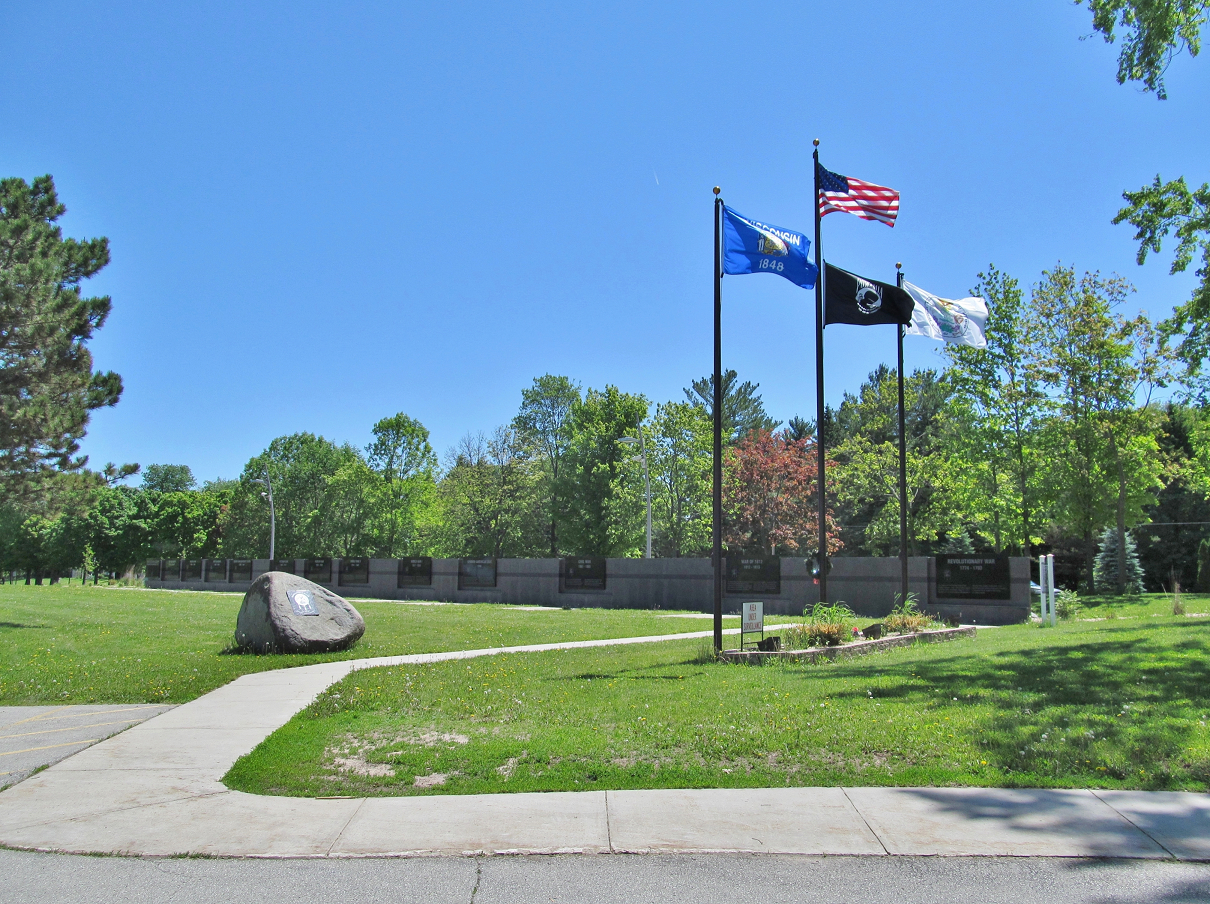
The Oneida Veterans Wall was made to honor all those who Veterans who served in the Armed Forces. The Oneida people were this countries first allies fighting with George Washington in the Revolutionary War. The wall is a monument to all those who fought and gave their lives for this country. The Oneida Veterans Wall was originally constructed in 2007.  In October 2012, the Wall received a face lift.  The wall has been sealed and the outside wall has received a new look with lettering.

601 Oradell Ave
07649 Oradell
NJ
USA

Oradell World War I Memorial

100 Cities / 100 Memorials

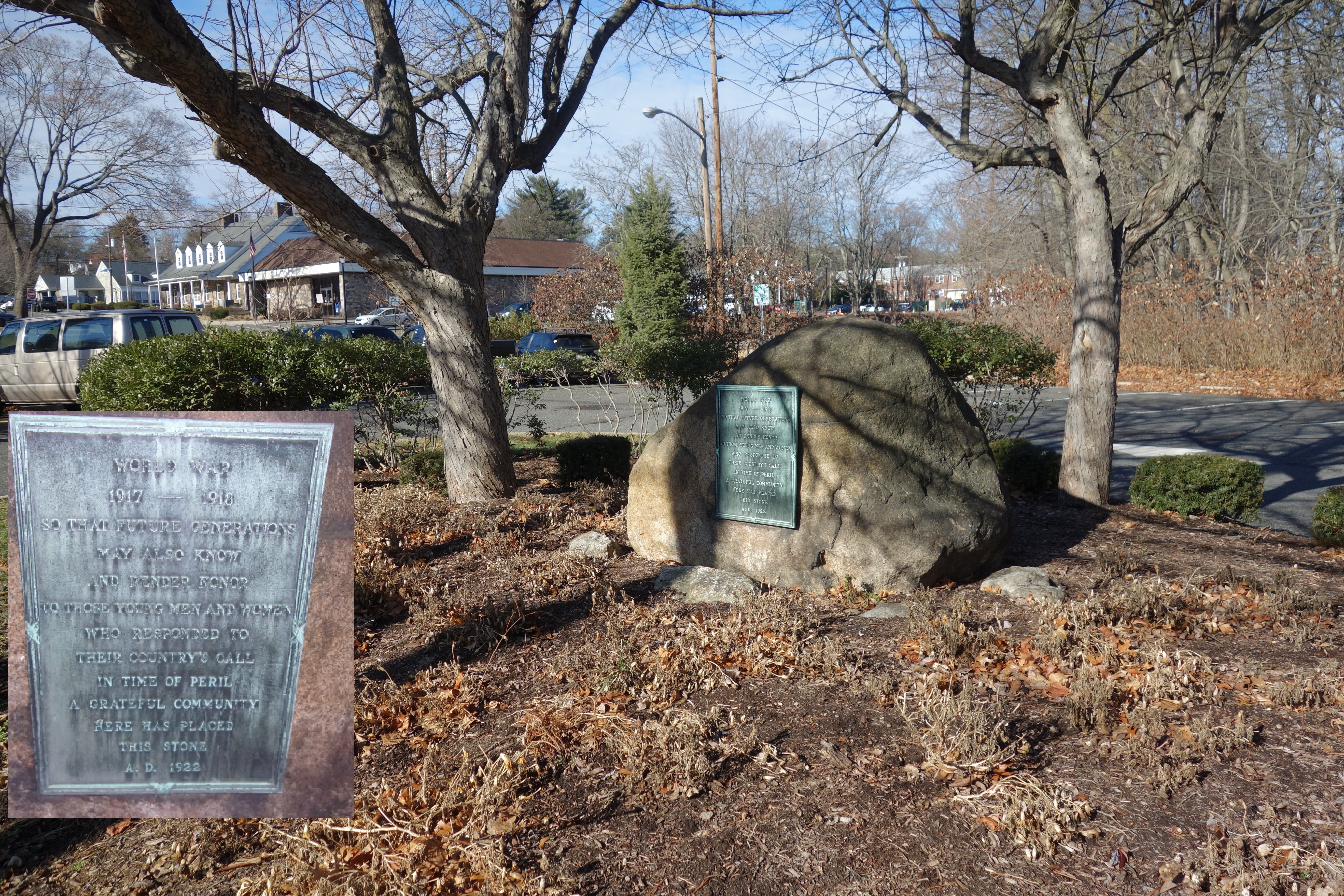
100c 100m wwi centennial plaque In 1922, the Borough of Oradell, New Jersey, set a memorial stone honoring the sixty-nine Borough residents who participated in World War I as members of various military branches, including the American Expeditionary Forces, U.S. Marine Corps, U.S. Army, YMCA, U.S. Navy Army Student Training Corps, and the U.S. Naval Reserve. The bronze plaque affixed to the boulder dedicates the stone, so that future generations may also know and render honor to those young men and women who responded to their country's call in times of peril.
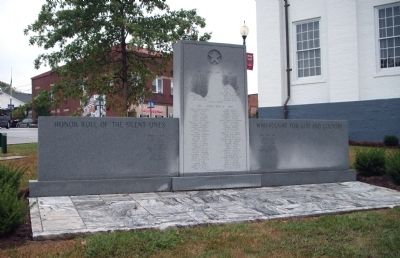
  • Dedication Date: Unknown
47454 Paoli
IN
USA
  • Memorial Hunters Club Submission: Aaron Lefkowitz & Zachary Andrews
Leroy Place- Liberty Street Triangle Park
12550 Newburgh
NY
USA

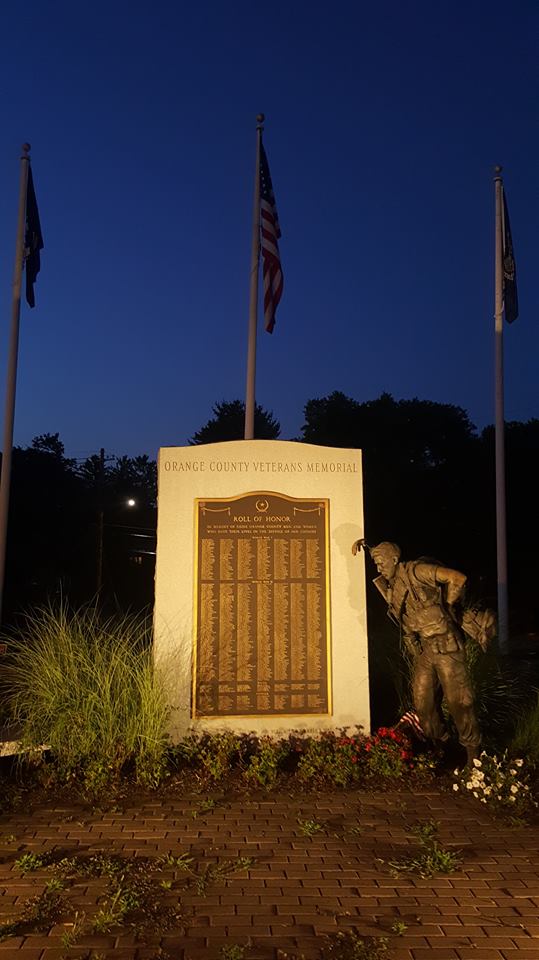
Roll of Honor- "In Memory of Those Orange County Men and Women Who Gave Their Lives in the Service of Our Country"

  • Memorial Hunters Club Submission: Robert Shay, PH3, USNR-R, 1964-70
117 First Avenue
98953 Zillah
WA
USA

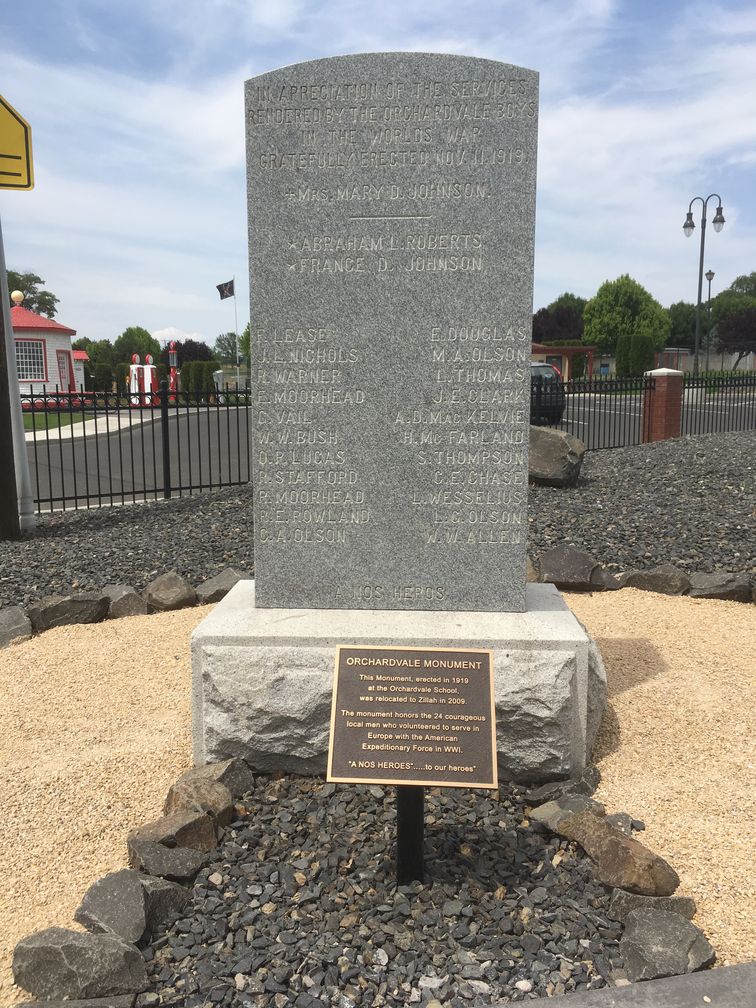
 This Monument once stood outside the school in Orchardvale, WA. The school closed and the building was taken over by the local Grange. Then the building burned down and the Grange built a metal building to replace it. When the Grange Hall closed the Monument was moved to the Zillah Cemetery for storage , awaiting the completion it’s new home at the Veterans Memorial in Zillah, WA. 

I parked next to the Memorial at the site of the old Teapot shaped gas station which is now a park and rest area. I took pictures of the old WW1 Memorial Monument and of the entire Zillah Veterans Memorial and then went back to the car and was about to leave when I noticed that there was an inscription on the back of the monument. It was nearly the same as what is on the front, but all of the names are different, plus there are 27 names on the back and 24 on the front. Days after returning home I spoke with the Commander of the Zillah American Legion Post and he’d explained the mystery of the two inscriptions. Because the monument laid on it’s back in the cemetery awaiting installation at the new memorial, no one knew of the inscription on the back. When it was installed the back inscription was noticed, but it was too late to change the installation. The Legion is now raising funds to clean up and restore the back inscription as well as modify the entrance to the memorial so visitors can walk around the WW1 Monument and read both sides.
The lead photograph is of the retired front, the gallery photo is of the unrestored back. I will keep in contact with the Legion Post and when the back of the monument has been restored, I will post additional photographs.

The top inscription reads:
IN APPRECIATION OF THE SERVICES
RENDERED BY THE ORCHARDVALE BOYS
IN THE WORLD WAR
GREATFULLY ERECTED NOV. 11, 1919.
+ MRS. MARY D. JOHNSON

  • Dedication Date: 1920
  • Memorial Hunters Club Submission: thewanderer
53575 Oregon
WI
USA

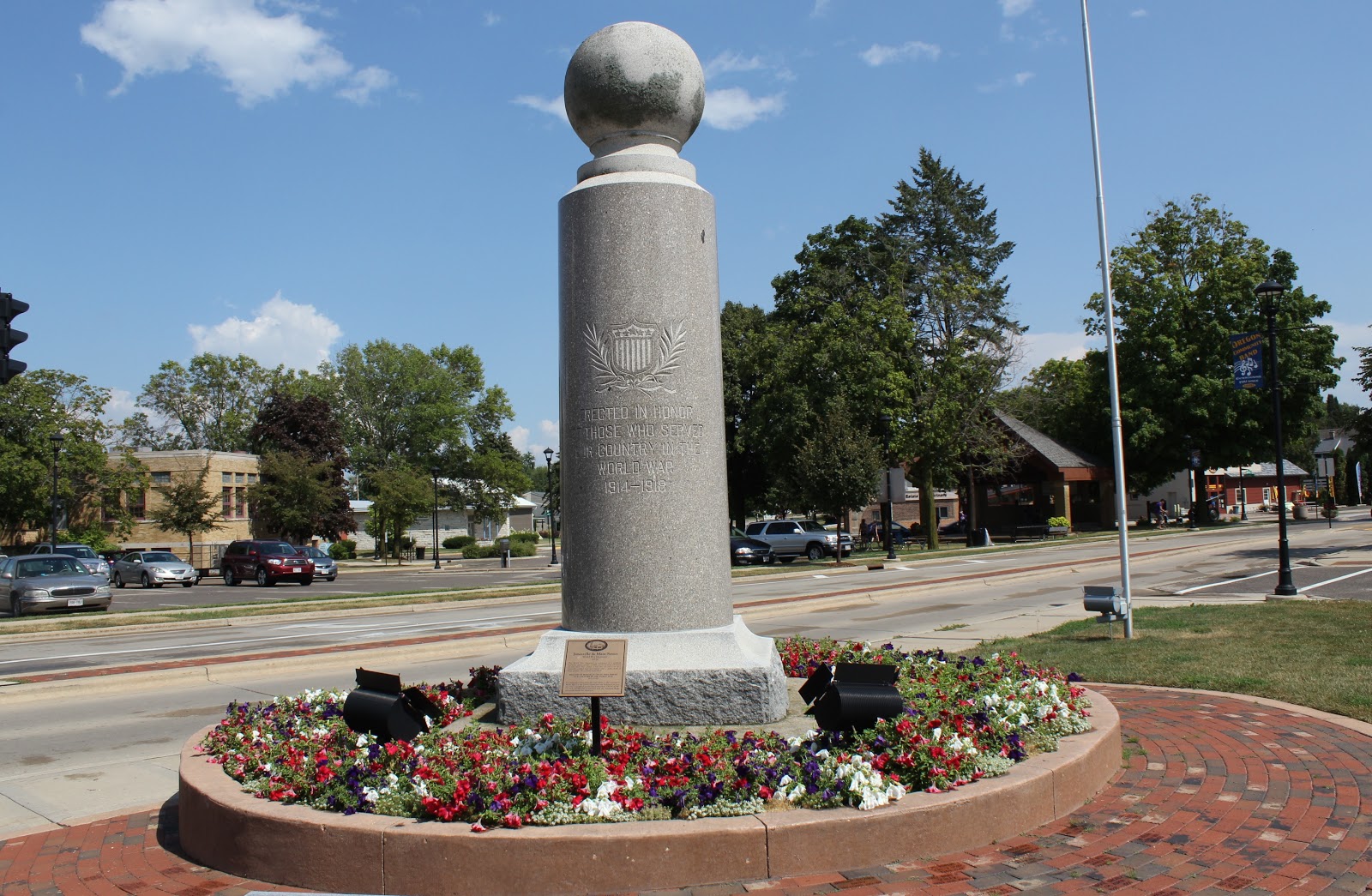
The memorial's granite shaft came from the original old Chicago City Hall. Six horses and numerous Oregon men were needed to erect the memorial. Gold Star Mother Chris Johnson unveiled the monument in 1920.

  • Memorial Hunters Club Submission: Robert Shay, PH3, USNR-R, 1964-70
Southwest Watson Avenue, Central Beaverton
97005 Beaverton
OR
USA

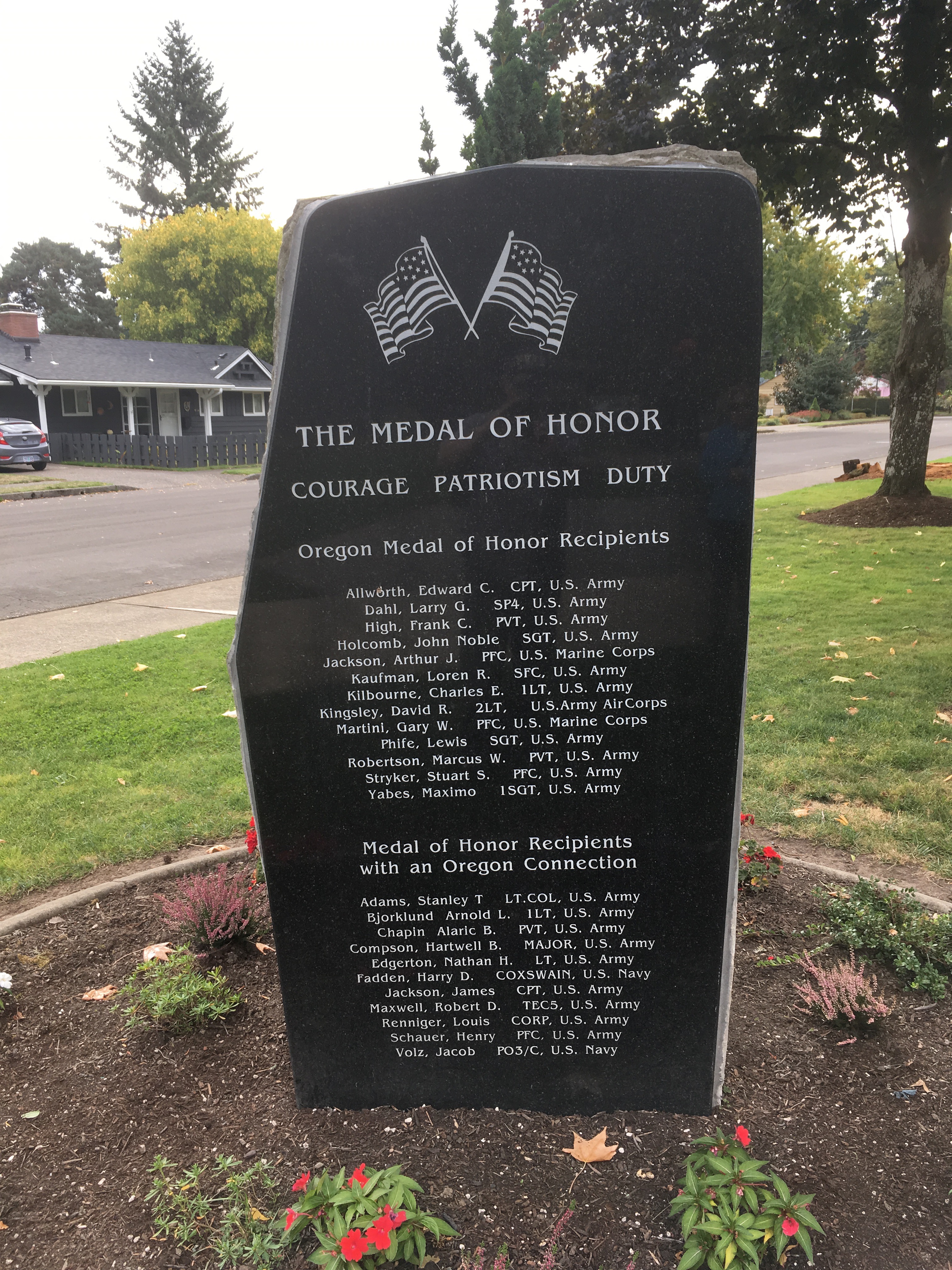
Featuring Captain Edward C. Allworth, Medal of Honor Recipient in World War 1

  • Memorial Hunters Club Submission: Robert Shay, PH3, USNR-R, 1964-70
3100 SW Jefferson Way
97333 Corvallis
OR
USA

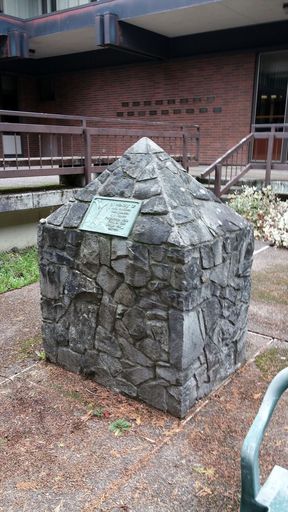
This Memorial Monument appears to have been constructed after World War 2.
It has three bronze plaques. One dedicated to 3 College of Forestry students
who were lost in World War 1 and two plaques dedicated to 34 “OSC” Foresters
lost in World War 2. Oregon State University was Oregon State College at the
time of the two World Wars. The World War 1 plaques appears to have been on
a wall or next to an entrance of an older building in the years following the war,
due to it’s size and design.
Currently this Memorial Monument is unavailable to visit due to construction of a
new College of Forestry building on this site. Pictures will be updated when the
new building is dedicated.