



























Doughboy Foundation Home
transition01.jpg
transition03.jpg
Belvedere-Stone-View-3.jpg
Belvedere-to-Sculpture.jpg
Belvedere-Stone-View-1.jpg
Rendering-2.jpg
Rendering-3A.jpg
Rendering-4.jpg
Rendering-5.jpg
Terrace-Planters2.jpg
_P3_3855_250118-Edit_250118.jpg
_P3_3934_250118_250118.jpg
_P3_3941_250118_250118.jpg
previous arrow
next arrow

Monuments & Memorials

"The centennial of World War One offers an opportunity for people in the United States
to learn about and commemorate the sacrifices of their predecessors."

from The World War One Centennial Commission Act, January 14, 2013
DCWorldWarMonumen 1World War One was a watershed in American history. The United States' decision to join the battle in 1917 "to make the world safe for democracy" proved pivotal in securing allied victory — a victory that would usher in the American Century.

In the war's aftermath, individuals, towns, cities, counties, and states all felt compelled to mark the war, as did colleges, businesses, clubs, associations, veterans groups, and houses of worship. Thousands of memorials—from simple honor rolls, to Doughboy sculptures, to grandiose architectural ensembles—were erected throughout the US in the 1920s and 1930s, blanketing the American landscape.

Each of these memorials, regardless of size or expense, has a story. But sadly, as we enter the war's centennial period, these memorials and their very purpose—to honor in perpetuity the more than four million Americans who served in the war and the more than 116,000 who were killed—have largely been forgotten. And while many memorials are carefully tended, others have fallen into disrepair through neglect, vandalism, or theft. Some have been destroyed. Watch this CBS news video on the plight of these monuments.

The extant memorials are our most salient material links in the US to the war. They afford a vital window onto the conflict, its participants, and those determined to remember them. Rediscovering the memorials and the stories they tell will contribute to their physical and cultural rehabilitation—a fitting commemoration of the war and the sacrifices it entailed.

Memorial Hunters Club

We are building a US WW1 Memorial register through a program called the Memorials Hunters Club. If you locate a memorial that is not on the map we invite you to upload your treasure to be permanently archived in the national register.  You can include your choice of your real name, nickname or team name as the explorers who added that memorial to the register. We even have room for a selfie! Check the map, and if you don't see the your memorial CLICK THE LINK TO ADD IT.
100 Cities - 100 Memorials

Filters
Geolocalisation bp
1613 Park Ave
42001 Paducah
KY
USA
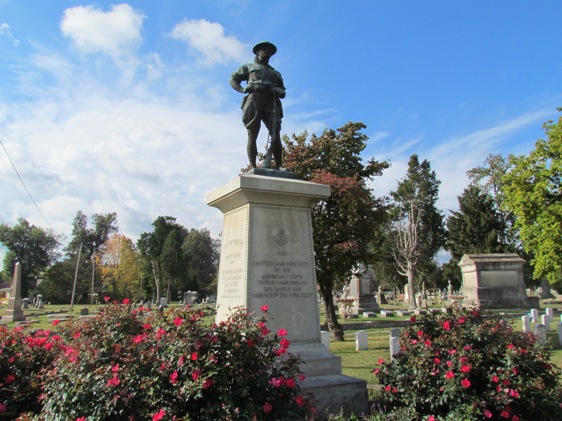
Paducah has a World War I monument in Oak Grove Cemetery.

The monument was erected and dedicated in 1928 by Paduke Post 31 of the American Legion. The bronze monument with a granite base was designed by sculptor John Paulding, cast by the American Bronze Company, and erected by the Beasley Monument Company.  The inscription on the front of the monument reads: 1928, Erected and dedicated by the American Legion to our comrades of the World War who sleep the long sleep.  One of the monument’s sides has the inscription: When to the last assault our bugles blow: reckless of pain and peril we shall go.  Heads high and hearts aflame and bayonets bare, and we shall brave eternity as though eyes looked on us in which we would seem fair.  The other two sides of the monument recognize the Paducah Mayor, City Commissioners, McCracken County Judge, and County Commissioners.
  • Dedication Date: 1927
  • 47260137
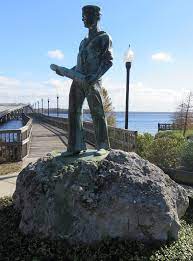
  • Standing figure of a sailor holding a cannon shell
  • One of four World War I figures located at the four corners of Memorial Park Bridge. The figures were originally mounted on the old Memorial Bridge completed in 1927. They were reinstalled at each end of the new bridge when it was completed in December 1976. The four World War I figures represent the three branches of the military service of that day; this figure, a sailor, represents the Navy. IAS files contain copy of dedication program from the old bridge, transcription of article from Town & Country (published by Palatka Daily News) 3 (Aug. 1964), and newspaper articles from Palatka Daily News, Sept. 11, 1979 and Jan. 16, 1991.
  • E. M. Viquesney
  • Administered by City of Palatka, 201 North 2nd Street, Palatka, Florida 32177 Located Memorial Park Bridge, Southwest side, Palatka, Florida
  • Single figure -- soldier
Memorial Bridge
32177 Palatka
FL
USA

This is a set of four life-sized bronze statues commemorating World War I soldiers and sailors (three doughboys and one sailor) at the Old Memorial Bridge over the St. Johns River. The four sculptures were dedicated November 11, 1927 at the two ends of Memorial Park Bridge over the St. Johns River near downtown Palatka, and later placed in the same relative positions when the New Memorial Bridge was completed in 1976.  Depicted in these four statues are: a doughboy carrying a 1903 Springfield rifle (E.M Viquesney or Gutzon Borglum sculptor), a doughboy equipped with a Colt .45 pistol and grenade (E.M. Viquesney), another doughboy carrying a grenade and sticks of dynamite (E.M Viquesney or Gutzon Borglum), and a sailor holding a shell (E.M. Viquesney).  See pictures gallery for additional three photos.

  • John Paulding
300 W Court St, Paragould, AR 72450
72450 Paragould
AR
USA

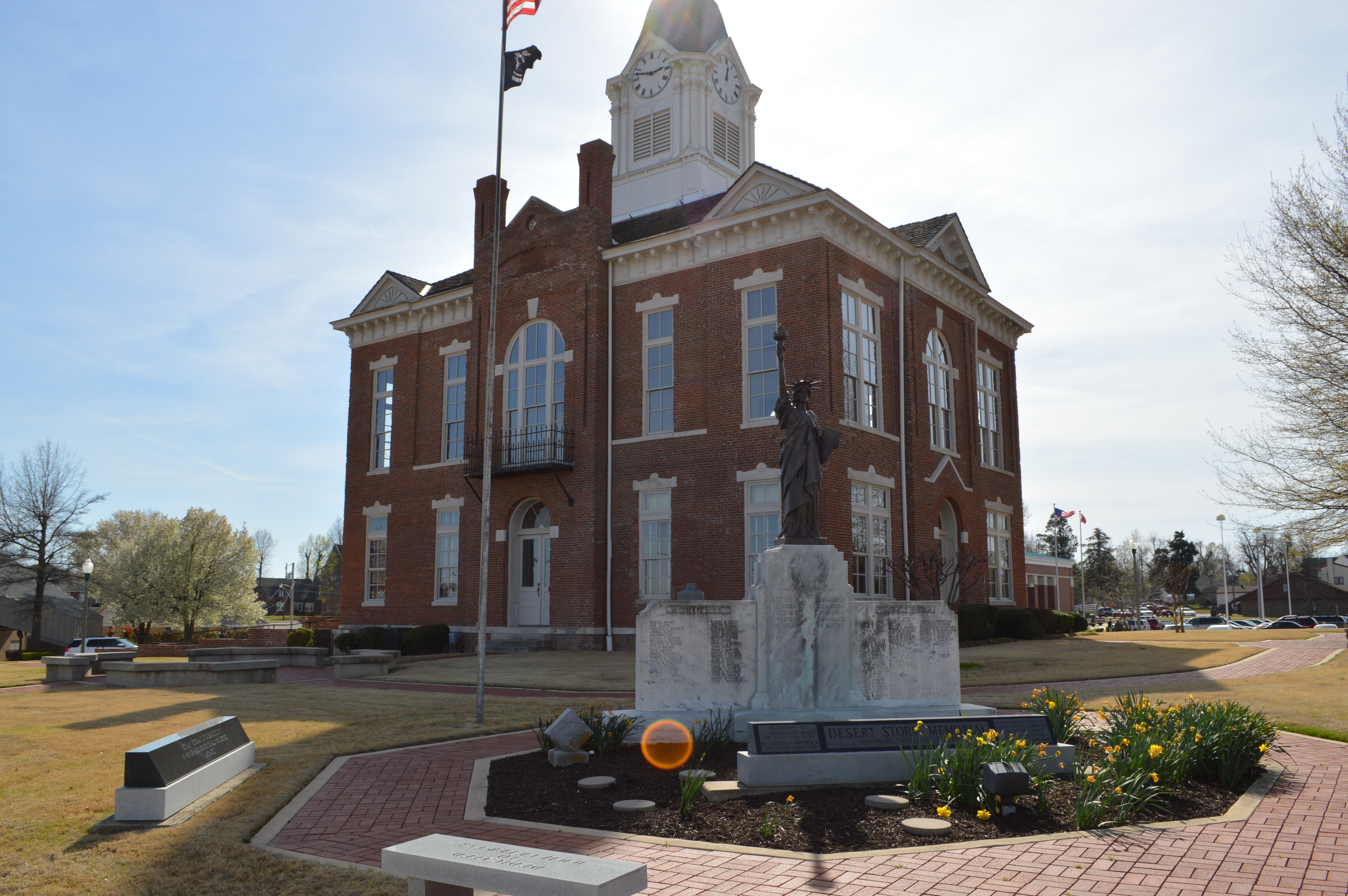
John Paulding sculpted this bronze memorial, which sits on a white marble base on the front lawn of the courthouse.  It is a female figure representing Liberty, wearing a flowing robe and holding a torch and tablet.  It is dedicated to the men from Greene County who died in service in World War I, and their names are inscribed on panels attached to the base.

  • Dedication Date: 1930
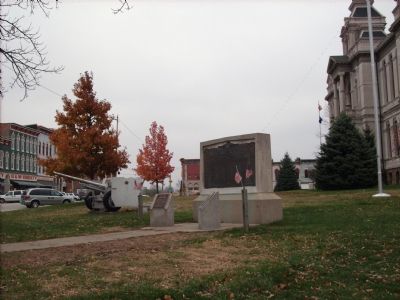
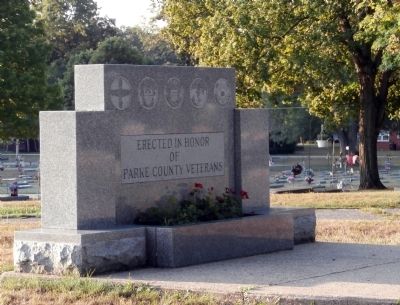
47872 Rockville
IN
USA
  • Dedication Date: 1949
47872 Rockville
IN
USA
  • Dedication Date: Unknown
47872 Rockville
IN
USA
Patterson Park
21224 Baltimore
MD
USA

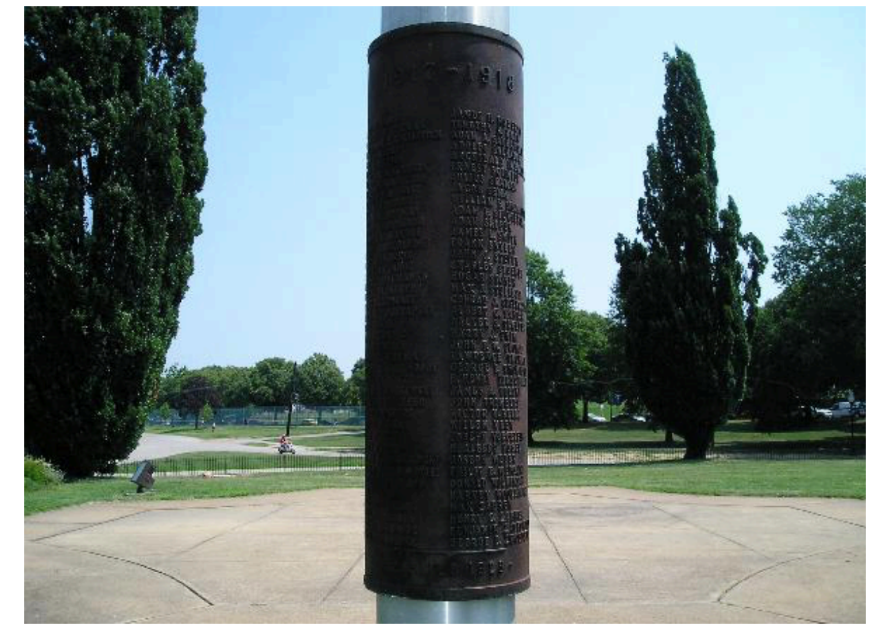
A flagpole dedicated to WW1 veterans was erected here in 1923.

  • Memorial Hunters Club Submission: The Wanderer
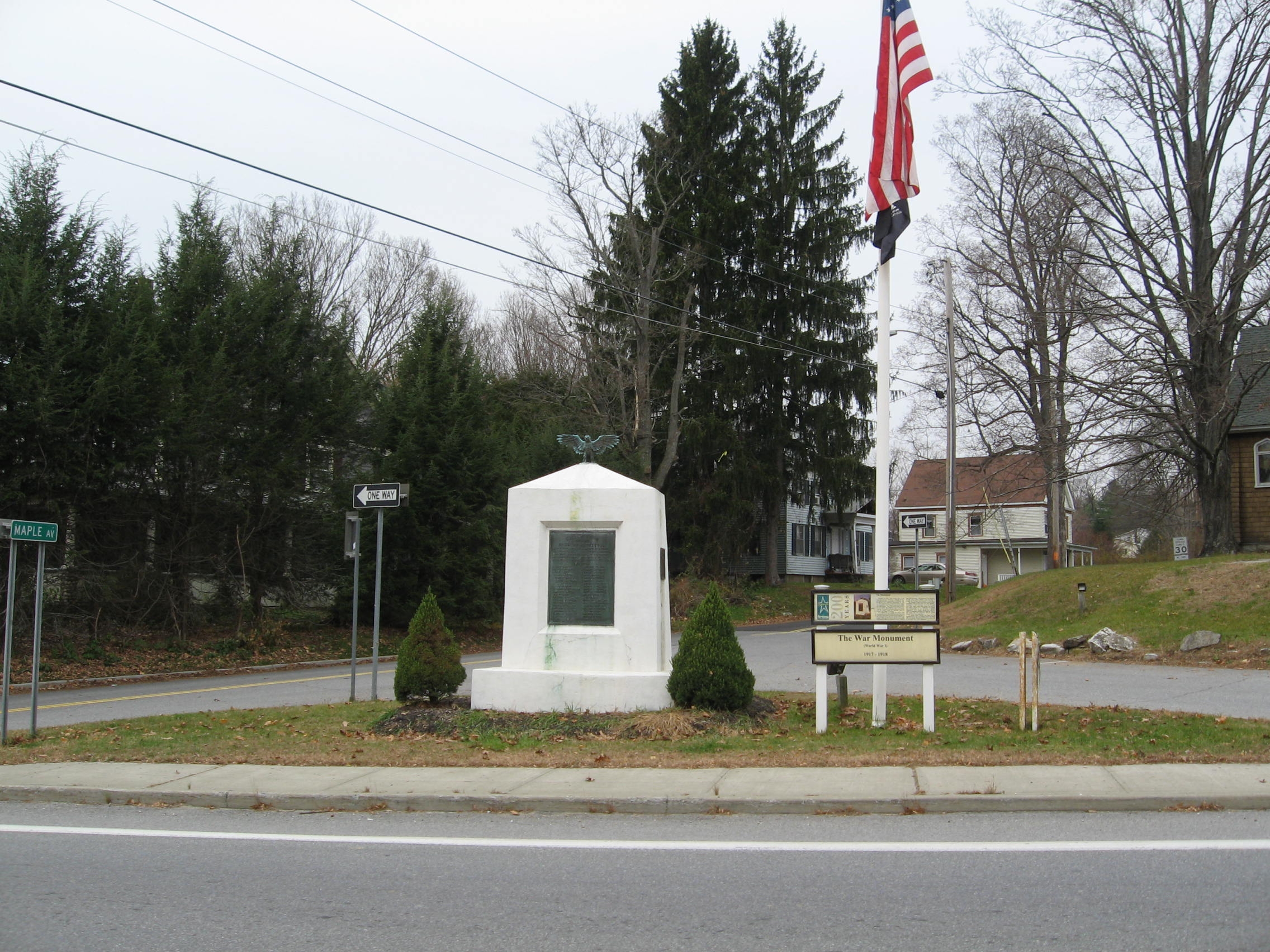
Rte 311 and Maple Ave.
12563 Patterson
NY
USA

Patterson was still a quiet country town at the beginning of the First World War. Although the State had begun to assume responsibility for the major roads through the area, three-way intersections like this one, more typical of wide turning horse-drawn wagons than automobiles, with triangular islands in the middle were still common. There was electric power in town and some people had telephones, but in many ways Patterson was a typical American small town, isolated from the outside world and especially from the passions and politics of Europe.

It is difficult for us to imagine the impact which the experience of the First World War had on the lives of the men whose names are listed on the south face of this monument and on the lives of their friends and families. Many had left home for the first time to fight in the largest conflict the world had yet seen. Three of them did not return. This monument was erected to all who served and it continues to be the focus of parades and Memorial Day ceremonies to this day.

The American Legion was formed in Paris in 1919 immediately after the end of the war. They adopted a constitution at their convention in St. Louis the same year which stated, among other things, that part of the Legion’s purpose was to “consecrate and sanctify our comradeship by our devotion to mutual helpfulness.” It is largely through the volunteer efforts of individual members of the Patterson Post of the Legion that this monument and the ground around it has been maintained.

  • 100 Cities / 100 Memorial Awardee
4554 Fayette Ave
40121 Fort Knox
KY
USA

Patton and the U.S. Tank Corps

100 Cities / 100 Memorials

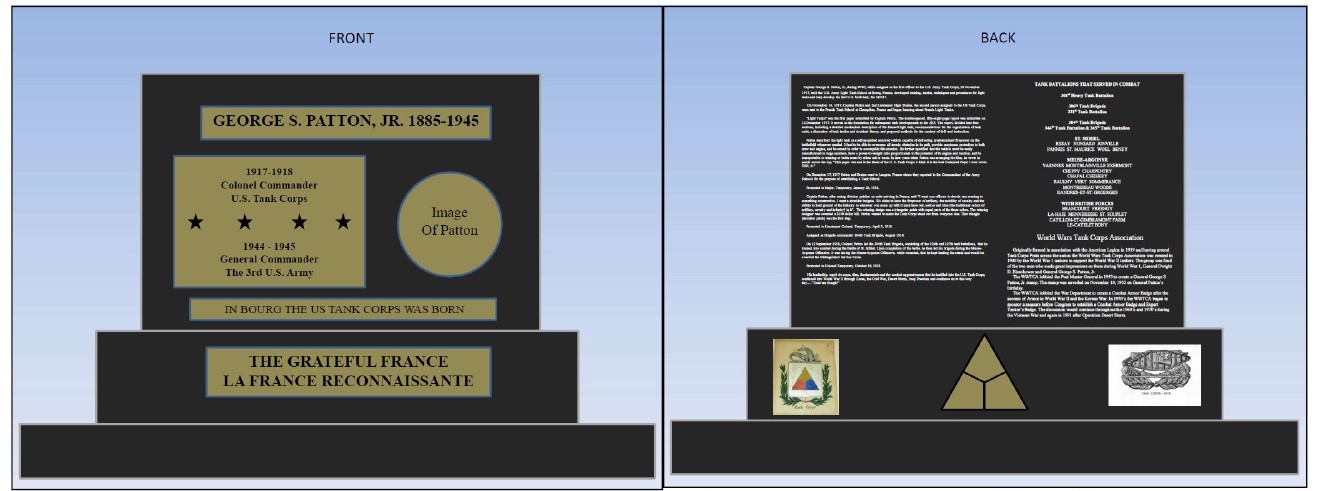
100c 100m wwi centennial plaque The Patton and the U.S. Tank Corps Monument was built in the memorial park located next to the Gen. George Patton Museum of Leadership to commemorate the 100th anniversary of CPT Patton joining the U.S. Tank Corps in November 1917. At the time, Patton was instructed to build the U.S. Tank School. He established the school, developed tactics and techniques, and lead the development of the first U.S. built tank. He was awarded the Distinguished Service Cross for his leadership and actions in World War I. This monument was designed to match the one in Bourg, France, where the U.S. tank school was located (that monument was dedicated in 1973).
  • Dedication Date: June 1, 1996
  • Photos courtesy of Lamar Veatch
Watson Dr.
30132 Dallas
GA
USA

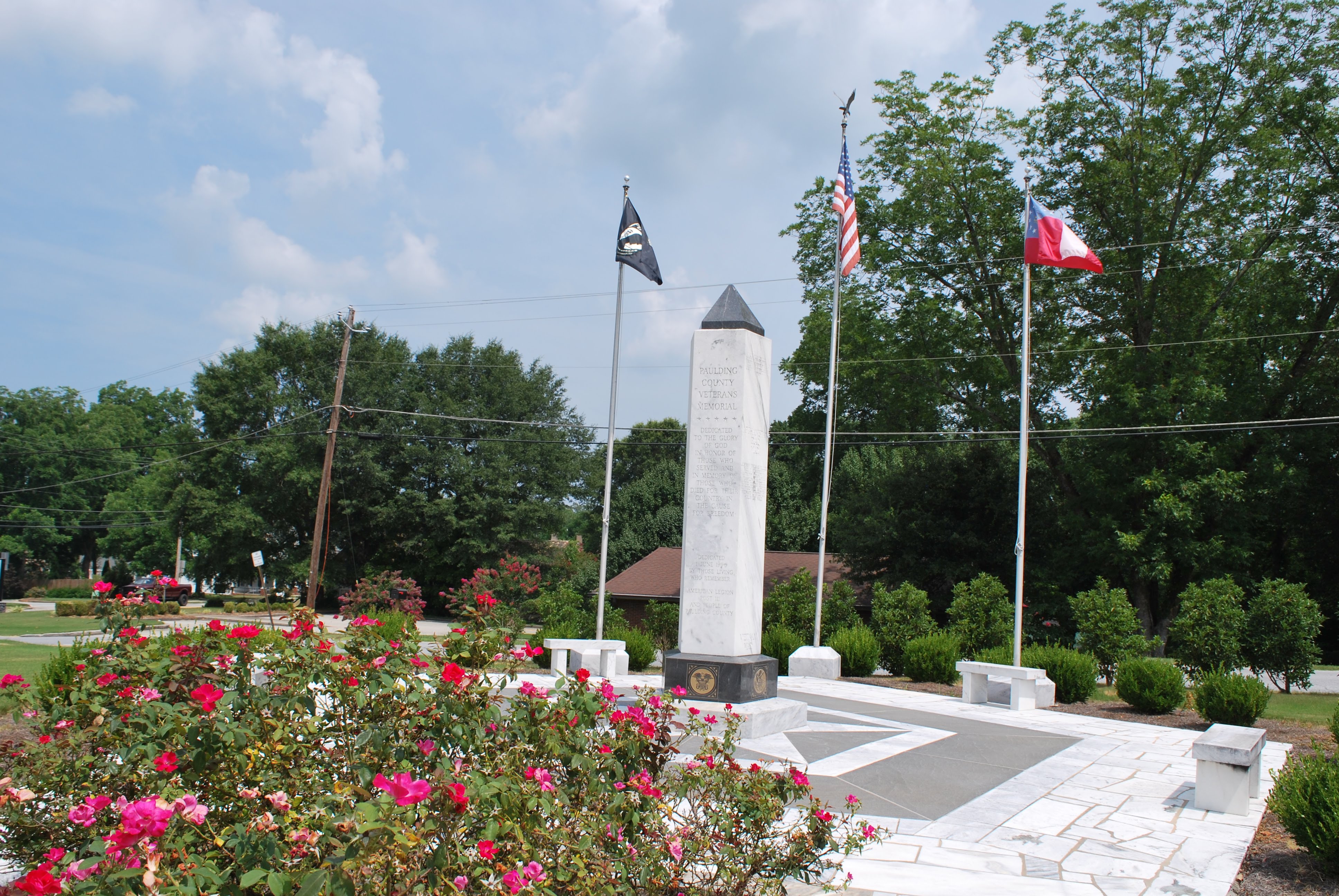
Description:  Memorial plaza with with central obelisk, one side dedicated to WW1

Inscription:  “Paulding County Veterans Memorial - Dedicated to the glory of God in honor of those who served and in memory of those who died for their country in the cause for freedom.  Dedicated 1 June 1996 - by those living who remember - American Legion Post 111 and the people of Paulding County.”


The WW1 inscription contains eight (8) names. 

Dallas Square, behind the Paulding County Courthouse in Main Street in downtown Dallas.
30132 Dallas
GA
USA
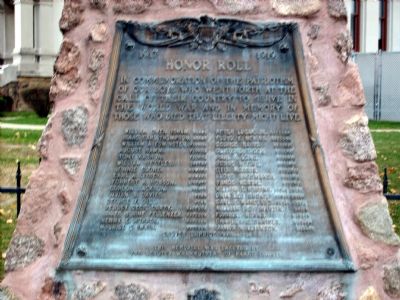
A rough-hewn rock inscribed with the names of the county’s war dead.
  • Memorial Hunters Club Submission: The Wanderer
Lake St and Big Tree Road
14525 Pavilion
NY
USA

This memorial was dedicated in 1920 in honor of the citizens of Pavilion who served in the World War 1914 - 1918.  The inscription reads:

Erected by
The Town of Pavilion

in honor of
its citizens who served
in the World War
1914-1918
Dedicated 1920

*John D. Arnett
+Mary E. Fagan

Ray E. McWethy · George Patridge ·
Carl Curry · Leo Aldridge ·
Robert J. Graham · Joseph Snider ·
Morgan Miller · Lee Connor ·
James M. Hudson · Adelbert Mix ·
George Murray · Elmer McDowell ·
Leo F. Gaugel · Clarence McDowell ·
Hugh Campbell · Harold Peterson ·
John Campbell · Fred Rose ·
Chauncey Connor · W. Clifford Hutchinson ·
Joseph Barnasse · Joyce Morce ·
Edison Phillips · Harold Clemens ·
McKinley Phillips · Walter Clemens ·
Maurice Fagan · Charles Canaway ·
Frank Fagan · Earl Kenna ·
John Burton · Thomas Burns ·
Glenn Van Duser · Frank Sandles ·
Charles Lupperger · Russell Lobaugh

*Killedin action in France
+Red Cross nurse served in France

  • Memorial Hunters Club Submission: Robert Shay, PH3, USNR-R, 1964-70

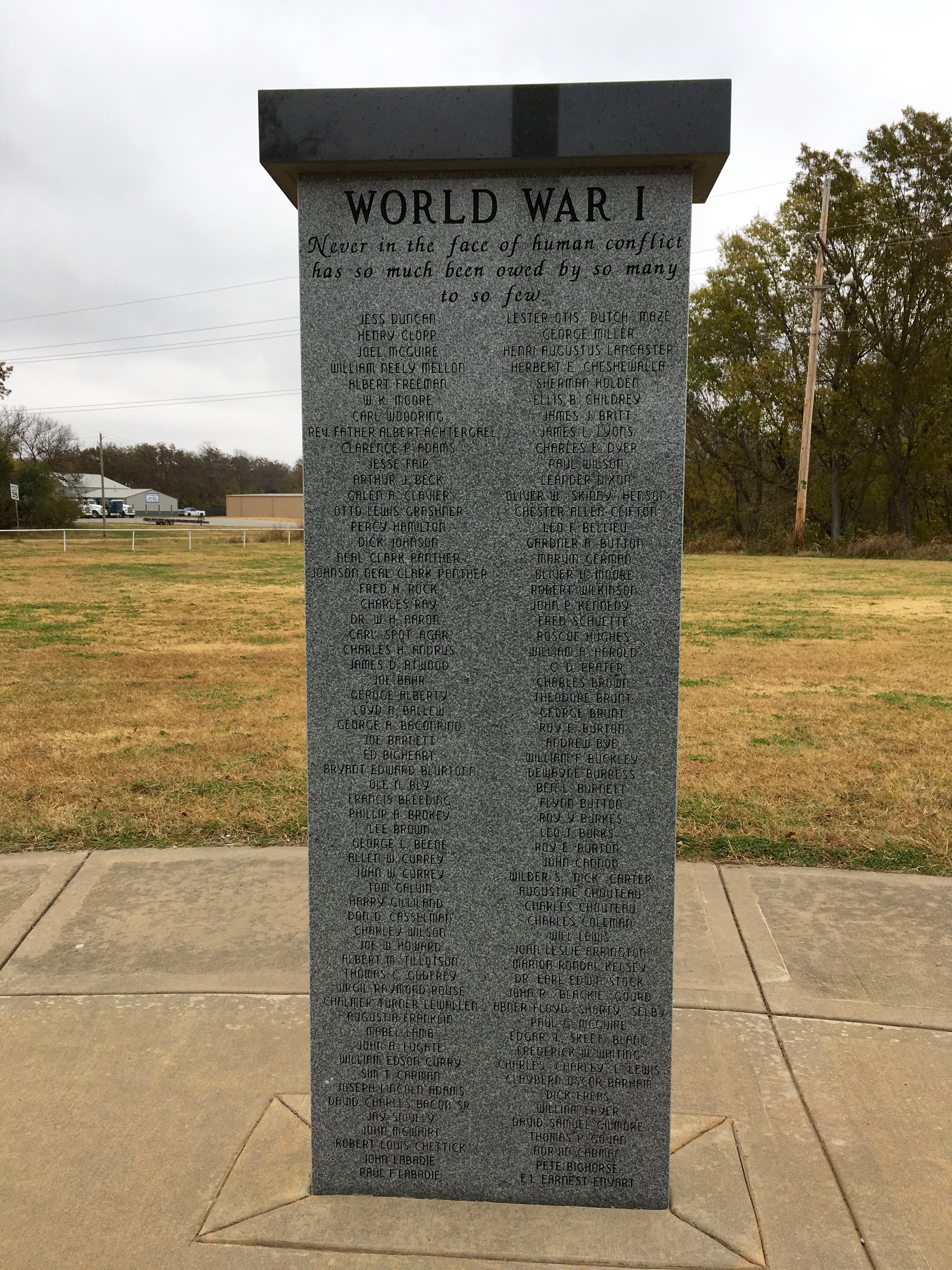
Pawhuska, OK Veterans Memorial, featuring a grey granite WW1 wall. This Memorial Plaza was Dedicated in May, 2005

Pawnee County Courthouse
74058 Pawnee
OK
USA

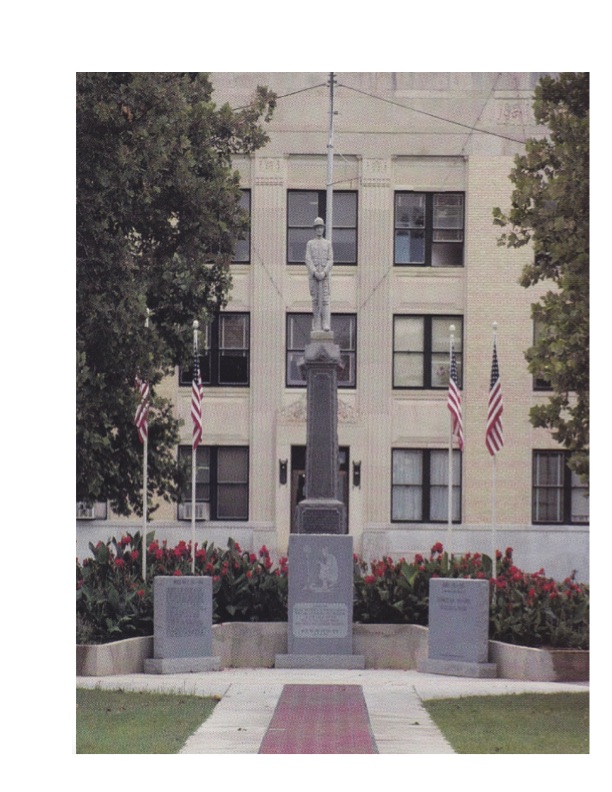
This granite statue sculpted in Carthage, Missouri, is a full-size uniformed WWI soldier with both hands on the barrel of his rifle. It was dedicated on November 11, 1922, as a tribute to the vaIor of the sons of America who gave their lives in WWI. The names of the dead from Pawnee County are listed on an honor roll incised on the base.

Town Common, Church St.
01612 Paxton
MA
USA

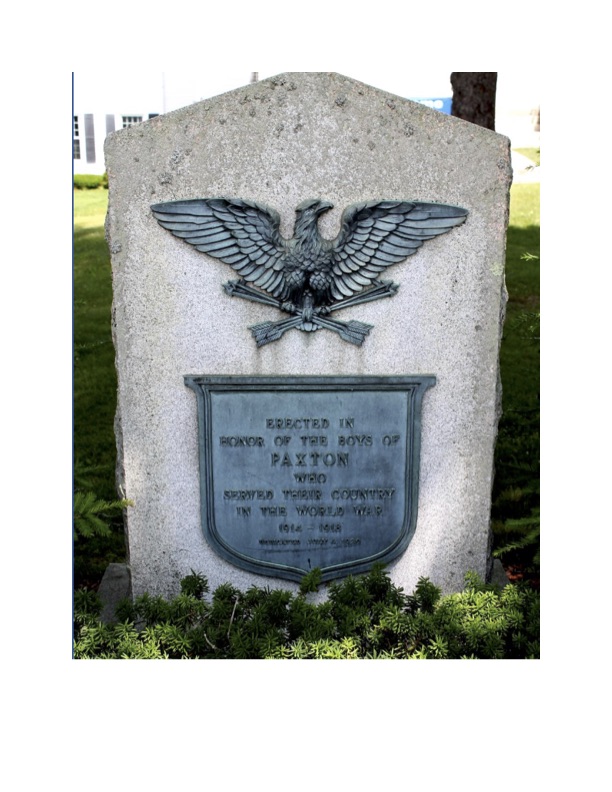
On a granite marker dedicated on July 4, 1929, is a bronze plaque bearing a relief of an eagle with crossed arrows in its talons. It was erected as a memorial to the boys of Paxton who served in WWI.

  • Memorial Hunters Club Submission: JEANNE WINNICK
Town Square
14590 Wolcott
NY
USA

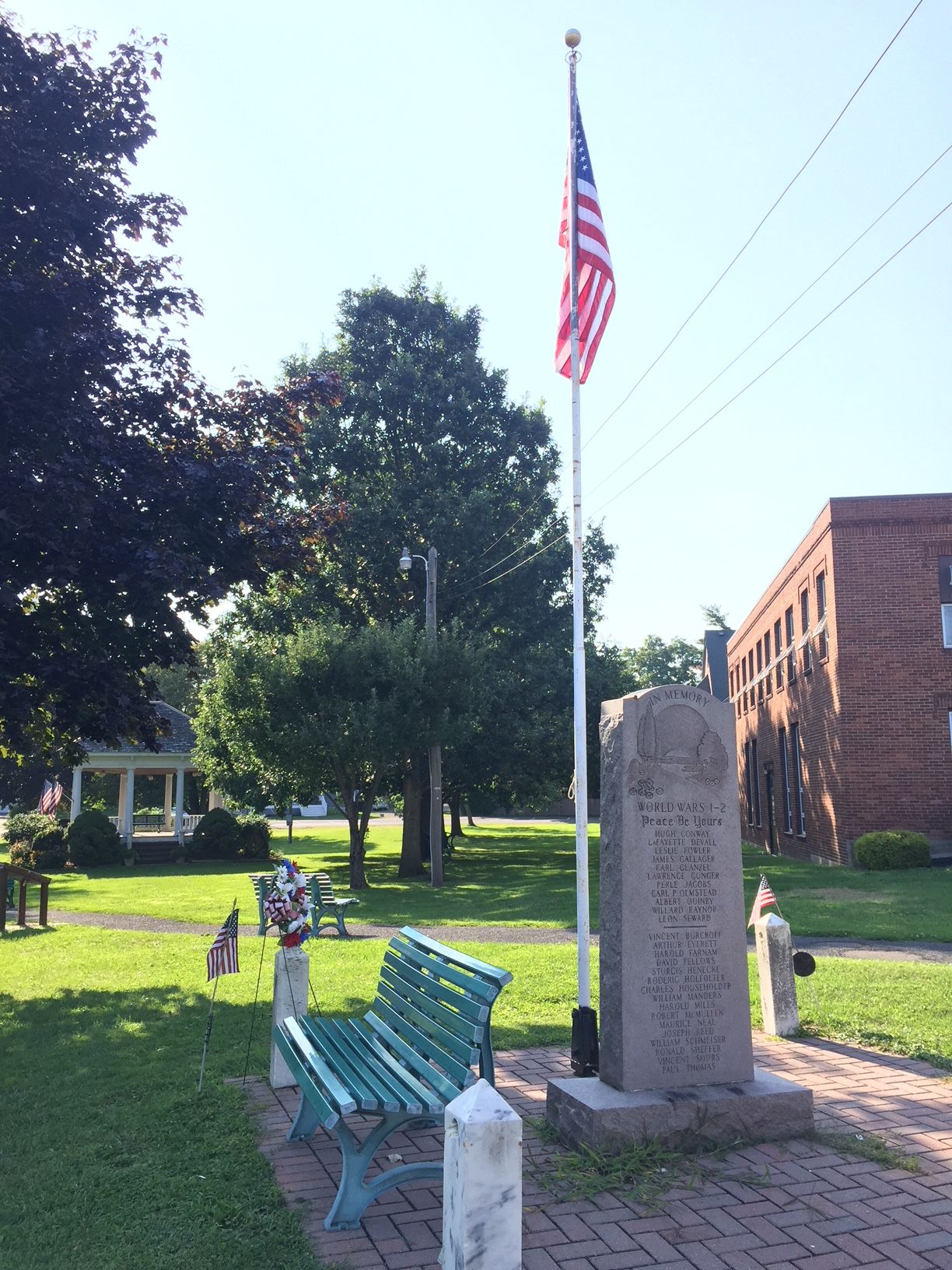
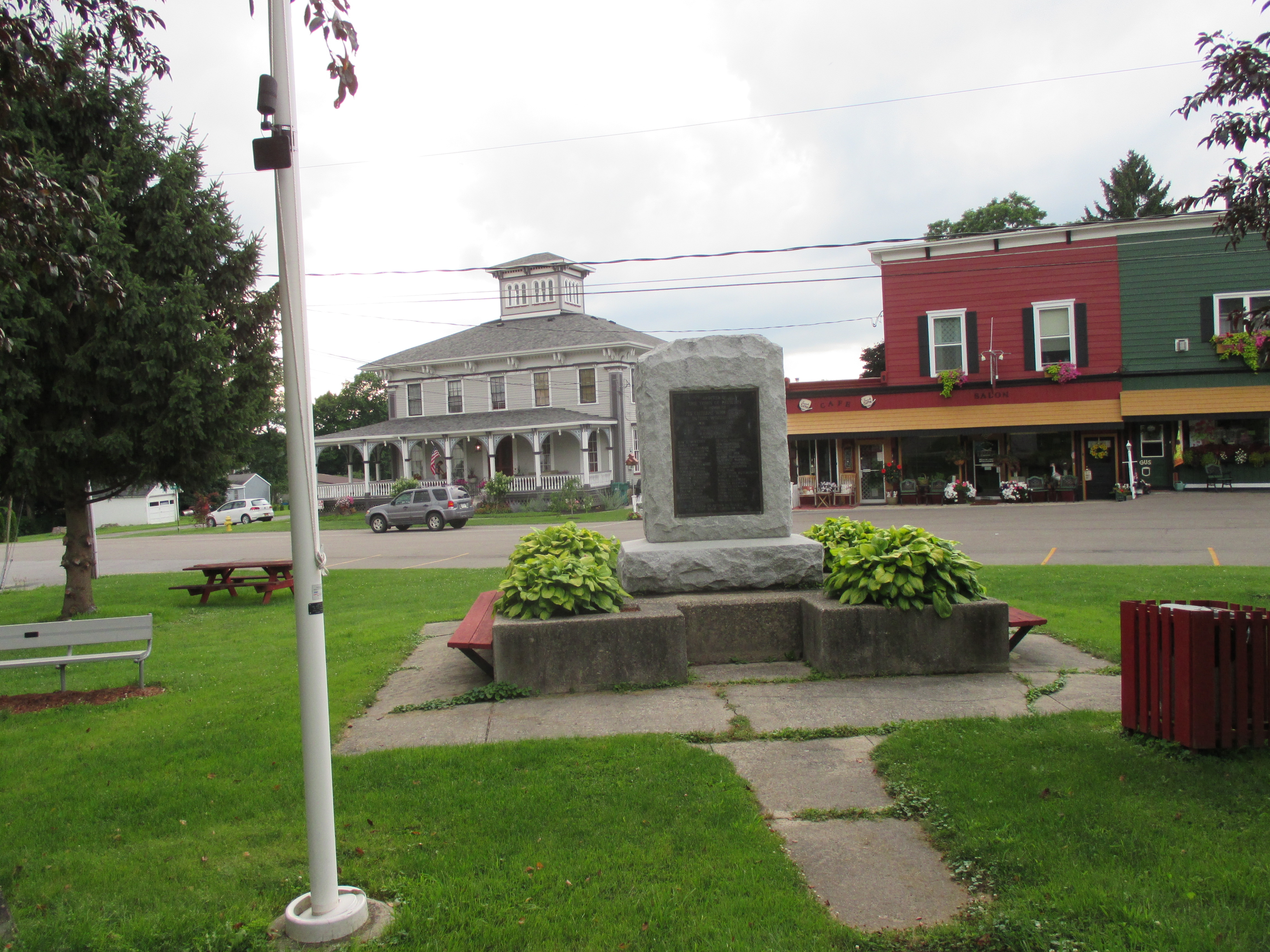
On a Thursday night farmers' market I noticed this memorial. In the quaint town square of Wolcott, NY, there is a flag pole and a monument with the names of those who died in WW1 and WW2.

  • Memorial Hunters Club Submission: thewanderer
21218 Baltimore
MD
USA

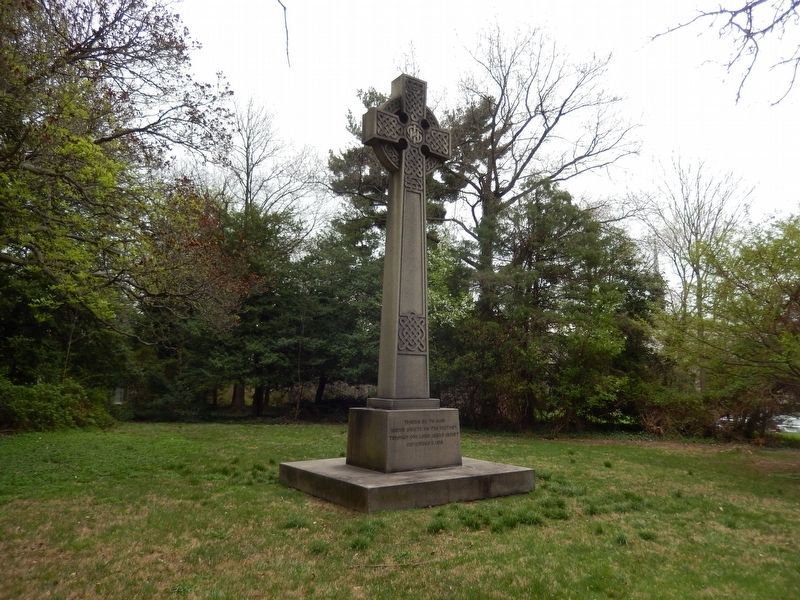
This Peace Cross is dedicated to those who served in World War I. It is located on the grounds of the Episcopal Diocesan Center and Cathedral of the Incarnation near the parking lot.

Inscription on the base of the memorial: "Thanks be to God which giveth us the victory through our Lord Jesus Christ-November 11, 1918."

  • Width: 2'2
  • Depth: 1'1
  • September 2, 1993
  • Dedication Date: September 2, 1993
  • Faiella Iron Works
  • Five steles set in a triangle around a flagstaff
  • Dominick de Nigris
  • Other
Pelham Parkway
Bronx
NY
USA

Flagpole:
Top:"ERECTED SEPTEMBER 25, 1989 BY THE KNIGHTS OF COLUMBUS COUNCIL 4521. WITH A GRANT FROM NBWRA SPONSORED BY SENATOR GUY J. VELELLA."

Bottom:"MONUMENT ERECTED IN MEMORY OF THOSE AMERICANS WHO GAVE THEIR LIVES IN THE FOUR GREAT CONFLICTS OF THE 20th CENTURY BY COLUMBUS DAY PARADE COMMITTEE COLUMBUS ALLIANCE IN CO, MORRIS PARK COMM. ASSN. MORRIS PARK BUS. ASSN."

On Tombstones:
Persian Gulf War (black granite): "PERSIAN GULF / WAR / LET US PRAY THIS DAY AND / EVERY DAY HEREAFTER, FOR PEACE, / AND MAY GOD KEEP THIS COUNTRY / AS ONE GREAT NATION UNDER HIM / FOREVER. - PRESIDENT GEORGE BUSH / FEBRUARY 3, 1991"

World War II (pink granite): "WORLD WAR / II / 1941-1945 / TO THE GERMAN GENERAL / "NUTS" / - FROM THE AMERICAN GENERAL."

World War I (pink granite): "WORLD WAR / I / 1914-1918 / OVER THERE, OVER THERE / SEND WORD THAT THE / YANKS ARE COMING / - GEORGE M. COHAN"

Vietnam War (gray granite): "VIETNAM / WAR / 1965-1975 / THAT BITCH OF A WAR. / - PRESIDENT L. B. JOHNSON"

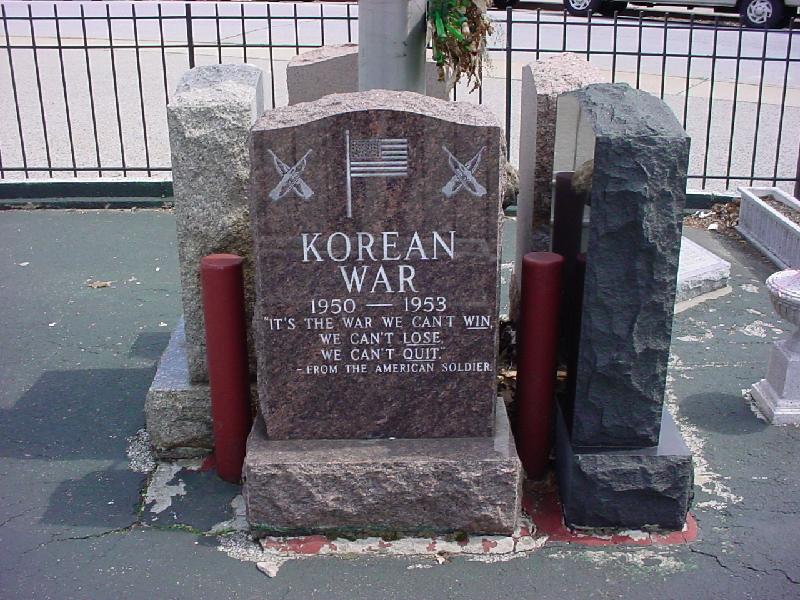
Korean War (pink granite): "KOREAN / WAR / 1950-1953 / IT'S THE WAR WE CAN'T WIN, / WE CAN'T LOSE, / WE CAN'T QUIT. / - FROM THE AMERICAN SOLDIER."


  • Architect: Rudy Macina
  • Memorial Hunters Club Submission: Robert Shay, PH3, USNR-R, 1964-70
1115 East 5th Street
98661 Vancouver
WA
USA

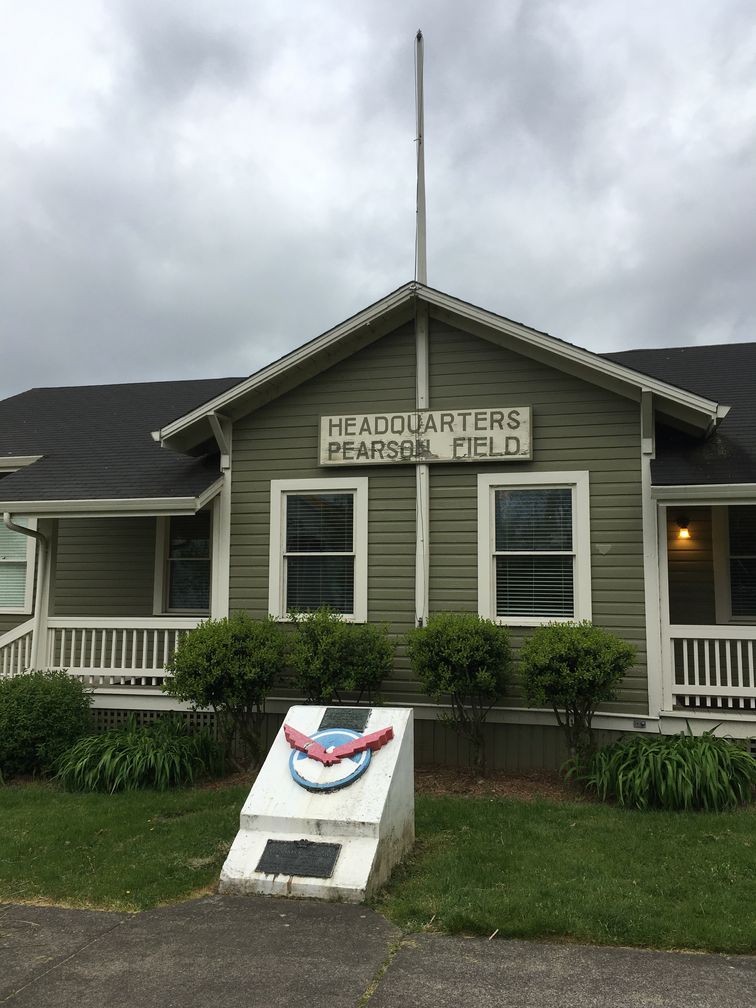
Website: https://www.nps.gov/fova/learn/historyculture/pearson.htm

Pearson Air Museum and the Jack Murdock Aviation Center help visitors connect
to the history of aviation at Pearson Field. From its roots as a civilian air field, to its
history as the site of the critically important lumber mill and wood “cut up” plant
for the War Department’s newly formed Army Spruce Squadrons and Spruce Divisions.
of the Army Signal Corps to its transformation into an important U. S. Army Air Corps field,
Pearson Air Museum helps provide a detailed look into the golden age of aviation at Pearson
Field. The scale model of the Spruce Mill is a fascinating look at the enormity of the NW’s
contribution to the national war effort.

  • 1891
  • Frank Hutchinson Peavey
2500 Lake of the Isles Parkway E Minneapolis, MN
55405 Minneapolis
MN
USA

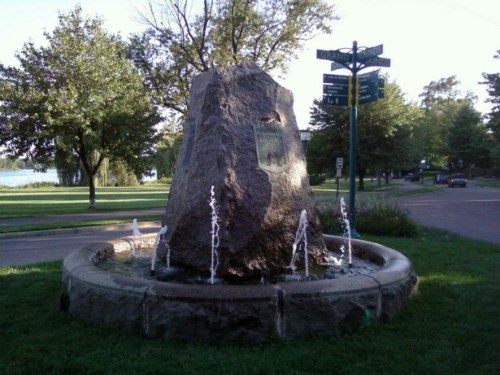
Peavey Fountain on the Lake of the Isles in Minneapolis was built in 1891 as a drinking fountain for horses and was later dedicated to the horses of the 151st Field Artillery, Minnesota National Guard who died during World War I.

The fountain was installed as a monument to the horses of the 151st Field Artillery from World War I. The 151st Field Artillery Regiment was originally organized in 1864 as the First Regiment of the Minnesota Heavy Artillery, was reorganized after the Civil War, became the First Battalion Field Artillery in 1893, was redesignated the First Field Artillery in 1900, was expanded to six batteries in 1903, served on the Mexican Border from 1916 to 1917, and then was drafted into Federal Service and subsequently was redesignated as the 151st Field Artillery. 

- http://www.angelfire.com/mn/thursdaynighthikes/lakeisles_arch15.html

In 1891, Frank Hutchinson Peavey donated the fountain to the people of Minneapolis as a drinking fountain for horses. In 1917 it was rededicated as a memorial to the horses of the 151st Field Artillery Minnesota National Guard killed in action. Today, Peavey Fountain would be easy to miss standing in the middle of an island diverting car traffic between Kenwood Parkway and Lake of the Isles Parkway.

I recommend visiting the Minnesota Historical Society website to travel back in time to see what the fountain and neighborhood looked like in the early 1900s. I was curious about the fountain’s connection to Peavey Plaza in downtown Minneapolis and learned that the company Frank started in 1874, F.H. Peavey & Company (renamed Peavey Company) gave $600,000 towards the $2.5 million budget for the plaza which earned them naming rights. The gift was given in 1974, the company’s centennial year.

- http://www.southwestjournal.com/focus/2016/10/a-neighborhood-for-all-seasons/