


























Doughboy Foundation Home
transition01.jpg
transition03.jpg
Belvedere-Stone-View-3.jpg
Belvedere-to-Sculpture.jpg
Belvedere-Stone-View-1.jpg
Rendering-2.jpg
Rendering-3A.jpg
Rendering-4.jpg
Rendering-5.jpg
Terrace-Planters2.jpg
_P3_3855_250118-Edit_250118.jpg
_P3_3934_250118_250118.jpg
_P3_3941_250118_250118.jpg
previous arrow
next arrow

Memorial

Geolocalisation bp
Independence Ave, NW, between 17th and 23rd Sts
20024 Washington
DC
USA

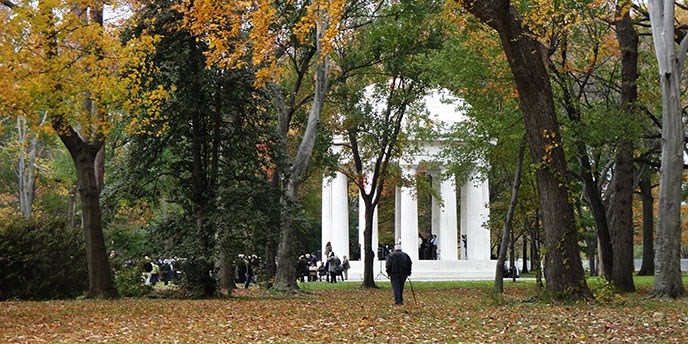
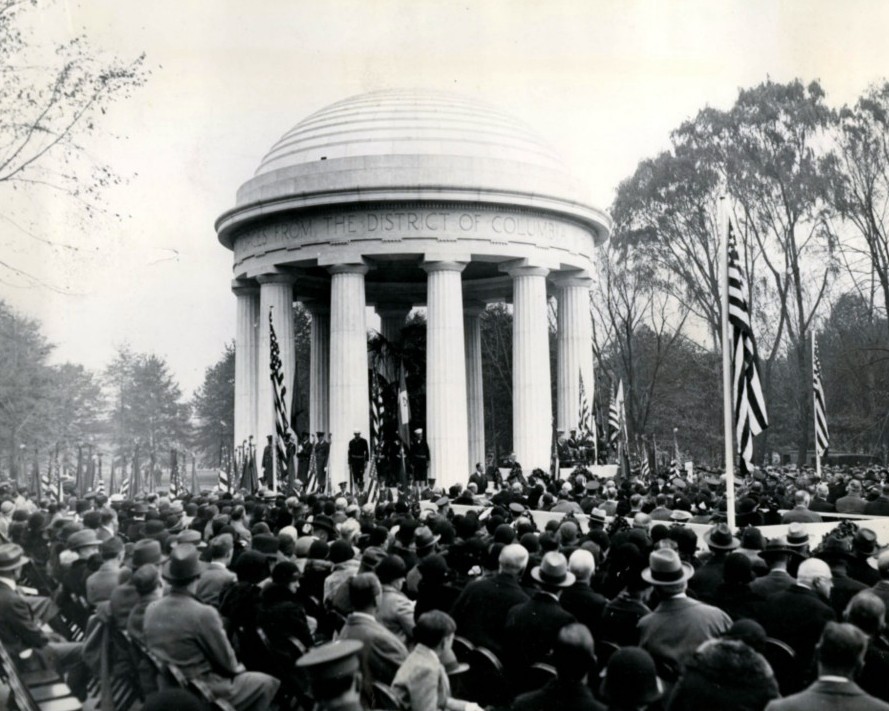
The D.C. War Memorial was designed by Architect Frederick H. Brooke, with associate architects Nathan C. Wyeth and Horace W. Peaslee; all three were veterans of the Great War.  A circular, open-air, Doric structure built almost entirely of Vermont marble, the memorial has an overall height of 47 feet and a diameter of 44 feet, large enough to accommodate the entire U.S. Marine Band. It was intended that the structure be a memorial and a bandstand and that each concert would be a tribute to those who served and sacrificed in the war.  The memorial stands on a four feet high circular marble platform around which are inscribed the names of 499 Washington residents who died in service during World War I. The names were inscribed on the face of the platform in alphabetical order with no distinction made to rank, race, or gender. The D.C. War Memorial is the only District memorial on the National Mall. It symbolizes the unique distinction of Washington, D.C. as a local entity even though it is the Federal City.  Construction was completed in 1931 and the memorial was dedicated by President Herbert Hoover on the national observance of Armistice Day, November 11, 193.   World War I veterans, Gold Star Mothers, the American Legion, the Veterans of Foreign Wars, and the Disabled American Veterans made up some of the thousands in attendance for the the dedication. Thousands more across the country listened to the live radio coverage. Other notable attendees were General John. J. Pershing and John Philip Sousa, a native Washingtonian and the former conductor of the U.S. Marine Band.

The inscription reads:  The names of the men and women from the District of Columbia who gave their lives in the World War are here inscribed as a perpetual record of their patriotic service to their country. Those who fell and those who survived have given to this and to future generations an example of high idealism, courageous sacrifice, and gallant achievement.
  • Other Measurements: 45' diameter
  • 1931
  • 1931
  • Dedication Date: 11/11/1931
  • DC citizens
  • 155000
  • Frank B. Noyes, an ardent supporter of the construction of a memorial and president of the Associated Press and Evening Star, was elected chairman of the Commission. The other members of the Commission were Joseph E. Berberich, Charles A. Baker, Edward F. Colladay, John Joy Edson, Mrs. William Corcoran Eustis, Robert N. Harper, Isaac Gans, Col. E. Lester Jones, Arthur D. Marks, James F. Oyster, Roland S. Robbins, Edgar D. Shaw, Hubert Suter, W.B. Westlake, Gen. Anton Stephan, J.R. McDonald, and Gist Blair, and Edward B. McLean.
  • James Baird Co., contractor
  • The 26,000 DC residents who served in the war.
  • The names inscribed around the base are done listed alphabetically, without mention of rank, color, or gender. Among the listed is Lt George Seibold. His mother founded the Gold Star Mothers after she had trouble learning of his fate, and then discovered that other mothers were also suffering. The story is mentioned in the Historic Park View Walking Tour: http://www.wdchumanities.org/docs/2012DCCHP/ParkViewFinal.pdf
  • National Park Service
  • neo-classical, tholos,
  • Neo-classical structure

Designed in the form of a circular Greek temple (tholos), the memorial is an open-air, white marble, Doric structure intended to serve as a bandstand.   A peristyle of 12 fluted Doric columns supports (without bases) supports an inscribed six-foot-tall entablature and, above that, a domed roof.  The floor (stylobate) is decorated with white and pink tiles; at the center is a bronze escutcheon featuring an eagle in low relief. 

The names of the men and women from the District of Columbia who gave their lives in the World War are here inscribed as a perpetual record of their patriotic service to their country. Those who fell and those who survived have given to this and to future generations an example of high idealism courageous sacrifice and gallant achievement

  • Memorial Hunters Club Submission: Jarod Jeglum
300 Main St.
58765 Noonan
ND
USA

The decision to build a memorial hall in Noonan (pop. 423) rather than the county seat of Crosby (pop. 1271) ended up being contested in ND Supreme Court Case Gehrke et al v Board of Commissioners of Divide County. The building was built with a full basement and main floor that included an auditorium with a balcony on the main floor. The lower level included a kitchen and lounge. The building is currently vacant.

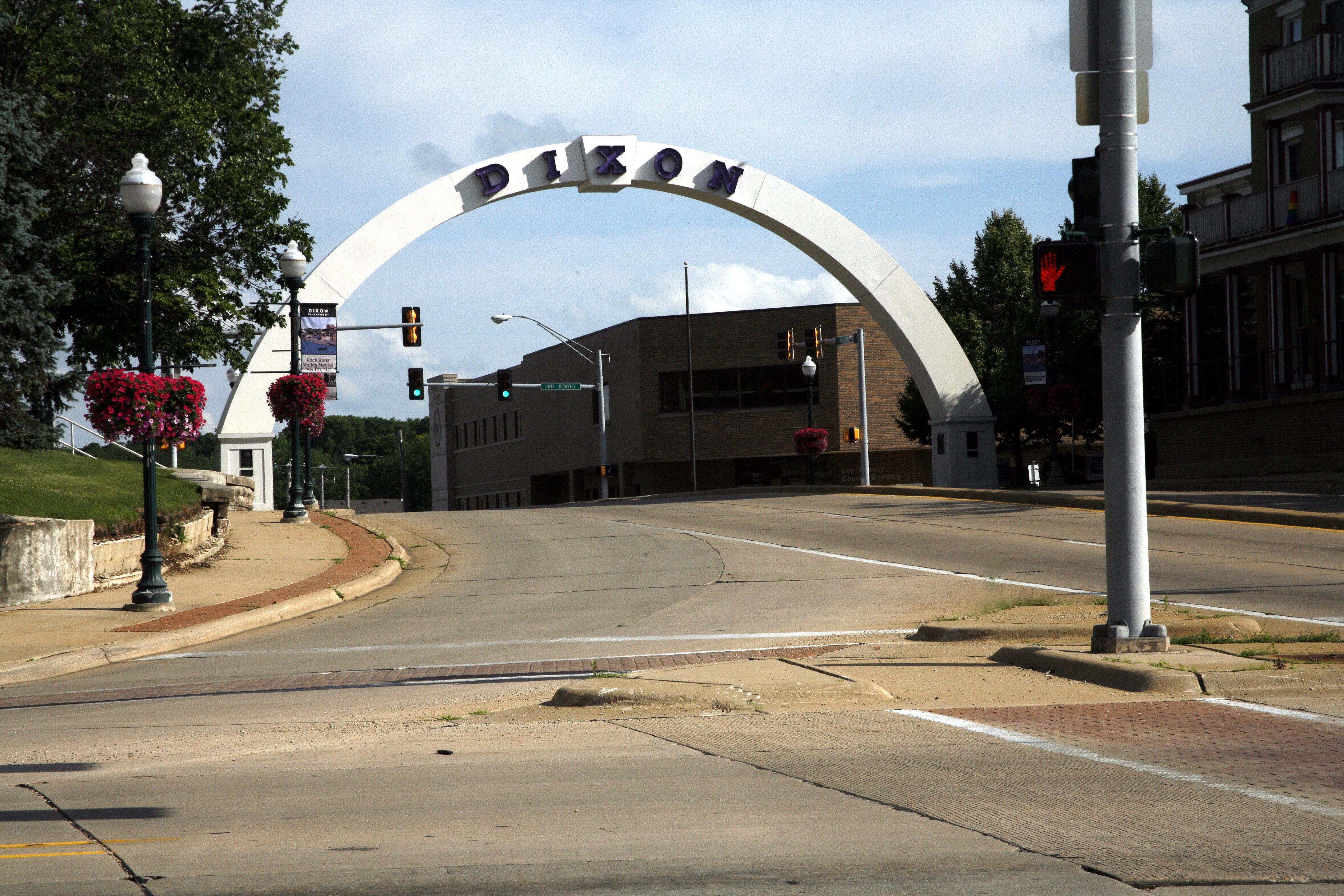
  • Original wood frame and beaverboard triumphal arch erected for June 12, 1919 celebration honoring Lee County WW1 veterans and Dixon's Co. C, 123rd Field Artillery, 33rd (Prarie) Division. Deteriorating arch replaced in 1949 and then again in 1965 when Galena Ave. was widened. Fiberglass arch erected and rededicated Veteran's Day Nov. 11, 1985.
  • Dedication Date: June 12, 1919
  • Arch
  • Photos courtesy of Janet Joiner, Community Development Director
104 S. 2nd Street
31092 Vienna
GA
USA

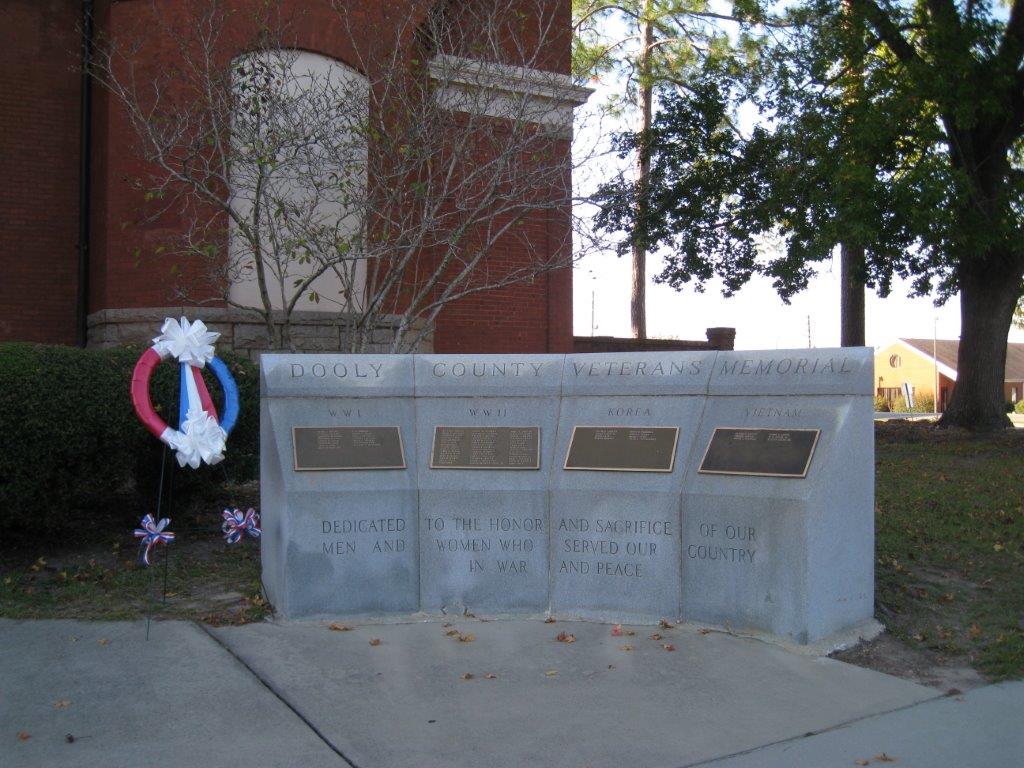
Located at the front entrance of the Dooly County Courthouse, this Granite memorial contains four bronze plaques, one each for WWI, WWII, Korea, and Vietnam. Inscription: “Dedicated to the Honor and Sacrifice of our Men and Women who Served our Country in War and Peace.”

. 5th and 6th Sts. and Grand Ave.
90013 Los ANGELES
CA
USA
  • "Hough hoy"

Pershing Square. Mill. 5th and 6th Sts. and Grand Ave., Ios An­geles- CA; Ciiy of los Angeles, Cultural Affairs Depanmeni. Public Art Division. 433 S. Spring St.. 10th Floor. l.os Angeles. CA 90013: Outdoors. Free.

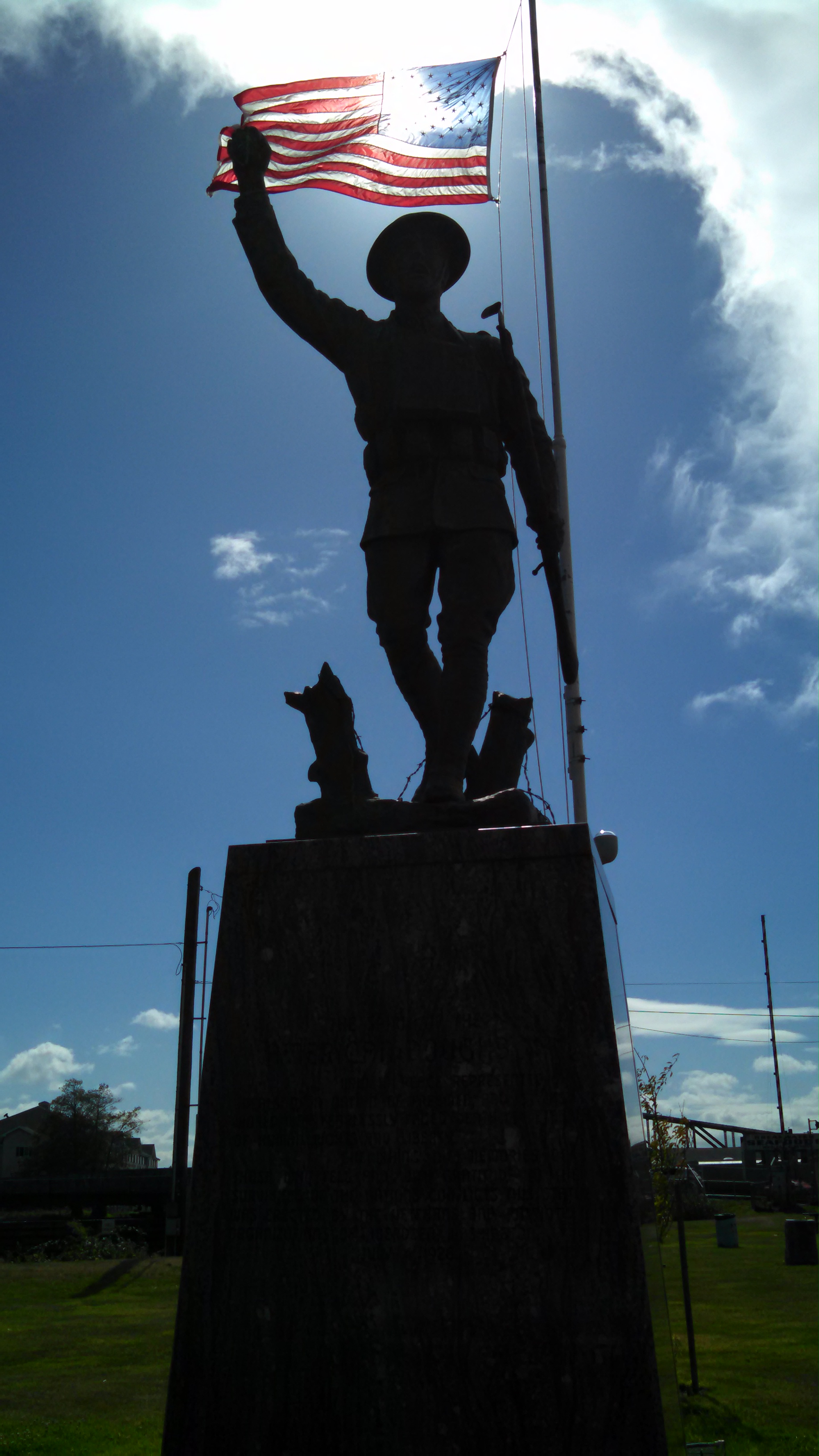
On top a 12 foot tall granite pedestal stands a bronze WWI uniformed soldier holding a Hag. At the top of the pedestal are two bands of stars, a dozen on each side. At the bottom is a bronze eagle. On the back of the pedestal is a bronze medal, and on the front is a olive branch and helmet. It was sculpted by lluoiliciio J. Pc-dictti and dedicated on July 4.1924. to all WWI veterans. The olive branch and helmet were added in 1927 by French veterans.

  • Dedication Date: July 4, 1926
  • 47260121
  • Single figure -- soldier
Zelasko Park
Aberdeen
WA
USA

THE SPIRIST OF THE AMERICAN DOUGHBOY, WHO IN PEACE REPRESENTED THE IDEALS OF A NATION OF FREEMEN, AND IN THE WORLD WAR FEARLESSLY FACED DEATH IN DEFENSE OF HUMAN RIGHTS AND LIBERTY. CHERISHING THE MEMORISES OF THOSE WHO FELL, AND WITH GRATITUDE TO THE SURVIVORS OF THE THE NATION'S CONFLICTS, THIS STATUE WAS ERECTED BY THE VETERANS AND PATRIOTIC ORGANIZATION OF ABERDEEN WASHINGTON. JULY 4, 1926

  • Dedication Date: 1929
  • Allen G. Newman

This monument commemorates the soldiers from Cliffside Park, NJ who served in World War I.  It was dedicated on Decoration Day 1929. 

The bronze sculpture depicts a WWI soldier leaning on his left foot. He is wearing his uniform, ragged on both arms, a helmet and carrying a rifle on his left shoulder. His left hand is holding the rife strap, his right hand is hooked to the ammunition belt hanging around his hips. He is wearing a gas mask on his chest & a canteen on his right hip. 

On February 12, 1950, the monument was rededicated and a new plaque was added to include the names of the soldiers who gave their lives in WWII. The new plaque, made of polished labradorite, covers the original inscription on the stone base. 

Narrative adapted from Smithsonian Institution Research Information System (SIRIS) inventory #NJ000379.

Photos courtesy of: Smithsonian Institution Research Information System (SIRIS) 

  • Dedication Date: 1922
Veterans Plaza, Wampum Park, Route 35 & West Street
07724 Eatontown
NJ
USA

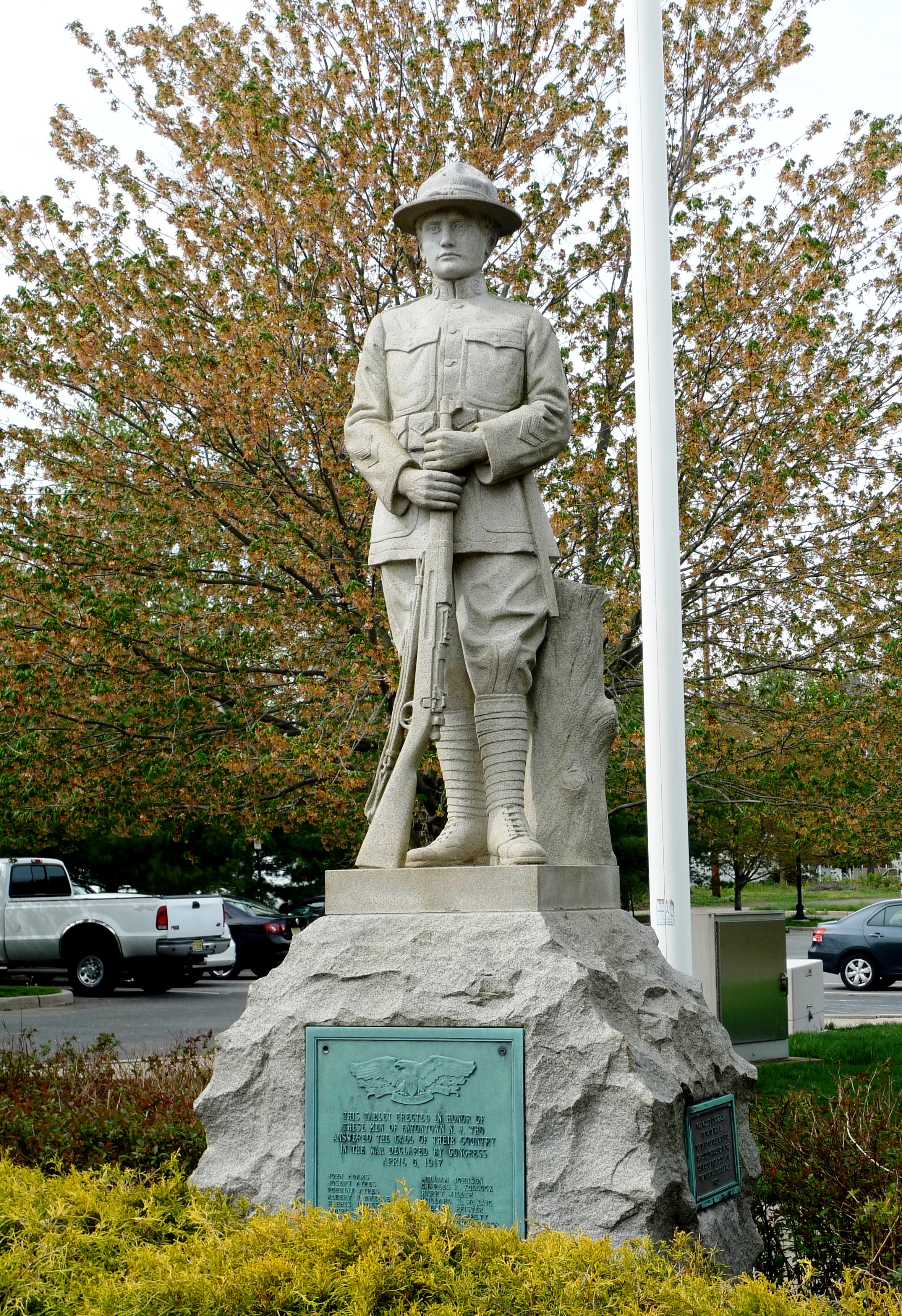
This World War I monument consists of an approx. 5' tall sculpture placed upon a square base about 5' high.  A plaque with raised lettering on the front of the base indicates this was erected to honor the men of Eatontown who served in the war. 

The sculpture itself depicts a WWI doughboy at parade rest with his left foot forward.  The soldier clasps the barrel of a rifle with both hands. The butt of the rifle rests on the ground near his right foot.  He wears a wide-brimmed hat, a belted jacket and his pants are tucked into wrappings that cover both calves. There is a tree trunk behind his left leg.

The monument was purchased from LL Manning & Son, a Plainfield, NJ monument company. 

Narrative adapted from Smithsonian Institution Research Information System (SIRIS) inventory #NJ000434. 

Photos courtesy of:  NJ State Historic Preservation Office

  • Memorial Hunters Club Submission: Nell Rapport
145 West Main St.
15401 Uniontown
PA
USA

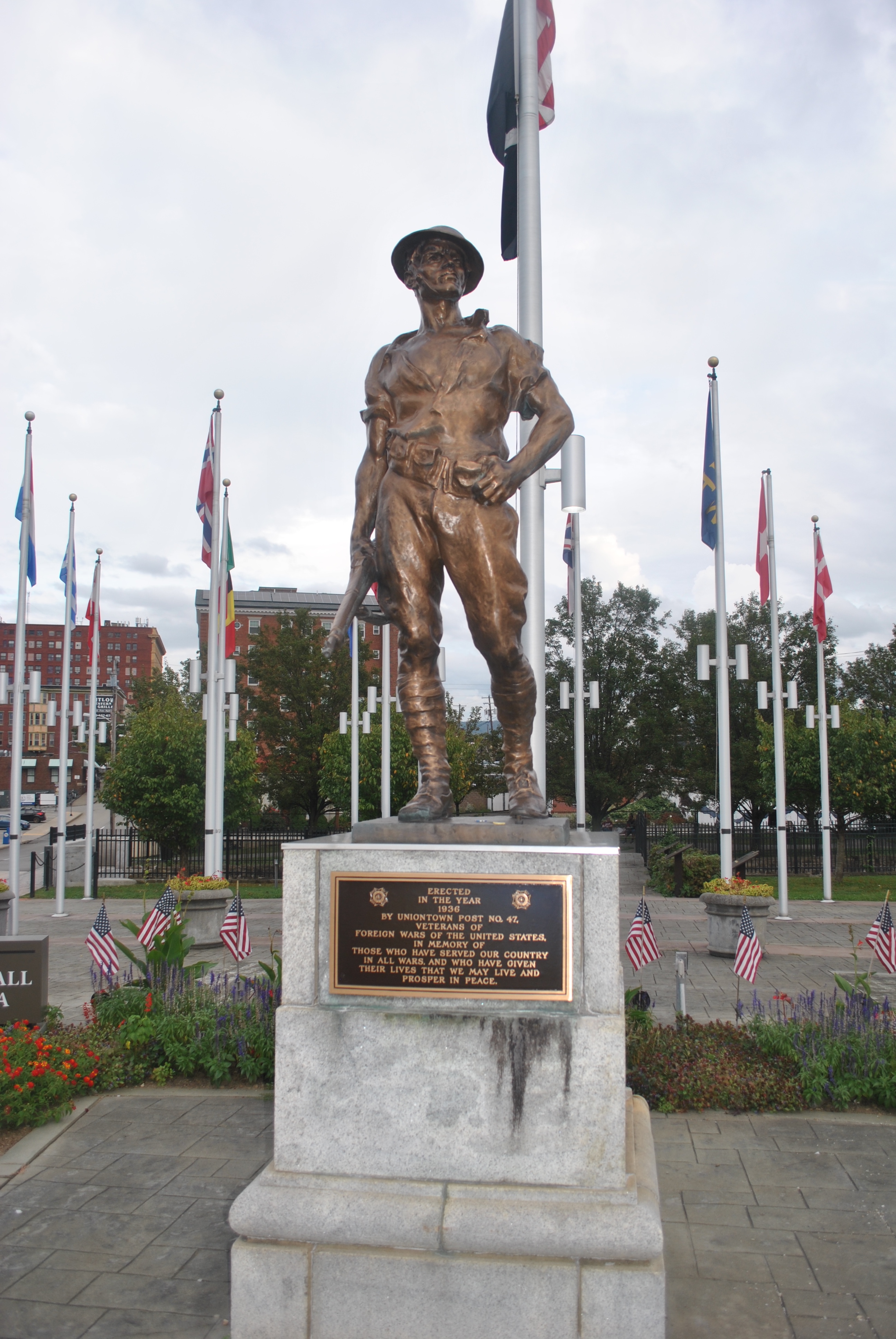
This doughboy statue is located on the George C. Marshall Memorial Plaza in downtown Uniontown, PA.  The inscription reads:

ERECTED IN THE YEAR 1936 BY UNIONTOWN POST NO. 47 VETERANS OF FOREIGN WARS OF THE UNTIED STATES.  IN MEMORY OF THOSE WHO HAVE SERVED OUR COUNTRY IN ALL WARS AND WHO HAVE GIVEN THEIR LIVES THAT WE MAY LIVE AND PROSPER IN PEACE.


  • Dedication Date: 1920
  • Richard Walter Bock
Westmont Fire Company, 120 Haddon Avenue
08108 Haddon Township
NJ
USA

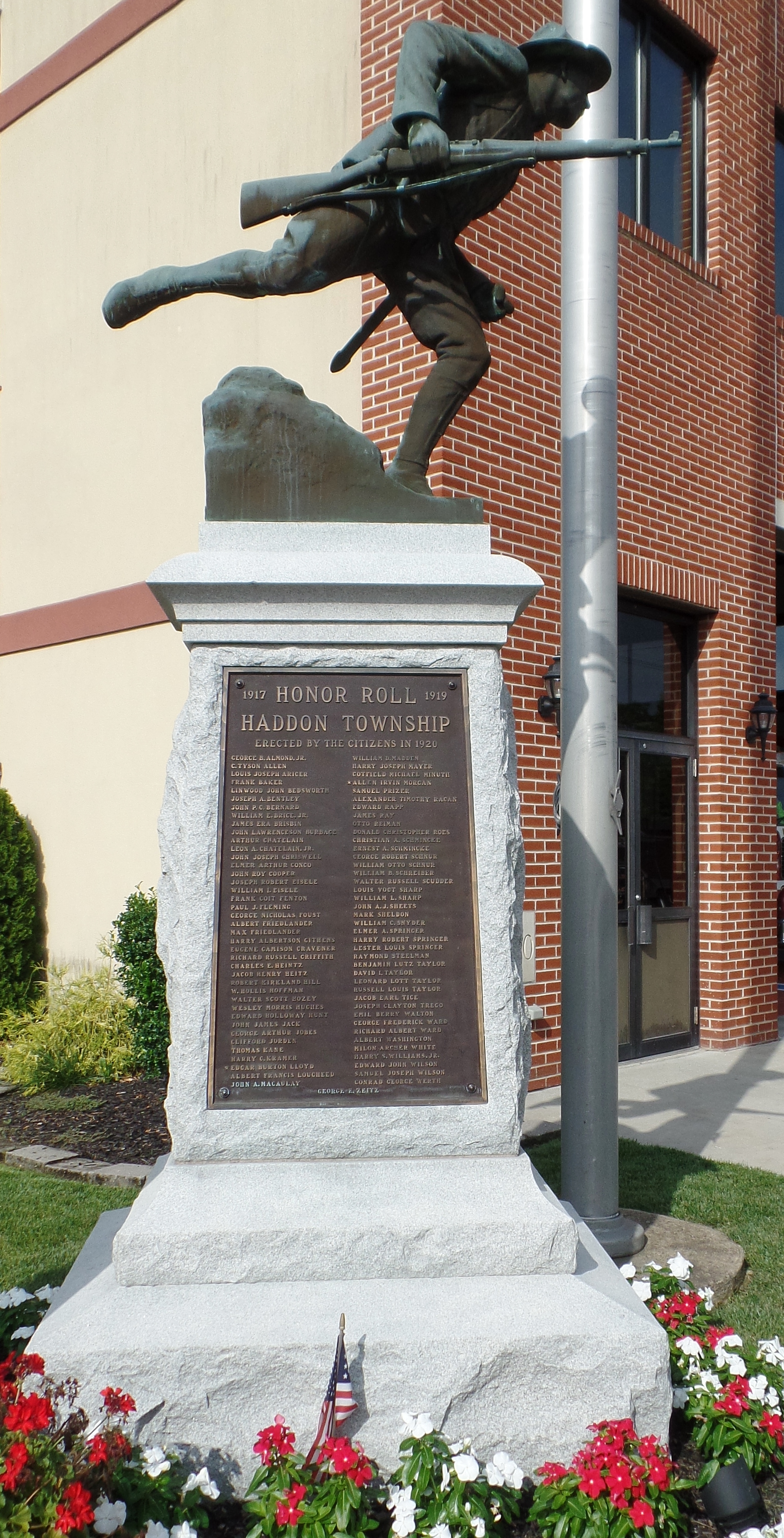
The Haddon Township Doughboy is one of the iconic figures not designed by Visquesney. It was, instead, designed by sculptor Richard Walter Bock who had been born in Germany in 1865. In 1870, his family emigrated to Chicago where his father opened a cabinet making business. Bock began his art education in the United States but returned to his native country and France to complete his training.

Bock opened a sculpture studio in Chicago, designed sculptures for the World’s Fair Columbian Exposition, and gained notice by his interior bas-reliefs for the city’s Schiller Theatre designed by famed Chicago architect, Louis Sullivan. While working with Sullivan, Bock became acquainted with the architect’s draftsman, Frank Lloyd Wright. Bock became a friend of Wright’s and designed numerous sculptures for Wright buildings.

In 1928, Bock was selected as head of the Sculpture Department at the University of Oregon. He retired from the University in 1932, and died in 1949. In his memoirs, Bock described the Haddon Township commission:

Following the War, I had  a number of commissions commemorating that unhappy event. One was a very conventional statue made as a civic monument for Jersey City, New Jersey. It was a realistic charging soldier with a fixed bayonet, titled “Over the Top.”…In a small size, about four feet tall, it was widely copied for schools all over the county.”

One cast of his Jersey City sculpture is located in Haddon Township, Camden County. It includes a pedestal on which the 81 Township residents who served in the war are commemorated, The monument originally stood in front of Westmont School #1, located at the intersection of Haddon and Reeve Avenues. In 1961, the sculpture was moved to its present location, in front of the Westmont Firehouse on Haddon Avenue. The monument was dedicated in 1920.

Narrative adapted from Sandra White-Grear, “The Haddon Township Doughboy,” edited and added to by William Brahms, Haddon Township Historical Society, 2010.

Photos courtesy of:  Haddon Township Historical Society

  • Width: 2 ft
  • Dedication Date: 1921
  • Amos Wheatley
  • NJ000048
Veterans Memorial Park, 609 Raritan Avenue
08904 Highland Park
NJ
USA

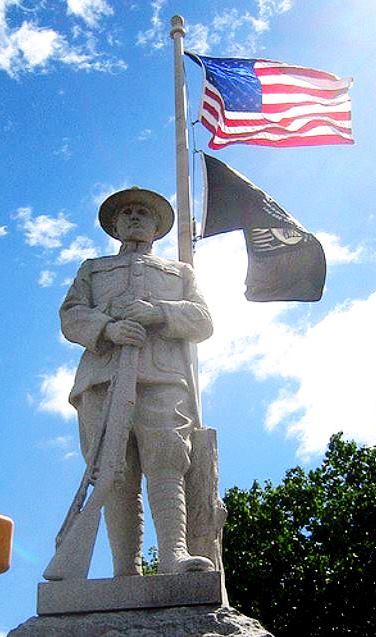
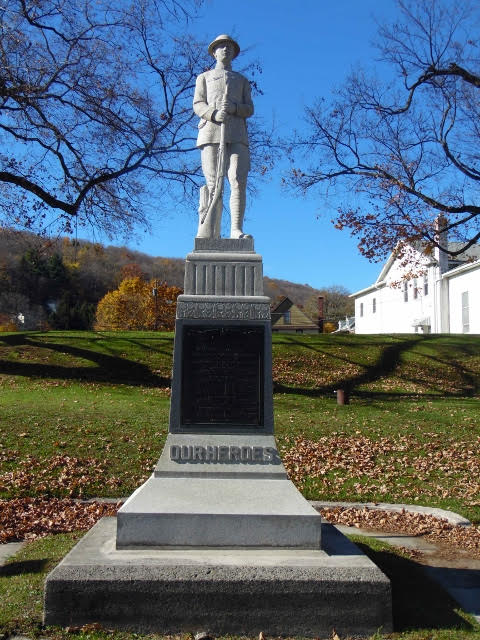
This monument depicts a World War I soldier in uniform standing at parade rest. Both hands grasp the barrel of his rifle, the butt of which rests on the ground.

The monument was sponsored by Amos Wheatley and dedicated to veterans of The Great War. It was purchased from LL Manning & Son, a Plainfield, NJ monument company. 

It was rededicated in 1989 as part of a refurbishing project at Veterans' Memorial Park. The figure was knocked slightly off its original position by a collision with a tractor trailer truck.

Narrative adapted from Smithsonian Institution Research Information System (SIRIS) inventory NJ000048.

Photos courtesy of: Sheena Chi

  • Dedication Date: c.1930
Church Street
07718 Middletown
NJ
USA

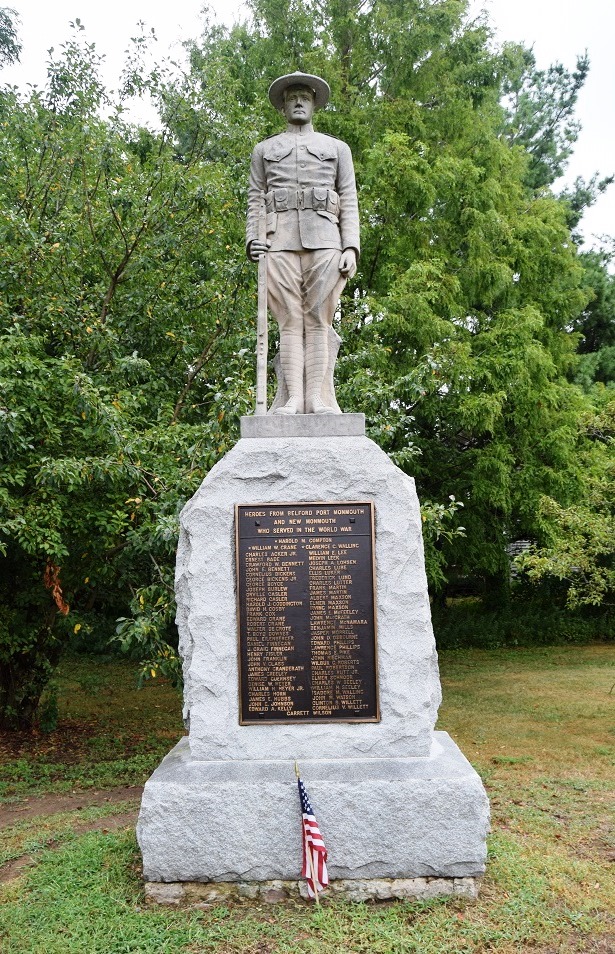
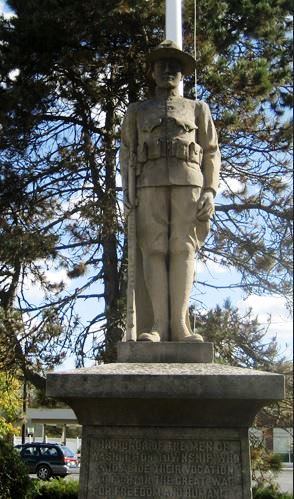
This World War I monument consists of a life-size statue of a doughboy standing at attention in full uniform with the barrel of a rifle in his right hand and the butt of the rifle on the ground.  The figure is set upon a granite plinth, square in cross-section, with an angled top, resting on a rusticated granite slab. 

A bronze plaque mounted on the front of the plinth contains the names of local soldiers from Belford, Port Monmouth & New Monmouth, NJ who served in the war.  The monument sits on a low mound to heighten its prominence.  It was purchased from LL Manning & Son, a Plainfield, NJ monument company. 

Photo courtesy of:  NJ State Historic Preservation Office 

  • Width: 3 ft
  • Depth: 3 ft
  • NJ 000149
  • Eagle Bronze Works
Police Station, Central & Broad
07650 Palisades Park
NJ
USA

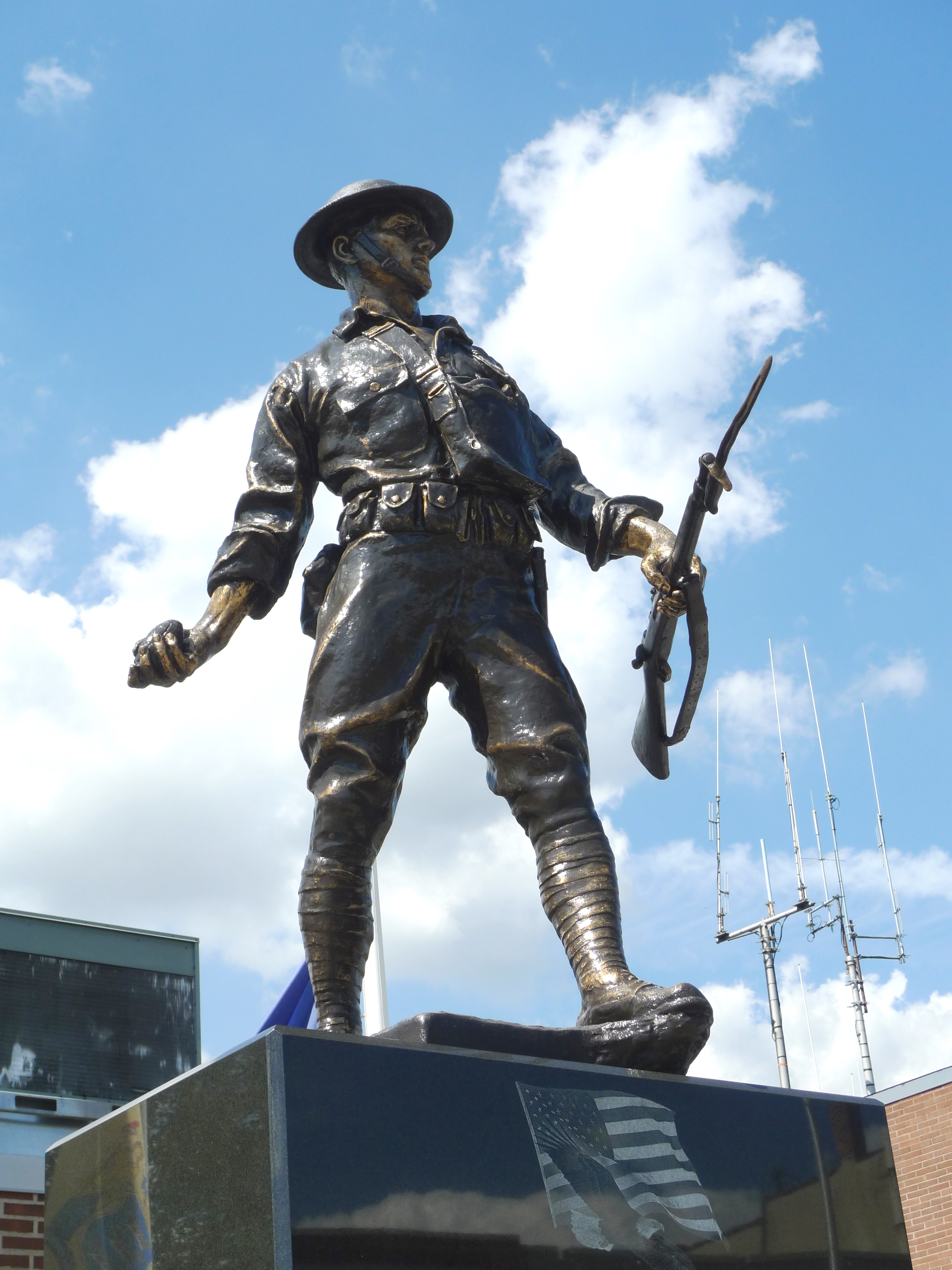
This monument consists of a bronze WWI soldier in uniform holding a rifle in his left hand & a grenade in his right hand.  He wears a helmet, shirt, belt with packs, pants & boots.

It appears this statue was recently moved from its original granite base to the current polished black stone, 3-tiered base. 

The original bronze honor roll plaque has been restored and mounted on a separate, nearby stone pillar. 

Photos courtesy of:  NJ State Historic Preservation Office

  • Dedication Date: 1920
Routes 33 & 526
Robbinsville
NJ
USA

This World War I doughboy statue is fabricated from concrete - one of four in the state of NJ using that material.  The 7' figure stands atop a 10' tall, square pedestal inscribed with the names of 15 men from Washington Township, NJ who served in The Great War. 

The land for the memorial was donated by resident & Civil War veteran, John Yard in 1919.  The monument was purchased from LL Manning & Son, a Plainfield, NJ monument company.  It was unveiled on October 16, 1920 with more than 1,000 people in attendance. 

Narrative adapted from Cathy Zahn, "Nearly a Century Old, but Doughboy's Message of Patriotism is Timeless," Robbinsville Sun website.

Photo Credit:  Sheena Chi

  • Dedication Date: 1926
  • NJ 000307
  • J.W. Fiske Iron Works
  • Gaetano Federici
Wanaque Borough Hall, 579 Ringwood Ave
07465 Wanaque
NJ
USA

This version of a doughboy was sculpted by Italian-American sculptor Gaetano Federici who emigrated to the United States and settled in Paterson.

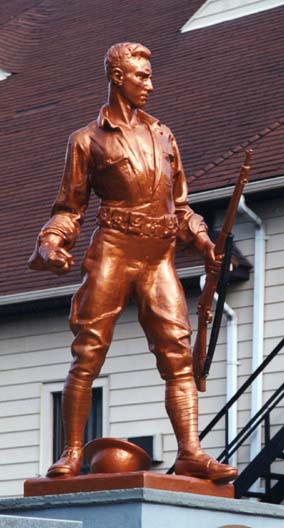
The memorial consists of a statue of a World War I soldier mounted on a rectangular base. The base is flanked by four steles commemorating other wars. The soldier is painted bronze and stands with a rifle, butt end down in his left hand. At his side, he holds a grenade in his clenched right fist. The sculpture is mounted on a square base with a commemorative plaque on the front. It was originally dedicated on Memorial Day 1926 on the grounds of the community house in Midvale.

Narrative adapted from Smithsonian Institution Research Information System (SIRIS) inventory #NJ000307.

Photo courtesy of: Smithsonian Institution Research Information System (SIRIS)

  • Dedication Date: 1925
  • Single figure -- soldier
  • Memorial Hunters Club Submission: Memorial Hunter: Denise Coughlin
Corner of E Main St and Pershing St
21539 Lonaconing
MD
USA

This memorial plaque and statue are dedicated to those from Lonaconing who died in service during World War 1.

  • Dedication Date: November 11, 1923
  • E.M. Viquesney
  • Single figure -- soldier
  • Memorial Hunters Club Submission: Memorial Hunter: Robert Shay, PH3, USNR-R, 1964-70
535 NE 5th St, Yamhill County Courthouse
97128 McMinnville
OR
USA

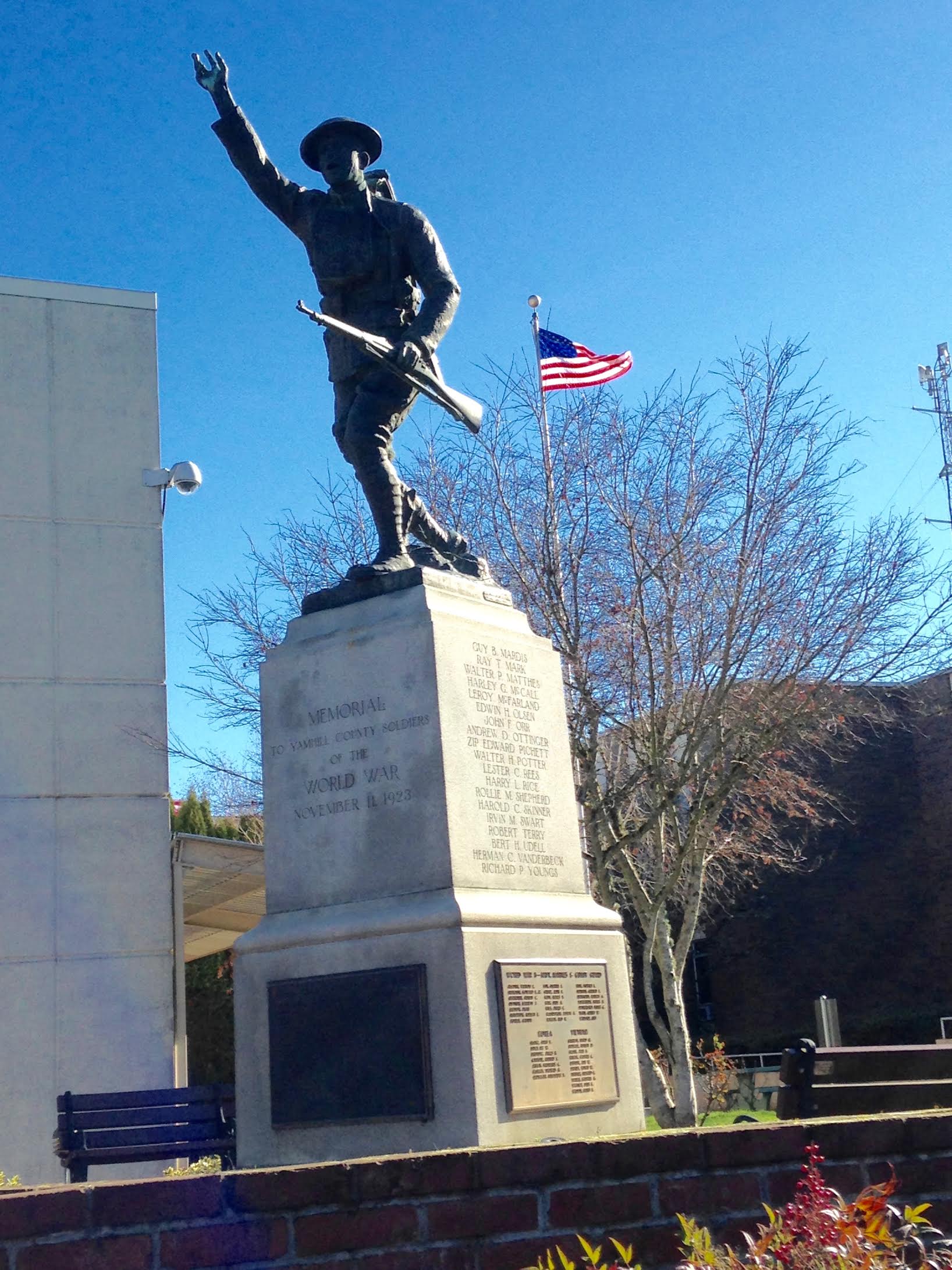
This Doughboy was originally dedicated to the Yamhill County soldiers of the World War in 1923, but its base now also contains plaques memorializing servicemembers in later wars. It is located in a small park adjacent to the Yamhill County Courthouse.