Doughboy Foundation Home
transition01.jpg
transition03.jpg
Belvedere-Stone-View-3.jpg
Belvedere-to-Sculpture.jpg
Belvedere-Stone-View-1.jpg
Rendering-2.jpg
Rendering-3A.jpg
Rendering-4.jpg
Rendering-5.jpg
Terrace-Planters2.jpg
_P3_3855_250118-Edit_250118.jpg
_P3_3934_250118_250118.jpg
_P3_3941_250118_250118.jpg
previous arrow
next arrow

100 Cities - 100 Memorials

Geolocalisation bp

Memorial Inventory Project:  There is one other existing partial database to consult - The WWI Memorial Inventory Project [CLICK HERE]. It contains some memorials our map doesn't. The listings on this database are fair game for the Memorial Hunters Club. So if you want to search for treasure from your desk - find missing listings here and submit them. Remember though, you will need to come up with pictures and the history of the memorial. You might be able to hunt that down through www.Proquest.com and Google.


  • Width: 5'4
  • Depth: 2'
  • Other Measurements: Plaque 1 H:4'6
  • 1923,1973
  • Dedication Date: 1923, 1973
  • Lt. F. J. McConnell Post No.229, V.F.W. (new plaque)
  • Stele, 2 tablets
  • H. Adler
  • Other
Lt. Frank McConnell Park
E 74th St
10021 New York
NY
USA

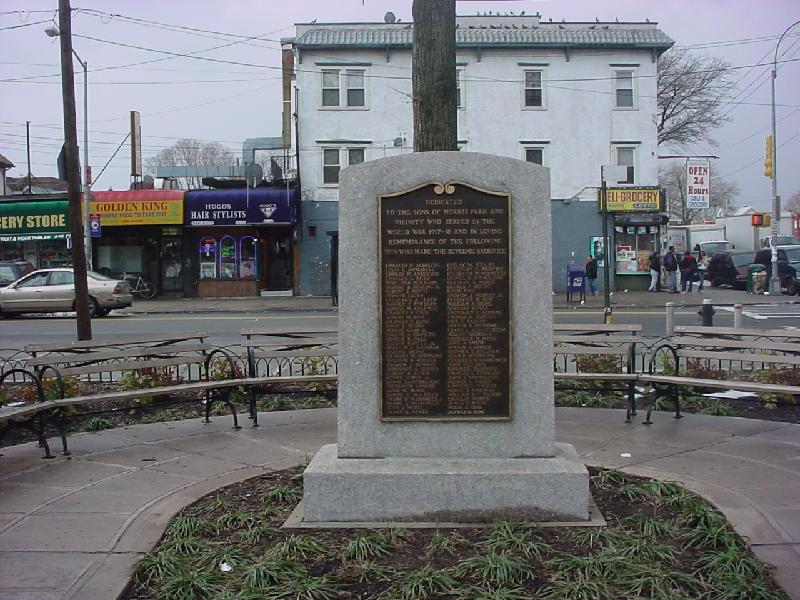
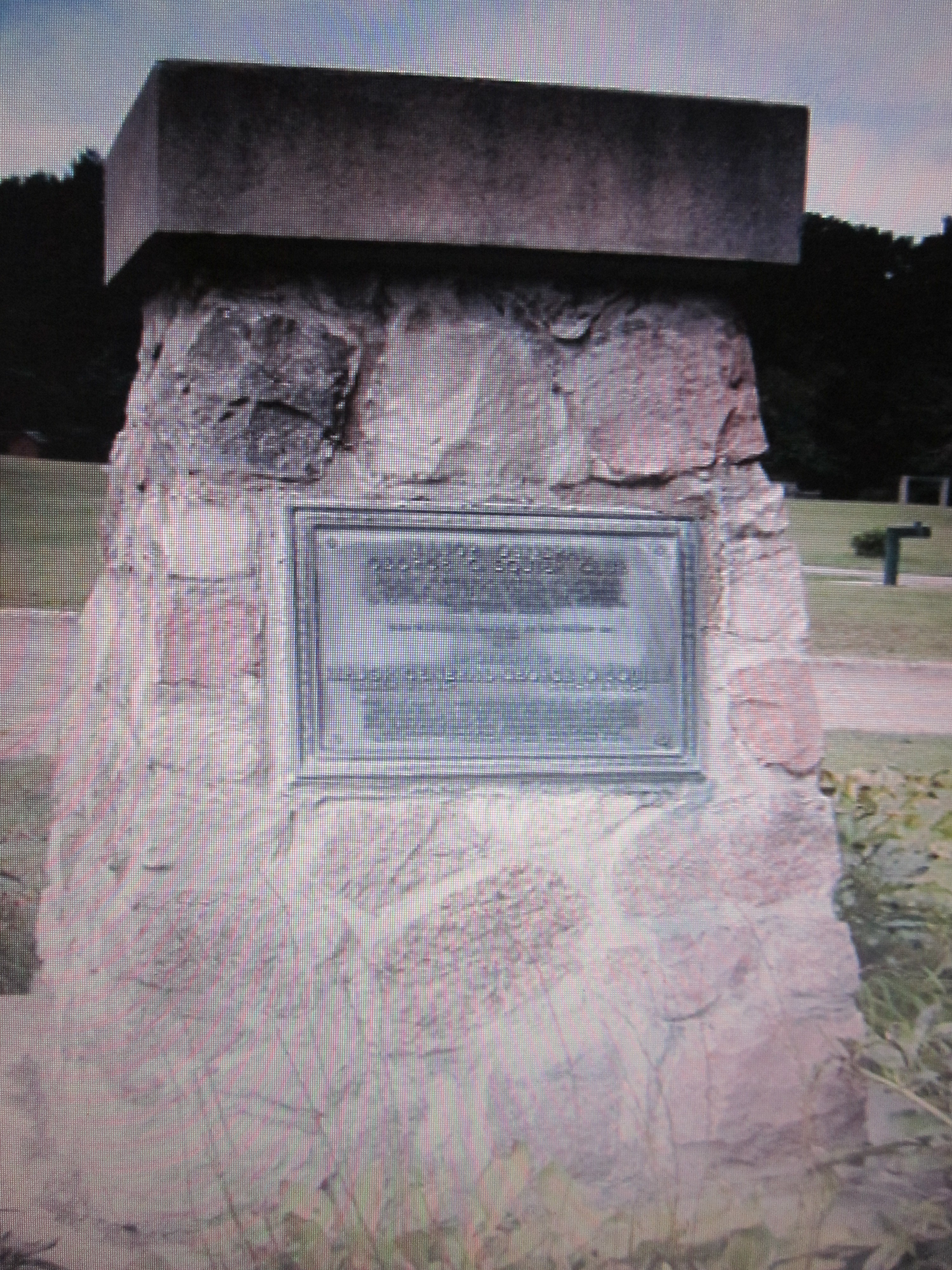
This park honors the memory of Lieutenant Frank McConnell (1896-1918), the first Richmond Hill resident killed in World War I.

Plaque 1: Dedicated to the sons of Morris Park and vicinity who served in the world war 1917-1918 and in loving remembrance of the following men who made the supreme sacrifice (names of 70 war dead).

Plaque 2: With undying love and gratitude to give homage to all veterans of the Spanish-American War, World War I, World War II, Korean Campaign, Vietnam Campaign, Lt. F.J. McConnell, Post 229 Veterans of Foreign Wars of the United States.

  • Memorial Hunters Club Submission: The Wanderer
201 E. Main St.
70760 New Roads
LA
USA

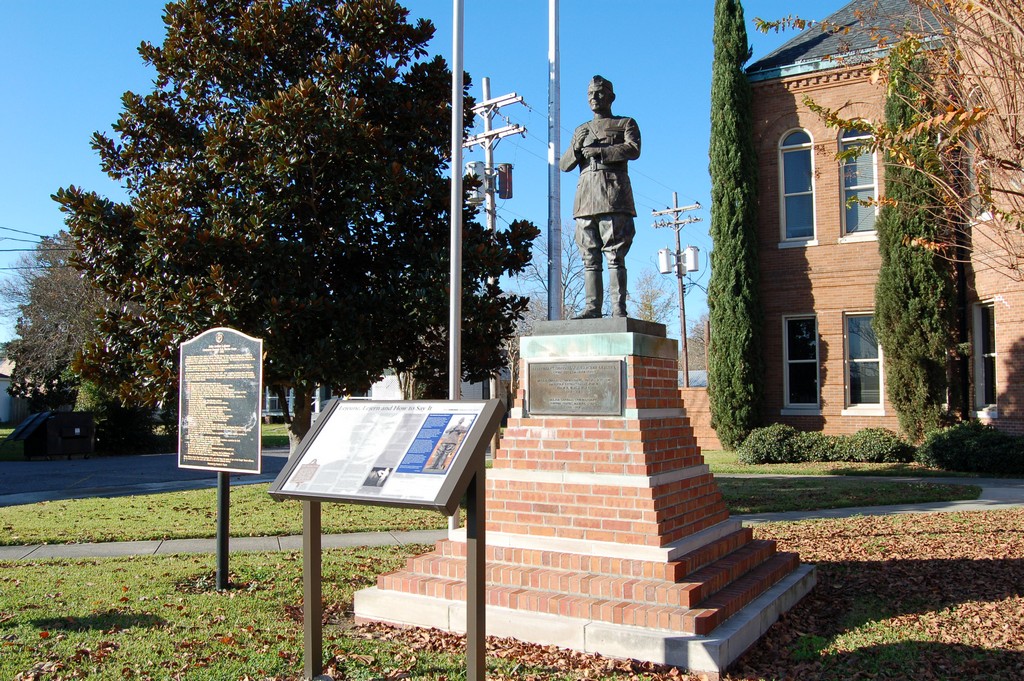
General John Archer Lejeune was born in Point Coupee Parish, LA about 15 miles north of New Roads. This statue and the accompanying memorial is on the ground of the Parish Courthouse.

Marker located at the statue, states

John Archer Lejeune Lieutenant General, U.S. Marine Corps 1867 – 1942
During his more than forty years of service with the Marine Corps, John A. Lejeune participated in campaigns in Panama, Cuba, Mexico, France and Germany. He led the famed 2nd Division, American Expeditionary Force, during World War I with valor and distinction. His leadership of his Marines in the critical action at St. Mihiel earned him the French Legion of Honor.
As Major General Commandant of the Marine Corps, he foresaw a unique mission for the Corps in amphibious expeditionary operations. By doing so, he single-handedly saved the Corps from extinction and preserved it for the service of our nation in war and peace. He was born in Pointe Coupee Parish on 10 January 1867. After attending Louisiana State University, he obtained an appointment to the United States Naval Academy. Upon his graduation from the Academy in 1888, he was assigned sea duty aboard the USS Vandalia and Midshipman Lejeune began his exemplary career as a United States Marine.
• 1890: Commissioned Second Lieutenant while at sea.
• 1898: Captain Lejeune excels at sea during the Spanish-American War.
• 1903: Major Lejeune and his battalion quell uprisings in Panama.
• 1910: Graduates U.S. Army War College following tour in the Philippines.
• 1919: Lieutenant Colonel Lejeune and his 2nd Provisional Brigade quell uprisings in Cuba.
• 1914: Commands the 2nd Advanced Base Regiment in Vera Cruz, Mexico.
• 1917: promoted to Brigadier General, first commander of Marine Barracks, Quantico, Va.
• 1918: World War I, France - Commanded a brigade of the 32nd Division at Brest. - Commanded 4th Marine Brigade following Soissons offensive. - Promoted to Major General. - Commander of 2nd Division, American Expeditionary Force. - Became the first Marine officer to command a division in combat. - Assaulted Marbeche sector during drive on St. Mihiel. - Stormed Blanc Mont Ridge during Champagne offensive. - Led 2nd Division triumphantly into Germany following its surrender.
• 1919: Commands Marine Barracks, Quantico, VA. for second time.
• 1920: Named Major General Commandant of the Marine Corps. - Developed Fleet Marine Force concept. - Established formal Marine Officers schools at Quantico, Va. - Founded Marine Corps Association, Marine Corps Institute and Marine Corps League. - Provided sound leadership and much needed vision for the Marine Corps at a time when efforts were underway to dissolve the service. - Carved a unique path for the Marine Corps in amphibious operations thereby ensuring its long-term future.
• 1929: Major General Lejeune retired from active duty.
• 1929: Became Superintendent for the Virginia Military Institute, a position he held until poor health forced his resignation in 1937.
• 1942: Promoted to Lieutenant General while on retired list. - Became first Marine to hold that rank. - The assault against the Japanese on Guadalcanal proved his amphibious concepts and substantiated his service. - November 20, at the age of 75, John A. Lejeune died in Baltimore, Md. - Buried with full military honors at Arlington National Cemetery.
Today, Marine Corps Base Camp Lejeune, N.C. not only bears the name of one of the Corps’ finest officers, but the name of one of the most able officers of American military history. Presented by Patrick F. Taylor

The sculptor of this monument, Patrick Miller, depicted General John Archer Lejeune from a photograph. Archer was apparently putting on his riding gloves before a parade in New York City after returning from France following World War I, around 1919. Without using planned designs, the sculptor jumped straight into the full-size sculpture, casting it in clay. Six castings of the sculpture can be found throughout the U.S. One of the castings stands outside the birthplace of Lejeune in New Road, Louisiana.

  • Memorial Hunters Club Submission: thewanderer
28308 Pope Field
NC
USA

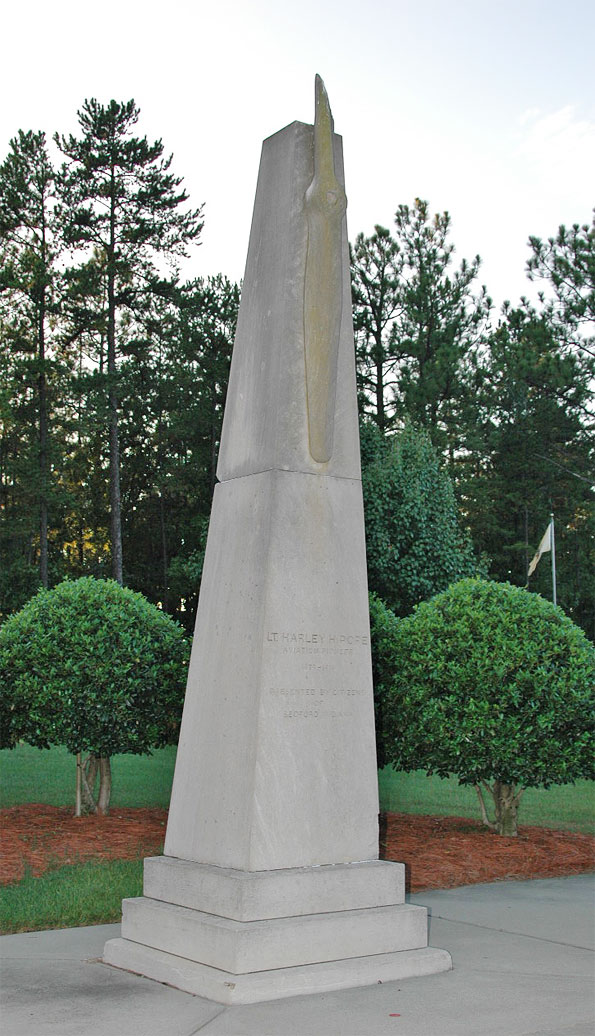
Pope AFB, NC was named for 1st Lt. Harley H. Pope, killed with his crewman, Sgt. W. W. Fleming, January 7, 1917 when his JN-4 crashed into the Cape Fear River near Fayetteville. Poor visibility and fuel exhaustion led to the fatal crash. Lt. Pope was from Bedford, Indiana.

  • Memorial Hunters Club Submission: The Wanderer
2500 West End Ave.
37203 Nashville
TN
USA

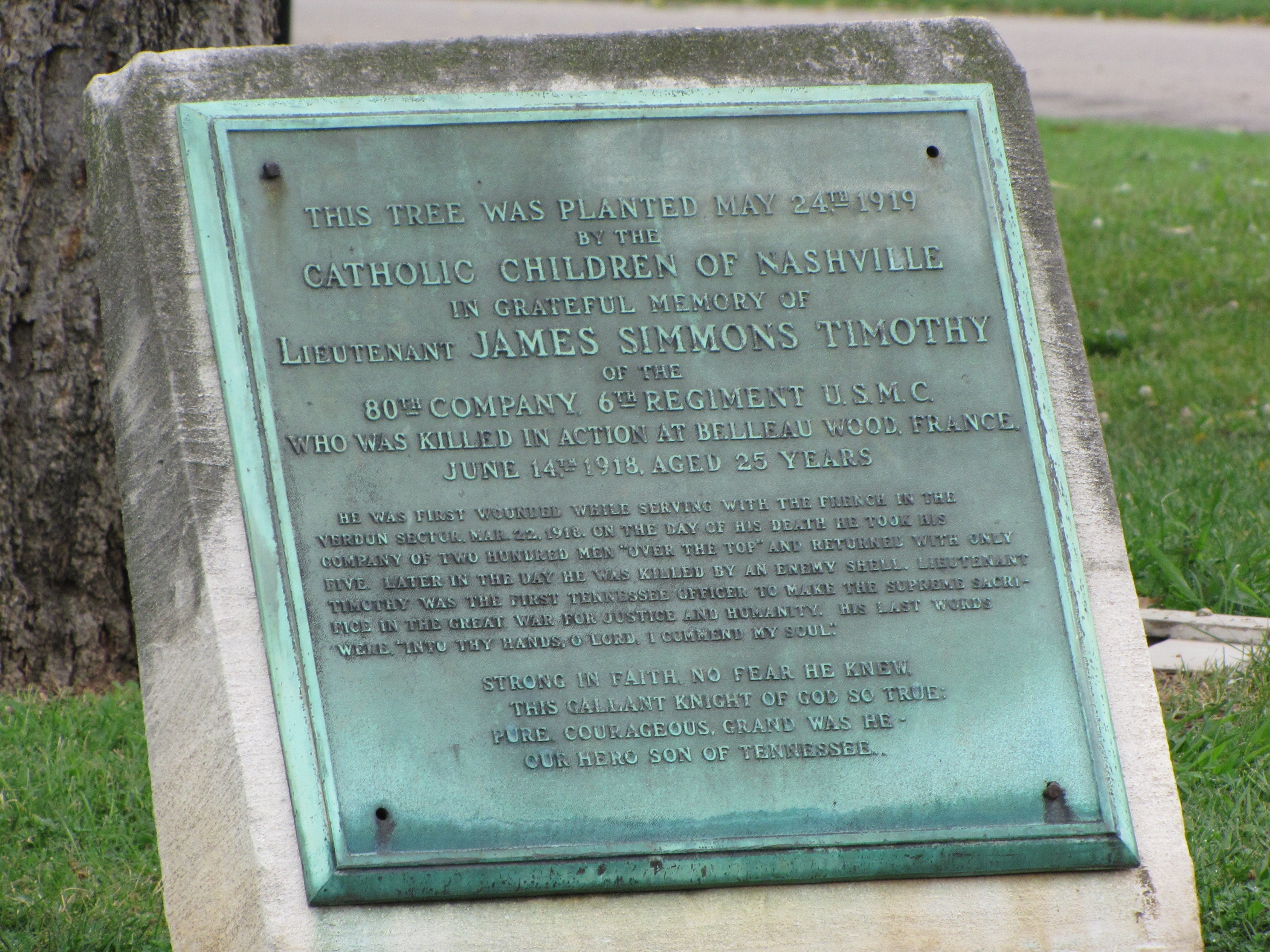
The inscription on this marker reads:

This tree was planted May 24th 1919 by the Catholic Children of Nashville in grateful memory of Lieutenant James Simmons Timothy of the 80th Company, 6th Regiment U.S.M.C. who was killed in action at Belleau Wood, France, June 14th 1918, aged 25 years.

He was first wounded while serving with the French in the Verdun Sector, Mar. 22, 1918. On the day of his death he took his company of two hundred men "over the top" and returned with only five. Later in the day he was killed by an enemy shell. Lieutenant Timothy was the first Tennessee officer to make the supreme sacrifice in the Great War for justice and humanity. His last words were, "Into thy hands, O Lord, I commend my soul."

Strong in faith, no fear he knew,
this gallant Knight of God so true:
Pure, courageous, grand was he -
our hero son of Tennessee.

Intersection of Lauderdale St. & Alabama Ave.
36701 Selma
AL
USA

"Born in Selma, Alabama Oct. 16, 1887. Among the first to volunteer, and the first American Naval Officer killed in action in our war with Germany. Lost his life by a torpedo from a German submarine while aboard the U.S. ship ALCEDO off the coast of France Nov. 5, 1917. He gave his life that democracy and liberty might live." -Memorial text

Erected by the Citizens of Selma.

203 Wahconah Street
01201 Pittsfield
MA
USA

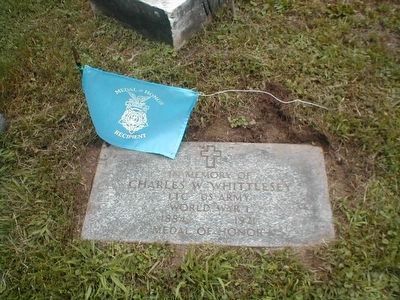
This marker is in memory of Charles White Whittlesey, a U.S. Army Medal of Honor recipient who led the "Lost Battalion" in the Meuse-Argonne Offensive during World War I.  As a major in the 77th Division, 308th Battalion, Whittlesey and his men were surrounded by the Germans from October 2 until October 7, 1918 in the Argonne Forest.

Whittlesey's Medal of Honor citation reads:

"Although cut off for five days from the remainder of his division, Major Whittlesey maintained his position, which he had reached under orders received for an advance, and held his command, consisting originally of 46 officers and men of the 308th Infantry and of Company K of the 307th Infantry, together in the face of superior numbers of the enemy during the five days. Major Whittlesey and his command were thus cut off, and no rations or other supplies reached him, in spite of determined efforts which were made by his division. On the 4th day Major Whittlesey received from the enemy a written proposition to surrender, which he treated with contempt, although he was at the time out of rations and had suffered a loss of about 50 percent in killed and wounded of his command and was surrounded by the enemy."


At the end of the ordeal, out of 550 men, only 194 were left alive and unwounded. In recognition of his valour, Whittlesey was made a Lt. Colonel and, along with his captains McMurtry and Holderman, awarded the Congressional Medal of Honor.

After the war, Whittlesey returned to law practice (he was a graduate of Harvard Law School). In November 1921, he booked passage on the S.S. Taloa, a steamer bound for Havana, Cuba. On Nov. 26, he dined with the captain and left the smoking room at 11:15 pm, stating he was retiring for the evening. It was noted by the captain that he was in good spirits. Whittlesey was never seen again. He is presumed to have jumped overboard; his body was never recovered. He left no explanation, but had written his will in New York before embarking on the journey and also left several letters in his cabin addressed to family and friends.

This memorial is an 'In Memory Only' marker, as Whittlesey's body was never recovered.  In addition, Whittlesey is also named on the family monument in the Pittsfield Cemetery.

For more on The Lost Battalion, see: https://www.worldwar1centennial.org/index.php/233-lost-battalion.html

  • 1920
  • Dedication Date: 1920
  • George Brewster
  • Memorial Hunters Club Submission: thewanderer
18651 Plymouth
PA
USA

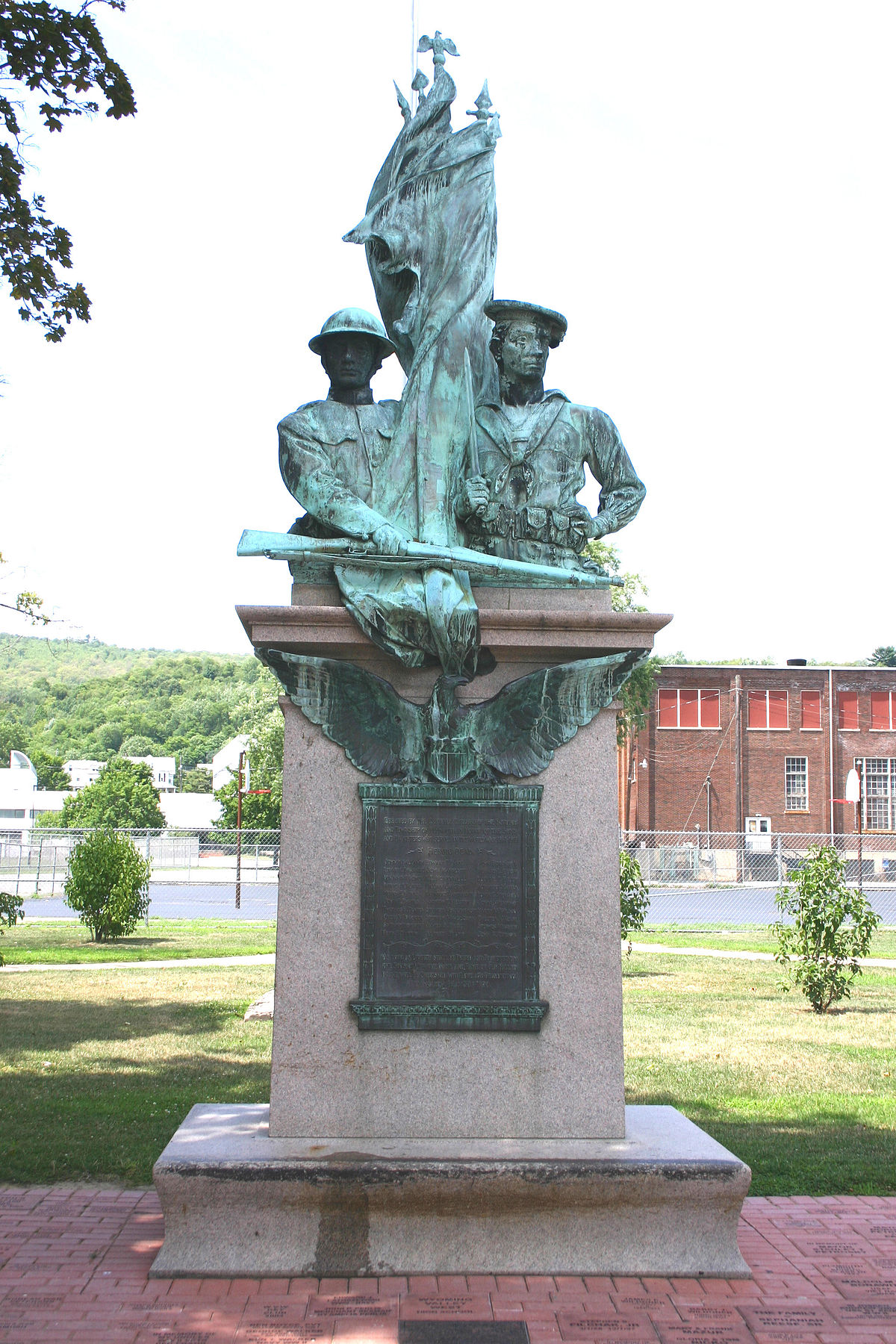
The Soldiers and Sailors Monument in Plymouth, Pennsylvania, honors those from the area who died during the fighting of World War I.

The monument is the work of the sculptor George Brewster. It was dedicated on November 11, 1920.

1 Columbus Drive
11563 Lynbrook
NY
USA

100 Cities / 100 Memorials

100c 100m wwi centennial plaque Ross Plaza, site of the Lynbrook Doughboy Monument, was acquired by the Village in 1938 and has evolved over the years to honor the fallen from each of the major wars.  The Lynbrook Doughboy (also called the Soldiers and Sailors monument in the 1920s) is a statue of a World War I soldier and the centerpiece of the village’s war monuments. On the four-sided pedestal below the statue are the names of 15 local soldiers killed in action in World War I. The inscription on the back of the statue reads, “Erected by the citizens of Lynbrook and vicinity, dedicated on 12th day of October A.D. 1920.”
Pine Grove Cemetery, 145 Boston St.
01904 Lynn
MA
USA

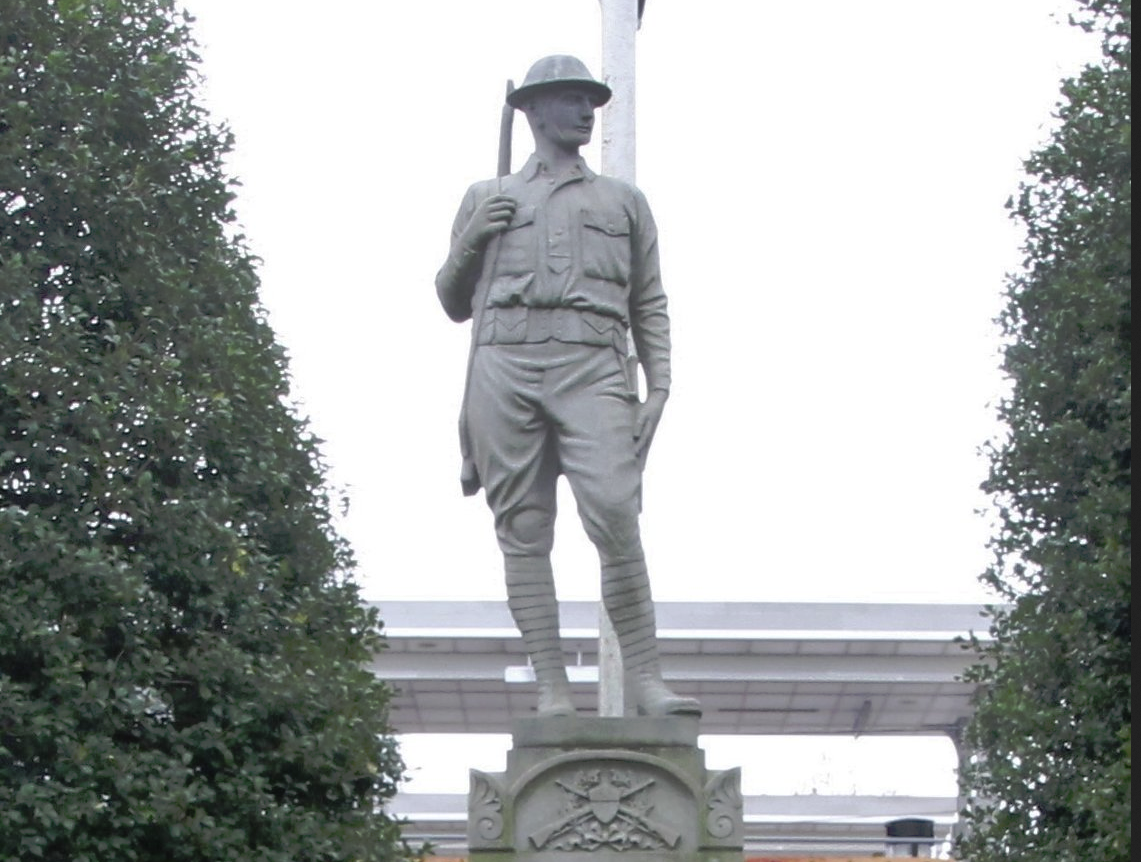
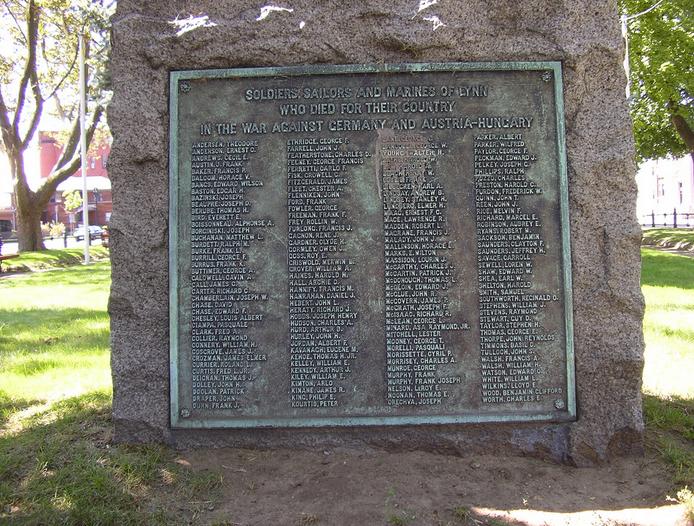
Joseph P. Pollia sculpted this bronze statue of a WWI soldier holding his rifle over his left shoulder, and a helmet in his right hand. It was dedicated in 1937 as a tribute to the men from Lynn who fought in WWI.

Inscription: To the memory of all who served our country in the World War Erected by the City of Lynn 1937.

  • Materials (select all that apply): Glass
  • Bench
Lynn
MA
USA
Church and N. Railroad Streets
53105 Burlington
WI
USA

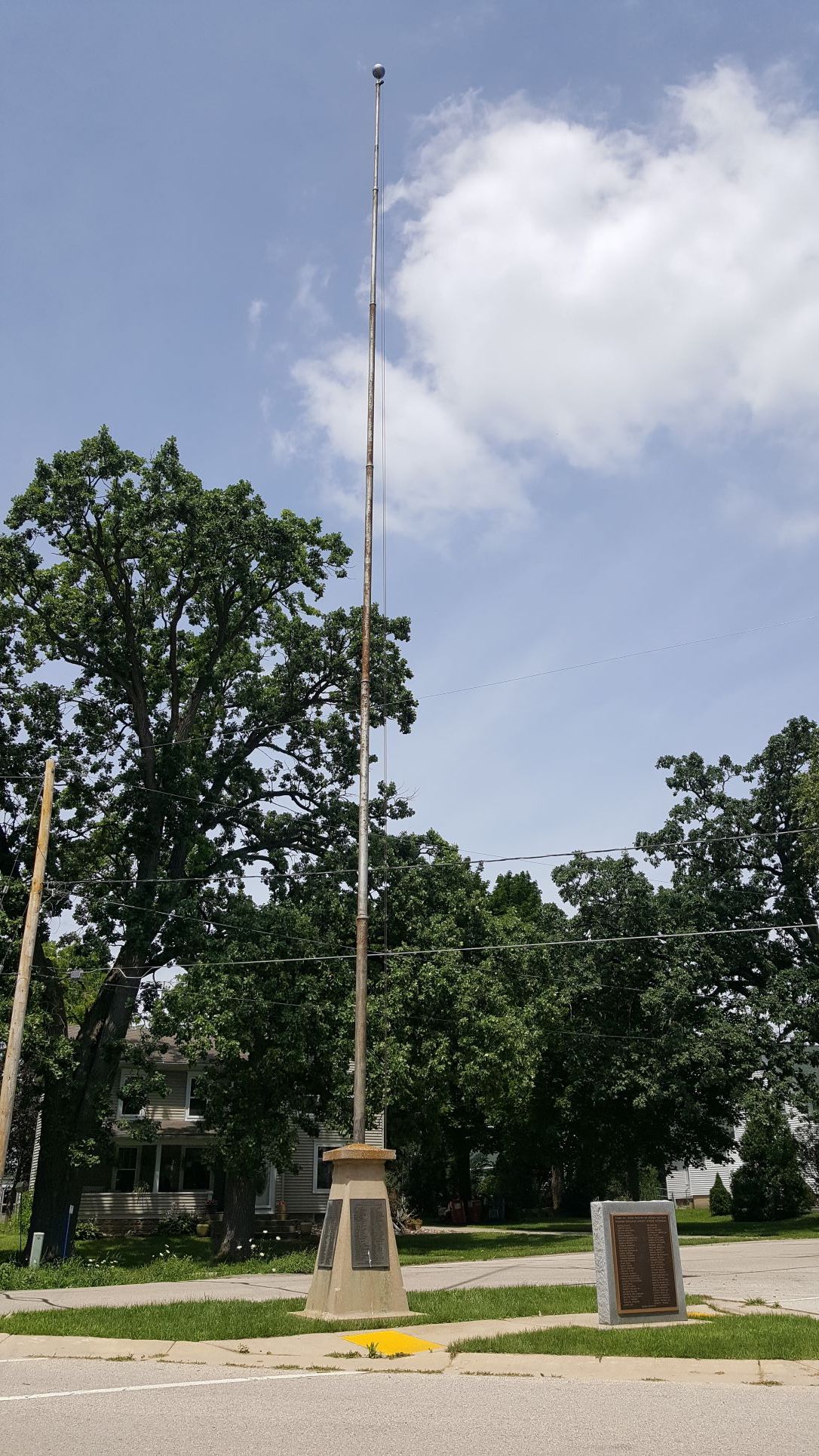
This monument, erected after World War II, sits atop a four-sided conical pyramid base. It is dedicated to Lyons' veterans and there are brass plaques on each side with rosters of the Lyons veterans who fought in: World War I; World War II; the Civil War; and the Revolutionary, Spanish-American, Korean, and Vietnam Wars, the invasions of Panama and Grenada, and Desert Storm.

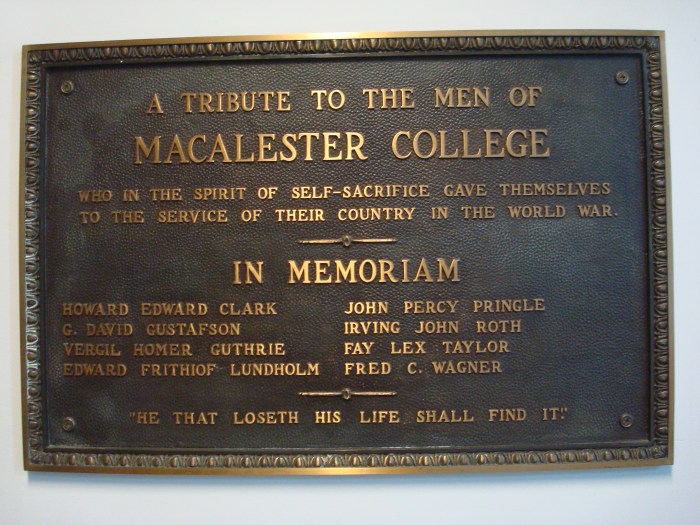
1600 Grand Avenue, Saint Paul, MN 55105
55105 Saint Paul
MN
USA
198 Bank Street.
23510 Norfolk
VA
USA
The MacArthur Memorial is a museum and research center dedicated to preserving and presenting the story of General Douglas MacArthur and the millions of men  and women who served with him in World War I, World War II, the Occupation of Japan, and the Korean War. Admission is FREE and the museum is open to the public Tuesday-Sunday ((757) 441-2965).
30633 Danielsville
GA
USA

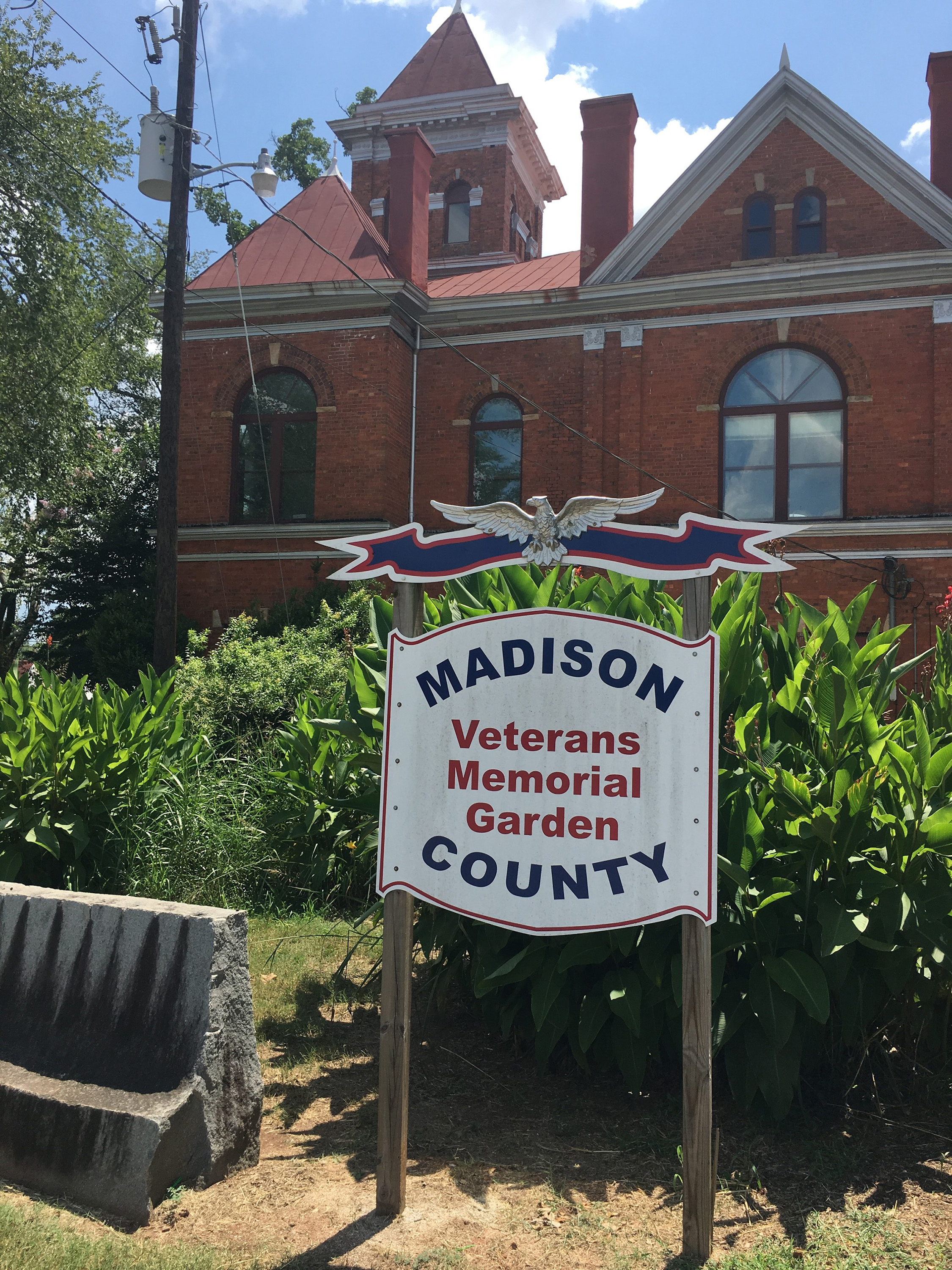
Garden area on courthouse grounds with inscribed bricks for all American wars. 

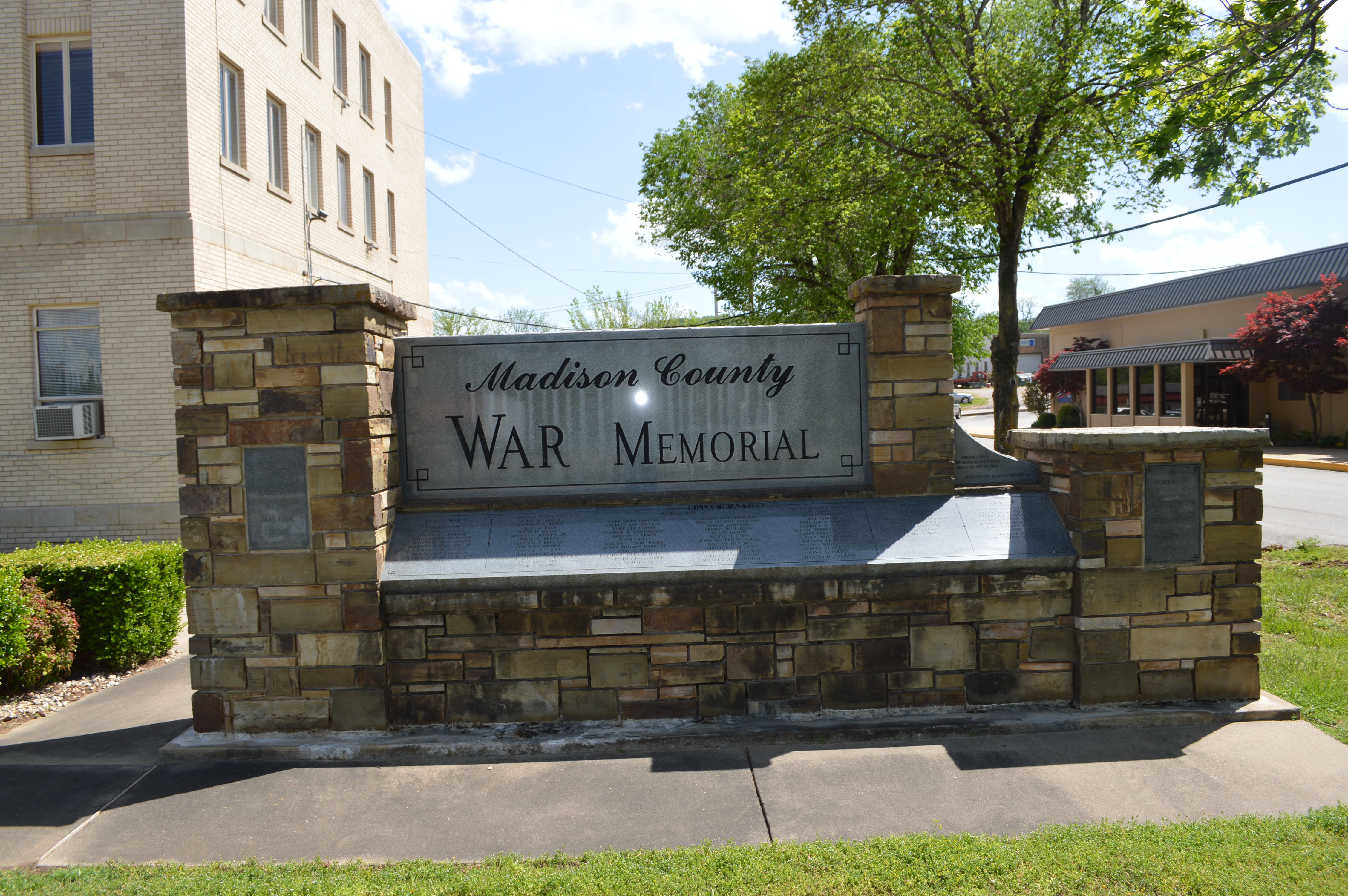
201 W Main St, Huntsville, AR 72740
72740 Huntsville
AR
USA
No additional information at this time.
200 Monroe St SW
35801 Huntsville
AL
USA
46016 Anderson
IN
USA
509 E 9th St.
72202 Little Rock
AR
USA

This memorial was part of the Main Street Bridge over the Arkansas River when it was built in 1924. The memorial was moved when the bridge was demolished and replaced.

  • Dedication Date: 1937
  • Single figure -- soldier
4725 South Mill Road
48428 Dryden
MI
USA

Major General George O. Squier Monument

Major General George Owen Squier (1865-1934) was a noted soldier and scientist. Graduating from West Point in 1887, he subsequently led the United States Signal Corps. He was also Chief of the Army Air Service during World War I and military attache in London during the postwar period. Working in the capacity of science, he discovered the multiplex telegraph system, which made him world renowned. The general held membership in the National Academy of Sciences, London Physical Society and the Royal Institute of Great Britain. Although he was denied royalties because of his army affiliations, Squier continued to contribute to the world of invention and discovery. He perfected much of his work at his country estate, which he opened as this free public park for the people of the community.

Major General George Owen Squier (1865-1934) was a noted soldier and scientist. Graduating from West Point in 1887, he subsequently led the United States Signal Corps. He was also Chief of the Army Air Service during World War I and military attache in London during the postwar period. Working in the capacity of science, he discovered the multiplex telegraph system, which made him world renowned. The general held membership in the National Academy of Sciences, London Physical Society and the Royal Institute of Great Britain. Although he was denied royalties because of his army affiliations, Squier continued to contribute to the world of invention and discovery. He perfected much of his work at his country estate, which he opened as this free public park for the people of the community.


200 Lakeshore Blvd
34741 Kissimmee
FL
USA

This small monument at the American Legion Makinson-Carson Post 10 in Kissimmee honors the two local men after whom the Post is named: Billie Makinson (killed at St. Mihiel) and Nat Carson (killed at The Argonne).  Both died in 1918.