






























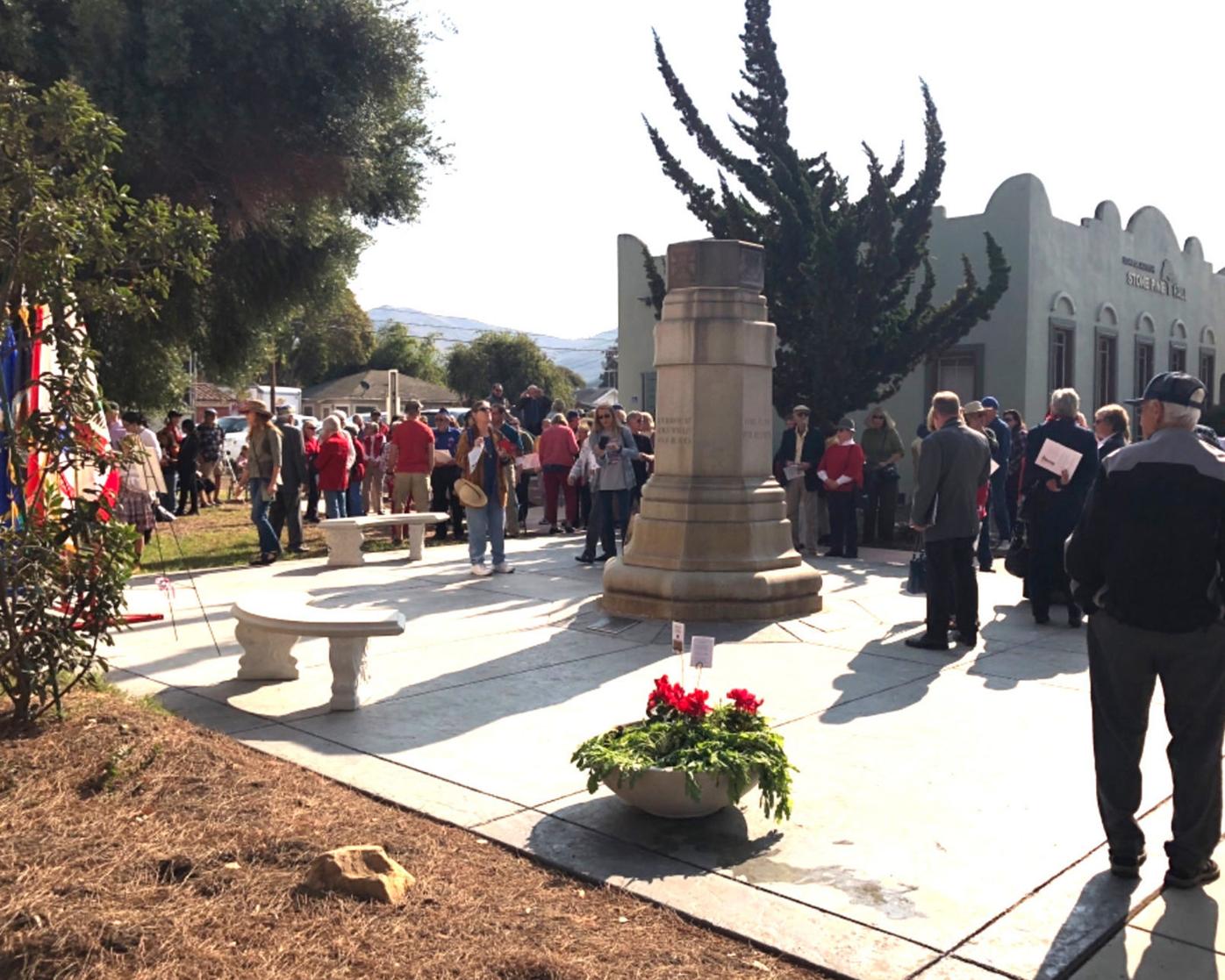
The Lompoc World War I Memorial, located at the Lompoc Museum, was erected in 1925 by Civic Club and dedicated to the WWI soldiers from Lompoc. To commemorate the 100-year anniversary of World War I, the Memorial was renovated, including adding commemorative plaques and benches, installing atop the capstone a life-sized bronze eagle by sculptor Mike Curtis, and adding to the base a bas relief bronze sculpture of a doughboy soldier created by local artist Ed Brooks. It was rededicated on November 11, 2018.
100 Cities - 100 Memorials
Memorial Inventory Project: There is one other existing partial database to consult - The WWI Memorial Inventory Project [CLICK HERE]. It contains some memorials our map doesn't. The listings on this database are fair game for the Memorial Hunters Club. So if you want to search for treasure from your desk - find missing listings here and submit them. Remember though, you will need to come up with pictures and the history of the memorial. You might be able to hunt that down through www.Proquest.com and Google.
- Details
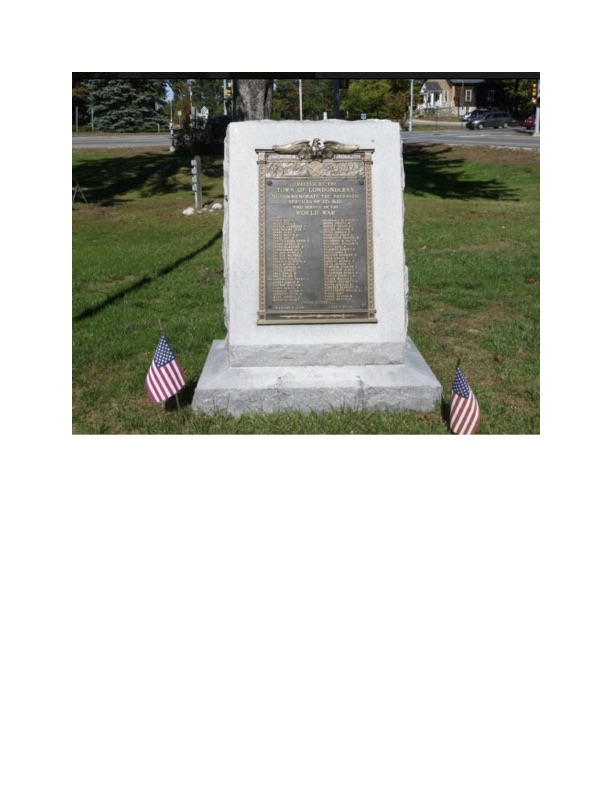
On a vertical granite slab is mounted a bronze plaque with a bas-relief of a spread-winged eagle. Below that is a WWI scene with an artillery squad with two cannon, manned by soldiers, and infantrymen with guns held at ready. Two columns of names form an honor roll of Londonderry men who served in WWI.
- Details
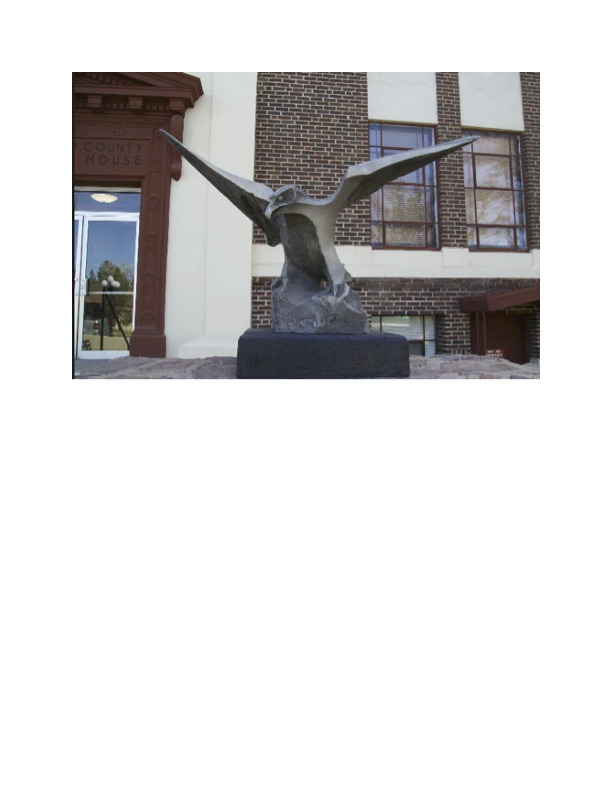
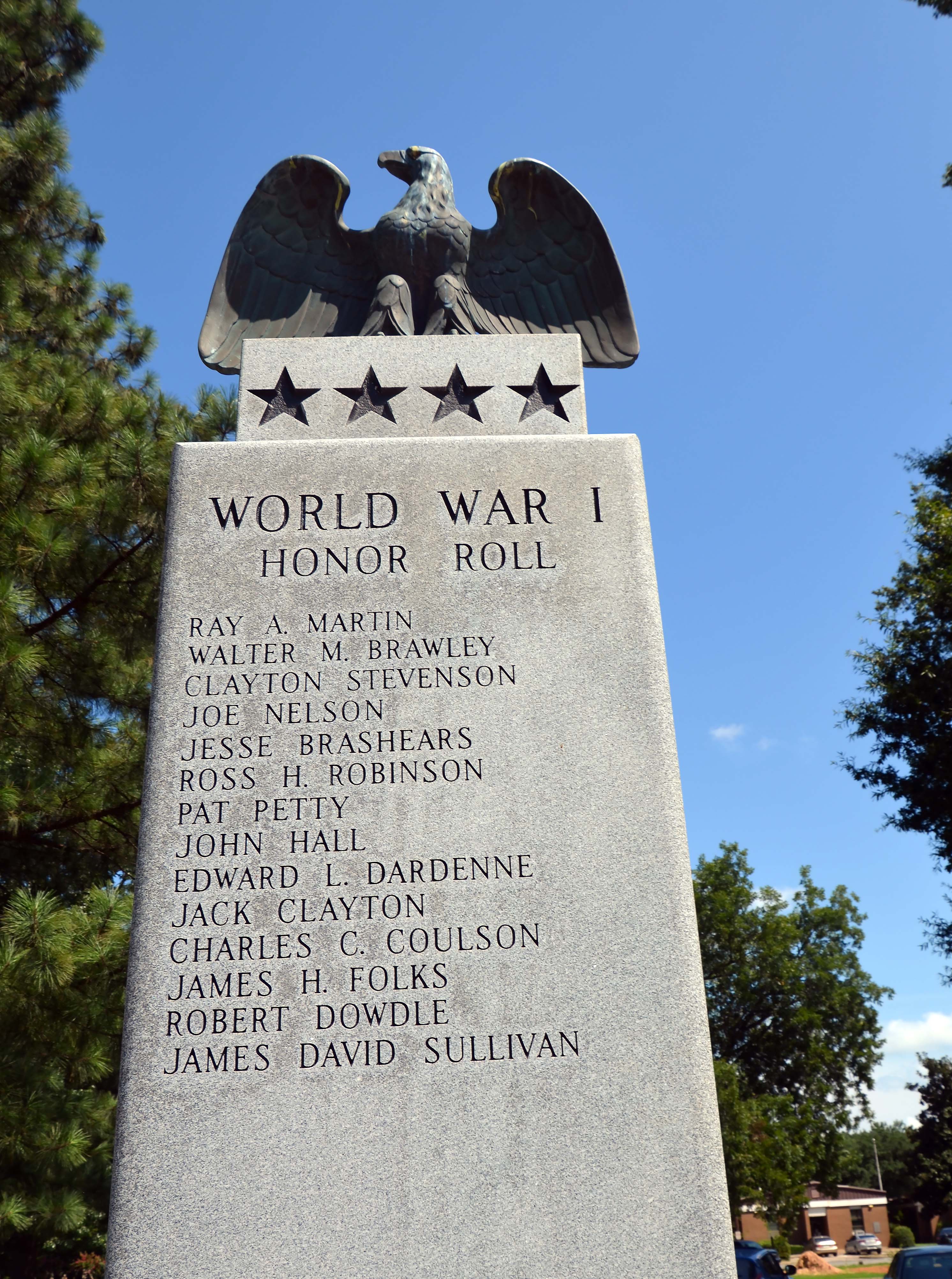
This is a stylized metal eagle with outstretched wings, perched atop a sloping base of rock and concrete. It was placed here during the 1980s to honor the Hidalgo County men and women who served in WWI and WWII.
- Details
- Materials (select all that apply): Metal (any)
- Dedication Date: 04/29/1930
- Los Angeles High School students
- school
- $2,500
- Los Angeles High Memorial Park; Los Angeles Library Memorial Branch
- Los Angeles High School alumni who died in service
- Judson Art Studio
- Stained glass
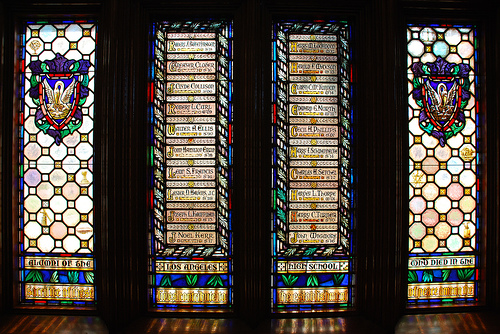
| The symbols and insignia are shown as decoration on the shields and in the top row of windows represent the various armed forces -- the Infantry, Field Artillery, Navy, Marine Corps, Engineers and Aviation. In the second row of windows the tower of the old L.A. High School, the seal of the city of L.A., the coat of arms of the United States, the California state flag, the coat of arms of the L.A. High School and the tower of the present L.A. High school building are represented. The lower row of light (two center panels) have the memorial tablets giving the names of the alumni who died in the service. The shields on either side carry the emblem of "Sacrifice," pictured by the legend of the Pelican in Piety, and on either end is an heraldic arrangement of the poem "In Flanders Field." Across the base of the window is the inscrIption "Dedicated to the Alumni of the Los Angeles High School who died in the World War. 1914—1918. May the sacrifice of these lives contribute to the establishment of peace among nations.” In consideration of the educational purpose of this library, there has been scattered throughout this window on the geometrIcal field pictorial illustrations of the arts and sciences. source: History of the Memorial Branch of the Los Angeles Public Library (undated, unattributed typescript, c. 1945): http://dbase1.lapl.org/webpics/calindex/documents/12/521419.pdf |
- Details
- Memorial Hunters Club Submission: Courtland Jindra
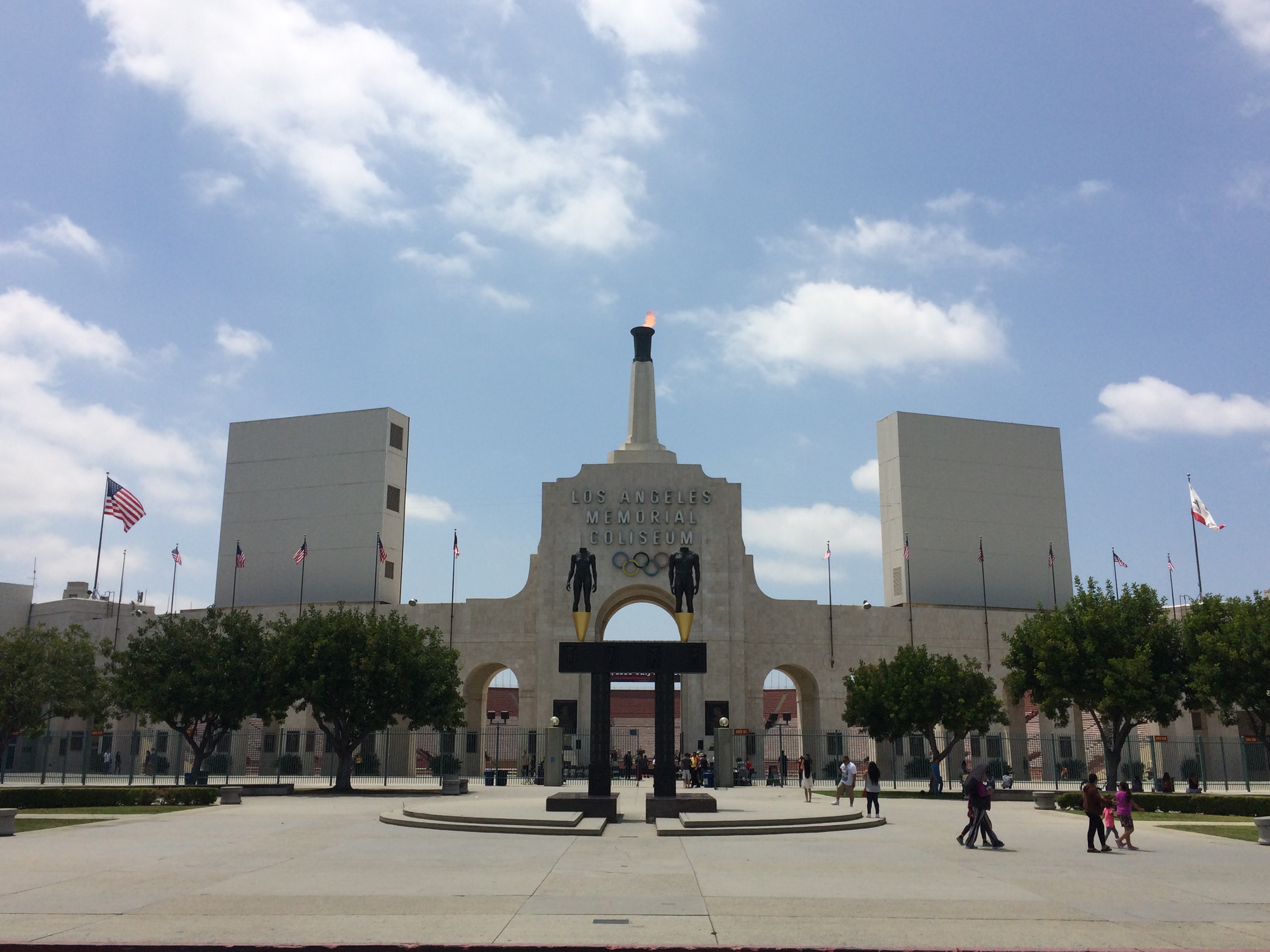
Los Angeles Memorial Coliseum
100 Cities / 100 Memorials
 "The Greatest Stadium in the World"
Over twenty three thousand Angelenos had served in the armed forces, more than 450 of whom died in service, and within weeks after the Armistice, discussions on how best to honor the troops had become heated. Exposition Park was chosen as a prime location for what would be the city's main war memorial. Los Angeles was already trying to get a large athletic complex built, so the idea was advanced to make a multi-purpose stadium that could be hold sporting, civic, and memorial events. The stadium was dedicated as a perpetual memorial to LA County Veterans of the World War. Memorial Day and Armistice Day programs would be held in the stadium for decades. Secretary of Commerce (and future President) Herbert Hoover spoke at one and many famous dignitaries would through the years. In 1968, top Great War Air Ace Eddie Rickenbacker headlined a Veterans Day ceremony at Expo Park. Though no text exists of his remarks, this was apparently when the Coliseum was rededicated, not just to LA County's war veterans, but to "all those who served in World War I." The Los Angeles Memorial Coliseum seeks to remember its heritage as not only a stadium of considerable athletic achievement, but as a venue that pays tribute to those who answered the nation's call nearly one hundred years ago
- Details
- Materials (select all that apply): Metal (any)
- Dedication Date: 04/29/1930
- public
- $47,621
- Los Angeles Historic-Cultural Monument #81
- Los Angeles High Memorial Park; Los Angeles Library Memorial Branch Alumni Memorial Window
- Los Angeles High School alumni who died in service
- John C. Austin and Frederick M. Ashley, architects
- Library
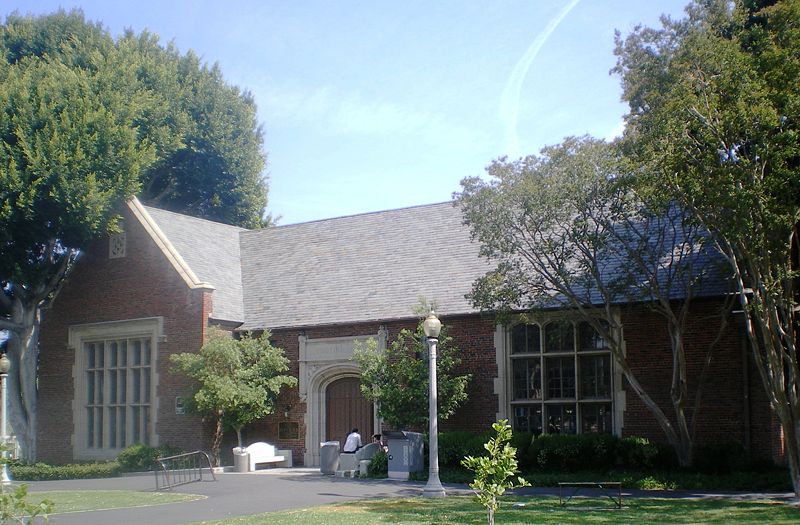
The history of the Memorial Branch Library began in 1923, seven years before the building opened. That year, the land on which the library now stands was purchased by the student body and alumni association of Los Angeles High School, and deeded to the City of Los Angeles in commemoration of twenty alumni who died in World War I. Six years later, the city gave the Los Angeles Public Library the right to establish a branch on the site.
The library formally opened on April 29, 1930. The architectural firm Austin and Ashley designed the building in a picturesque English Tudor style to harmonize with the high school building across Olympic Boulevard, which they also designed. The students of Los Angeles High School commissioned a stained glass window with the names of the twenty alumni and an inscription stating hope for “peace among nations.” The window, designed by the renowned Judson Art Studio, was inspired by those in the Parliament Building of London and was installed in the adult reading room.
On the memorial stained glass windows:
"The symbols and insignia are shown as decoration on the shields and in the top row of windows represent the various armed forces -- the Infantry, Field Artillery, Navy, Marine Corps, Engineers and Aviation.
In the second row of windows the tower of the old L.A. High School, the seal of the city of L.A., the coat of arms of the United States, the California state flag, the coat of arms of the L.A. High School, and the tower of the present L.A. High school building are represented.
The lower row of light (two center panels) have the memorial tablets giving the names of the alumni who died in the service. The shields on either side carry the emblem of ""Sacrifice,"" pictured by the legend of the Pelican in Piety, and on either end is an heraldic arrangement of the poem ""In Flanders Field.""
Across the base of the window is the inscrIption ""Dedicated to the Alumni of the Los Angeles High School who died in the World War. 1914—1918. May the sacrifice of these lives contribute to the establishment of peace among nations.”
- Details
- Works Progress Administration
- NYC Parks Department
- Community center
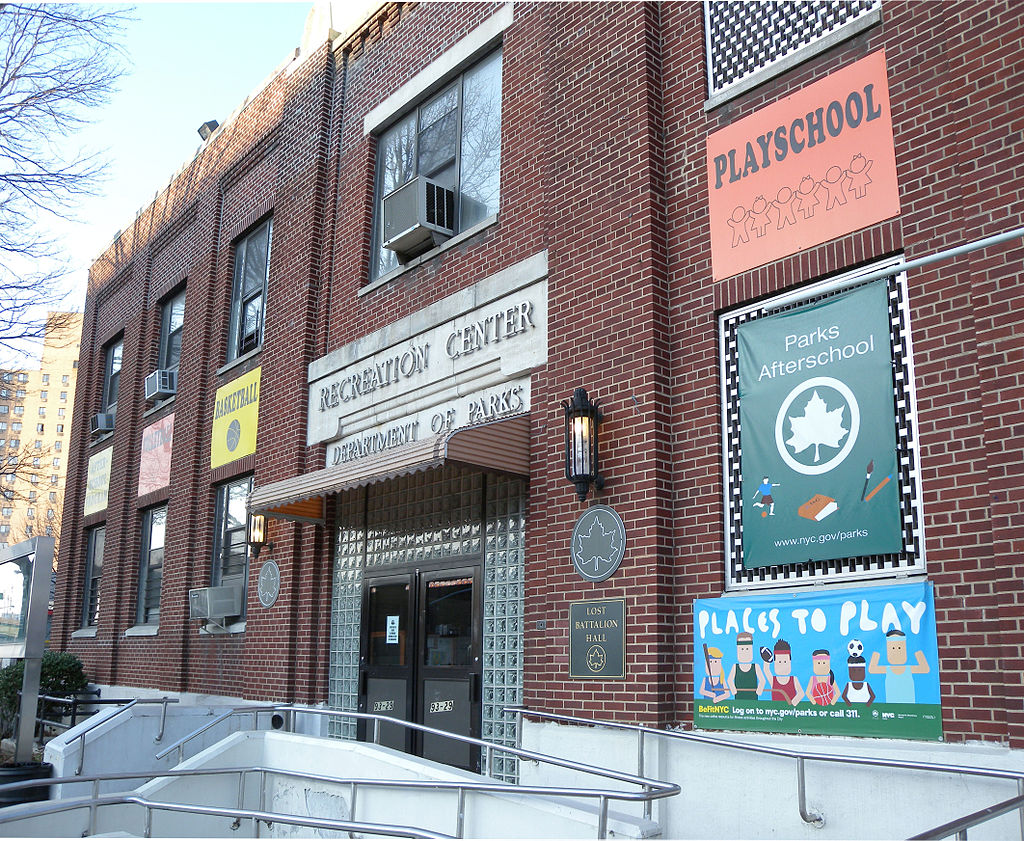
In memory of the Lost Battalion. Built A.D. 1938 by Work Projects Administration. George U. Harvey Borough President of Queens.
- Details
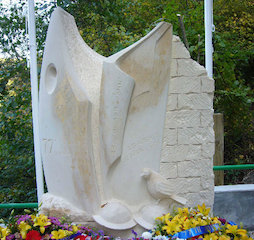
The Lost Battalion Memorial is on the south side of the road D66/Charlevaux. It is in front of a green fence and is flanked by two flag poles. The memorial commemorates the combat of the 307th and the 308th U.S. Infantry Regiments of the 77th Division from the 2-7 October 1918.
The memorial is a stone sculpture containing helmets as well as a dove. It rests in a gravel base and is flanked by flagpoles. It was unveiled on 7 October 2008.
For more on The Lost Battalion: https://www.worldwar1centennial.org/index.php/finding-the-lost-battalion-home.html
- Details
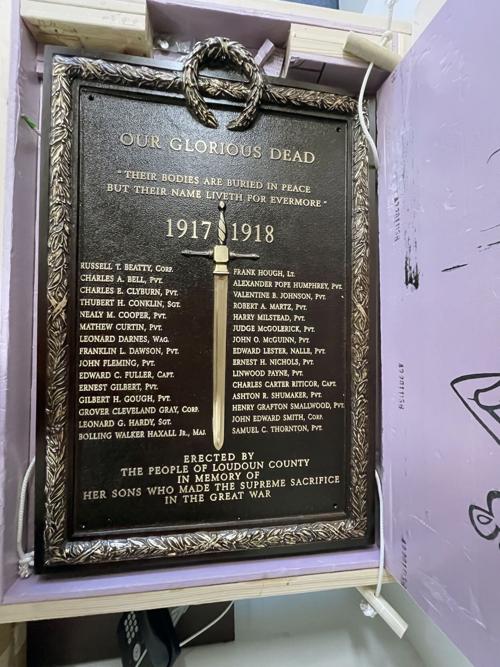
The Loudoun County Memorial Plaque was erected 1921, three years after the end of World War I. The plaque, on a stone monument, lists 30 names of Loudoun County residents who died serving during the Great War. The plaque originally separated the names of the three Black people of the group: Pvts. Ernest Gilbert; Valentine B. Johnson; and Samuel C. Thornton. On its 100th anniversary, November 11, 2021, the memorial was rededicated with a new plaque of similar design with all of the names listed together alphabetically, not segregated.
- Details
- Dedication Date: 1929
- Memorial Hunters Club Submission: thewanderer
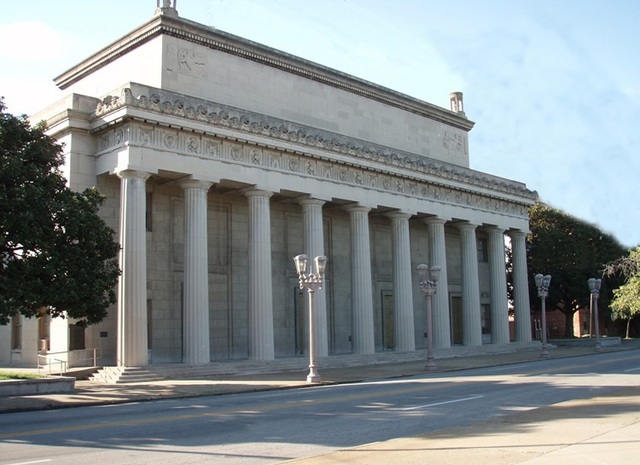
The Louisville Memorial Auditorium, located at 970 South Fourth Street, is a concert venue of Greek Revival design. It was dedicated on Memorial Day, May 30, 1929, as a memorial to the people of Louisville who served in World War I.
- Details
- Single figure -- soldier
Memorial for men who died from the "Acre" neighborhood of Lowell during World War One.
- Details
- Memorial Hunters Club Submission: William Desrosiers
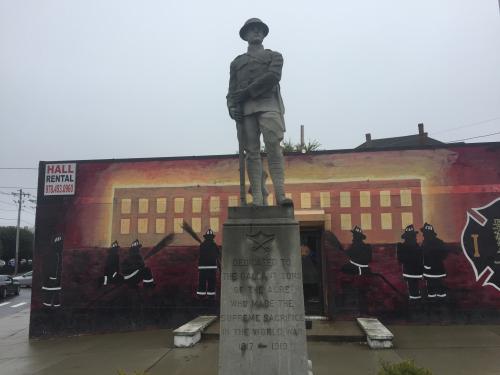
This monument is dedicated to the 36 men, from this "Acre" section of Lowell, MA, who lost their lives during WW I
- Details
- Other Measurements: diam: 4'
- May 30, 1953
- Dedication Date: May 30, 1953
- Morris Dickstein Post #462, Veterans of Foreign Wars
- IN MEMORY OF THOSE WHO MADE THE SUPREME SACRIFICE IN DEFENSE OF THEIR COUNTRY/
- Other
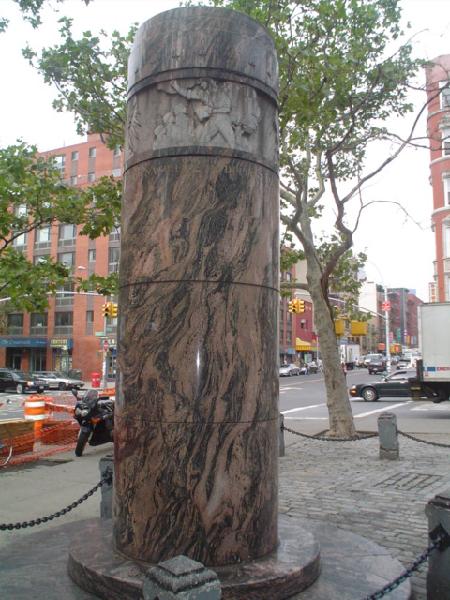
IN MEMORY OF THOSE WHO MADE THE SUPREME SACRIFICE IN DEFENSE OF
THEIR COUNTRY/
BASE: DEDICATED BY MORRIS DICKSTEIN POST NO 462 VFW
PLAQUE: ERECTED BY THE / MORRIS DICKSTEIN POST NO. 462 / VETERANS
OF FOREIGN WARS / OF THE UNITED STATES / MAY 30, 1953 / DEDICATED TO
OUR SERVICE MEN AND WOMEN ORIGINATING FROM THE LOWER EAST SIDE/
WHO SERVED OUR COURNTRY DURING / WORLD WAR I..WORLD WAR II..KOREAN
ACTION / OUR NATION AND ALL FREE PEOPLES / ARE PERPETUALLY IN THEIR
DEBT / GROUND DEDICATED BY HONORABLE HUGO E. ROGERS / BOROUGH
PRESIDENT, MANHATTAN 1946-1950.
FOR COMMITTEE LIST SEE INDEX CARD
- Details
- Memorial Hunters Club Submission: Van Robinson
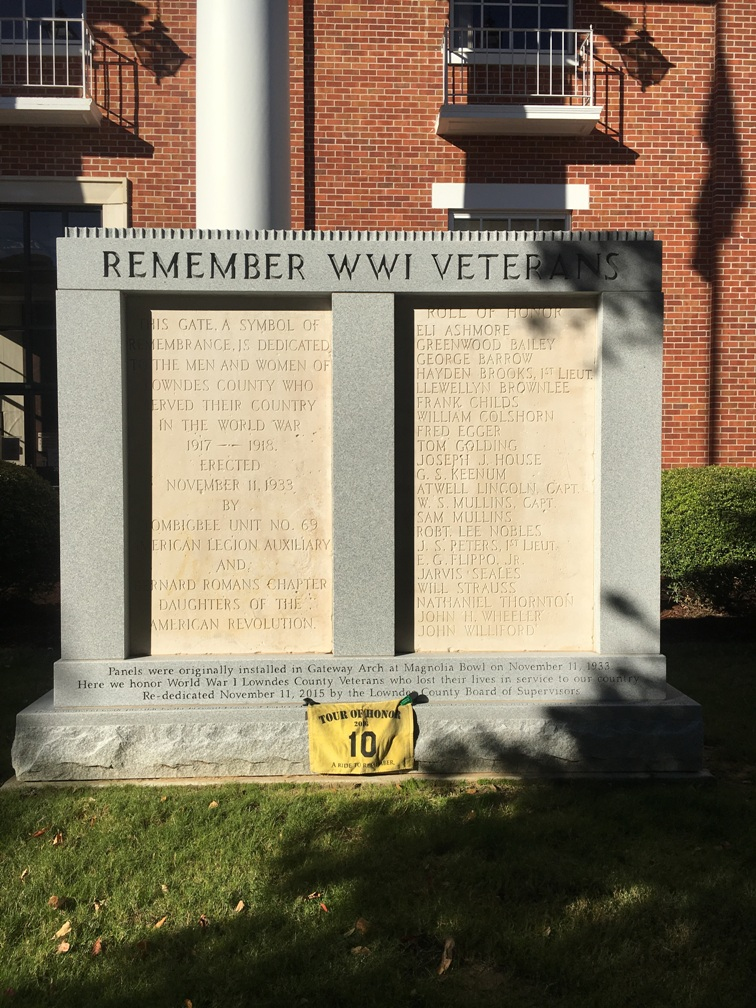
The Lowndes County WWI Memorial is dedicated to the remembrance of the men and women of Lowndes County who served in World War I. It was relocated to right of the entrance to the Lowndes County Courthouse in 2015.
- Details
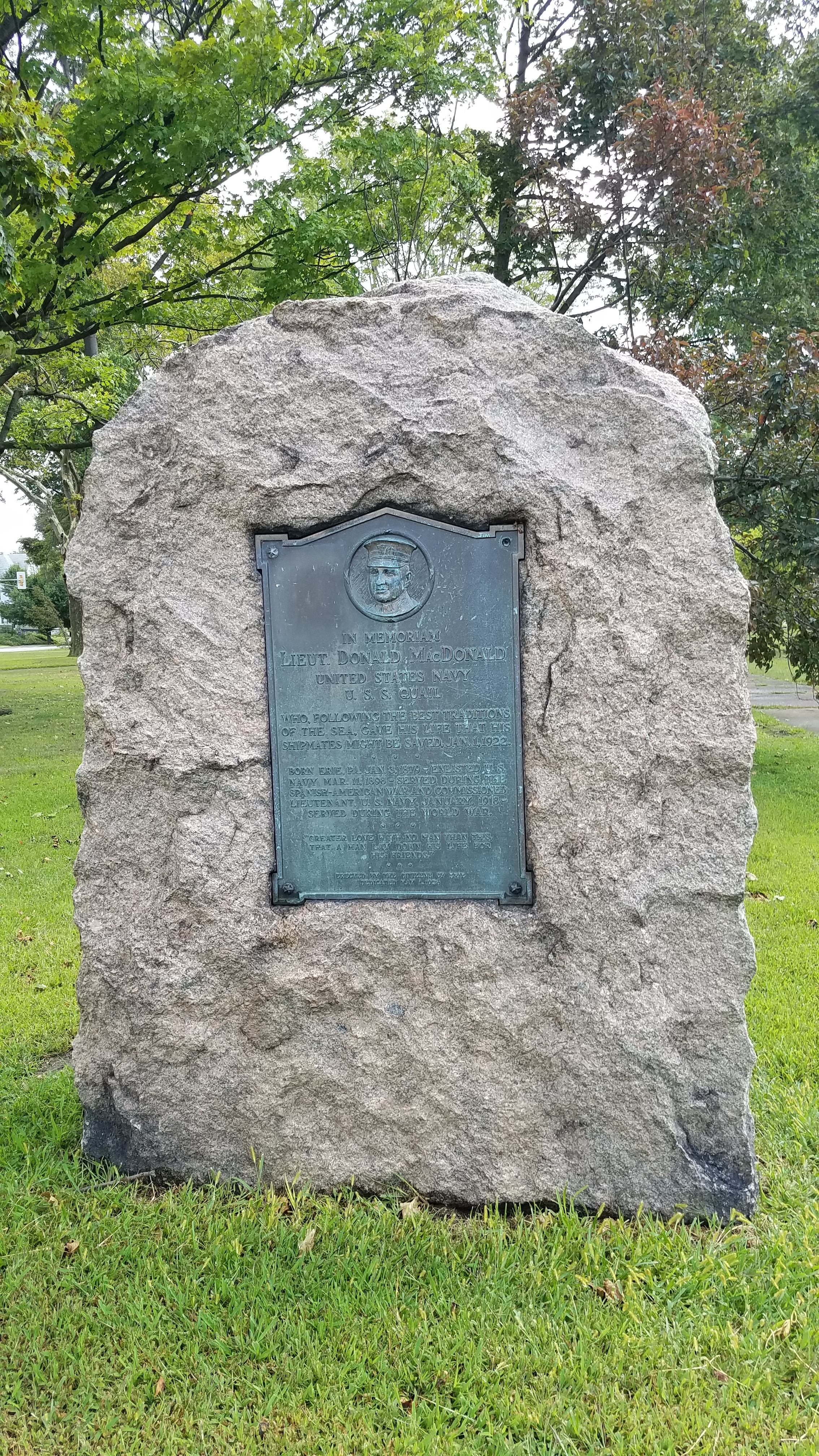
This memorial plaque is dedicated to Lt. Donald MacDonald who served in the U.S. Navy in World War I.
The inscription reads:
Lieutenant Donald MacDonald
U.S. Navy
U.S.S. Quail
Who, following the best traditions of the sea, gave his life that his shipmates might be saved, Jan. 1, 1922.
Born Erie Pa, Jan. 3, 1879 - Enlisted U.S. Navy Mar. 11, 1898 - Served during the Spanish American War and Commissioned Lieutenant, U.S. Navy Jan. 1918 - Served during the World War.
"Greater Love Hath No Man Than This, That A Man Lay Down His Life For His Friends."
Erected by the Citizens of Erie
Dedicated May 1, 1926
- Details
- Dedication Date: 10/12/1921
- Lt. Charles M. Toole
- Bench
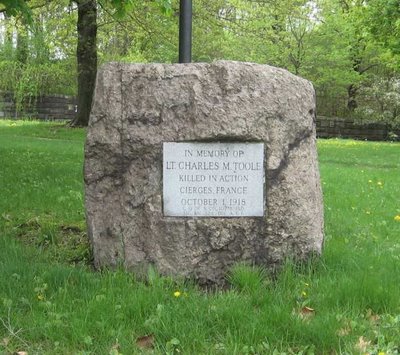
Plaque: IN MEMORY OF/ LT. CHARLES M. TOOLE/ KILLED IN ACTION/ CIERGES, FRANCE/ OCTOBER 1, 1918
- Details
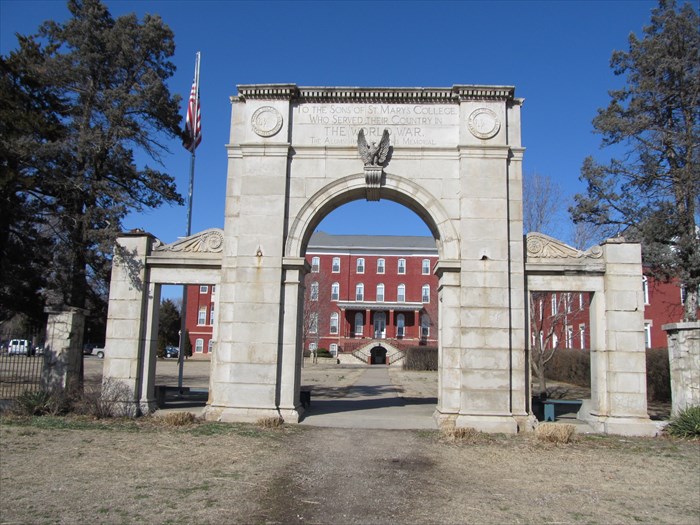
This beautiful freestanding arch memorial dedicated to Lt. William Fitzgibbons specifically, and all other former St Mary's College stdents who served in WWI generally, was erected by the College and by Jesuit order that owned the college at that time.
From the St. Mary's Academy and College website: (visit link)
"The Memorial Arch is dedicated, "To the Sons of St. Mary's College who Served their Country in the World War, the Alumni Have Built this Memorial."
During the Great War, World War I, the Student Army Training Corps was established at St. Mary's and the campus was crowded with students in STAC uniforms. Over 700 of St. Mary's "old boys" (alumni) served in the War, and no less than 19 paid with the supreme sacrifice of their lives.
One of these, Lieutenant William T. Fitzsimons, of the Medical Corps (SMC class of '60) was the first American officer to die in France, September 7, 1917.
On Memorial day of 1922, a fountain honoring him was dedicated in Kansas City, Missouri, which can still be seen on the Paseo, a short distance from Interstate 70.
Meanwhile at St. Mary's, a magnificent Memorial Arch, gift of the College Alumni, was constructed at the main gateway of the College to honor Lt. Fitzsimons and all St. Mary's sons who fought in the War.
Dedicated during the Diamond Jubilee Celebration of St. Mary's in 1923, with Kansas Governor Jonathan M. Davis as a special guest, the Arch is surmounted by the Cross, and bears on either side of the inscription the old SMC seal, one commemorating the founding of the Society of Jesus in 1540, the other the founding of St. Mary's in 1848."
From the St. Mary's Academy and College website: (visit link)
"The Memorial Arch is dedicated, "To the Sons of St. Mary's College who Served their Country in the World War, the Alumni Have Built this Memorial."
During the Great War, World War I, the Student Army Training Corps was established at St. Mary's and the campus was crowded with students in STAC uniforms. Over 700 of St. Mary's "old boys" (alumni) served in the War, and no less than 19 paid with the supreme sacrifice of their lives.
One of these, Lieutenant William T. Fitzsimons, of the Medical Corps (SMC class of '60) was the first American officer to die in France, September 7, 1917.
On Memorial day of 1922, a fountain honoring him was dedicated in Kansas City, Missouri, which can still be seen on the Paseo, a short distance from Interstate 70.
Meanwhile at St. Mary's, a magnificent Memorial Arch, gift of the College Alumni, was constructed at the main gateway of the College to honor Lt. Fitzsimons and all St. Mary's sons who fought in the War.
Dedicated during the Diamond Jubilee Celebration of St. Mary's in 1923, with Kansas Governor Jonathan M. Davis as a special guest, the Arch is surmounted by the Cross, and bears on either side of the inscription the old SMC seal, one commemorating the founding of the Society of Jesus in 1540, the other the founding of St. Mary's in 1848."
- Details
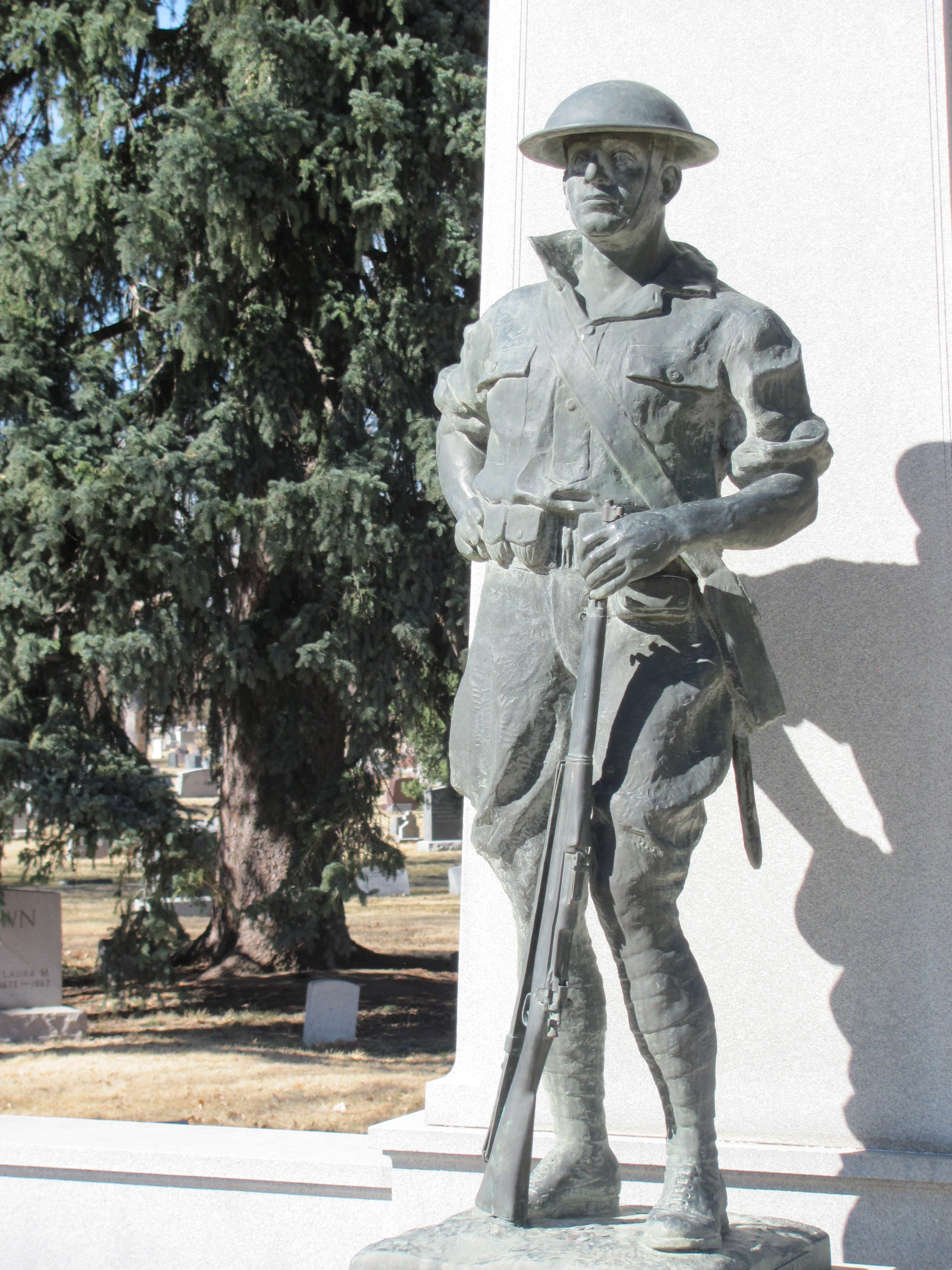
Second Lieutenant Francis Brown Lowry of the 91st Aero Squadron, Coast Artillery Corps, was killed in action while on a photo-reconnaissance mission flying through a heavy anti-aircraft barrage in hostile territory in France. Originally buried in Argonne cemetery in France, he was moved to Fairmount cemetery in Colorado in 1921. Lowry's name was used for the new airfield in 1938. In 1948 Lowry Airfield became Lowry Air Force Base. After the base closed in 1994 a new elementary school opened on the property in 2002 and was named the Lowry Elementary School. Lt. Lowry was posthumously awared the Distinguished Service Cross.
- Details
- Roger Burnham
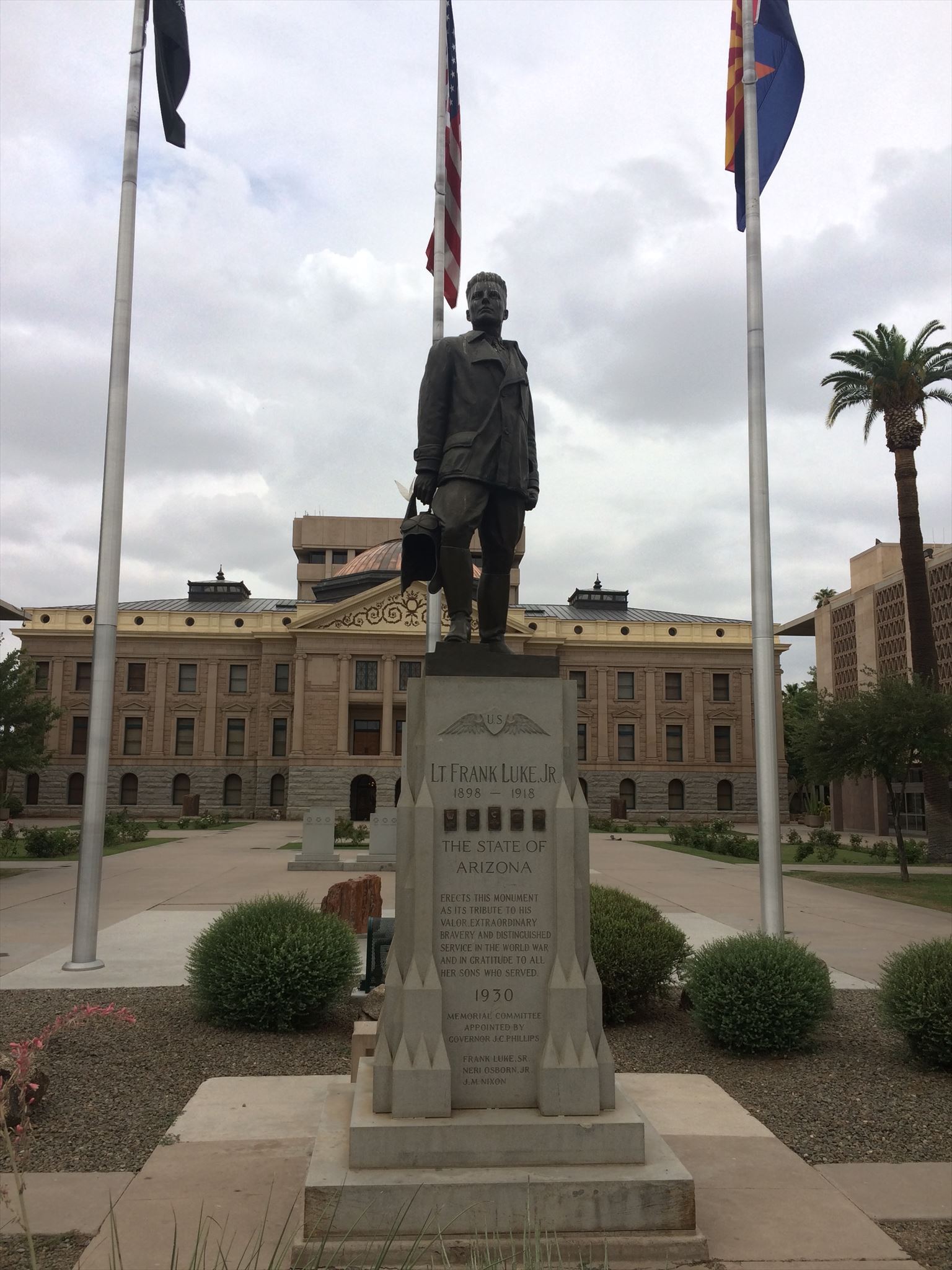
The Lt. Frank Luke Jr. Memorial is located in front of the Arizona State Capitol in Phoenix, Arizona.
The sculpture is a full-length portrait of Lt. Frank Luke, Jr., by sculptor Roger Burnham. He is dressed in a World War I military uniform and holds an aviator helmet in his proper right hand. The bronze sculpture stands atop a stone base.
Lt. Luke was a World War I airman known as the 'balloon buster'. He saw exactly 17 days of action in France during World War I. During that brief period, he destroyed 14 enemy balloons and 4 enemy planes. He was killed near Murvaux, France, by enemy soldiers when he refused to surrender and tried to hold them off with a pistol. He received, posthumously, the Congressional Medal of Honor as well as other medals. Nearby Luke Air Force Base was also named after Lt. Luke.
On the backside of the monument is an honor roll listing the names all Arizonians killed during the war.