





























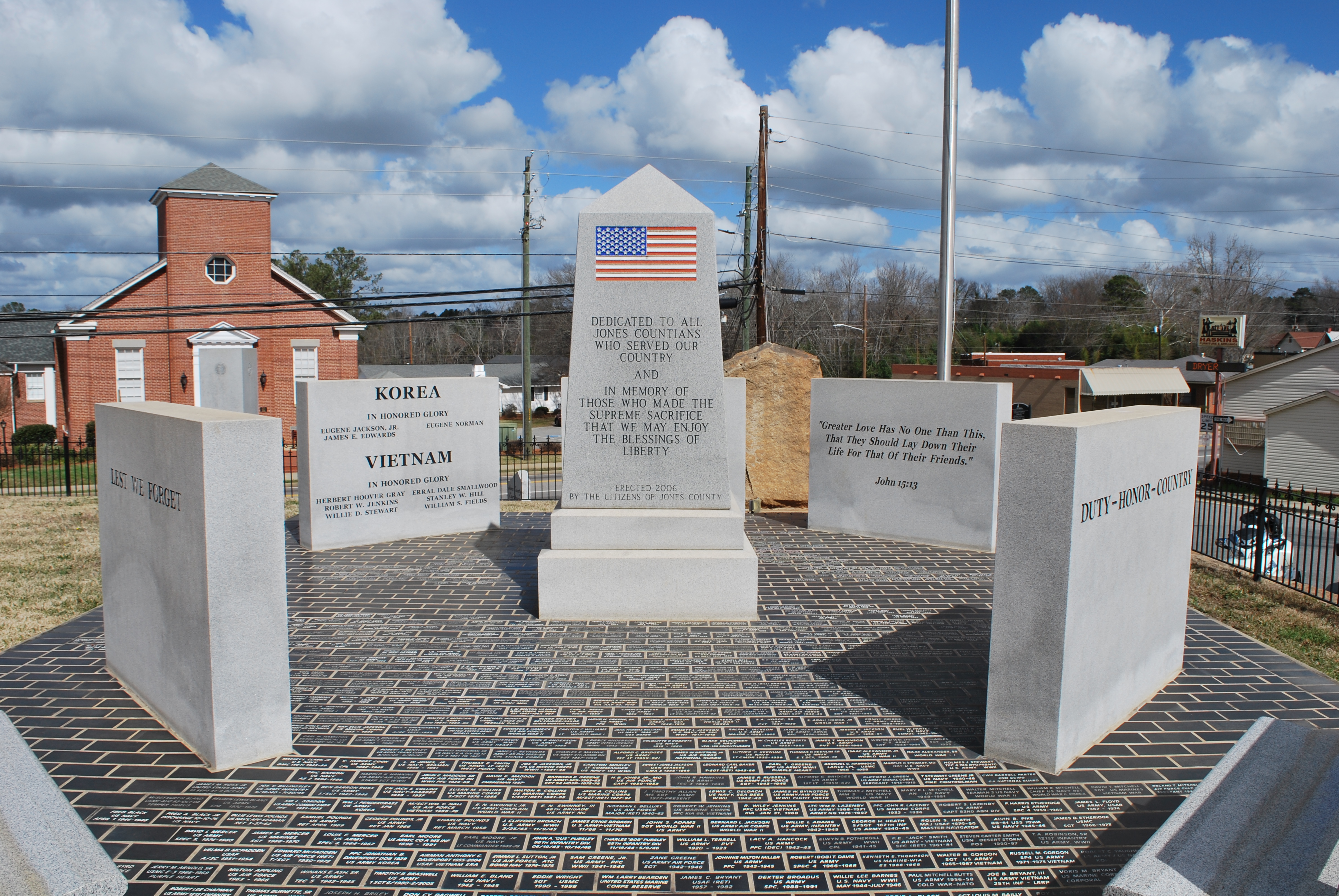
“Dedicated to all Jones Countians who served our country and in the memory of those who made the supreme sacrifice that we may enjoy the blessings of liberty. Erected 2006 by the citizens of Jones County”. The WW1 monument is inscribed with twenty-one names.
100 Cities - 100 Memorials
Memorial Inventory Project: There is one other existing partial database to consult - The WWI Memorial Inventory Project [CLICK HERE]. It contains some memorials our map doesn't. The listings on this database are fair game for the Memorial Hunters Club. So if you want to search for treasure from your desk - find missing listings here and submit them. Remember though, you will need to come up with pictures and the history of the memorial. You might be able to hunt that down through www.Proquest.com and Google.
- Details
- Memorial Hunters Club Submission: Robert Shay, PH3, USNR-R, 1964-70
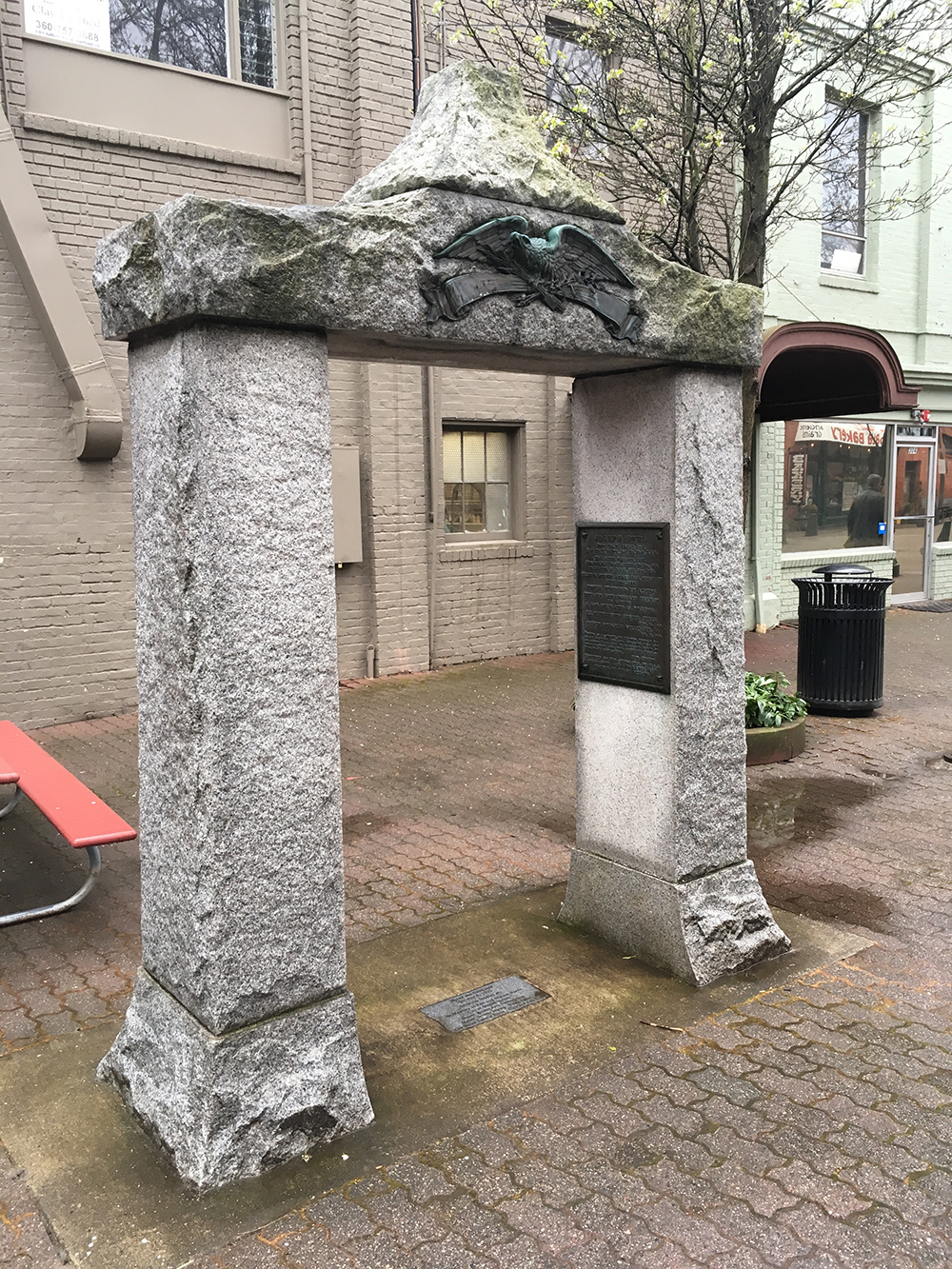
Joseph Berg
Pvt. Co. F, 161st, Inf.
Sgt. Co. G, 167th, Inf.
2D, Eng. U.S.N.
Enlisted May 9th, 1916.
Honorably discharged Nov. 7th, 1919.
Enlisted in U.S.N. Aug. 12th, 1922.
Killed in service aboard U.S.S. Mississippi
June 12th, 1924.
TWICE WOUNDED IN ACTION
Cited for extraordinary heroism in action and decorated as follows:
U.S. Distinguished Service Cross: Mch. 23, 1919.
French Medaille Millitaire: Apr. 13, 1919
Posted as a lookout, he exposed himself to heavy machine gun and artillery fire and succeeded in killing or disabling crews of three machine guns, thus saving his company from heavy casualties. From citation.
Erected by his shipmates of U.S.S. Mississippi and comrades and friends of Mount Vernon.
————————————————————————————————————————-
Moved, restored and rededicated in 2005
- Details
- Width: 1'8
- May 28, 1938
- Dedication Date: May 28, 1938
- James S. Slosson Post, American Legion
- Plaque
- Joseph H. Lyons
- Plaque or tablet
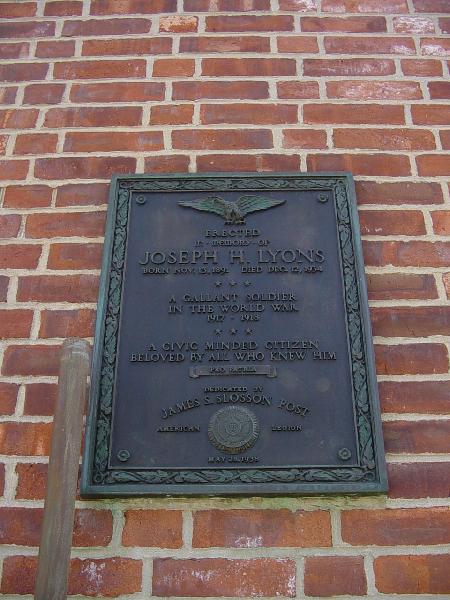
ERECTED / IN MEMORY OF / JOSEPH H. LYONS / BORN NOV. 13, 1891 DIED
DEC. 12, 1934
A GALLANT SOLDIER / IN THE WORLD WAR / 1917-1918/
A CIVIC MINDED CITIZEN / BELOVED BY ALL WHO KNEW HIM / PRO PATRIA/
DEDICATED BY / JAMES S. SLOSSON POST / AMERICAN LEGION / MAY 28,
1938/
- Details
- Single figure -- soldier
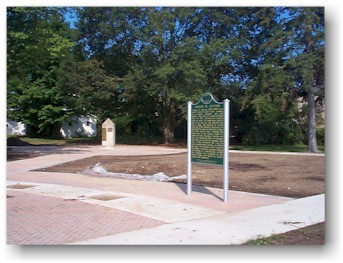
Joseph W. Guyton
Joseph W. Guyton (1889 ~ 1918) lived most of his life near Evart, working as a farmer, plumber, and well driller. When the U.S. entered World War I inn 1917, Guyton was drafted into the army. He could have elected not to go since he was married and had a child, but instead he served with the 126th Infantry Regiment of the 32nd "Red Arrow Division". On May 24, 1918, shortly after reaching the front line in the Alsace region of what was then Germany, Guyton was the first American killed on German soil when he was hit by machine gun fire. France bestowed the Croix De Guerre medal upon Guyton, as well as his unit to recognize their bravery in combat Guyton's comrades buried his remains in a churchyard. In 1921 the remains were returned to the United States and buried in Evart's Forest Hill Cemetery.
In 1918 when Private Joseph Guyton died during World War I, his fellow soldiers buried him in a German cemetery. In 1921 his remains and those of 5,212 other U.S. soldiers were returned home. At a memorial ceremony in Hoboken, New Jersey, President Warren Harding laid a wreath on Guyton's casket which represented all the war dead. Guyton's remains were given to his parents and daughter, his wife having died in the worldwide flu epidemic only months after him. Newspapers reported that 10,000 people attended Guyton's funeral in his hometown of Evart. Tributes include; Evart's Guyton Park, the Joseph W. Guyton American Legion post in Evart, the US-10 "Guyton" Bridge over the Muskegon River in Osceola County, and Guyton Elementary School in Detroit.
- Details
- Memorial Hunters Club Submission: Aaron Lefkowitz
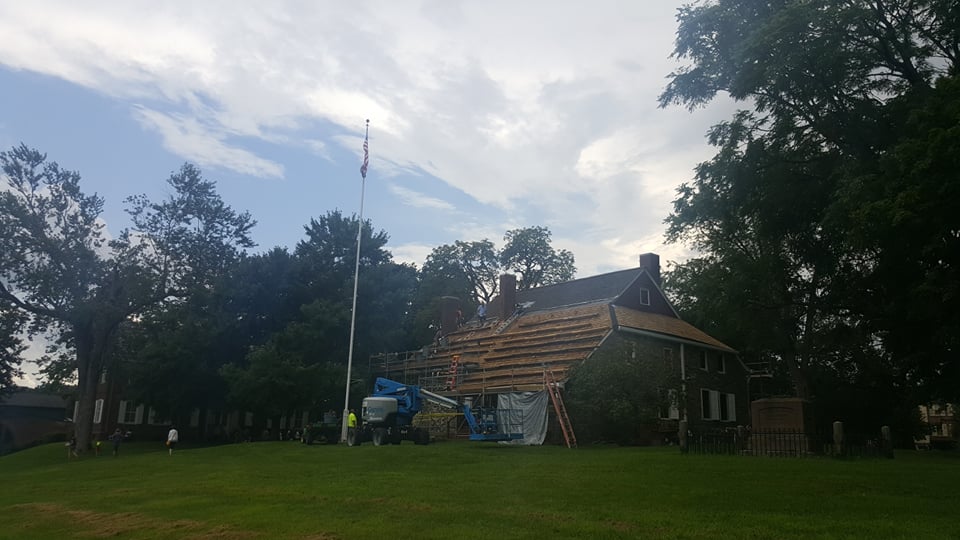
"Greater Love Hath No Man Than This,That A Man Lay Down His Life For His Friends"
- Details
- Dedication Date: 1920
- Memorial Hunters Club Submission: Jerry Persun
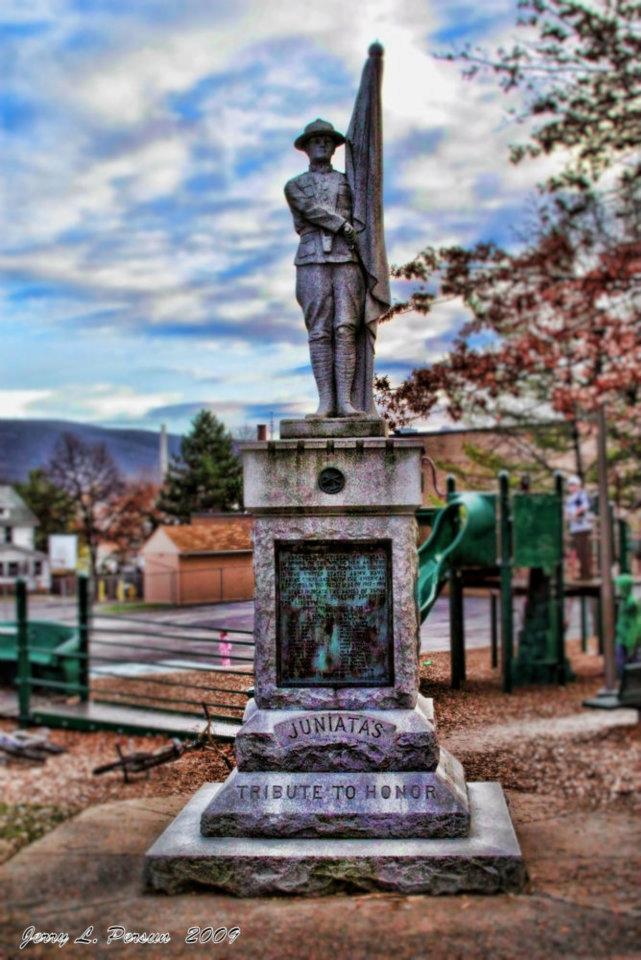
Dedicated September 6, 1920 to honor the men and women from Juniata (Altoona) that served in the Great War.
- Details
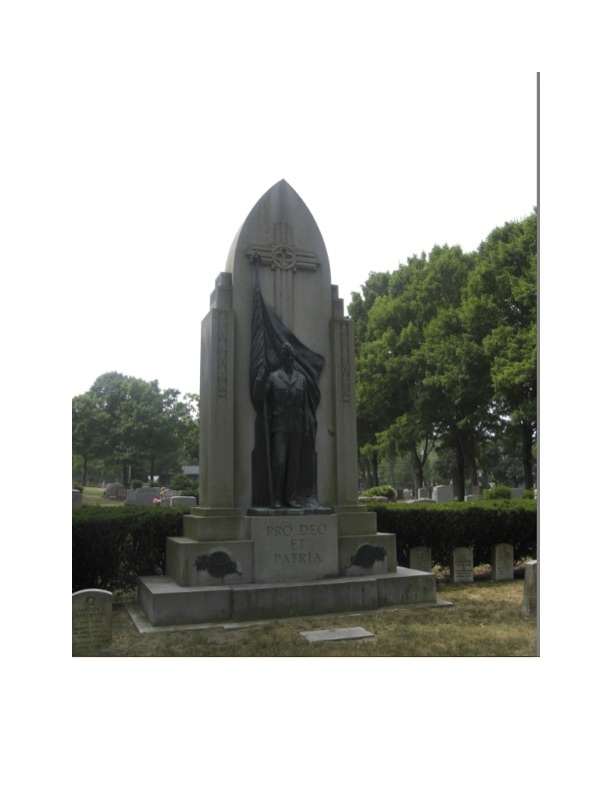
This is a bronze high relief figure of a French legionnaire, wearing a uniform of the Jutras Post No. 43 and holding a flagstaff with the flag swirling behind him. Also in the scene are two palm branches and a flower. It sits on an elaborate granite base shaped as a tall Gothic arch on a three-tiered base.
Flanking the arch are buttresses, and at the top is an ornate cross. On the base are the seals of the U.S. and New Hampshire, over bronze olive branches. This was sculpted by Lucien H. Gosselin and dedicated on October 8, 1939, to honor the Manchester French-Americans who served in WWI.
- Details
- Memorial Hunters Club Submission: Robert Shay, PH3, USNR-R, 1964-70
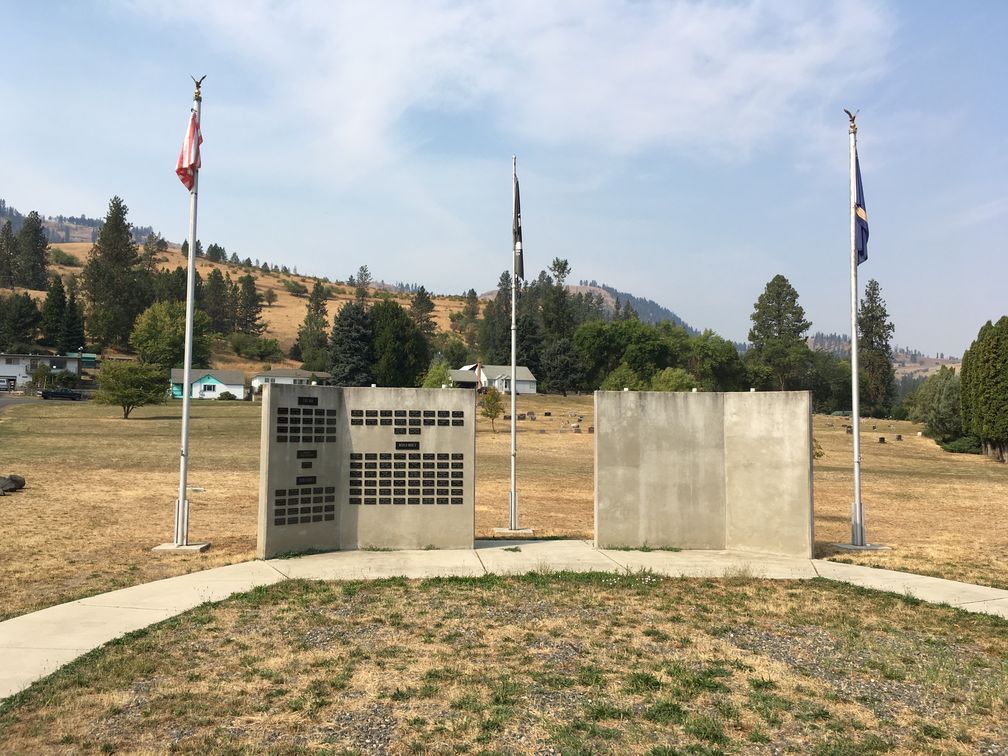
The members of the veteran community in Kamiah are constructing this Memorial Wall and it is being done in stages and the plaques are being engraved by one resident. These pictures were taken on September 17, 2017. When I visit again, I am sure I will see a more complete project.
- Details
- Memorial Hunters Club Submission: The Wanderer
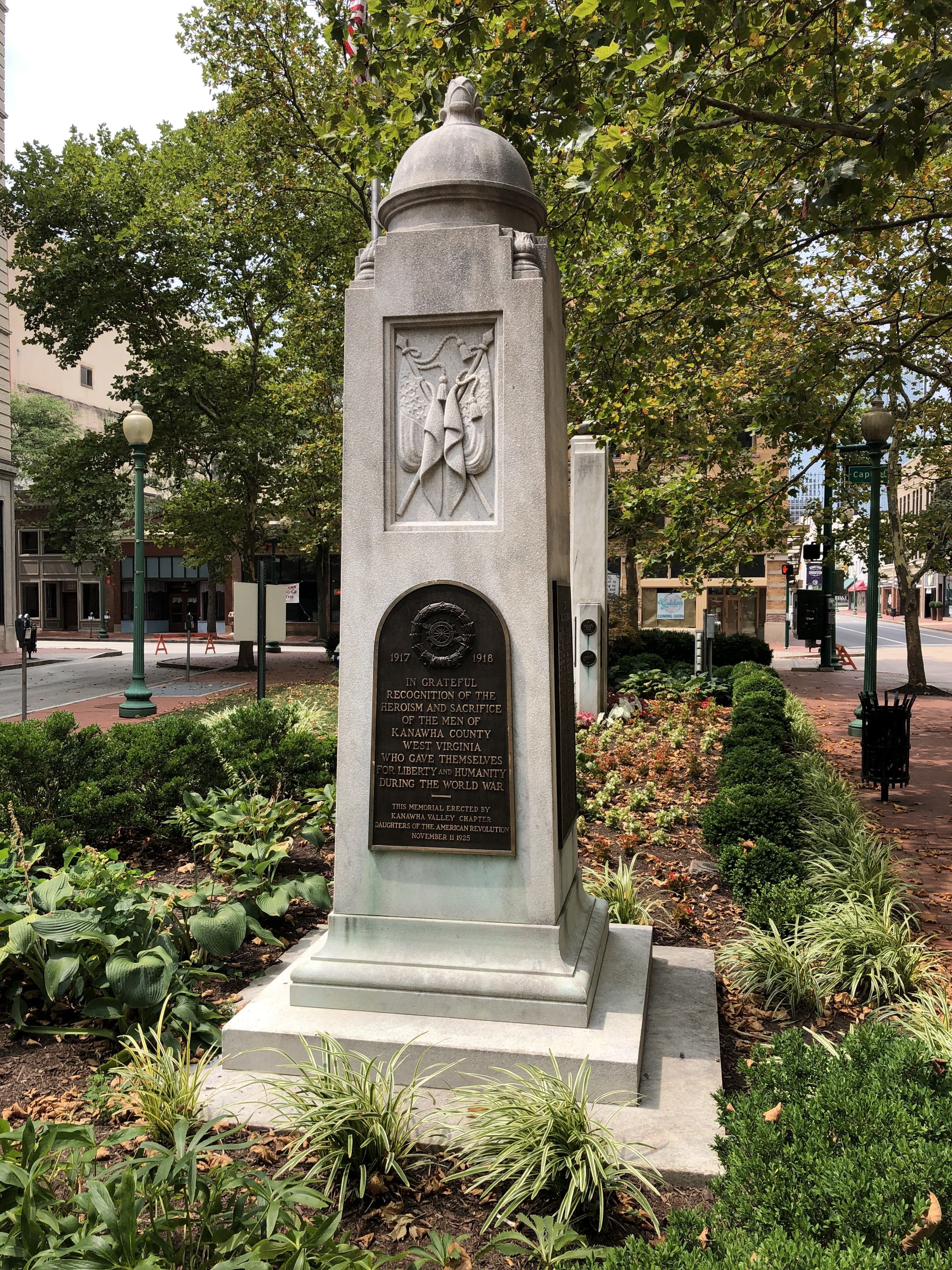
The inscription on this memorial, erected in 1925 by the Kanawha Chapter of the Daughters of the American Revolution, reads:
IN GRATEFUL RECOGNITION OF THE HEROISM AND SACRIFICE OF THE MEN OF KANAWHA COUNTY WEST VIRGINIA WHO GAVE THEMSELVES FOR LIBERTY AND HUMANITY DURING THE WORLD WAR
Columns contain Honor Roll lists with the names of those from Kanawha County who died during World War I.
- Details
- Memorial Hunters Club Submission: Lori
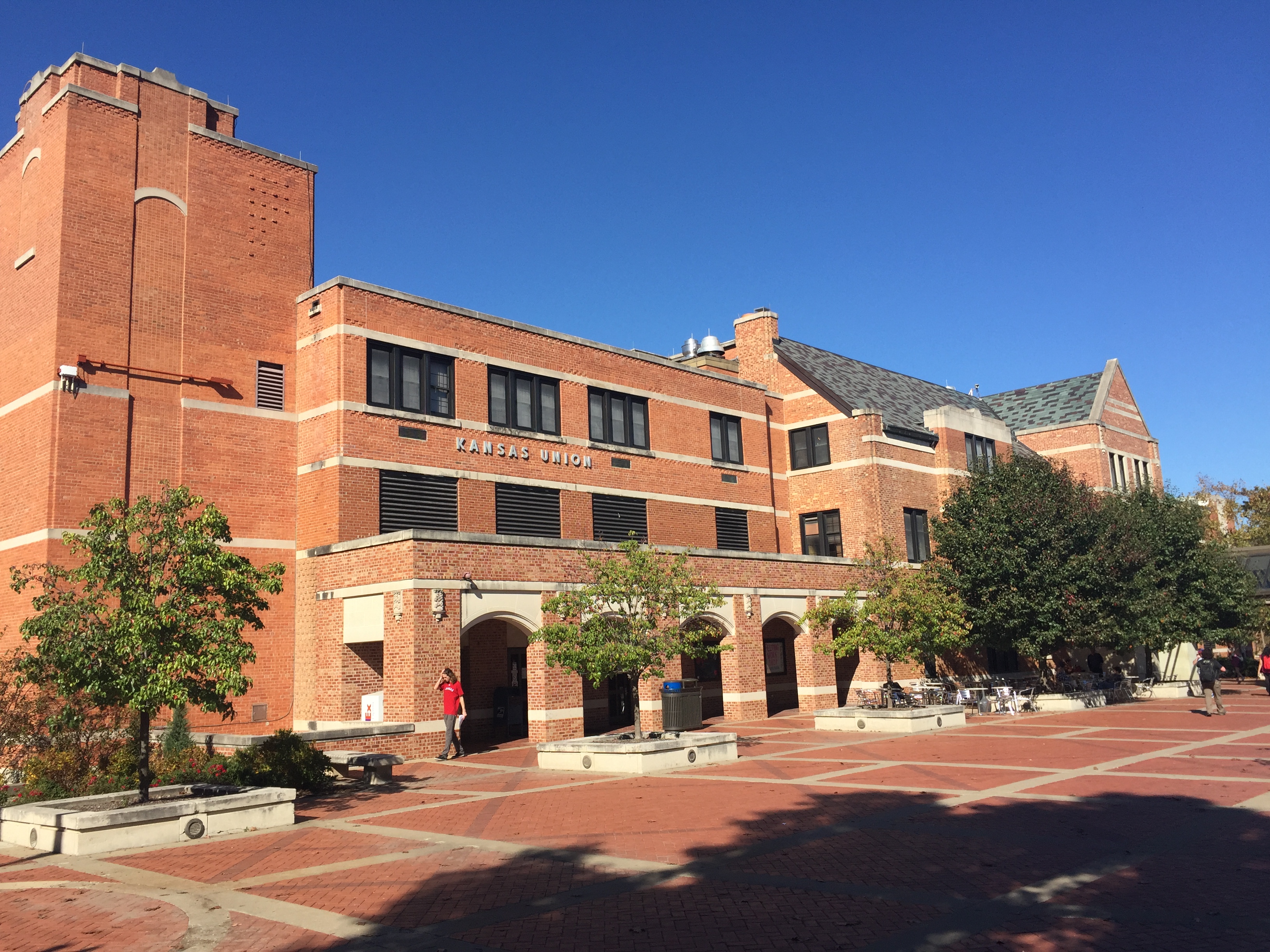
Like the Memorial Stadium, the student union was built to memorialize University of Kansas. It is situated on Mount Oread, overlooking the stadium, and was completed in 1927. The 6th floor of the union has a small exhibit which includes photographs of the 129 KU men and women who died during their service in WW1.
- Details
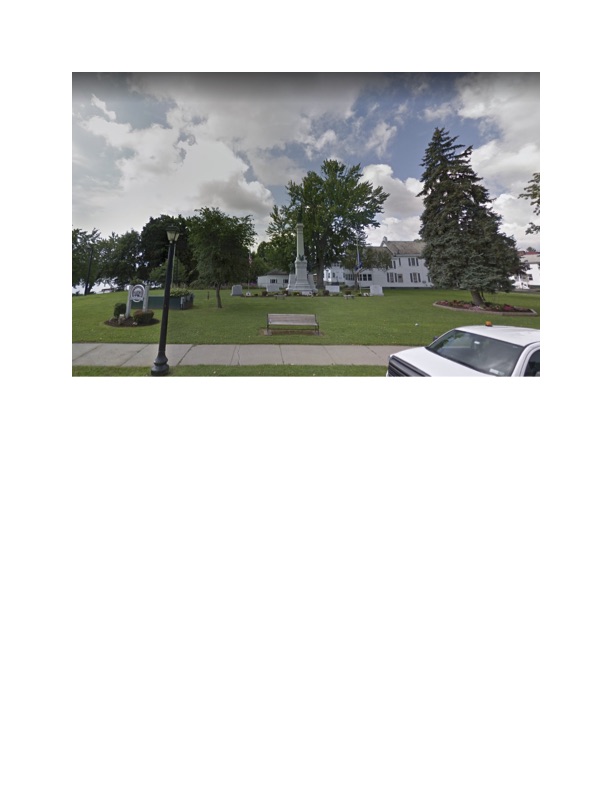
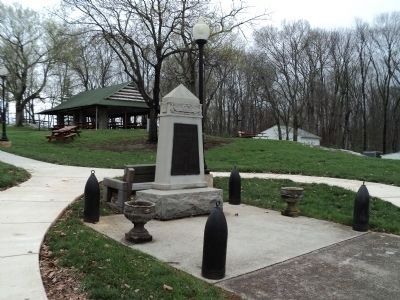
On a tall, square granite column stands a bronze robed female figure, possibly Liberty, holding a flag and laurel wreath. She is flanked at the base by a WWI soldier and a WWI sailor carrying guns. There is also a spread-winged bronze eagle holding a quiver of arrows, olive branch and laurel leaves. It was sculpted by A. Ghioli and dedicated in 1922. Commemorative tablets added June of 1989 honor the veterans of the Civil War, WWI, WWII, and the Korean and Vietnam Wars.
- Details
- Memorial Hunters Club Submission: Nell Rapport
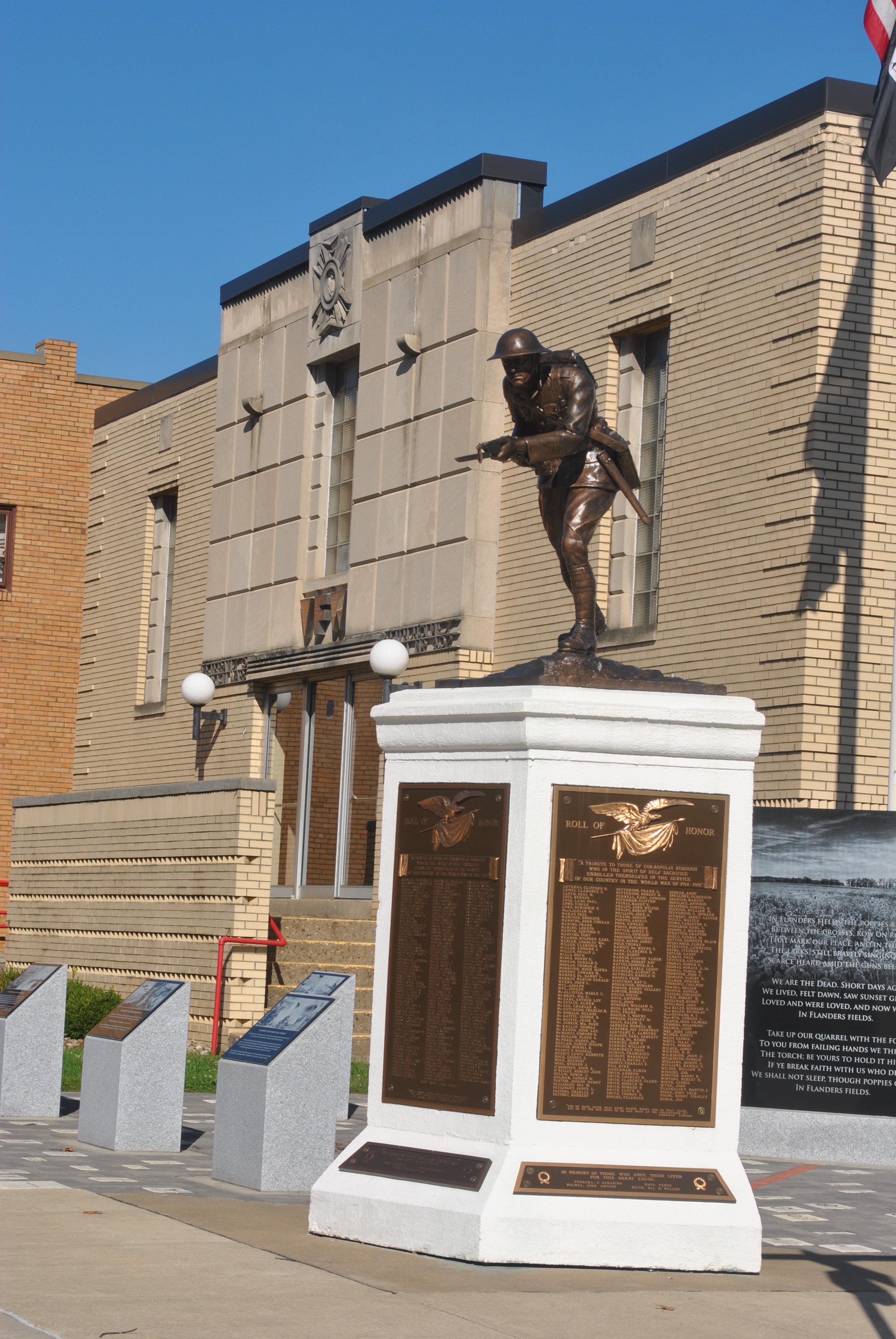
Dedicated on Memorial Day 2021, with the support of Coraopolis VFW Post 402 and Sewickley VFW Post 5756, this bronze Doughboy statue honors veterans from all 6 service branches who fought in wars from World War I to the war on terror.
- Details
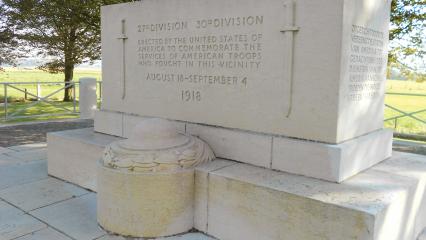
The World War I Kemmel American Monument is six miles south of Ieper (Ypres), Belgium. It is a small monument on a low platform consisting of a rectangular white stone block, in front of which is carved a soldier's helmet upon a wreath. It commemorates the services and sacrifices of the American troops who, in the late summer of 1918, fought nearby in units attached to the British Army. Some are buried in Flanders Field American Cemetery at Waregem, Belgium, 30 miles to the east.
The inscription reads:
Erected by the United States of America to commemorate
the services of American troops who fought in this vicinity
August 18–September 4 1918
The 27th and 30th Divisions are honored. They served with the British Army from arrival in Europe in May 1918. Their participation in the Ypres-Lys Offensive began when the 30th Division took position in the line on August 18, and the 27th on August 23. The Allied advance began on August 31. Both divisions met determined German resistance. They moved forward slowly. That afternoon the 27th Division reached the area where the Kemmel Monument stands. They advanced against German forces on September 1 and 2. The 27th Division was relieved on September 3, and the 30th Division the next day. Both divisions moved south to the region near St. Quentin. Soon they fought in the Somme Offensive, September 23-30.
- Details
- Memorial Hunters Club Submission: thewanderer
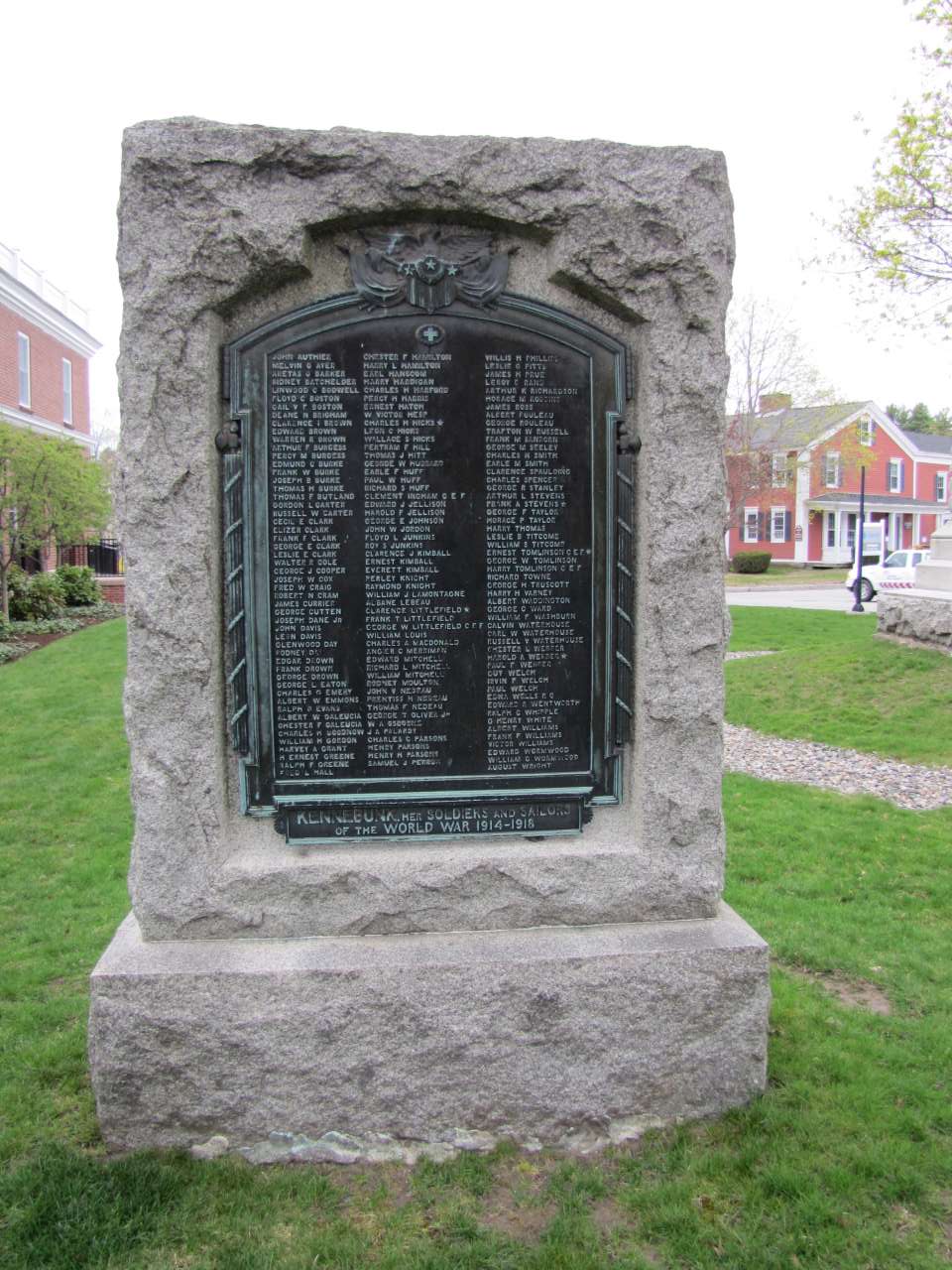
The memorial is a large stone monument with a bronze plaque. The plaque is inscribed with a long list of names of all soldiers and sailors from Kennebunk who participated in World War I. At the bottom of the list is the following inscription:
Kennebunk
Her Soldiers and Sailors
Of The World War 1914-1918
- Details
- Materials (select all that apply): Stone (any)
- Dedication Date: 02/11/1928
- County
- County
- $25,000
- Boone, Eason, and Woods, contractors
- 1,500 Black soldiers of McDowell County
- Hassell T. Hicks, architect
- Memorial building
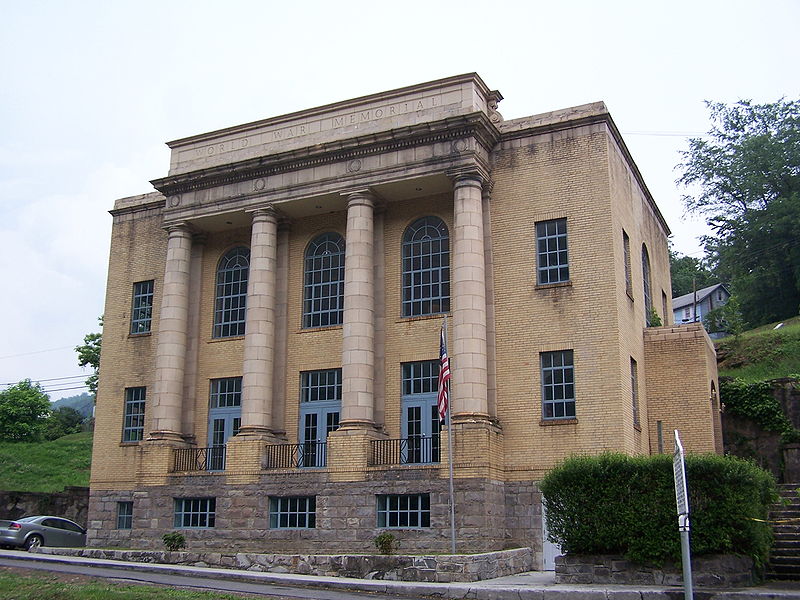
The Kimball World War Memorial was the first memorial built in the United States to honor African-American veterans of World War I. The Classical Revival style building, designed by noted West Virginia architect Hassel T. Hicks of Welch, was completed in 1928 and listed on the National Register of Historic Places in 1993. The War Memorial became the headquarters of the nation’s first all-black American Legion Post and hosted some of the state’s first NAACP meetings.
Unknown today by many Americans, over 400,000 African Americans volunteered to serve in combat during the Great War. 50,000 of these soldiers actually served overseas -- one-third of the total U.S. fighting forces -- and 1,500 of these came from McDowell County. While discriminatory military practices were still prevalent, when allowed to fight these black soldiers did so with honor, demonstrating their valor in combat with French forces at the Battles of Argonne, Chateau Thierry, St. Mihies, Champagne, Vosges, and Metz. One-hundred-and-seventy-one (171) were awarded the Croix de Guerre for “gallantry in action”. Thirteen hundred (1,300) were eventually commissioned as officers in the U.S. Military for their service during World War I.
The War Memorial was designed in the classical Greek style by Hassell T. Hicks, a noted Welch architect, also a World War I veteran, and was dedicated on February 11, 1928. Originally the building housed an auditorium with a small stage, a library, meeting rooms, kitchen facilities, a billiard room and a trophy room, with displays of plaques dedicated to veterans, and wartime memorabilia. It was a multi-purpose facility, hosting such diverse activities as American Legion meetings, high school proms, wedding receptions, and performances by Cab Calloway and other well-known entertainers of the day.
The Kimball War Memorial was a focal point of community life for decades, serving as a cultural and social center for all residents of McDowell County.
Over time, deterioration, abandonment and finally a fire in 1991 crippled the beautiful structure, leaving only its exterior shell.
For over 30 years, a group of citizens had been pursuing the dream of restoring the Memorial to its former glory. With the financial and other support of many, the dream became a reality. The memorial was the recipient of a 2007 Honor Award presented by the West Virginia Chapter of the America Institute of Architects and was also featured in the National Trust for Historic Preservation’s forum as a Preservation Solution. The Memorial was also honored in 2006 with a Congressional Black Caucus Veterans Braintrust Award.
Presently, The Kimball World War Memorial was serves as a living community resource and is available for a wide variety of functions, including tours, training sessions, classes, organizational meetings, organizational dinners, receptions and other social events.
The two-story, light-brick building stands on a sturdy cut-stone foundation. Its plan is a rectangular box with a small entrance vestibule on the east side. The facade faces south and displays a monumental classical portico centered in the middle. Four terra cotta columns stand on brick bases and support a tall terra cotta entablature. Laurel reliefs decorate the frieze section over each column. A band of dentils extends across the portico just under the cornice. Historic photographs of the building reveal a terra cotta extension over the entablature that held the words "World War Memorial". This section of the entablature has crumbled and no longer displays the building's name. A simple terra cotta parapet at the roofline flanks the centered portico and extends along the other two sides of the building.
Three pairs of door openings stand between the columns and open onto a shallow balcony, each separated by the columns' brick bases. The original doors were wood-framed, multi-paned double doors with metal-framed transoms. On the second level centered over each doorway are tall, metal-framed multi-paned windows in arched openings. flanking the portico are single multi-paned windows on each level.
The Memorial Building's main entrance stands on the east side behind an entrance vestibule that has an arched opening. Concrete stairs with wrought iron railings ascend from the street level to the entrance. An arched window identical to the windows on the facade is located directly above the entrance. The rear of the building holds two second-level doorways that open at ground level to the steep grade behind. The building's west side simply has a narrow chimney and two windows on each level.
- Details
- Memorial Hunters Club Submission: Robert Shay, PH3, USNR-R, 1964-70
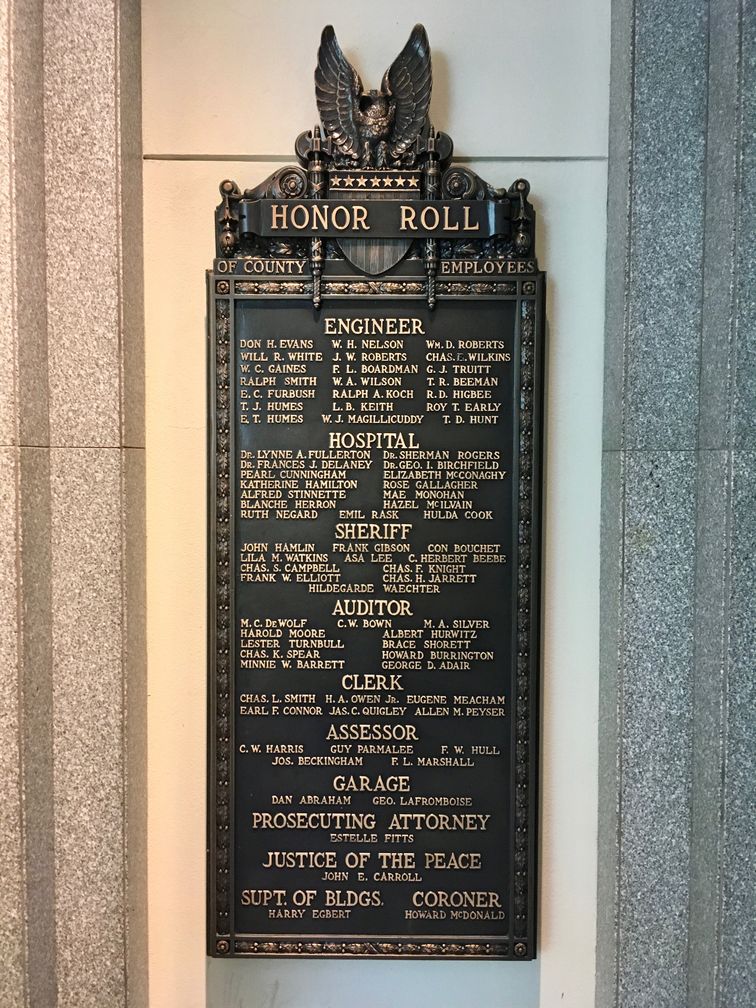
Dedicated in 1931
Restored and Rededicated 4-6-2017
500 Block of Fourth Avenue Employee Entrance Niche
This bronze Honor Roll contains the names of all city employees who served in The World War.
Thew names are organized by department. It is not known if any employees died in the war.
- Details
- Memorial Hunters Club Submission: The Wanderer
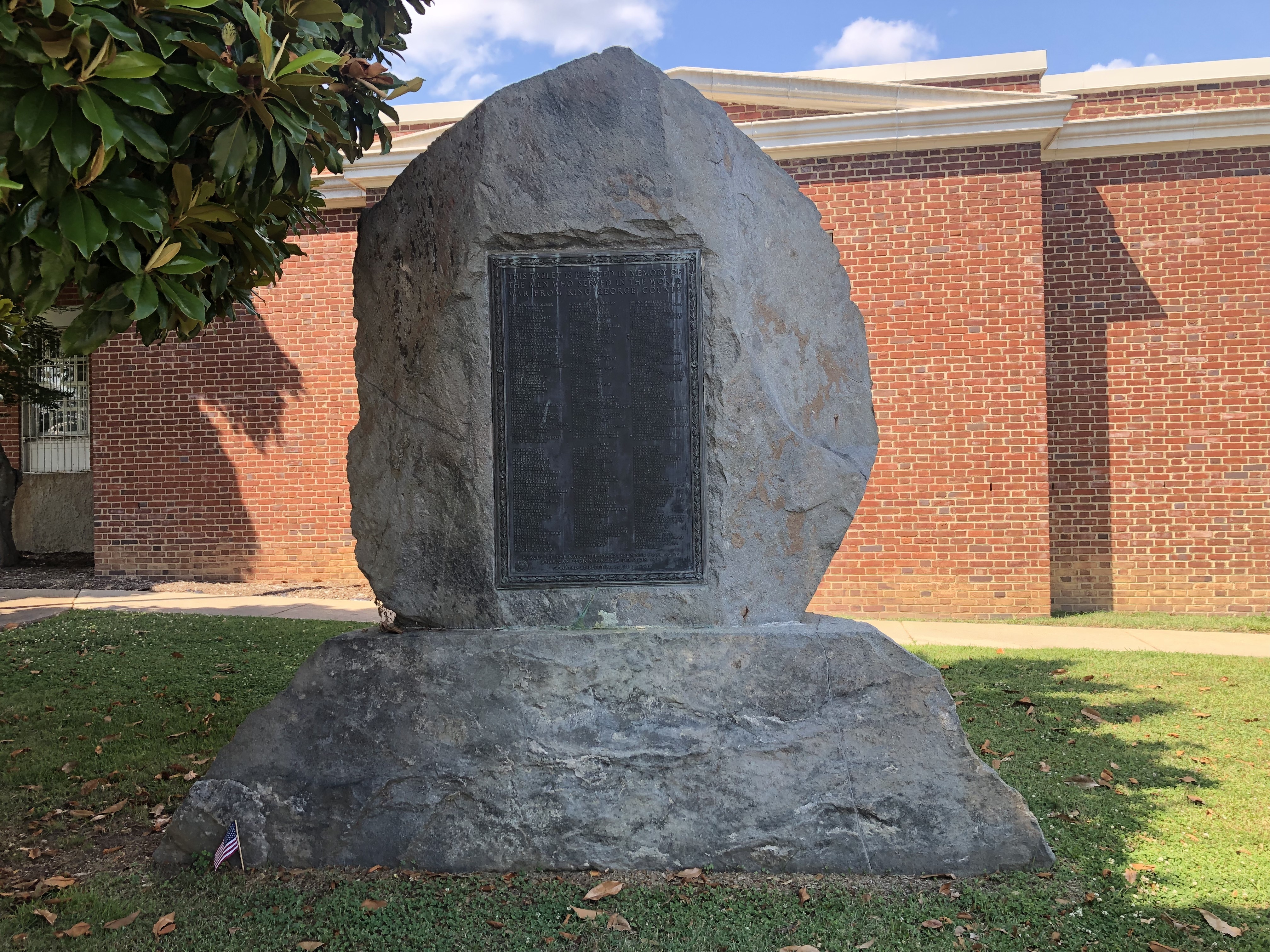
The inscription on this monuments reads:
THIS TABLET IS ERECTED IN MEMORY OF THE MEN WHO SERVED IN THE WORLD WAR FROM KING GEORGE COUNTY.
ERECTED IN 1935 BY THE RATCLIFFE-OWENS-SUMNER POST NO. 89, AMERICAN LEGION, VIRGINIA DIVISION; DONATED BY BETTY MCGUIRE SMOOT.
- Details
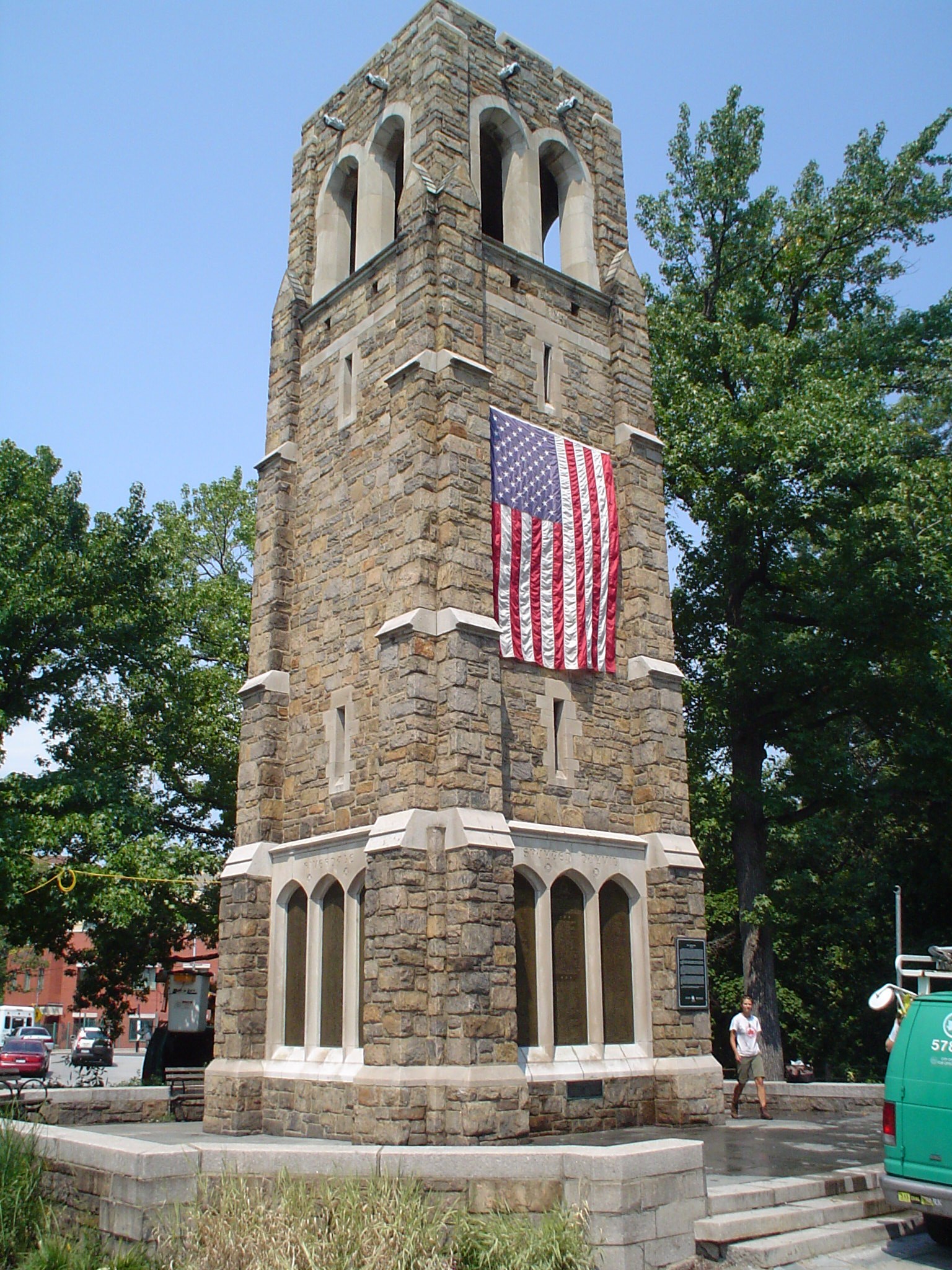
Kingsbridge War Memorial Bell Tower
100 Cities / 100 Memorials
 The Riverdale, Spuyten Duyvil, Kingsbridge War Memorial Bell Tower was designed in 1930 by distinguished architect Dwight James Baum (1886-1939). The memorial honors those from Riverdale, Spuyten Duyvil and Kingsbridge who gave their lives in World War I. Construction on the memorial tower began on July 4, 1930, with the laying of a cornerstone containing a time capsule. Initially known as the Memorial Tower, it was dedicated on July 4, 1931. The dedication was conducted with great fanfare, as “observation planes” from the Twenty-Seventh Division flew overhead circling the monument three times dropping flowers upon the crowd, and pigeons were released from the belfry. In his remarks, Alderman Alford J. Williams commented of the memorial tower, “It is built of native rock and the soil on which it stands is that which was trampled by those boys from here who died—those boys who died so that we may enjoy the liberty handed down by our forebears.” At the base of the monument three of the four sides feature sets of three bronze honor rolls, listing the names of the local soldiers who served from the three adjacent communities. In total 700 residents enlisted in the war effort, 29 of whom sacrificed their lives in war in the service of their country. The tower houses an extraordinary historic artifact—a bronze bell cast in Spain in 1762 for a Mexican monastery, and captured by General Winfield Scott in the Mexican-American War of 1846-1848. When the bell was first brought back to New York City, it was housed at a fire watch tower at Jefferson Market in Greenwich Village. It was later moved to a Riverdale firehouse, where it tolled daily at 8 a.m., noon, and 9 p.m., until it was installed it in its current tower in 1931.
- Details
- Width: 6'
- Depth: 5'
- 1921
- Dedication Date: 1921
- Gift
- Boulder with incised inscription
- Anthony V.Grand
- Other
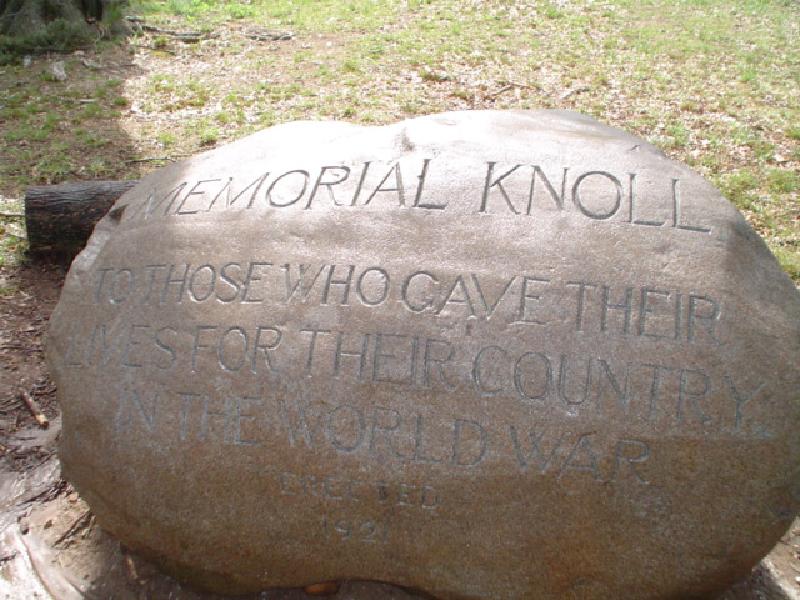
MEMORIAL KNOLL / TO THOSE WHO GAVE THEIR / LIVES FOR THEIR COUNTRY/ IN THE WORLD WAR / ERECTED / 1921