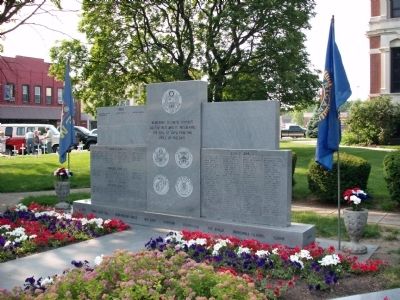





























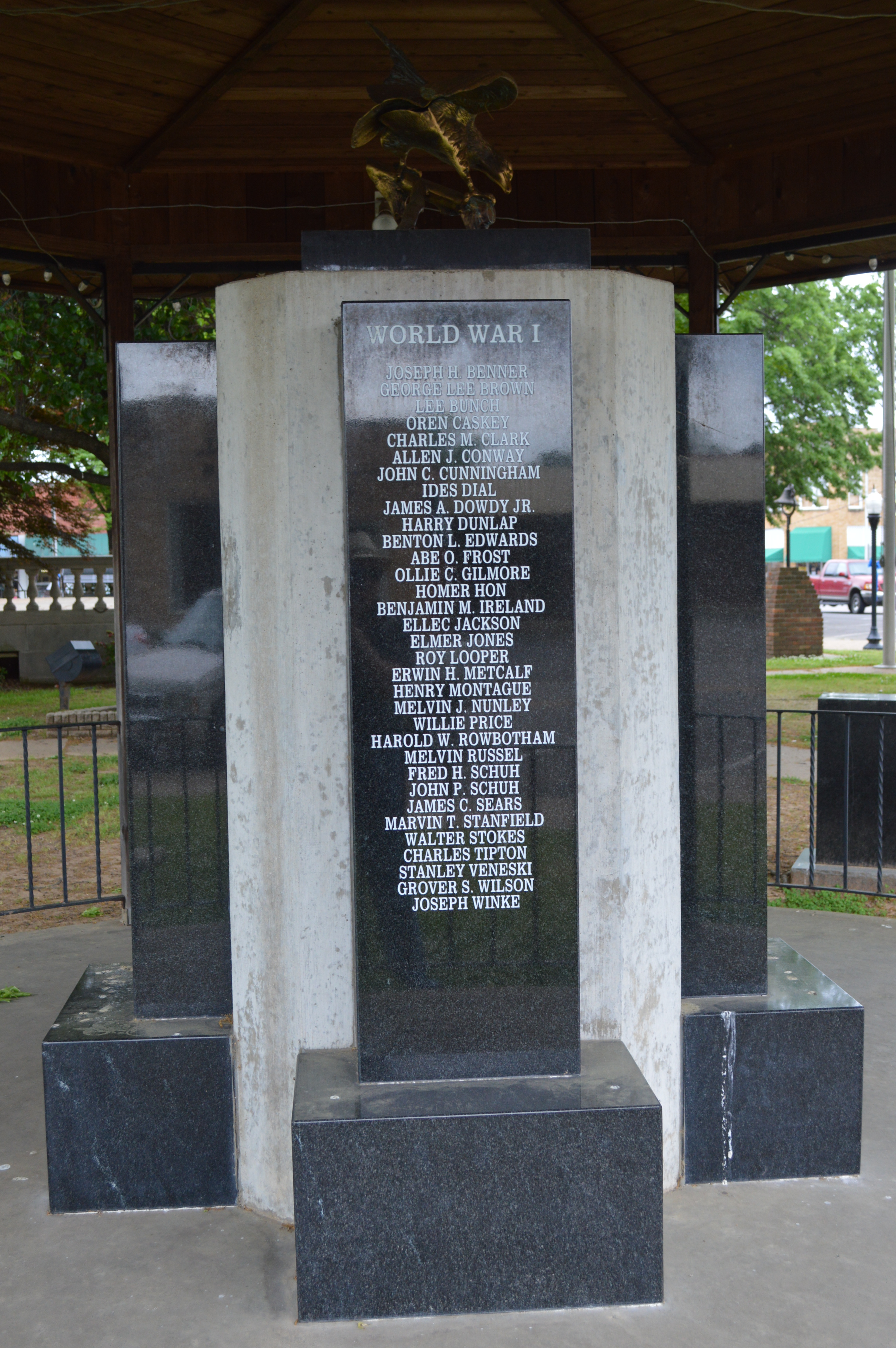
This is a marble plaque for World War I service that lists 31 names.
100 Cities - 100 Memorials
Memorial Inventory Project: There is one other existing partial database to consult - The WWI Memorial Inventory Project [CLICK HERE]. It contains some memorials our map doesn't. The listings on this database are fair game for the Memorial Hunters Club. So if you want to search for treasure from your desk - find missing listings here and submit them. Remember though, you will need to come up with pictures and the history of the memorial. You might be able to hunt that down through www.Proquest.com and Google.
- Details
- Dedication Date: May 23, 2019
- Photos Courtesy of Lamar Veatch
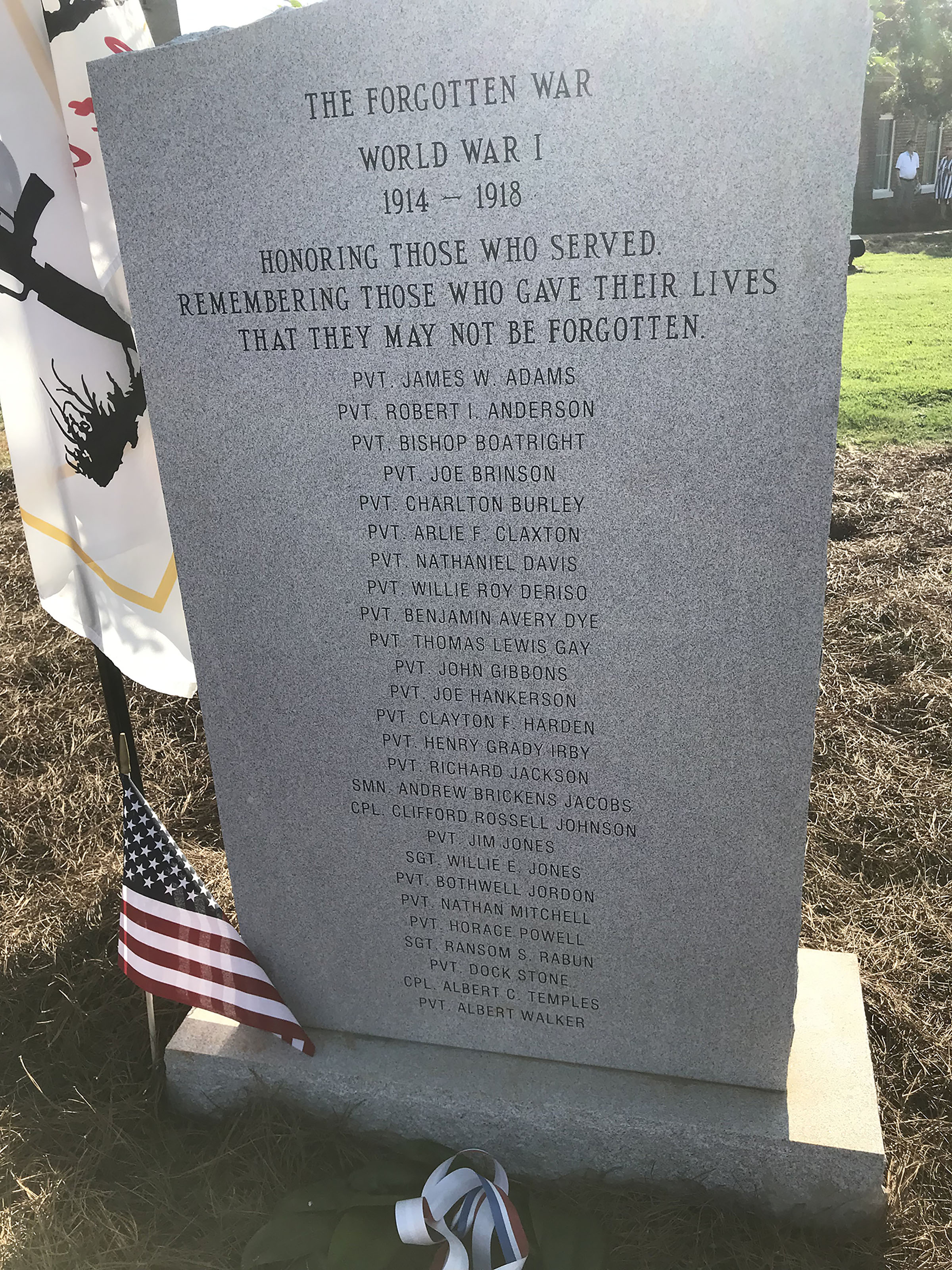
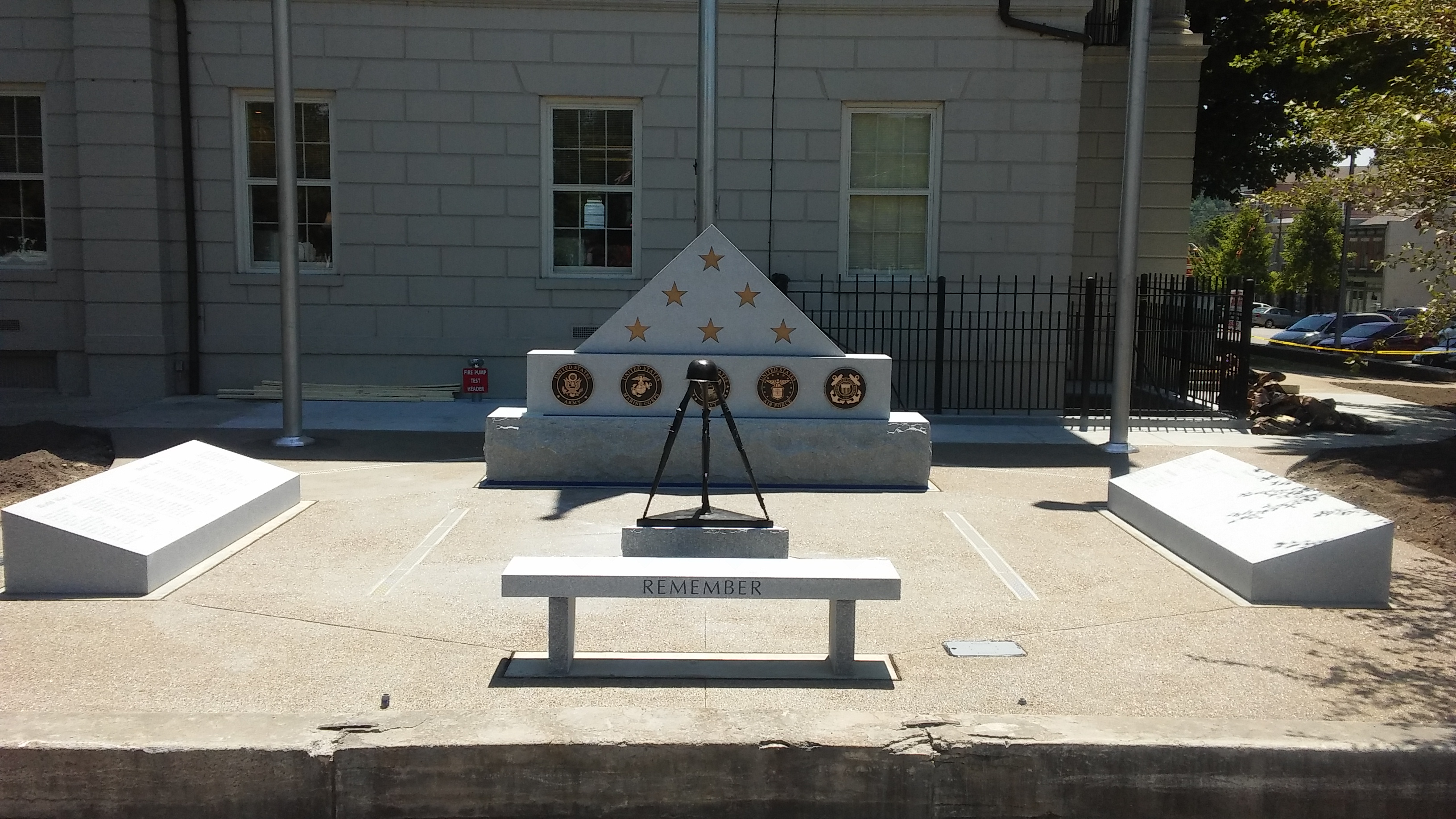
Granite memorial listing twenty-six service members from Jefferson Co, GA who died in WW1 service. This monument joins those of the other wars and conflicts in a completely renovated Veterans’ Plaza on the front lawn of the historic courthouse.
Inscription: “The Forgotten War - World War I - 1914-1918 - Honoring Those Who Served. Remembering Those Who Gave Their Lives That They May Not Be Forgotten.”
- Details
This is a granite full-length figure of a WWI soldier, wearing a uniform, canteen and bayonet, and carrying a rifle. It sits on a rough-hewn granite base with bronze reliefs. They are the seals of the U.S. and New Hampshire, and a U.S. flag and rifle. It was dedicated on September 22, 1922, and a later plaque was added, so that now it honors those who fought in wars from the Revolutionary War through WWII.
- Details
- Photos courtesy of Lamar Veatch
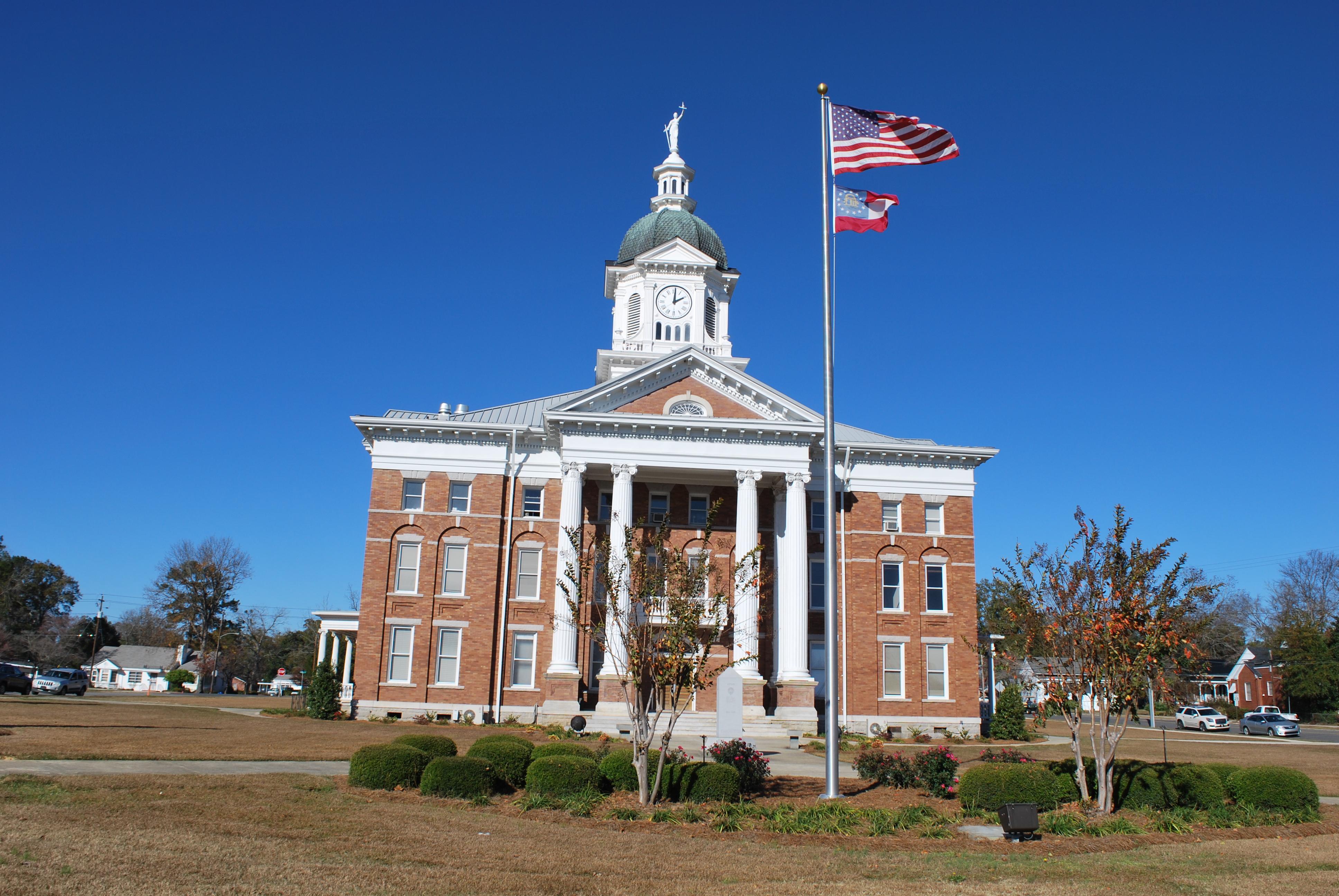
“From the People of Jenkins County in Tribute to Those Who Perished, in Honor of Those Who Served, in Gratitude to Those Now Serving”. “He that Sheds his Blood for Me Shall Be My Brother - All Gave Some - Some Gave All”. Four names listed from World War 1.
- Details
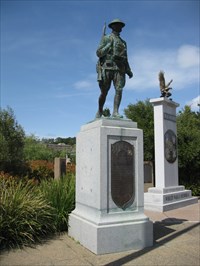
This is a bronze sculpture of a uniformed WWI infantryman, with a rifle slung over his right shoulder, carrying a backpack and wearing a helmet, leggings, and a pouch strapped to his chest. The Bench is a rectangular base of California granite and concrete. It was sculpted by Jo Mora and dedicated on September 17, 1922, at the County Courthouse, to honor the Marin County citizens who died in WWI. It was relocated to its picnic spot in 1971, the year after the courthouse burned down. Later plaques include the names of those who died in WWII.
- Details
- Memorial Hunters Club Submission: The Wanderer
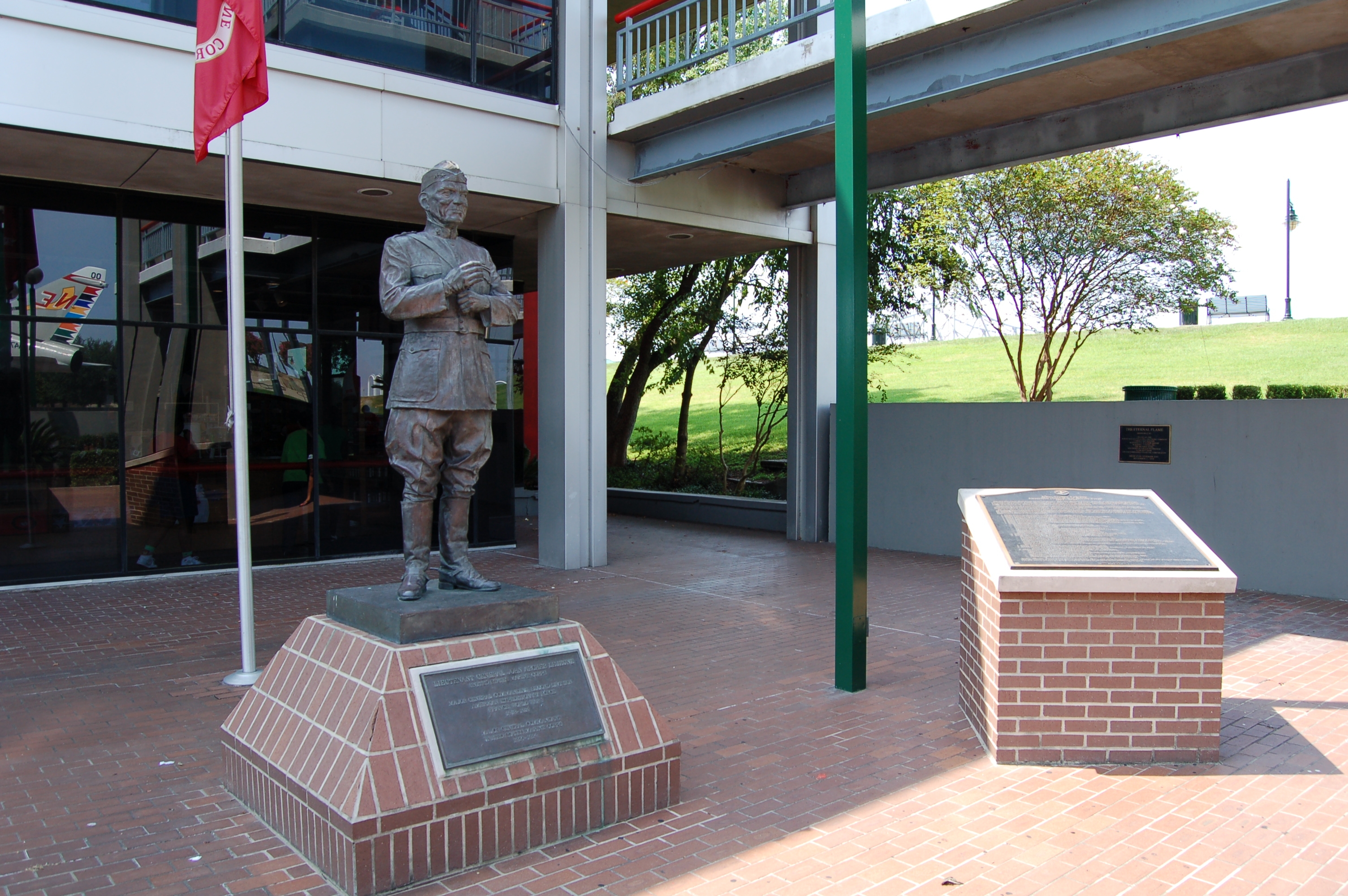
During his more than forty years of service with the Marine Corps, John A. Lejeune participated in campaigns in Panama, Cuba, Mexico, France and Germany. He led the famed 2nd Division, American Expeditionary Force, during World War I with valor and distinction. His leadership of his Marines in the critical action at St. Mihiel earned him the French Legion of Honor.
As Major General Commandant of the Marine Corps, he foresaw a unique mission for the Corps in amphibious expeditionary operations. By doing so, he single-handedly saved the Corps from extinction and preserved it for the service of our nation in war and peace.
He was born in Pointe Coupee Parish on 10 January 1867. After attending Louisiana State University, he obtained an appointment to the United States Naval Academy. Upon his graduation from the Academy in 1888, he was assigned sea duty aboard the USS Vandalia and Midshipman Lejeune began his exemplary career as a United States Marine.
• 1890: Commissioned Second Lieutenant while at sea.
• 1898: Captain Lejeune excels at sea during the Spanish-American War.
• 1903: Major Lejeune and his battalion quell uprisings in Panama.
• 1910: Graduates U.S. Army War College following tour in the Philippines.
• 1919: Lieutenant Colonel Lejeune and his 2nd Provisional Brigade quell uprisings in Cuba.
• 1914: Commands the 2nd Advanced Base Regiment in Vera Cruz, Mexico.
• 1917: promoted to Brigadier General, first commander of Marine Barracks, Quantico, Va.
• 1918: World War I, France
- Commanded a brigade of the 32nd Division at Brest.
- Commanded 4th Marine Brigade following Soissons offensive.
- Promoted to Major General.
- Commander of 2nd Division, American Expeditionary Force.
- Became the first Marine officer to command a division in combat.
- Assaulted Marbeche sector during drive on St. Mihiel.
- Stormed Blanc Mont Ridge during Champagne offensive.
- Led 2nd Division triumphantly into Germany following its surrender.
• 1919: Commands Marine Barracks, Quantico, VA. for second time.
• 1920: Named Major General Commandant of the Marine Corps.
- Developed Fleet Marine Force concept.
- Established formal Marine Officers schools at Quantico, Va.
- Founded Marine Corps Association, Marine Corps Institute and Marine Corps League.
- Provided sound leadership and much needed vision for the Marine Corps at a time when efforts were underway to dissolve the service.
- Carved a unique path for the Marine Corps in amphibious operations thereby ensuring its long-term future.
• 1929: Major General Lejeune retired from active duty.
• 1929: Became Superintendent for the Virginia Military Institute, a position he held until poor health forced his resignation in 1937.
• 1942: Promoted to Lieutenant General while on retired list.
- Became first Marine to hold that rank.
- The assault against the Japanese on Guadalcanal proved his amphibious concepts and substantiated his service.
- November 20, at the age of 75, John A. Lejeune died in Baltimore, Md.
- Buried with full military honors at Arlington National Cemetery.
Today, Marine Corps Base Camp Lejeune, N.C., not only bears the name of one of the Corps’ finest officers, but the name of one of the most able officers of American military history. This is the second of six monuments of General Lejeune sculpted by Patrick Miller. Others are located at General Lejeune's birthplace in New Roads, Louisiana; the Marine Corps Base Camp Lejeune, North Carolina; National Museum of the Marine Corps Base Triangle, Virginia; U.S. Naval Academy, Annapolis, Maryland; and Quantico Marine Corps Base in Prince William County, Virginia.
- Details
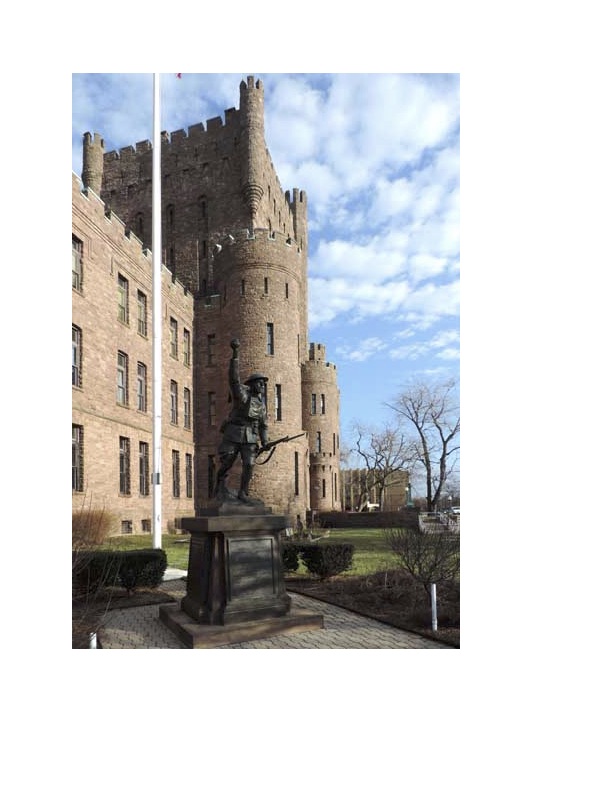
This is a life-size bronze statue of a WWI infantryman, charging forward with a rifle in his left hand and a grenade in his right. Beneath is a red Medina sandstone base, in which is scaled a copper box containing veterans association minutes, a full roster of the 74th Regiment, coins of the war period, and a program from the statue's dedication. It was sculpted by John Paulding and dedicated on May 18, 1929, in honor of the members of the 74th who served, and the 43 who died in service.
This John Paulding "Over the Top to Victory" is one of only two known that holds a grenade like Viquesney's Doughboy sculptures.
- Details
- All photos courtesy of Lamar Veatch
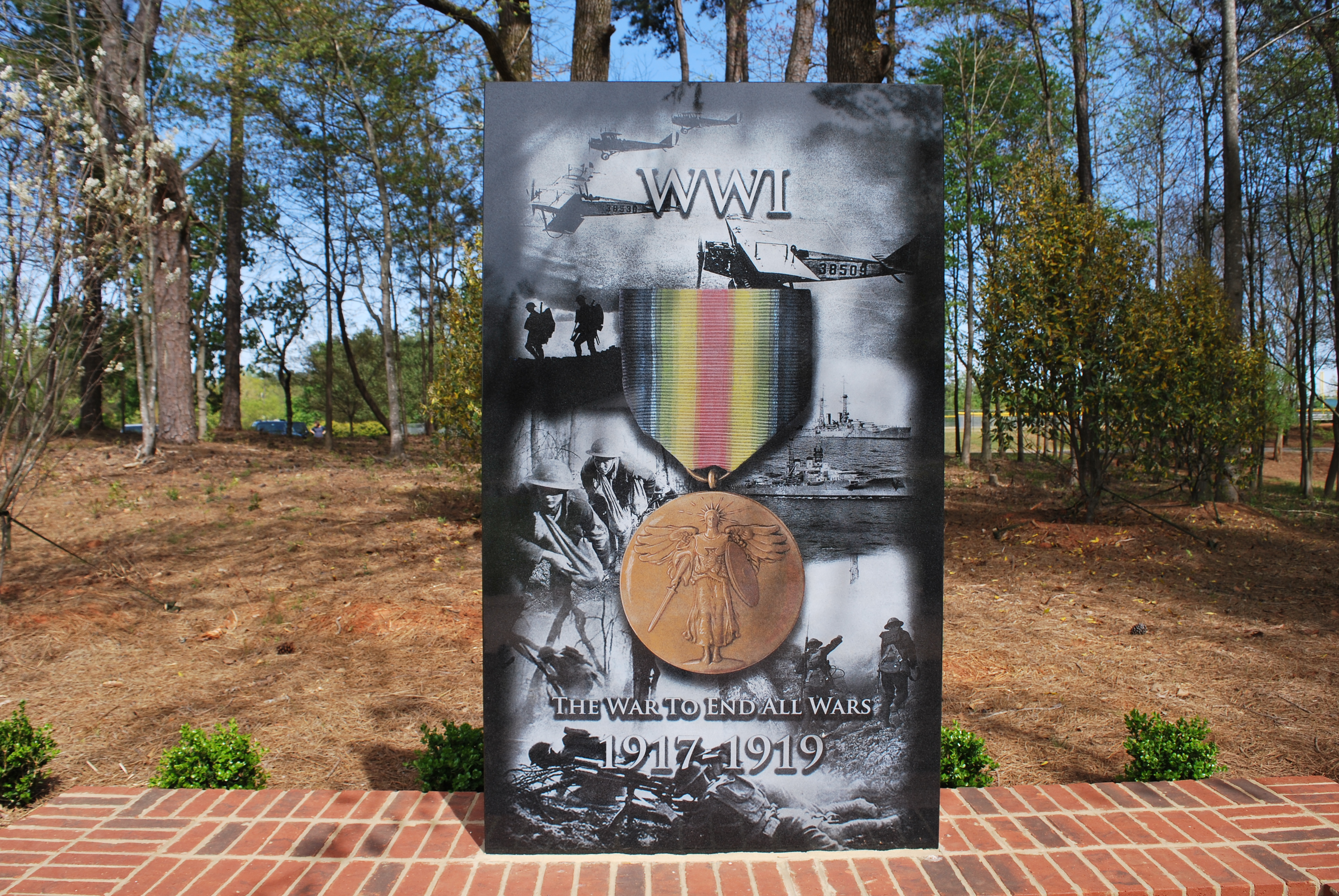
Photo-engraved monolith plaques of all American overseas conflicts from World War 1. This walk includes tributes to Women in Service and Purple Heart recipients. Individual brick pavers continue to be added.
- Details
- Memorial Hunters Club Submission: The Wanderer
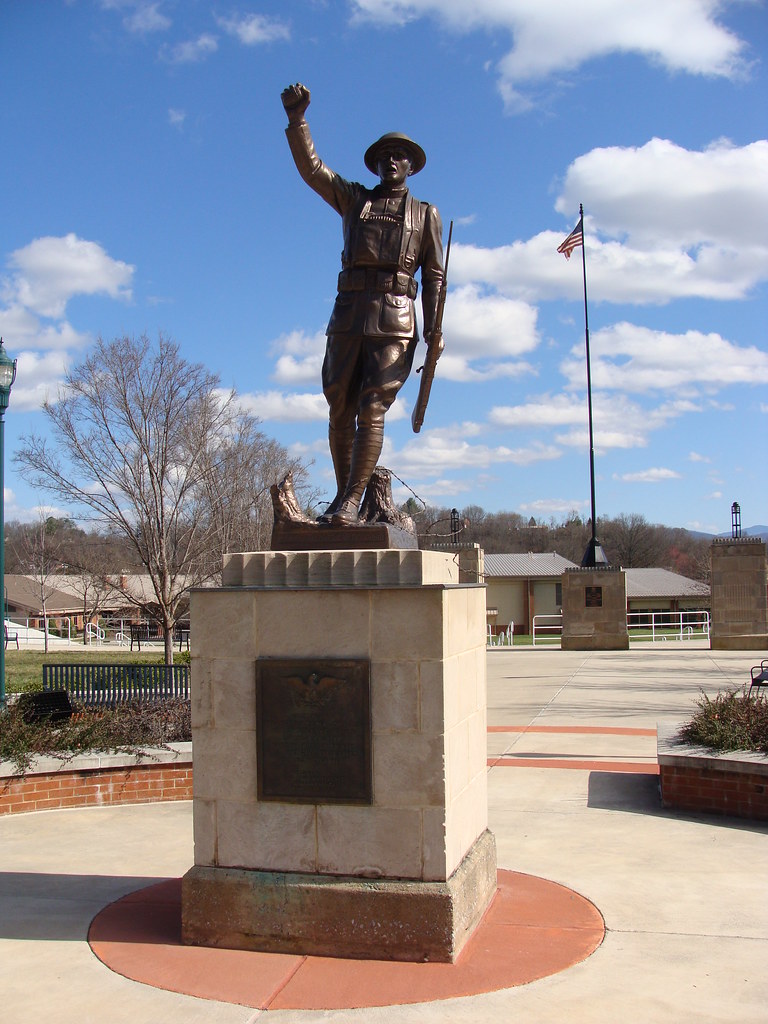
This E.M. Viquesney Spirit of the American Doughboy statue was dedicated November 11, 1935. It was later rededicated (November 11, 1974) to include those who served and died in other wars. A separate nearby stone memorial erected by the Johnson City Jaycees in 1975 honors those who gave their lives in the Vietnam War (with names).
According to a Johnson City Press news clipping archive, there was a "Doughboy Day" held in 1974, probably involving the rededication.
The statue is designated as a historical marker at the main entrance to the new 25-acre Memorial Park Community Campus on the site of the former stadium which was torn down in August of 2010.
In September, 2012, the statue was dismounted and taken to a local company, Gardner Paint Services, for refurbishment, application of a new coating. and replacement of the missing bayonet. It was returned on August 30, 2013, with a ribbon-cutting ceremony held at the new Veterans Plaza.
The statue was again rededicated on Memorial Day, May 27, 2019, in honor of the 100th anniversary of the chartering of the American Legion.
- Details
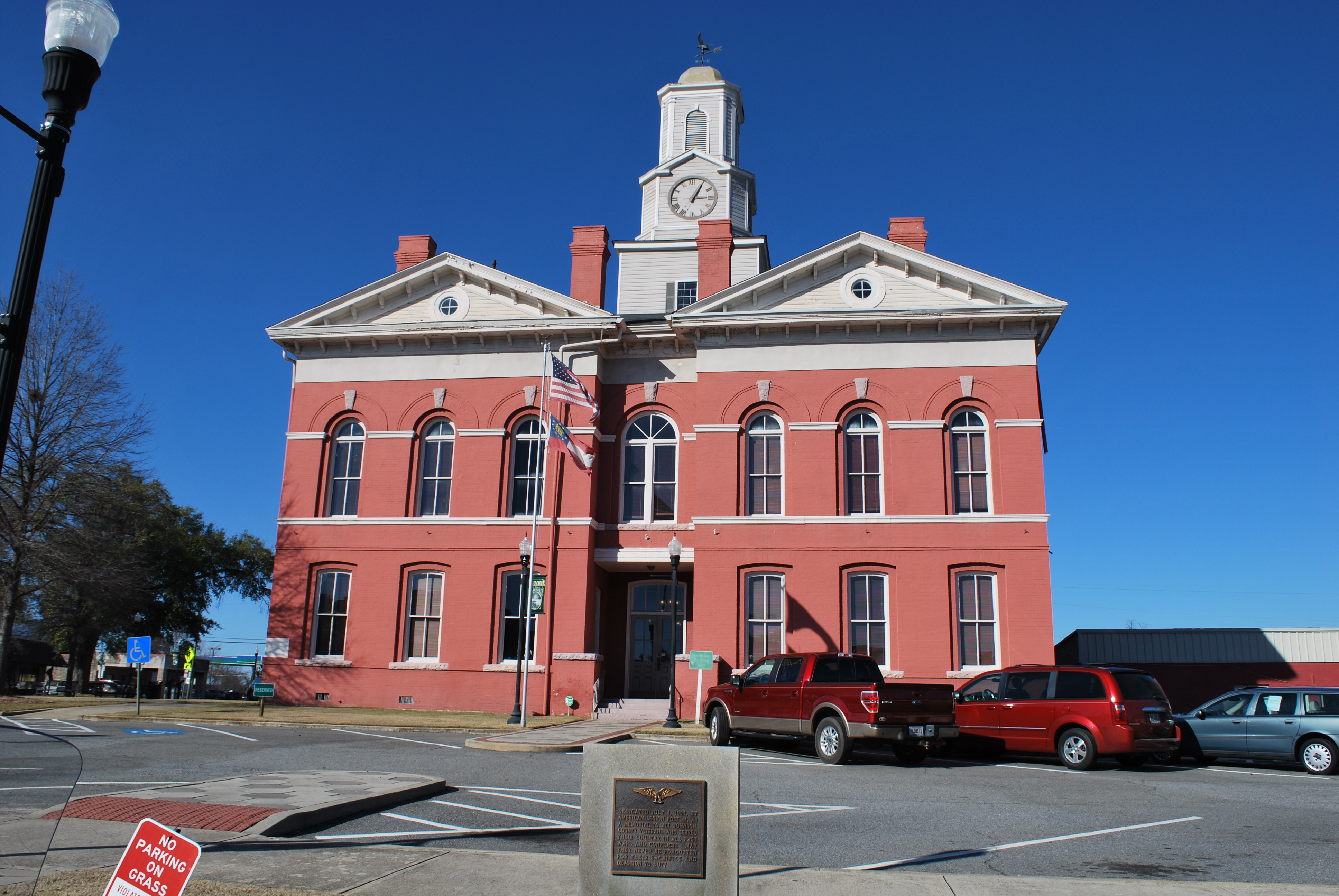
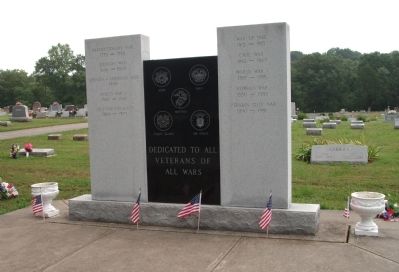
"Dedicated July 4, 1991, by American Legion Post 44, as a memorial to all Johnson County veterans who served their country in all past wars and conflicts. May they never be forgotten for their sacrifice and devotion to duty."
- Details
- Memorial Hunters Club Submission: Robert Shay, PH3, USNR-R, 1964-70
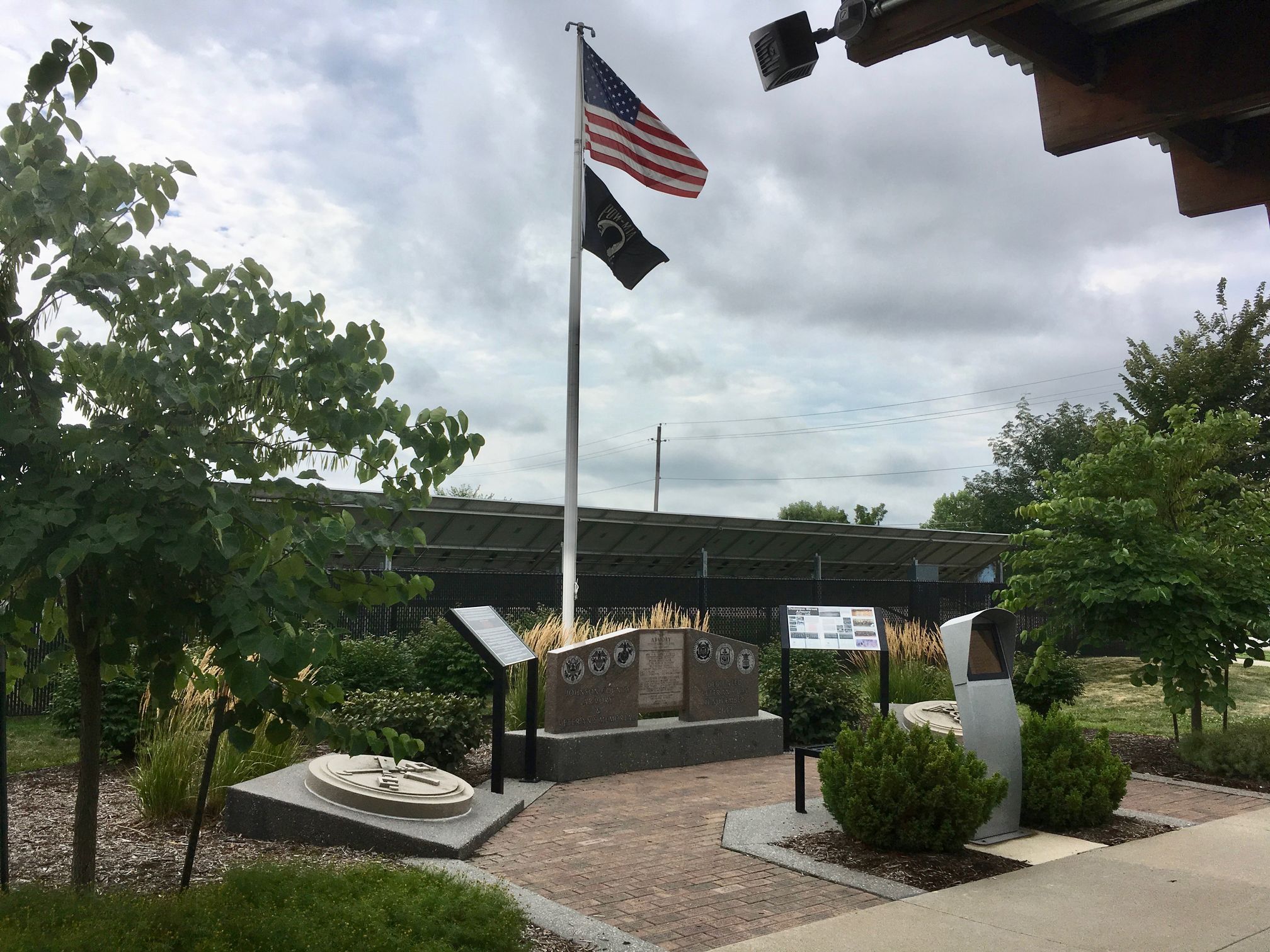
DEDICATED
VETERANS DAY
11 NOVEMBER
2013
Phase III was completed in 2018 and includes a brick path around the existing memorial
structure, using repurposed bricks from the Iowa City Pedestrian Mall, and two raised brick
beds with additional engraved memorial bricks. This Phase was completed after most of
the pictures in the gallery were taken. The overhead photo in the gallery courtesy of
Johnson County shows Phase III completed.
Phase II was completed in 2014 with the installation of an interactive kiosk at the base of
the Memorial. Each brick in the Memorial has a matching bio that can be viewed both on
the Memorial kiosk, as well as the Johnson County website. The kiosk earned the “2016
Excellence in Action Award” from the Iowa State Association of Counties and the “2017
Achievement Award” from the National Association of Counties.
Phase I, completed in 2014 and installed at the site of the old 1937 National Guard Armory.
The Memorial serves as a permanent place of honor for families, friends and community
members to visit, reflect and to remember those who bravely served our country. The
Memorial includes the Armory’s original corner stone from 1937, centered between two
Red Granite walls with the crests of each branch of the Armed Forces, reproductions of the
medallions from the Armory and interpretative panels with the Armory’s history in text and
photographs. At the base of the Memorial are brick pavers honoring veterans and showing
gratitude from supporting business and families.
The last picture in the gallery shows USWW1CC Volunteer Monument Hunter, Robert Shay,
PH3, USNR-R and Johnson County Department of Veterans Affairs Director and Memorial
project manager, Gary Boseneiler - Air Force Veteran. Gary, on short notice, very kindly
gave us a personal tour of this wonderful Memorial Monument Project.
- Details
- Dedication Date: November 11, 1987
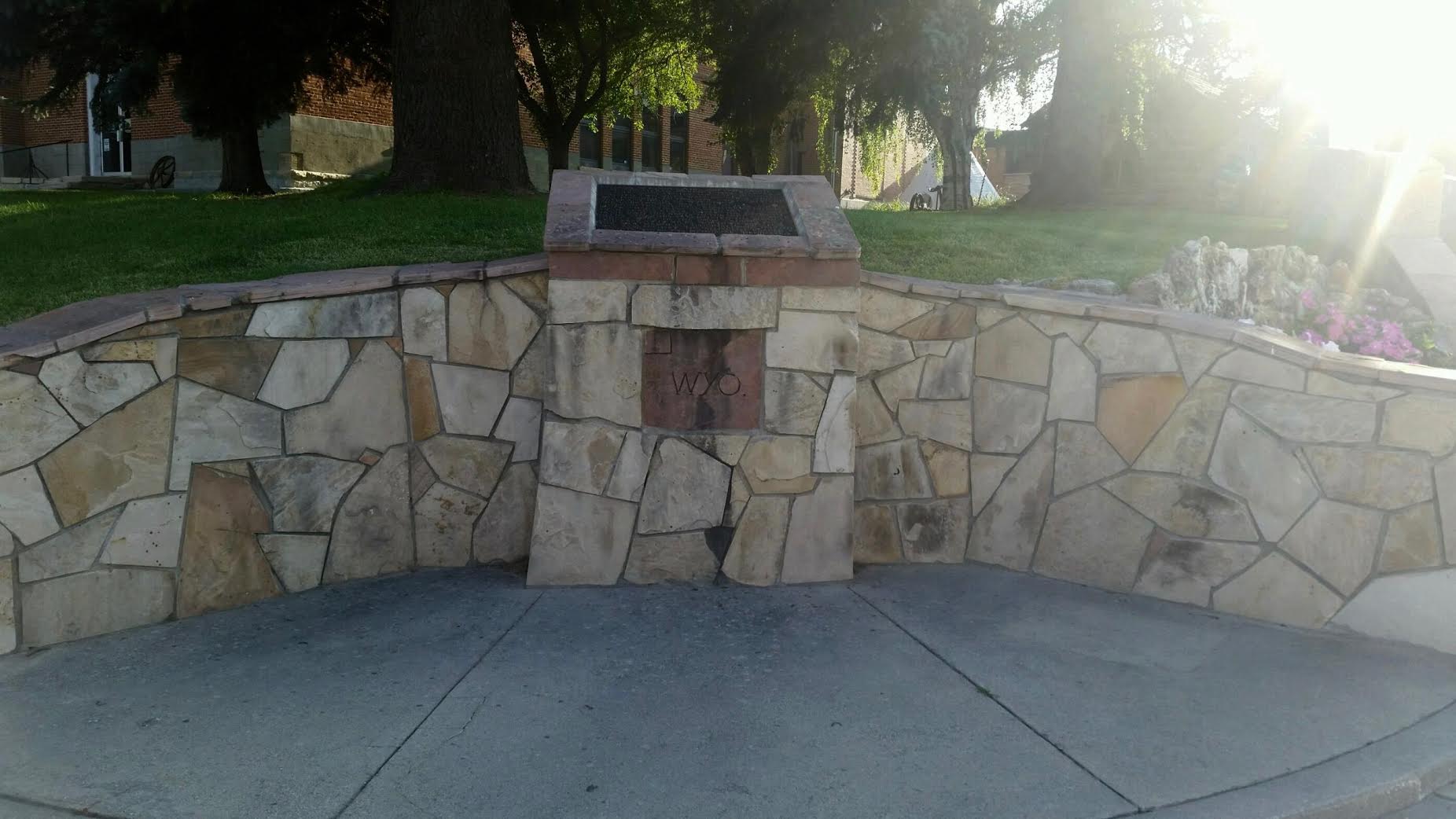
This memorial stands outside the Johnson County Courthouse. Its dedication reads: "In honor of the men and women of Johnson County, Wyoming who served in the Armed Forces of the United States in time of war...and in memory of those who gave their lives for our country." The surrounding memorial walls list the names of local servicemembers killed in the Spanish-American War, World War I, World War II, and the Vietnam War.