









































Louis Arthur "Slip" Paquette
Submitted by: Thomas, "T.J." Cullinane {Town Historian}
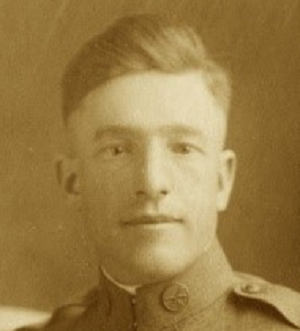 Louis Arthur "Slip" Paquette was born in 1890. Louis Paquette served in World War 1 with the United States Army. The enlistment was in 1918 and the service was completed in 1919.
Story of Service
A Derry Shoemaker in the Coast Artillery
Few portraits in the Derry, New Hampshire Great War Soldier’s Album are more compelling than that of Louis Arthur Paquette, late of Battery A, 71st Coast Artillery Corps. Upright and earnest, the handsome young Paquette proudly displays his New Hampshire War Service Medal and First Army artillery patch. “Slip,” as he was popularly known, was born in Derry on December 30, 1890. The town records state that the industrious shoe maker enlisted at age 26 on March 8, 1918.
Like many New England soldiers, he would begin his Army career with recruit training at Fort Slocum, New York. This post was located on David’s Island at the southern end of Long Island Sound in the city environs of New Rochelle.
Soon after completing his training, he was given serial number 402214 and assigned to Battery A of the 71st Coast Artillery Corps. At this juncture, Slip was destined to spend the war manning a huge coastal artillery battery in Boston Harbor’s Fort Strong. This was not to be however, as there was an urgent need for heavy mobile artillery in the American Expeditionary Force deployed in France. Slip’s unit was among those selected to fulfill this demand and soon he would embark on the former Cunard liner S.S. Margha to cross the Atlantic. On a preserved copy of the ship’s manifest, one can see that Slip claimed his brother Albert Augustus Paquette of Box #86 in Derry as his next of kin.
Hyman Freiberg
Submitted by: James C. Leichtung {Grand Nephew}
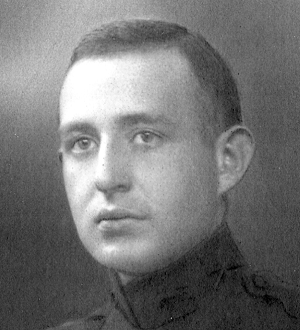 Hyman Freiberg was born around 1899. Hyman Freiberg served in World War 1 with the United States Army. The enlistment was in 1917 and the service was completed in 1918.
Story of Service
Second Lieutenant Hyman Freiberg, USNG 131 Infantry, 33d Division.
Member of the American Expeditionary Forces. Killed in action August 9, 1918.
Received the Distinguished Service Cross posthumously July 1919. Interred in Somme American Cemetery. Bony (Aisne), France.
William Edward Allen
Submitted by: Paula Thistlewaite {Granddaughter}
William Edward Allen was born around 1898. William Allen served in World War 1 with the United States Army. The enlistment was in 1917 and the service was completed in 1919.
Story of Service
William Edward Allen enlisted in the Army on May 8, 1917 at Pittsburgh, Pennsylvania. On May 17, 1917, he was transferred to Company E, 303 Engineers. He was promoted to Corporal on July 1, 1917; sergeant on October 4, 1917; and Sergeant First Class on May 15, 1918.
He left the U.S on May 26, 1918 and arrived overseas on June 7, 1918. He engaged in the battles of St. Mihiel, Sept.12-16; Limey Sector; and Meuse-Argonne offensive, October 12-November 8, 1918, St. Juvin sector. His vocation was a machinist.
He arrived back in the U.S. on June 3, 1919. He was honorably discharged from Fort Dix, New Jersey on June 12, 1919. Miraculously, he was never wounded. He came home to marry and raise a family a boy and a girl, my mother.
Guy E Golterman Sr.
Submitted by: Ed Golterman {Grandson}
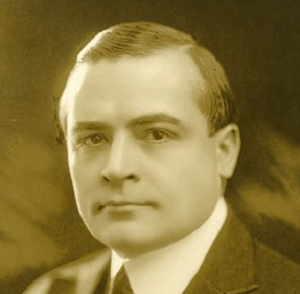 Guy E Golterman Sr. born around 1879. Guy Golterman served in World War 1 with the American wartime industry supplying the armed forces. The enlistment was in 1917 and the service was completed in 1917.
Story of Service
As Director of the Nation’s Forum, Guy Golterman produced the most important series of recordings in US History, led by Pershing’s Address from the Battlefields. Mr. Golterman marshaled the recording and radio industries to the war effort, and to capture all the major statements leading up to the elections of 1920. Pershing’s was the first recording of a General made on a battlefield in history. The Forum did its job well a century ago and we have the voices today.
Guy Golterman went back to St. Louis, where he produced grand opera at the Municipal Theater in Forest Park and in Kiel opera house.
James Alexander Leonard
Submitted by: Norris Carroll Warren {Post member}
James Alexander Leonard was born around 1891. James Leonard served in World War 1 with the United States Army. The enlistment was in 1916 and the service was completed in 1919.
Story of Service
James Alexander Leonard enlisted in the U.S. Army in 1916 in Lexington, NC. After training, he was commissioned 2LT and assigned A, 120th Inf. Regt., NCARNG.
In 1917, Co A, 120th Regt. was mobilized and sent to Camp Seiver, SC. There the unit was transferred to active duty and incorporated into the 30th Inf. Division. 2LT Leonard was promoted to Captain.
In 1918 he and his unit were shipped to a port of debarkation in France. They were assigned to the British Fourth Army, and assigned their position along the Hindenburg Line near Bellicourt, BG.
Arthur F Brandt
Submitted by: Sharon Morena {Grand Niece}
Arthur F Brandt was born around 1899. Arthur Brandt served in World War 1 with the United States Army. The enlistment was in 1917 and the service was completed in 1917.
Story of Service
My Great Uncle Arthur F. Brandt received the Distinguished Service Cross for heroic valor presented posthumously by President Wilson and was also one of General Pershing's 100 Heroes.
He received the Victory Medal, also.
He is buried at the Meuse-Argonne Cemetery in France.
 Harold J. Cloutman
Submitted by: Kevin Cloutman {Grandson}
Harold J. Cloutman was born around 1893. Harold Cloutman served in World War 1 with the United States Marine Corps. The enlistment was in 1917 and the service was completed in 1918.
Story of Service
My Grandfather, Corporal Harold J. Cloutman, enlisted in the US Marine Corps at the outbreak of the American involvement in WWI. Being 24 years old, and a college graduate, he was quickly promoted to the rank of Corporal. He arrived in France with the first deployment of the AEF assigned to the 5th Marine Regiment which was part of the larger Marine Brigade. He was a gunner on a .30 caliber water cooled machine gun.
Upon their arrival in France, the Marine Brigade participated in a few quiet sectors, but their biggest challenge came during Germany’s last great offensive in the Spring of 1918 when they broke the French lines southeast of Paris. The Marines were thrown into battle to plug the gap in the line in what would famously be called Belleau Woods.
Michael John Kurinskee (Krinke)
Submitted by: Nellie Pearl De Baker {Daughter}
Michael John Kurinskee (Krinke) born around 1891. Michael Kurinskee (Krinke) served in World War 1 with the United States Army. The enlistment was in 1917 and the service was completed in 1918.
Story of Service
INFORMATION SUBMITTED BY Nellie P. De Baker American Legion Member 103629525, one of 12 children of Michael John Krinke. Krinke is my maiden name.
The original name I gave was Michael John Kurlinski, the name the family surmised was correct all our life. I found on his military papers the correct name is spelled KURINSKEE. This is the name for all his military service records as that was his birth name until he changed it sometime after the military service and prior to marriage 06-12-1930. Reason given to us kids for the change: KRINKE was easier to spell. He never specified what his birth name was. He had a sister whose last name was KURLINSKI and we thought she never married so Kurlinski was thought to be Pa's birth name. It turns out we were incorrect all these years.
Maurice Herbert Roberts
Submitted by: Thomas, "T.J." Cullinane {Town Historian}
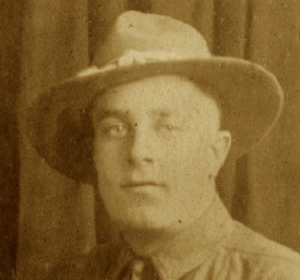 Maurice Herbert Roberts was born in 1900. Maurice Roberts served in World War 1 with the United States Army. The enlistment was in 1917 and the service was completed in 1918.
Story of Service
Forgotten Sorrow, Forgotten Valor.
In gazing at the serene visage of Maurice Roberts, one gets the impression of a young man who has wisdom beyond his years. Just eighteen when he volunteered for the Army, Maurice had seen his mother Carrie pass away at age 39 after a long and painful fight with uterine cancer. As his unit was preparing for overseas movement at Camp Syracuse, New York, he would learn of the death of his nineteen year old sister Melissa from tuberculosis.
In spite of these tragedies, or perhaps because of them, Roberts would fight with reckless abandon on the Western Front. He would be cited twice for bravery by the French government, a very rare distinction for a lowly enlisted man, before being killed in action during the opening stages of the Meuse-Argonne Campaign.